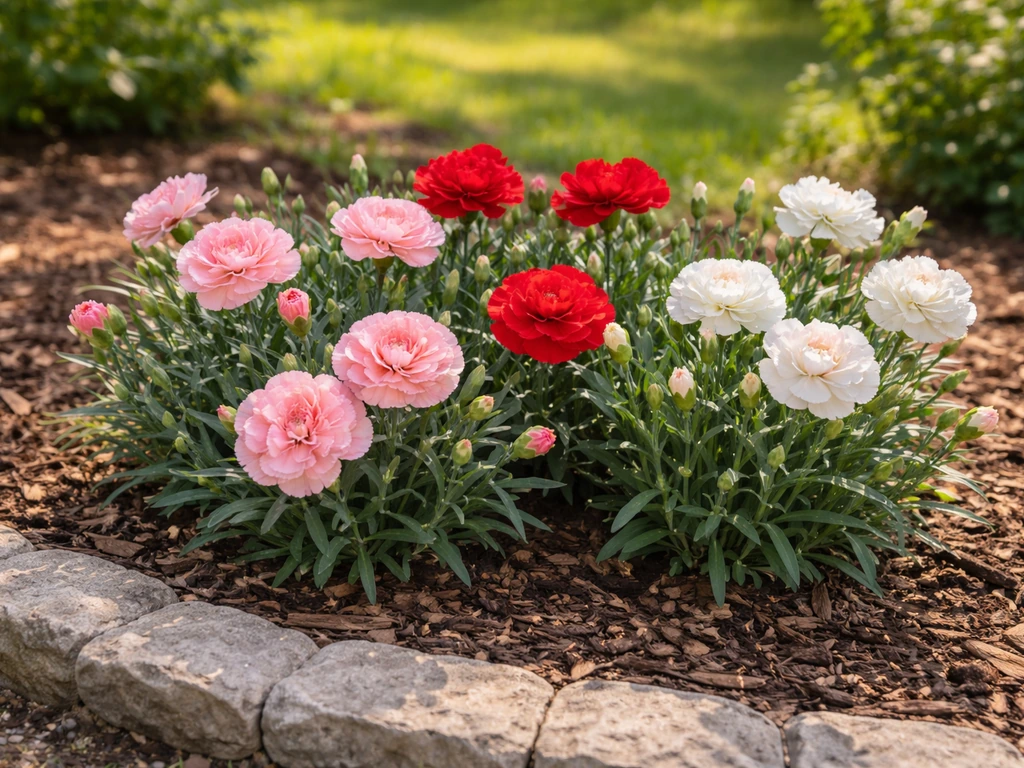
Yes, you can absolutely grow carnations from a stem cutting, and honestly it's the best way to do it. You get a new plant that's genetically identical to the parent, it roots in roughly 4 to 6 weeks, and you skip the slow, unpredictable process of starting from seed. Most home gardeners who try this once never go back to seeds for carnations.
Can You Grow Carnation From Stem? Step by Step Guide
Marcus Holloway
23 Jun 2026
What 'growing carnations from stem' actually means
When people say 'growing carnations from stem,' they mean taking a short cutting from a healthy, actively growing carnation plant and convincing that cutting to grow its own roots. Once it has roots, it becomes an independent plant. This is called vegetative propagation or cutting propagation, and it's different from starting carnations from seed. With seeds, you're growing a new plant from scratch and there's genetic variation, meaning the flowers might not look exactly like the parent. With a stem cutting, you're cloning the parent plant. If you love a specific color or variety, a cutting is the only way to guarantee you'll get exactly that again.
This method works for standard carnations (Dianthus caryophyllus), border carnations, and most mini carnation types. The technique is essentially the same across varieties: you take a soft shoot tip, prepare it properly, give it the right rooting environment, and wait. If you're interested in growing mini carnations or long-stem carnations specifically, the cutting method applies to those too, though long-stem types can take a little longer to reach a blooming size. If you want to go step by step for how to grow mini carnations from cuttings, keep working through the rooting and timing sections below growing mini carnations.
When to take carnation cuttings
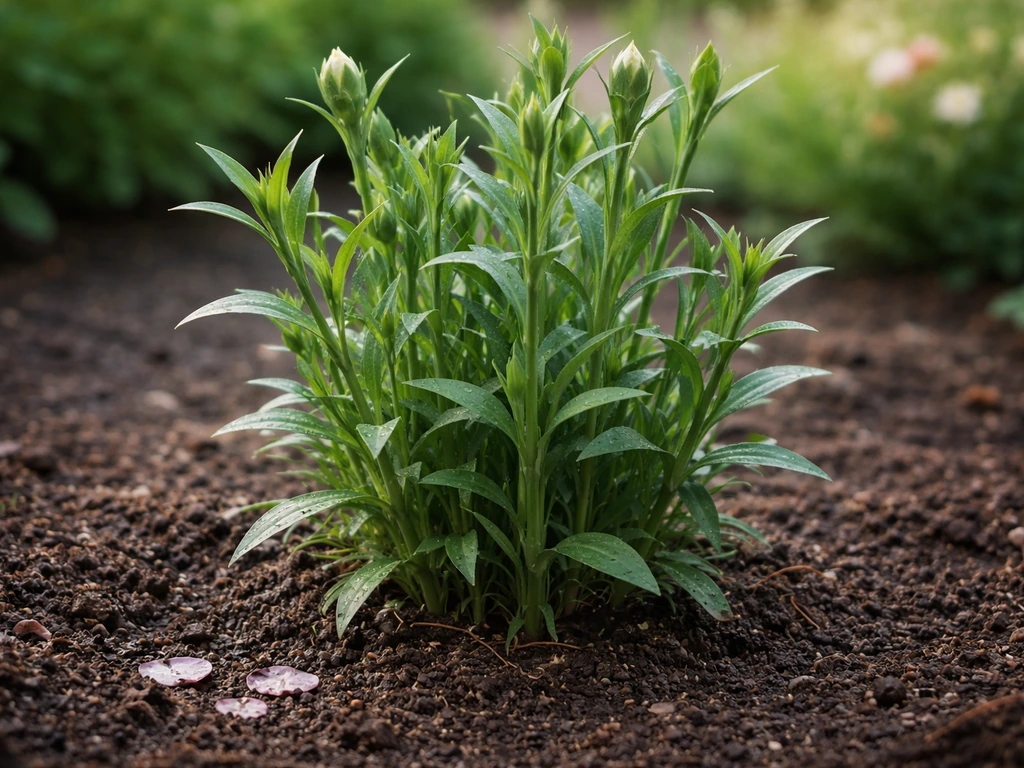
Timing matters more than most beginners expect. The ideal window for taking carnation cuttings is late spring through midsummer, which for most of the Northern Hemisphere means May through July. Right now, in late June, you're sitting in the sweet spot. The parent plant is actively growing, the shoots are soft and full of energy, and the warm ambient temperatures will encourage rooting without you needing to do much extra.
You can also take cuttings in late summer, but rooting slows down as the days shorten and temperatures drop. Cuttings taken in winter can work under grow lights or in a heated greenhouse, but they take significantly longer to root and bloom. Research on carnation flowering timelines shows that cuttings planted in May reach anthesis (full bloom) in about 110 days, while December-planted cuttings can take around 230 days. That's a dramatic difference and a good reason to work with the season rather than against it.
The other timing consideration is the state of the parent plant. Take cuttings from shoots that have no flower buds on them. A shoot that's already committed to flowering has different hormonal priorities and won't root as reliably. Look for strong, vigorous, non-flowering side shoots.
How to take and prep your cuttings
This step is where most beginners either get it right and succeed or make small mistakes that cause cuttings to fail later. Take your time here.
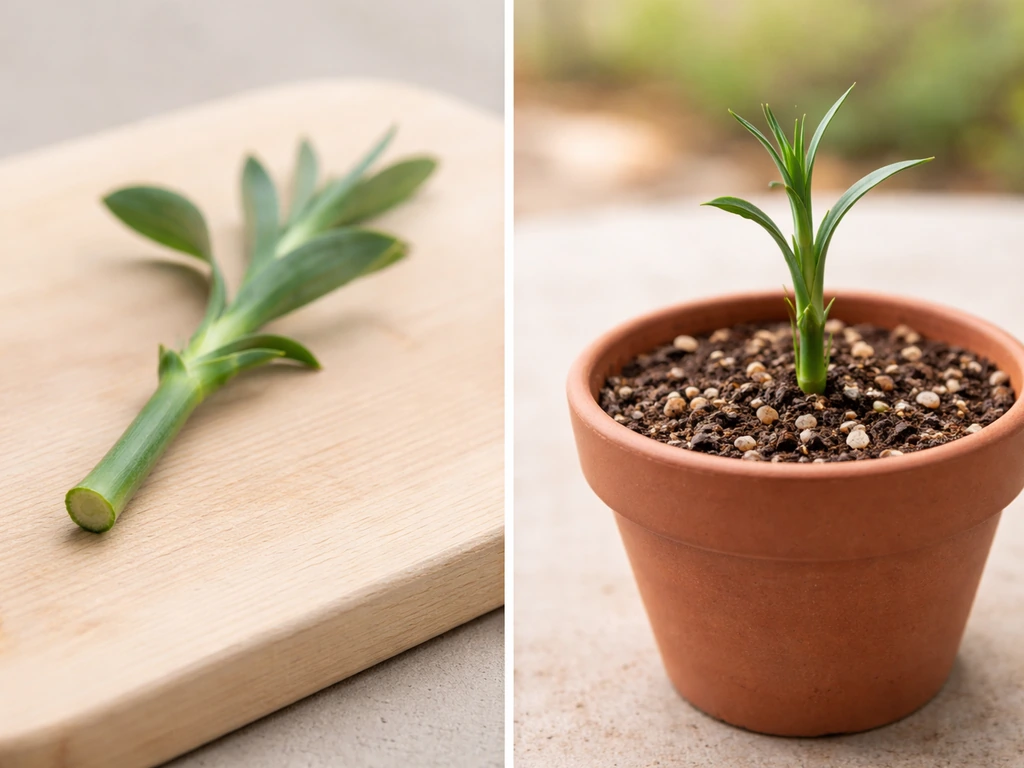
- Choose a healthy parent plant with no signs of disease or pest damage. Look for non-flowering side shoots that are soft and green, about 10 to 15 cm (4 to 6 inches) long, with four to five pairs of leaves.
- Use clean, sharp scissors or a knife. Dirty tools introduce bacteria and fungus, which are the main reasons cuttings rot. Wipe your blade with rubbing alcohol before you start.
- Cut just below a leaf node, the point where a pair of leaves joins the stem. This is where rooting hormones naturally concentrate and where new roots are most likely to form.
- Strip off the lowest one or two pairs of leaves cleanly. You want 2 to 3 cm of bare stem at the base that will sit below the rooting medium. Leaving leaves buried in the medium causes rot.
- Make a tiny slanted cut (about 2 mm) at the very base of the stem. This small wound increases the surface area in contact with rooting hormone and the medium.
- If you're not planting immediately, wrap the cuttings in a damp paper towel and store them somewhere cool and dark. Keeping them at around 5°C (40°F) for up to 24 hours before planting is fine and won't hurt rooting. Don't leave them sitting out on a warm bench, they'll wilt and stress quickly.
- Dip the base of each cutting into rooting hormone powder or gel before planting. IBA (indole-3-butyric acid) powder at around 1000 ppm is the standard and it genuinely makes a difference. If you don't have rooting hormone, some gardeners use honey as a natural alternative, though it's less effective.
Rooting methods: soil vs. water
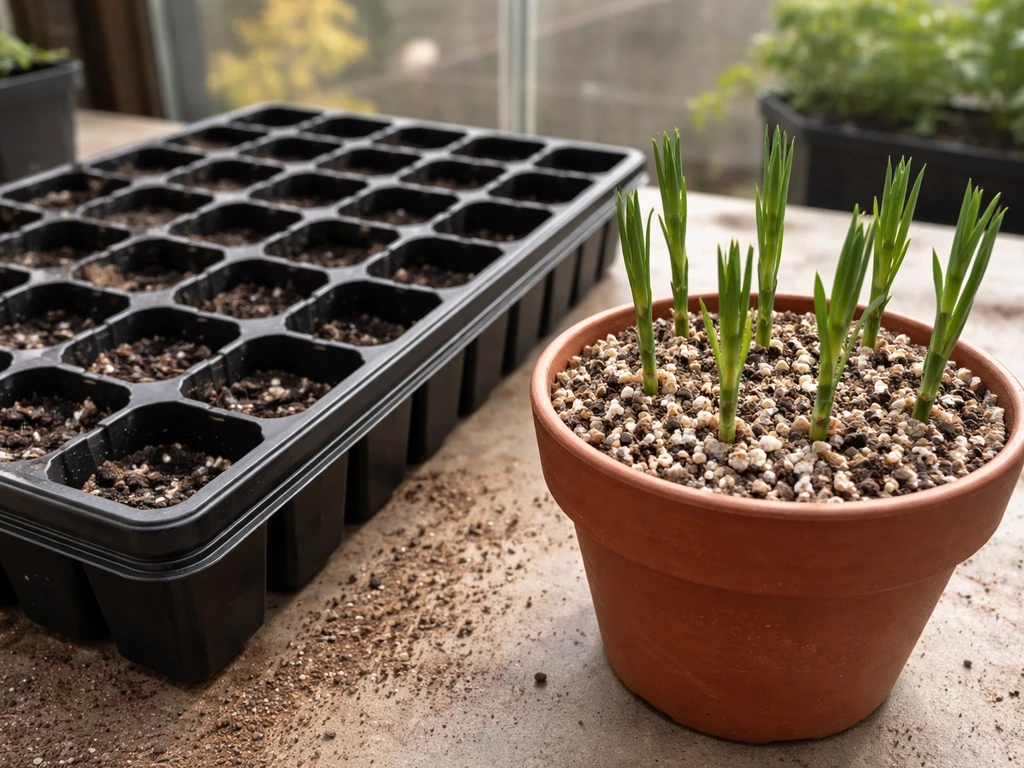
You have two main options for rooting carnation cuttings: a gritty rooting mix in a pot or tray, or a glass of water. They work differently and suit different situations.
Rooting in soil (the better method for carnations)
For carnations specifically, rooting in a well-draining medium gives you a much higher success rate than water. The best results come from a mix of perlite and sphagnum peat at roughly a 7:3 ratio, limed to a pH of around 7.0. If you don't want to fuss with liming, a simple 1:1 mix of cocopeat and coarse river sand works very well and has shown rooting rates above 90% in published trials. The key is that the medium drains freely, holds just enough moisture to stay damp but never waterlogged, and has a neutral pH. Avoid regular potting compost on its own, it holds too much water and leads to rot.
Fill a small pot or propagation tray with your mix, water it lightly, then make a hole with a pencil or dibber and insert the cutting so the bare stem section is fully buried. Firm the medium gently around it. Cover the pot with a clear plastic bag or a propagation dome to trap humidity. Place it somewhere bright but out of direct sun. A windowsill with filtered light is ideal. Bottom heat helps too: keeping the medium around 68 to 73°F (20 to 23°C) speeds up rooting noticeably.
Mist the cuttings every other day to keep humidity up. You should start seeing roots forming within 3 to 5 weeks. You can gently tug on the cutting after 4 weeks: resistance means roots have formed.
Rooting in water
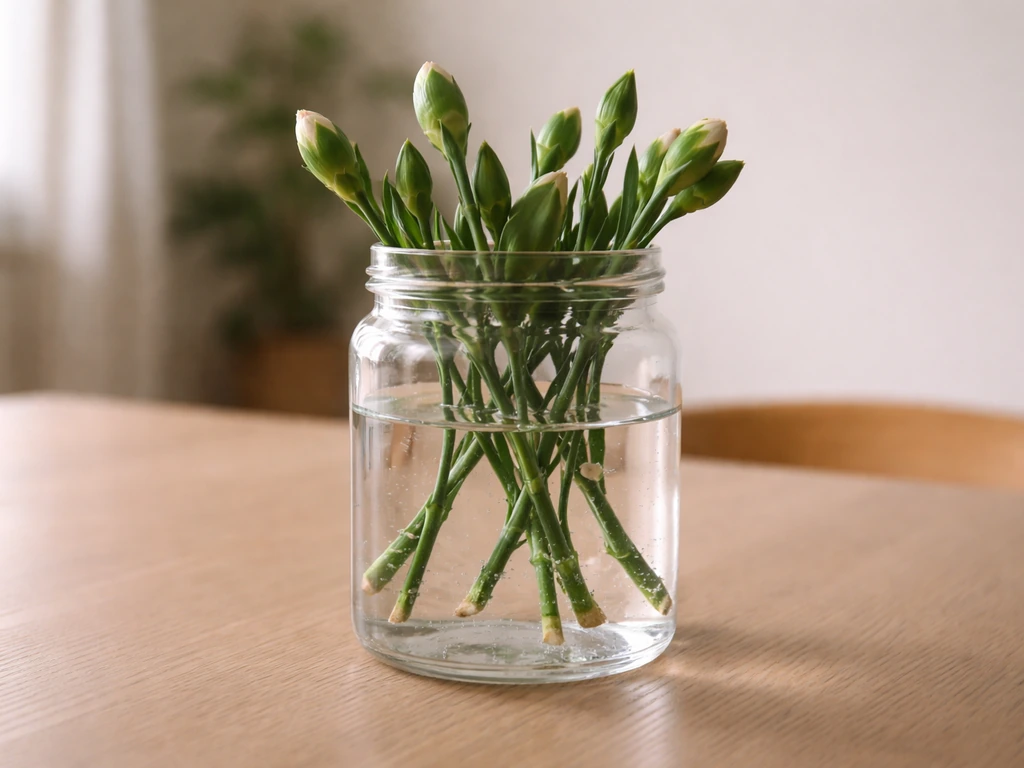
Water rooting is simpler to set up and works reasonably well for carnations, though survival rates are a bit lower and the transition to soil requires care. Place the prepared cutting in a glass of clean water so the bare stem is submerged but no leaves touch the water. Change the water every two to three days to prevent bacteria building up. Keep it in a warm, bright spot. Roots usually appear within two to four weeks.
The catch with water rooting is that water roots are structurally different from soil roots, and carnations can struggle a bit during the transition. When you move a water-rooted cutting to soil, do it as soon as you see roots that are 1 to 2 cm long. For more detailed, step-by-step guidance on growing carnations in water, follow the water-rooting method and then transition them carefully to soil water-rooted cutting. Don't wait until the roots are long and tangled. Plant into a lightly moist, well-draining mix and keep it in a humid spot for the first week to reduce transplant shock.
| Method | Success Rate | Setup | Best For | Watch Out For |
|---|---|---|---|---|
| Gritty rooting mix (perlite + peat/cocopeat) | High (90%+ with IBA) | Slightly more prep | Most beginners, larger batches | Overwatering, wrong pH |
| Water rooting | Moderate | Very easy | Small numbers, quick trial | Transplant shock when moving to soil |
If you're only doing a few cuttings and want to see what's happening, water rooting is fine. If you're trying to propagate a meaningful number of plants or you want the best survival odds, go with the gritty mix.
Troubleshooting: rot, no roots, and low survival
The most common failure points with carnation cuttings are predictable once you know what to look for. Here's how to fix or prevent each one.
Cuttings turn black and rot at the base
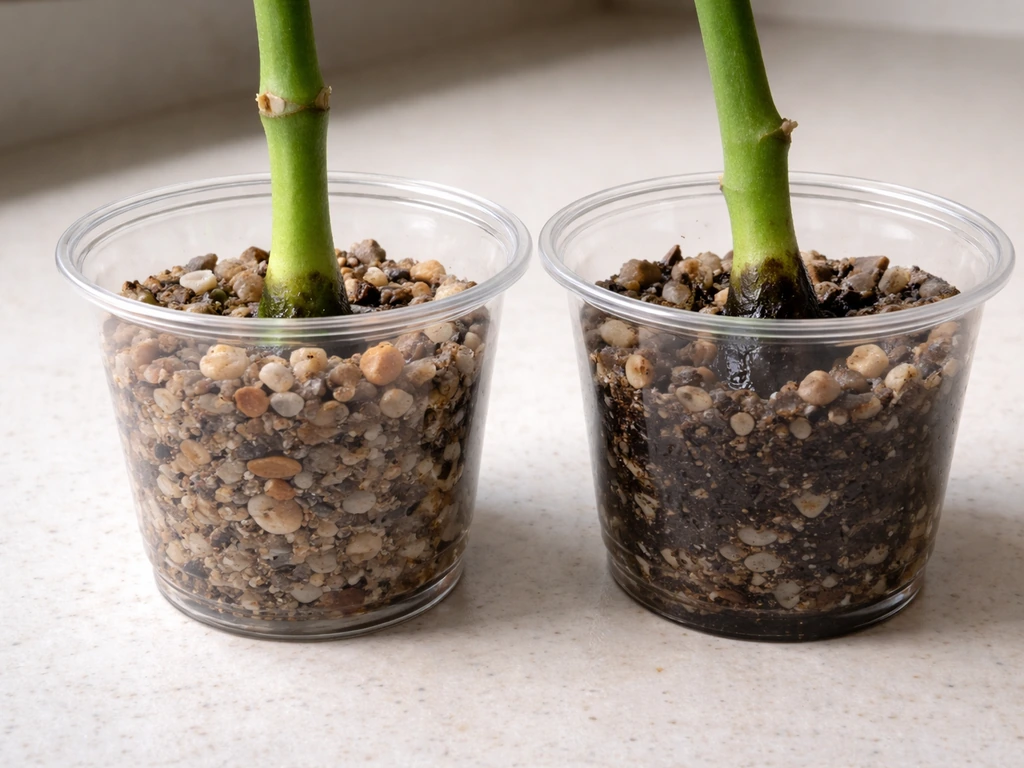
This is almost always caused by the medium being too wet or by buried leaves rotting and spreading decay. Make sure your mix drains freely and you're not overwatering. Remove any leaves that are touching or below the medium surface. If you're using a humidity dome, crack it open for 30 minutes a day to allow some airflow. If rot is persistent, drench the medium with a very dilute fungicide solution before inserting cuttings.
Cuttings wilt and don't perk back up
Some initial wilting after taking a cutting is normal, but it should recover within 24 to 48 hours under a humidity cover. If it doesn't, the cutting may be too stressed from heat or sun exposure, or it dried out before you got it into the medium. Take cuttings in the morning or evening rather than midday when it's hottest. If your cuttings came from a particularly floppy or heat-stressed parent plant, give them a different day.
No roots after 6 weeks
If you're past six weeks with no roots, the most likely culprits are: no rooting hormone was used, the medium is too cold (below 15°C/60°F slows rooting dramatically), or the cutting came from a flowering shoot rather than a vegetative one. For Dianthus caryophyllus cuttings, IBA and NAA treatments can promote rooting at 1000 mg·kg−1 IBA, while higher auxin concentrations inhibit rooting [no rooting hormone was used](https://journals. ashs. org/view/journals/hortsci/55/2/article-p170.
xml). Try again with a fresh cutting from a non-flowering shoot, use IBA rooting powder, and consider adding a heat mat under the propagation tray. In a study on carnation cultivars, IBA at 400 ppm produced superior rooting outcomes, with maximum rooting around 97. 4% compared with other IBA treatments [use IBA rooting powder](https://www.
phytojournal. com/archives/2021. v10. i1.
13455/response-of-cuttings-of-different-carnation-dianthus-caryophyllus-l-cultivars-to-rooting-hormones). Also check that your rooting medium isn't bone dry: it should feel like a wrung-out sponge, consistently damp but not wet.
Low survival when potting up rooted cuttings
Rooted cuttings that collapse after being moved to a larger pot are usually experiencing a combination of root damage during transplanting and a sudden drop in humidity. Handle rooted cuttings gently, disturb the root ball as little as possible, and keep the newly potted plant under cover or in a sheltered spot for the first week. Don't fertilize immediately after transplanting: let the plant settle for two weeks first.
Transplanting, aftercare, and when you'll see flowers
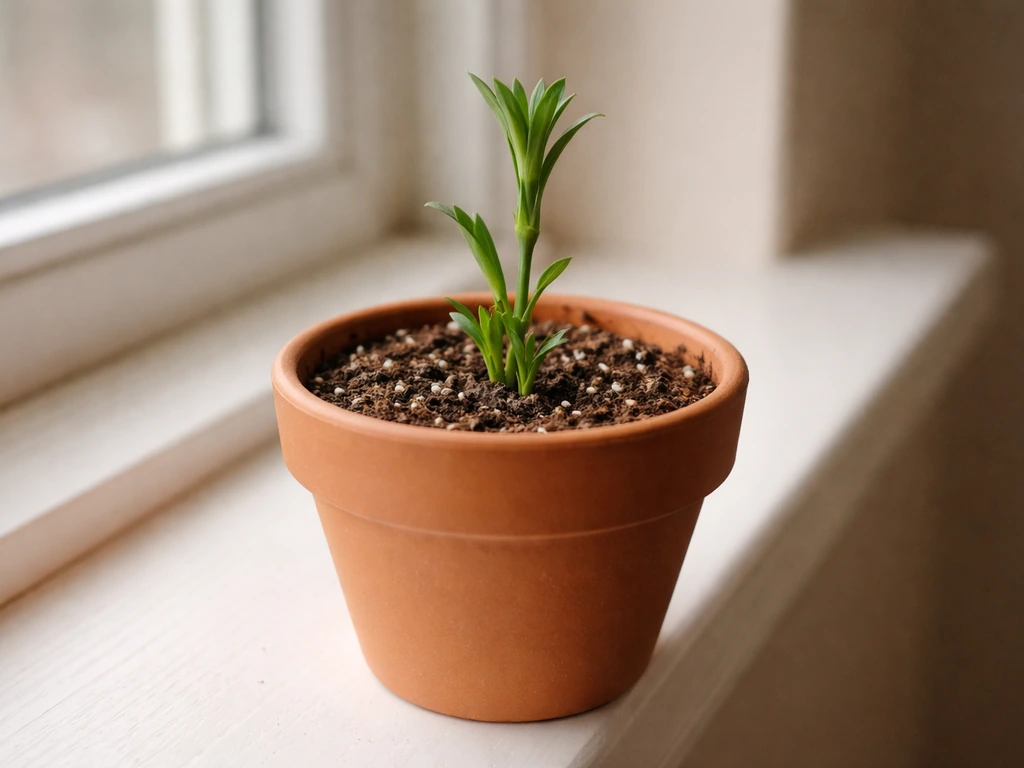
Once your cutting has rooted, which you'll confirm by a gentle tug test at around 4 to 6 weeks, it's ready to pot up into a slightly larger container with regular potting mix. These same general cutting and rooting steps can also guide you on how to grow amaryllis Ferrari from a healthy starting bulb carnation cuttings. Don't jump straight to a huge pot: a 9 to 10 cm pot is right for a freshly rooted carnation cutting. Give it a few weeks to fill that pot with roots before moving up again.
Carnations love full sun: aim for at least 6 hours of direct light per day. Once you have established roots, follow the right long-stem growing practices so your plants produce tall, straight blooms how to grow long stem carnations. If you're growing outdoors, harden off your young plants before moving them outside permanently. Hardening off means setting them outside in a sheltered, partially shaded spot for an hour or two the first day, then gradually increasing sun and time over 7 to 10 days. This prevents the shock of jumping from a sheltered indoor environment to full outdoor conditions.
For watering, carnations strongly prefer to dry out slightly between waterings. They hate sitting in soggy soil. Water thoroughly, then wait until the top 2 to 3 cm of the mix feels dry before watering again. Feed with a balanced liquid fertilizer (something like a 10-10-10 or similar) every two weeks once the plant is established and putting on new growth. If you want a broader guide, the same general stem-cutting approach can help you learn how to grow alstroemerias too.
As for when you'll see flowers: cuttings taken in late spring and rooted by mid-summer can bloom that same season, typically 100 to 110 days from the date of planting out. Cuttings taken in June right now (late June) should give you rooted plants by early August, with blooms possible in October or early November if your climate stays warm enough. If you're growing outdoors, that timing may mean cutting-grown plants flower next spring in cooler climates. When you’re ready to move carnation cuttings outdoors, follow outdoor spacing, light, and watering guidelines so they establish well and bloom how to grow carnations outdoors. Cuttings taken now and grown on indoors under decent light can still bloom this year.
Your action plan: what to do today, next week, and after
- Today: Check your carnation plant for strong, non-flowering side shoots. Gather your tools (clean scissors, rooting hormone powder, small pots, perlite, cocopeat or fine sand). Take cuttings in the cool of the morning.
- Today: Prep cuttings immediately. Strip lower leaves, make a clean node cut, dip in IBA rooting powder, and insert into your damp rooting mix. Cover with a plastic bag or dome and place in a bright, warm spot out of direct sun.
- Days 1 to 14: Mist every other day. Don't uncover the cuttings completely. Check for any signs of blackening or rot at the base. If you see it, remove that cutting immediately so it doesn't spread.
- Weeks 2 to 4: Keep the medium consistently damp. Gently check for roots at week 4 by giving a very light tug. No resistance means rooting is still in progress. Be patient.
- Week 4 to 6: Once you feel resistance when tugging, the cutting has rooted. Remove the humidity cover gradually over a few days to acclimatize. Pot up into a 9 to 10 cm pot with regular potting mix.
- Weeks 6 to 8: Harden off outdoor plants. Start a fortnightly feeding schedule. Move to a sunny spot and continue monitoring moisture. Pinch out the growing tip once the plant has 5 or 6 pairs of leaves to encourage bushier growth and more blooms.
Growing carnations from cuttings is genuinely one of the more satisfying propagation projects you can do in summer. It's low cost, it works reliably when you get the basics right, and within a couple of months you'll have proper flowering-sized plants from nothing more than a few stems. If you want to go deeper, it's worth also exploring how carnation care changes once they're outdoors full-time or looking into whether mini carnations need any different approach for propagation.
FAQ
Can you grow carnation from stem even if it has flowers or buds on it?
In most cases, carnations root best from a non-flowering, actively growing side shoot with soft, flexible growth. If the stem already has flower buds or open blooms, the plant is prioritizing reproduction, and rooting becomes unreliable. Take tip or side cuttings from green growth that is vigorous and not heat-floppy.
If I cut a carnation stem, can I keep it and root it later (instead of immediately)?
Yes, but only if you can keep the cutting alive long enough to root. For best results, take cuttings and insert them into your rooting medium the same day, or store them short term in a cool, shaded place with the stems lightly misted. Very dry, long-stored cuttings often fail even when the rooting setup is perfect.
How long should a carnation cutting be, and what parts should be removed?
Use a cutting long enough to provide buried stem and at least one growth node, commonly around 3 to 5 inches (7 to 12 cm). Make sure you remove lower leaves so they are not submerged or touching the medium, and keep the top leaves intact to maintain energy for rooting.
Should I fertilize carnation cuttings while they are rooting?
Carnation cuttings generally do not need heavy fertilization while rooting. Fertilizing too early can stress tender new growth and encourage rot if the medium stays wet. Wait until after transplanting into the next pot and the plant shows fresh growth, then feed lightly on a schedule (as described in the main guide).
What does it mean if mold or strange growth appears on my carnation cuttings?
If you see white, fluffy growth, it could be mold, especially if the medium is staying too wet or the dome is sealed too tightly. Remove affected leaves, improve drainage, crack the dome for airflow, and avoid over-misting. If rot is spreading or stems blacken, discard the most affected cuttings and adjust moisture immediately.
When is the best time to move water-rooted carnation cuttings into soil?
For soil transition, the goal is to minimize root damage and transplant shock. Move the cutting as soon as roots are about 1 to 2 cm long, keep the new mix lightly moist (not wet), and maintain higher humidity for about the first week. Avoid tugging hard to “check” too often, because damaged new roots can delay recovery.
Can too much heat prevent carnation cuttings from rooting?
Bottom heat helps, but it must stay moderate. If the medium overheats or dries out unevenly, cuttings can wilt or fail to form roots. Aim for the temperature range given in the guide (roughly 68 to 73°F, 20 to 23°C), and verify that the medium is consistently damp, like a wrung-out sponge.
Is rooting hormone required to grow carnation from a stem?
If you have no rooting hormone, you can still succeed, but your odds may drop, especially in cooler conditions or with borderline cuttings. If you are getting repeated failures, use IBA rooting powder as suggested and re-evaluate the two biggest drivers first: cutting source (non-flowering shoot) and medium moisture and temperature.
Can I move rooted carnation cuttings outdoors immediately, or do I need to harden them off?
After potting up, carnations typically need full sun once established, but you should introduce it gradually. Hardening off means partial shade first, then more direct light each day over about a week. Skipping this step can cause leaf scorch and stunted growth even if the plant rooted well.
What size pot should I use right after rooting a carnation cutting?
A pot that is too large can stay wet too long, which increases rot risk and slows healthy root development. For freshly rooted carnation cuttings, a small container size (around 9 to 10 cm as noted in the guide) is usually the right starting point, then upsize once roots fill the pot.
Next Article
How to Grow Carnations Outdoors: Beginner Guide
Learn how to grow carnations outdoors step by step: varieties, planting, watering, feeding, blooms, and frost care.