Carnations are genuinely one of the most rewarding flowers you can grow at home, whether you're starting from a packet of seeds, rooting a stem from a bouquet, or nursing a plant you picked up at the garden center. They smell incredible, they last for weeks once cut, and they bloom for months if you stay on top of them. The key is matching your starting point to the right method, because growing carnations from seed is a completely different process from coaxing roots from a florist stem. This guide covers both, plus everything in between.
How to Grow Carnations: Seeds, Cuttings, and Care at Home
Marcus Holloway
19 Apr 2026
Pick the right type of carnation first
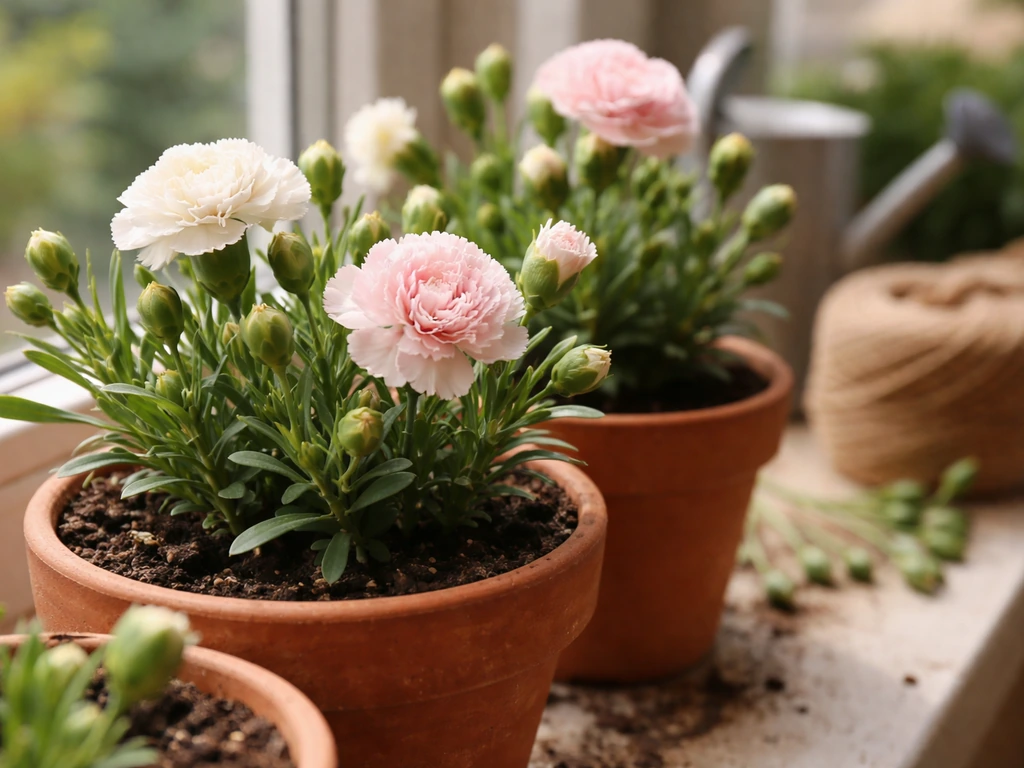
Not all carnations behave the same way in the garden, and getting clear on the type you're growing will save you a lot of confusion. The three main types you'll encounter as a home gardener are perpetual-flowering carnations, spray carnations, and border carnations.
- Perpetual-flowering carnations (Dianthus caryophyllus) are the classic long-stem florist type. They grow tall, produce one large bloom per stem, and are what most people picture when they think of a cut carnation. They're typically grown as annuals or tender perennials and need a bit more attention, but the payoff is big, fragrant blooms all season.
- Spray carnations are a branch-heavy type that produces multiple smaller blooms per stem, making them brilliant for mixed bouquets. In commercial growing they're spaced tighter, around 30 x 30 cm, because they're expected to bush out with lots of lateral growth. For home growers, they're often a little easier and more forgiving than the tall single-stem types.
- Border carnations are shorter, hardier, and better suited to outdoor garden beds in cooler climates. If you're growing entirely outdoors without protection, this is often the most practical choice.
If you want long vase-ready stems for cutting, go for a perpetual-flowering or long-stem variety. If you want a bushy, productive plant that fills a pot or border bed with lots of smaller blooms, spray carnations are your best bet. Mini carnations are a great compact option too, especially for containers. If you are specifically growing mini carnations, focus on container-friendly conditions and consistent deadheading for the best ongoing blooms. Once you know which type you're working with, the rest of this guide will make a lot more sense.
Starting from seed: timing, sowing, and what to expect
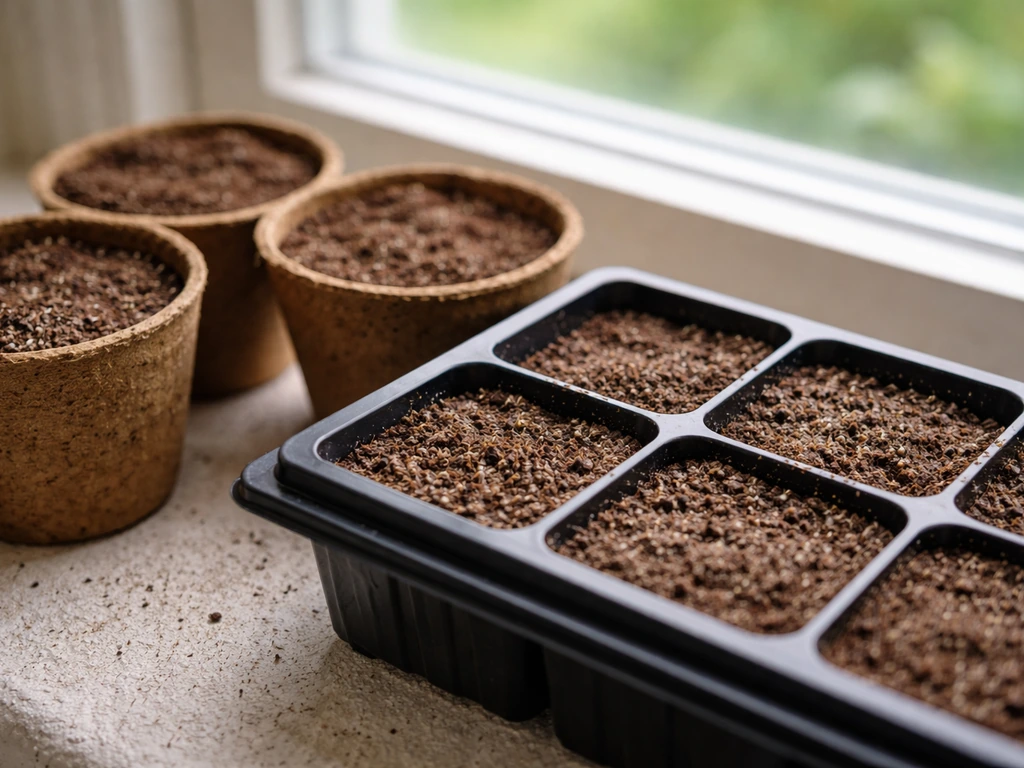
Carnations from seed take more patience than, say, cosmos or marigolds, but it's absolutely doable and much cheaper than buying plants. GrowerFacts notes that carnation seeds can be covered lightly with coarse vermiculite, and that this light covering supports the sowing process. The important thing is starting early enough indoors, because carnations need time to establish before they'll flower.
When to sow
Sow carnation seeds indoors about 8 weeks before your last expected frost date. That puts most UK and northern US gardeners in the late January to early March window. If you miss that window, you can direct-sow outdoors in early summer, but those plants are unlikely to flower much until the following year. For flowers in the same growing season, indoor sowing is the way to go.
How to sow carnation seeds
- Fill a seed tray or small pots with a fine seed-starting mix. Don't use regular garden soil, it's too dense and will slow germination.
- Scatter seeds thinly on the surface and press them lightly into the mix. Carnation seeds need light to germinate, so don't bury them under a thick layer of compost. A very light dusting of vermiculite over the top is fine.
- Water gently from below by sitting the tray in a shallow dish of water until the surface darkens, then drain. This avoids dislodging seeds.
- Keep the tray at around 70°F (21°C). A heat mat helps, especially in a cold house in January.
- Expect germination in roughly 14 to 21 days. Some sources put it at around 20 days at 70°F, which matches my experience.
- As soon as seedlings emerge, move them somewhere bright immediately. A sunny south-facing windowsill works, but a grow light on for about 16 hours a day is better. Without enough light, seedlings go leggy fast and become harder to recover.
Moving seedlings along: the early transplant step
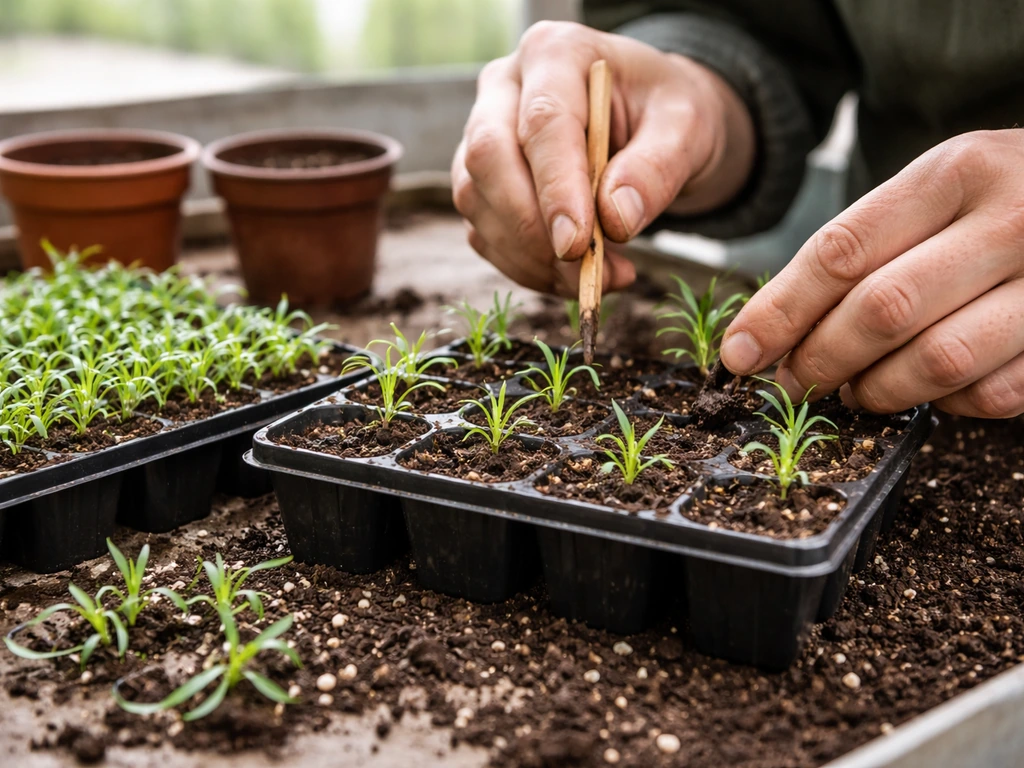
About 20 to 25 days after sowing, your seedlings should be ready to prick out and move into cell packs or individual 3 to 4 inch pots. Don't wait until they're crowded and tangled. Moving them early, while roots are small and undamaged, gives you stockier, healthier plants. Keep them in bright light and don't let the mix dry out completely, but don't waterlog them either. Harden off your seedlings for about a week before transplanting outdoors by putting them outside in a sheltered spot during the day and bringing them in at night.
Transplanting and growing on: light, soil, water, and feeding
Carnations are sun lovers. Alstroemerias have their own specific needs for planting, light, soil, and aftercare, so follow the dedicated steps for the best results how to grow alstroemerias. Full sun means at least 6 hours of direct sunlight per day, and honestly, the more the better. In shadier spots you'll get leaves but very few flowers. If you're also growing a statement bulb indoors, see our guide on how to grow amaryllis ferrari for detailed care and flowering tips. Choose your sunniest bed or the sunniest windowsill or balcony spot for containers.
Soil preparation
Carnations hate sitting in wet soil. They need something that drains freely. In a garden bed, dig in plenty of grit or sharp sand if your soil is heavy clay. Aim for a slightly alkaline to neutral pH, somewhere around 6.5 to 7.5. If your soil is very acidic, a small amount of garden lime worked in before planting helps. For containers, more on that below.
Watering
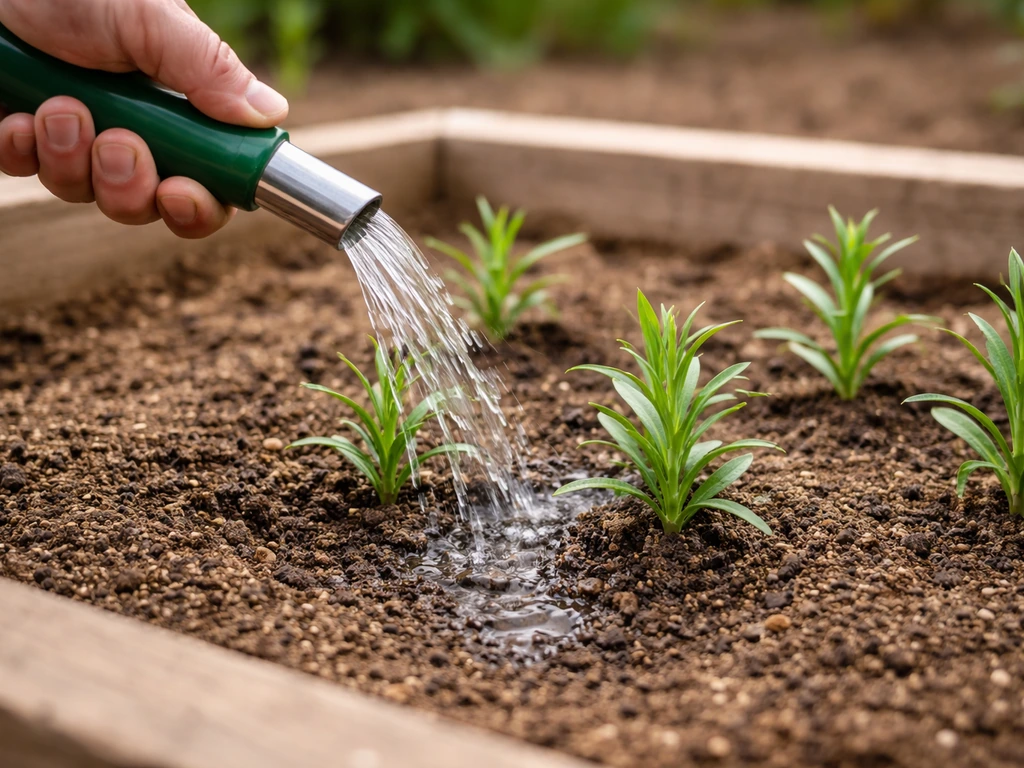
Water regularly after transplanting to help the roots settle in, then ease back to watering when the top inch or two of soil feels dry. For a similar technique in a different setup, you can also learn how to grow carnations in water so the roots stay evenly hydrated. Overwatering is one of the most common carnation mistakes. They'll tolerate a little drought far better than they'll tolerate soggy roots. In summer heat, you'll water more often. In cooler weather, far less.
Feeding
Once plants are established and showing new growth, feed with a balanced liquid fertilizer every two to three weeks during the growing season. Once flower buds start to form, switch to a fertilizer that's higher in potassium (a tomato-type feed works well) to support bloom development. Don't overfeed with nitrogen or you'll get lots of lush green growth and fewer flowers.
Growing carnations at home: containers vs. garden beds
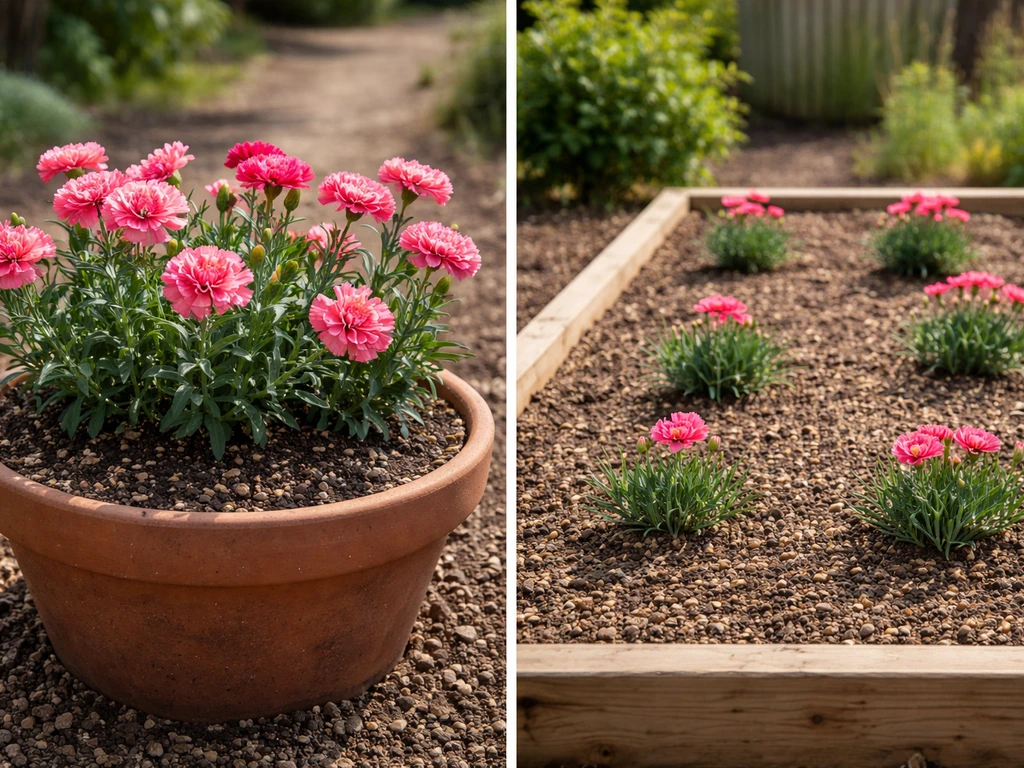
Good news: carnations genuinely do well in both containers and in-ground beds, as long as you get the basics right. Here's how the two setups compare and what each one needs.
| Factor | Garden Bed | Container |
|---|---|---|
| Drainage | Improve clay soil with grit; raised beds ideal | Use a gritty mix; drainage layer at the bottom is essential |
| Soil mix | Well-draining, slightly alkaline garden soil | Potting compost + garden soil + coarse river sand blend |
| Watering frequency | Less frequent; check soil before watering | More frequent; pots dry out faster in heat |
| Feeding | Top-dress with compost in spring; liquid feed in season | Regular liquid feeding every 2 to 3 weeks (nutrients leach out) |
| Space per plant | Spray types ~30 cm apart; standards ~45 cm | One plant per 20–25 cm pot; two or three in a larger planter |
| Winter hardiness | Border types often survive; tender types need lifting | Move pots under cover or indoors before hard frosts |
| Best for | Higher yields, perpetual and border types | Mini carnations, spray types, balconies, small spaces |
For container growing, the single most important thing is drainage. A layer of crocks, gravel, or broken pottery at the bottom of the pot before you add your mix makes a real difference. The growing medium itself should feel gritty and loose, not like dense potting soil straight from the bag. Mixing in coarse river sand or perlite at roughly a third by volume is a practical approach. Waterlogged roots in a pot are almost impossible to recover from, and carnations will tell you about it by turning yellow and collapsing fast.
In garden beds, the main advantage is stability. Plants root deeper, need less frequent watering, and the taller perpetual-flowering types have more support. If you're growing carnations outdoors with the intention of cutting long stems, a dedicated bed where you can stake them and keep the soil consistently managed is the better setup. You can find much more detail on the specific outdoor setup in a dedicated guide to growing carnations outdoors.
Growing carnations from cuttings or a bought bouquet
This is one of the most searched carnation questions, and I want to give you an honest answer: rooting carnations from florist stems is possible, but it's not always easy, and success rates from shop-bought bouquet stems are genuinely variable. Here's what affects your chances and how to give it the best shot.
Why bouquet stems are tricky
Commercial cut carnations are often treated with preservatives, stored for extended periods, and sometimes grown in conditions that reduce the viability of stem tissue for rooting. Older stems that have been in a vase for a week are much less likely to root than a fresh cutting taken directly from a growing plant. If you've bought a fresh bunch and want to try, act fast, ideally within a day or two of purchase.
How to take and prepare cuttings
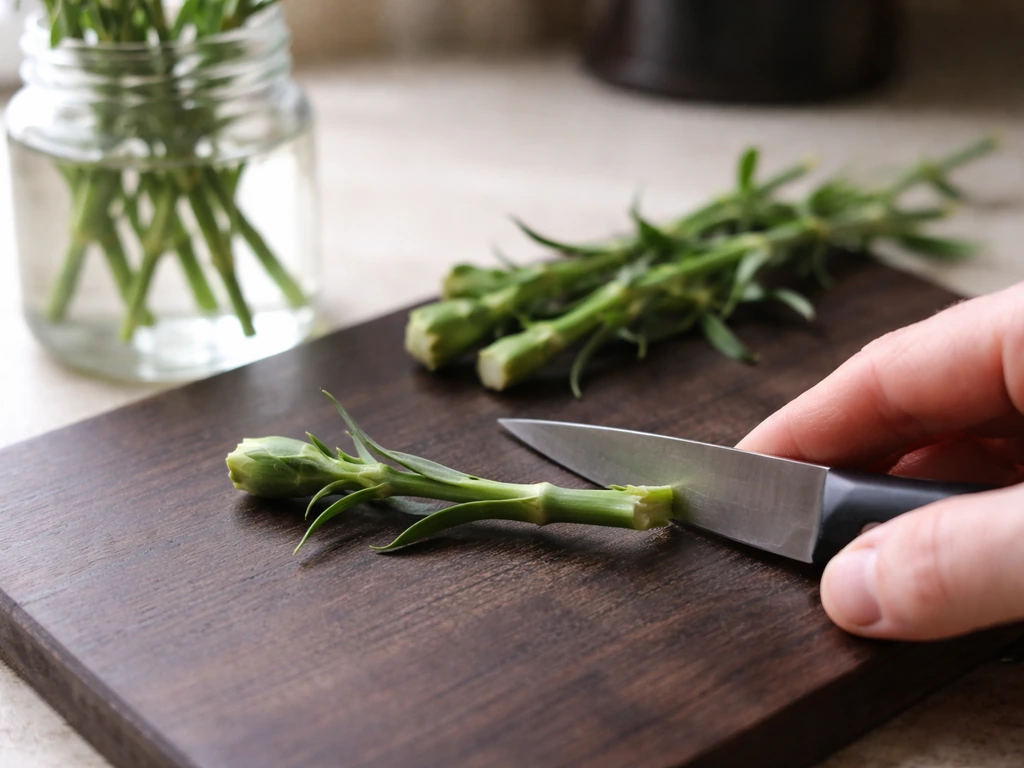
- Choose a non-flowering side shoot from a healthy plant, or a fresh stem from a bouquet that hasn't fully opened yet. Look for firm, green stems with no signs of disease.
- Cut to the right length: spray carnation cuttings should be about 7 to 10 cm long; standard/perpetual types should be 10 to 15 cm.
- Remove the lower leaves, leaving just two or three pairs at the top.
- Dip the cut end in rooting hormone powder or gel. This isn't strictly required, but it meaningfully improves success rates.
- Insert into a gritty, free-draining rooting medium, something like a 50/50 mix of perlite and coir or fine sand. Avoid rich potting compost, it encourages rot rather than root formation.
- Water lightly and cover with a clear plastic bag or propagator lid to hold humidity.
- Place somewhere bright but out of direct hot sun. Too much direct sun scorches the cutting before it can root; too little light slows root formation and increases rot risk.
- Roots typically form in around 2 to 3 weeks in warm conditions. Tug the cutting gently after two weeks: resistance means roots are forming.
Cuttings taken from your own growing carnation plants will always outperform bouquet stems. If you have an established plant, taking cuttings from it in late spring or early summer is the most reliable propagation method. When rooting cuttings at home, use clean, sterile rooting media and avoid mixes that contain fertilizer blank" rel="noopener noreferrer">clean, sterile rooting media that should not contain fertilizer. You can also grow carnations directly from stem cuttings as an alternative to seed, and it's often faster to flower.
Keeping them flowering: deadheading, pinching, staking, and dealing with problems
Deadheading and pinching
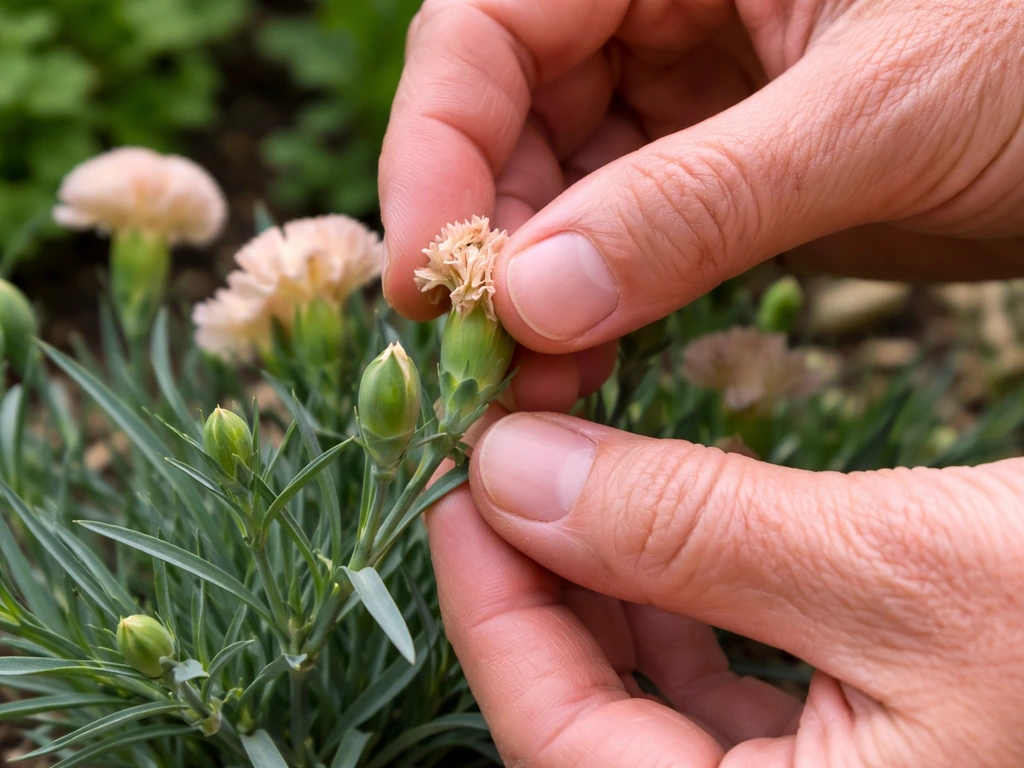
Deadheading is the single best thing you can do to keep carnations flowering from late spring all the way into fall. When you remove spent blooms, the plant redirects its energy into producing new buds rather than setting seed. Do it regularly, every few days if you can. When cutting back a stem after flowering, aim to leave about five pairs of leaves on the stem rather than cutting all the way back to the base. This gives the plant enough energy reserves to push out new growth and repeat-flower.
Pinching is slightly different from deadheading. When young plants are about 15 cm tall and have several sets of leaves, pinch out the growing tip to encourage branching. This is especially useful for spray carnation types, where you want lots of lateral shoots rather than one central stem. It delays first flowering by a couple of weeks but results in a much bushier, more productive plant overall.
Staking tall types
Perpetual-flowering and long-stem carnations grow tall and can flop badly in wind or rain. Long-stem carnations also benefit from proper staking and regular deadheading to keep their cutting stems upright and productive. Push in bamboo canes or ring supports early, before stems start to lean. Tying stems loosely to canes as they grow is far easier than trying to straighten a flopped plant after the fact. Spray carnations, being bushier and shorter, usually support themselves unless they're in a very exposed position.
Common pests and diseases
Carnations have a few recurring problems to watch for. Botrytis (gray mold) is the big one, especially in humid conditions or when plants are crowded. It shows up as fuzzy gray patches on stems and flowers. Good airflow between plants is the best prevention. Powdery mildew appears as a white powdery coating on leaves, usually in warm, dry spells with cool nights. Rust (Uromyces dianthi) causes orange-brown pustules on the underside of leaves and spreads quickly, so remove affected leaves promptly. Aphids are common on new growth; a blast of water or an insecticidal soap spray deals with them quickly. The common thread for prevention is good airflow, avoiding overhead watering, and not letting plants sit in wet soil.
Harvesting your carnations and stretching the season
Cut carnation stems in the morning when temperatures are cool, ideally just as the first one or two buds on the stem are beginning to open. Cutting too early means buds that never fully open in the vase; too late and the vase life is shorter. Use clean, sharp scissors or snips and cut at an angle to maximize water uptake. Place stems in water immediately.
For long-stem types, cut the stem as long as possible and leave at least two sets of leaves on the remaining plant so it can continue to photosynthesize and push new flowering growth. Cut flower carnations easily last two to three weeks in a vase with fresh water and the occasional trim of the stem end.
To extend the flowering season into late fall, keep deadheading consistently and consider a harder cut-back in midsummer if the plant looks tired or has slowed down. Leaving about five pairs of leaves after a midsummer cut often triggers a fresh flush of growth and a strong second wave of flowers in late summer and early fall. In very mild climates, perpetual carnations may overwinter and bloom into the following year. In colder climates, it's worth taking cuttings in late summer to keep your best varieties going, since pot-grown plants can be brought under cover while garden plants may not survive a hard freeze.
Whether you started with a seed packet, a cutting from a friend's garden, or a stem from a market bouquet, carnations reward persistence. The first bloom always feels like a small win worth celebrating, and once you get that timing and care routine dialed in, they just keep coming.
FAQ
Can I grow carnations from seed and still get blooms the same year?
Yes, but you must match your method to your conditions. If you want flowers the same year, start seeds indoors about 8 weeks before your last frost, or use rooted cuttings from an existing plant. If you direct-sow outdoors in early summer, expect most plants to focus on establishment and bloom more reliably the following year.
What size pot do I need for growing carnations in containers?
Use a roomy container because carnations resent being crowded at the root. A typical starting point is a pot at least 8 to 10 inches across (bigger for long-stem types), with drainage holes you can’t block with gravel. The gritty mix matters, but the pot size determines how quickly the medium dries and how stable the plant stays.
How do I tell whether my carnations are getting too much or too little water?
Aim for soil that drains fast but never completely dries out during establishment. Water only when the top inch or two is dry, then water thoroughly until excess drains. If you see yellowing plus a mushy base, assume overwatering and let the mix dry more between waterings.
What’s the best way to prevent botrytis and other fungal issues?
Overwatering and poor airflow are the two biggest drivers of failure. In humid areas, space plants a bit farther apart than the label suggests and avoid watering overhead. If you prune for airflow, remove any diseased leaves promptly so spores are less likely to spread through the canopy.
What fertilizer should I use, and how do I know I’m feeding too much nitrogen?
For most carnations, feed lightly and time it to flowering. Use a balanced liquid while you’re building growth, then switch to a higher-potassium feed once you see buds forming. If leaves go very dark and lush but buds stall, that’s a sign you’re overdoing nitrogen.
Why are my carnation seedlings leggy, and how can I fix it?
Seedlings usually benefit from a brighter spot than mature plants. Keep them in strong light so stems don’t stretch, and prick out at about 20 to 25 days so the roots are still delicate. Once transplanted, full sun (at least 6 hours) is what turns leaf growth into consistent blooms.
Do carnations need alkaline soil, and what if my soil is very acidic?
Carnations are happier with light-neutral to slightly alkaline soil. If your garden runs acidic, work in garden lime before planting, then retest later in the season if you can. For containers, avoid repeatedly topping up with fresh compost that keeps the mix acidic, refresh the medium periodically.
How exactly should I deadhead carnations for the best repeat flowering?
Deadheading is most effective when you remove spent blooms before they set seed. If you only cut the flower head but leave the seed pod and stem continues to mature, you’ll get less of a repeat flush. If you do a heavier cut-back after a long bloom stretch, leave about five pairs of leaves to trigger new shoots.
When should I pinch carnations, and will it delay flowering?
Pinching is mainly useful for young plants, around when they’re roughly 15 cm tall, before they’ve committed to tall central growth. It encourages branching, especially for spray types, but it can delay the first flowering by a couple of weeks. If your plant is already flowering, switch to deadheading instead of pinching.
Is rooting carnations from bouquet stems worth trying, and how do I improve my success rate?
Yes, but prioritize sanitation and freshness. Use clean, sharp snips, take cuttings from healthy growth on your own plant when possible, and act quickly if you’re trying bouquet stems. Expect older or preservative-treated stems to root poorly, even if you follow the right technique.
What’s the best time to cut carnation stems for a vase, and how can I make them last longer?
Use morning cuts and keep leaves off the part submerged in water. Change the water regularly and trim the end a little every few days so the stem stays able to uptake water. Cutting just as the first buds begin to open generally gives the longest vase life, compared with cutting fully tight or fully open blooms.
How do I extend carnation blooms into late fall, especially if my plants slow down?
If the plant looks tired mid-season, a harder cut-back can restart flowering, but do it thoughtfully. Leave around five pairs of leaves after the cut so the plant has enough energy to push a new flush. In colder climates, schedule a plan for overwintering by taking cuttings late summer from your best performers.
Next Article
How to Grow Marigold From Stem Cutting: Step-by-Step
Learn how to grow marigold from stem cuttings, root in water or soil, avoid rot and mold, and transplant to flower.