Papaver poppies are genuinely one of the easiest flowers you can grow from seed, but they have a few quirks that trip up a lot of beginners. If you want a step-by-step roadmap, use this guide on how to grow poppies from seed to help you nail timing, sowing depth, and early care. Get the timing right, sow the seed correctly (most need to sit on or very near the surface, not buried), and give them cool conditions to start, do those three things and you'll have flowers. Skip one of them and you'll be staring at bare soil wondering what went wrong. Here's exactly how to do it.
Papaver How to Grow From Seed: Step by Step Guide
Marcus Holloway
10 Jun 2026
Choose the right Papaver type and variety
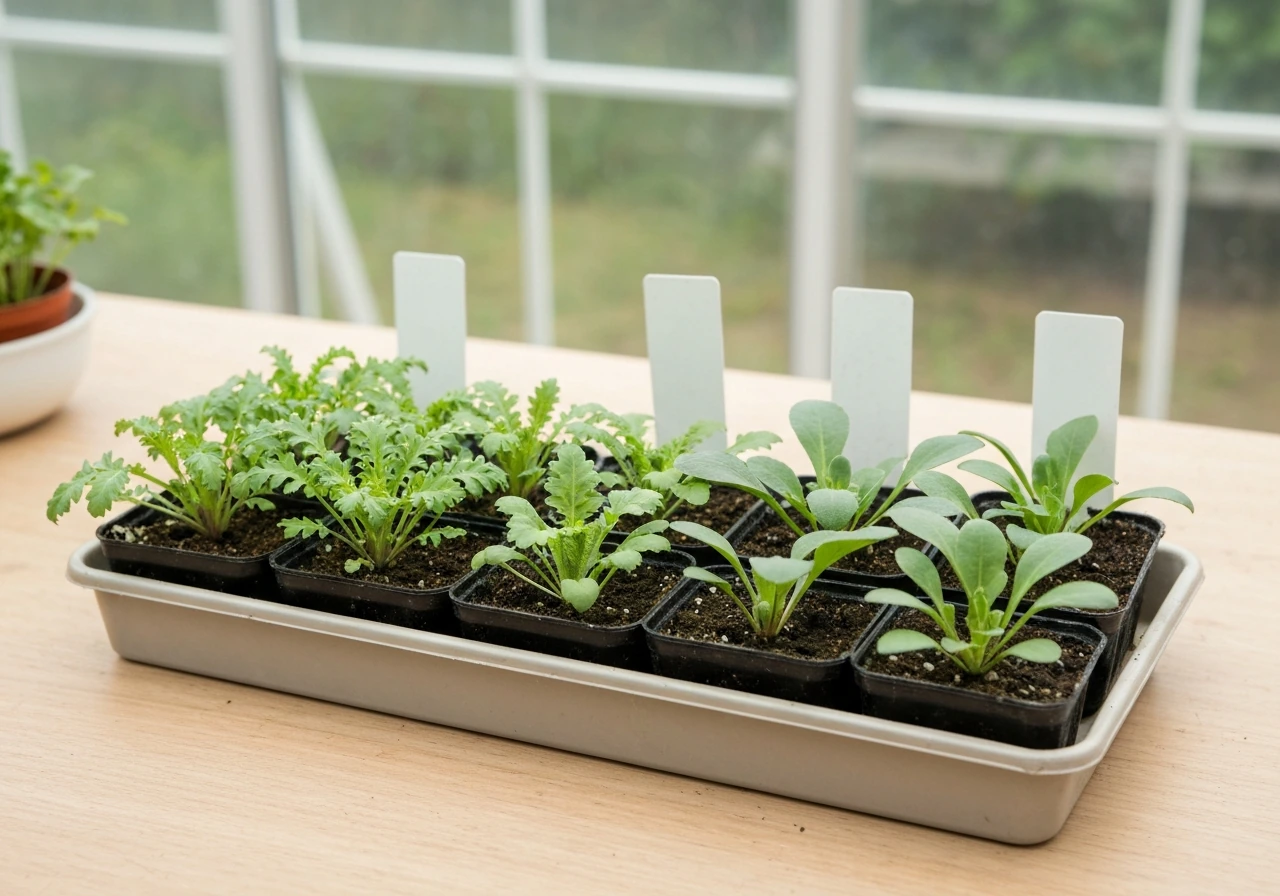
The genus Papaver covers dozens of species, but for home gardeners growing from seed, three types come up again and again: Papaver rhoeas (the corn or Flanders poppy), Papaver nudicaule (Iceland poppy), and Papaver orientale (Oriental poppy). They look related, but they behave quite differently, so picking the right one for your goals matters before you buy a single seed packet.
| Type | Lifecycle | Best for | Difficulty |
|---|---|---|---|
| Papaver rhoeas (Corn poppy) | Annual | Cutting garden, wildflower meadow, mass colour | Easy |
| Papaver nudicaule (Iceland poppy) | Short-lived perennial/biennial | Cool-season cutting garden, containers | Easy to moderate |
| Papaver orientale (Oriental poppy) | Perennial | Border focal point, long-term planting | Moderate (slow to establish) |
Papaver rhoeas is the classic red field poppy, fast, prolific, and a heavy self-seeder. It's the one most beginners picture when they say 'poppy.' Varieties like 'Mother of Pearl,' the Shirley Series, and the dramatic black-centered 'Lauren's Grape' are all rhoeas types. If you want armfuls of cut flowers this summer with very little fuss, this is your starting point.
Iceland poppies (P. nudicaule) are showier per flower, with papery, tissue-like petals in soft oranges, pinks, yellows, and white. They're technically short-lived perennials but are usually treated as cool-season annuals in most climates because they hate summer heat. They're outstanding cut flowers. The 'Champagne Bubbles' and 'Meadow Pastels' series are reliable choices for beginners.
Oriental poppies (P. orientale) are the big, bold perennials, the ones with dinner-plate blooms in June. They're tougher to grow from seed because they're slow and they hate being moved once established, but the payoff is a planting that comes back every year and gets better with age. If you're interested in giant-flowered types, that's a whole category worth exploring on its own. If you specifically want giant poppies, the key is still timing and surface sowing, but it helps to follow a giant poppies how to grow guide for the best approach giant-flowered types.
For most beginners, I'd start with P. rhoeas or P. nudicaule. They reward you faster, they're more forgiving, and they'll give you the confidence to tackle more demanding types later.
Best timing and site conditions for Papaver
When to sow
Timing is probably the single most important variable with poppies, and the rule is simple: sow cool. Papaver rhoeas should go in the ground as soon as the soil can be worked in early spring, even if there's still a risk of frost. It germinates best at 60–75°F (16–24°C) and actively dislikes germinating in warm soil. In mild climates, an autumn sow works brilliantly too, letting seeds overwinter and shoot up the moment conditions are right. Iceland poppies follow similar logic: early spring, fall, or even winter sowing works; summer is the one time to avoid. Oriental poppies benefit from 6–9 weeks of cold exposure to break dormancy, so late autumn direct sowing or a cold stratification period for indoor-started seed is worth building into your plan. If you're trying to nail timing and cold requirements, also follow our guide on how to grow oriental poppies for the exact dormancy-breaking steps cold stratification period.
Sun, soil, and drainage
All Papaver types want full sun, at least 6 hours a day, ideally more. Oriental poppies will tolerate part shade, but flowering is reduced. Soil should be reasonably fertile but well-draining; poppies sitting in waterlogged ground will struggle and are much more vulnerable to root rot. They're not fussy about soil type, they'll grow in average garden soil, slightly sandy loam, or even poor ground, as long as drainage is good. Aim for a soil pH of around 6.5 to 7.5 for Oriental poppies; the annual types are similarly unfussy. Work in a little compost before sowing but don't overdo rich amendments, very fertile soil encourages leafy growth at the expense of flowers.
How to sow Papaver seeds (indoor vs direct)
Direct sowing: the preferred method
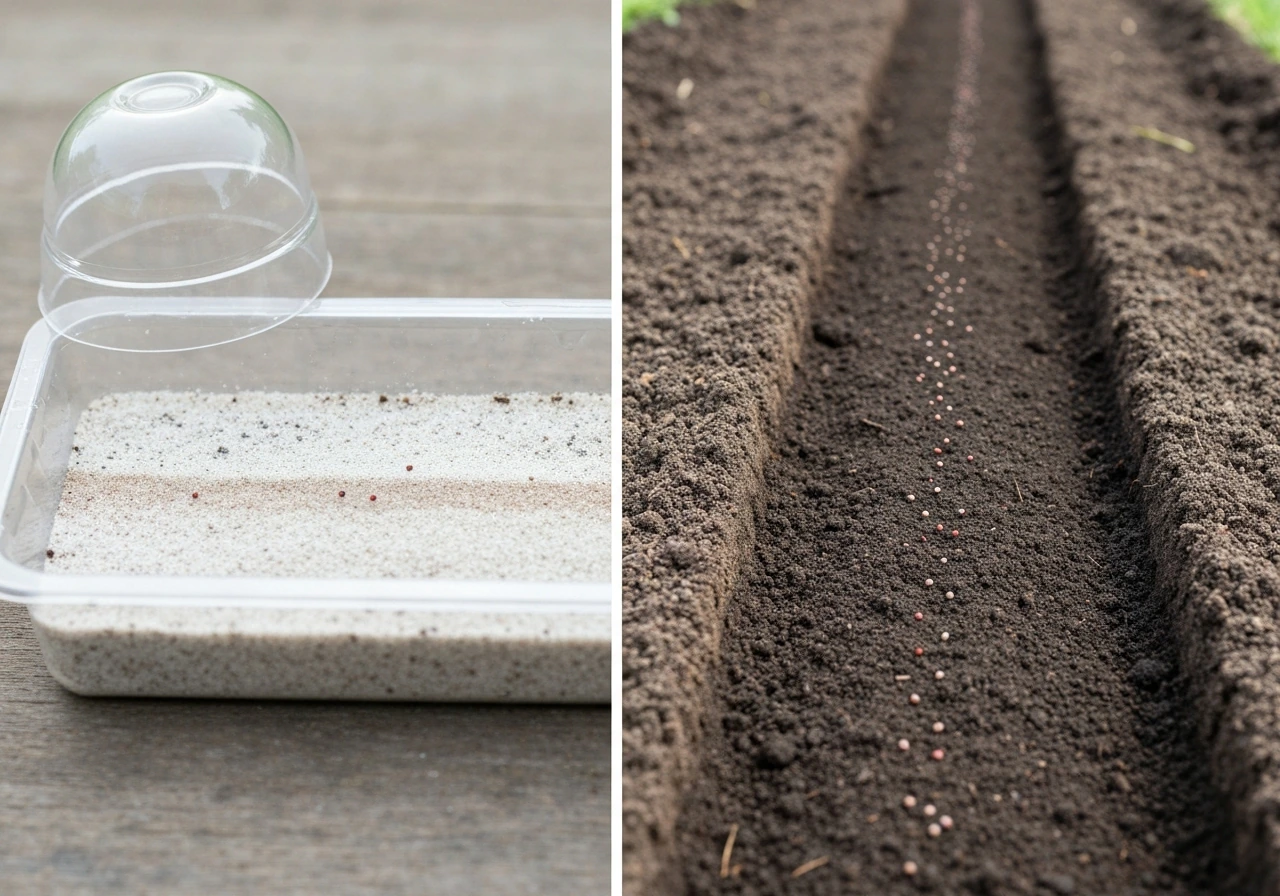
Direct sowing is genuinely the best way to grow almost all Papaver types. Poppies develop a taproot early, and disturbing it during transplanting, even carefully, sets them back badly. Johnny's Seeds explicitly lists transplanting as 'not recommended' for both P. rhoeas and P. nudicaule, and Oriental poppies share the same sensitivity. Wherever possible, sow where the plants are going to grow and leave them there.
Here's the sowing depth question that trips up a lot of people: different Papaver species have different light requirements for germination, and that changes how you sow them.
| Species | Sowing depth / method | Light requirement for germination |
|---|---|---|
| P. rhoeas (Corn poppy) | Cover with approx. 1/4 inch (6mm) of soil | Requires darkness — do cover |
| P. nudicaule (Iceland poppy) | Press onto surface; do not cover | Requires light — do not cover |
| P. orientale (Oriental poppy) | Do not bury; press onto surface or cover very lightly | Needs light — barely cover or leave on surface |
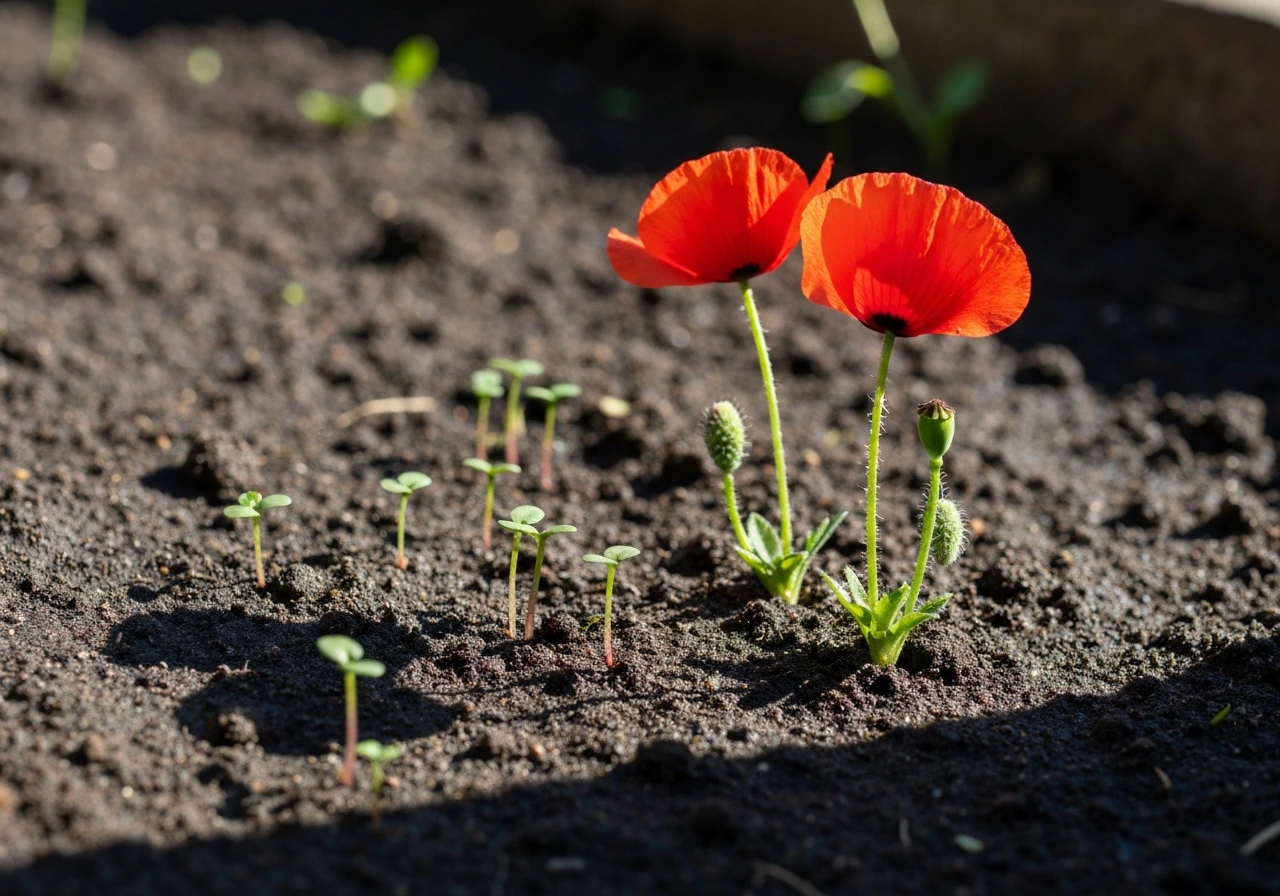
For P. rhoeas, prepare a fine seedbed, scatter the seed thinly, and rake lightly so seeds are covered by about 1/4 inch of soil. Rows should be spaced 12 to 24 inches apart if you're being orderly; for a wilder, meadow look, scatter broadcast-style. For Iceland and Oriental poppies, simply press the seed firmly onto a moist, raked surface and don't cover. Firm contact with the soil is more important than depth. Water gently with a fine rose so you don't wash the seeds away. After sowing, follow the rest of the corn poppy care steps so you get reliable germination and flowering how to grow papaver rhoeas.
Starting indoors: when it makes sense and how to do it safely
Even though direct sowing is preferred, indoor starting can make sense for Iceland poppies if you want an early display or need to start in late winter before outdoor conditions allow. The key is to sow into individual cells or small biodegradable pots so you can transplant the entire root ball without disturbing the taproot. Use a sterile, soilless seed-starting mix, this is non-negotiable for preventing damping-off. Press Iceland poppy seed onto the surface of the moist mix without covering. Provide moderate light (a south-facing window or grow light at around 1,500–3,000 foot-candles works well). Keep temperatures in the 60–75°F range. Transplant outdoors as early as possible, while plants are still small, to minimise root disturbance.
One practical trick: mix tiny poppy seeds with a small amount of dry sand before sowing. It helps you see where you've already sown and distributes the seed much more evenly, which saves thinning work later.
Germination, thinning, and early-care checklist
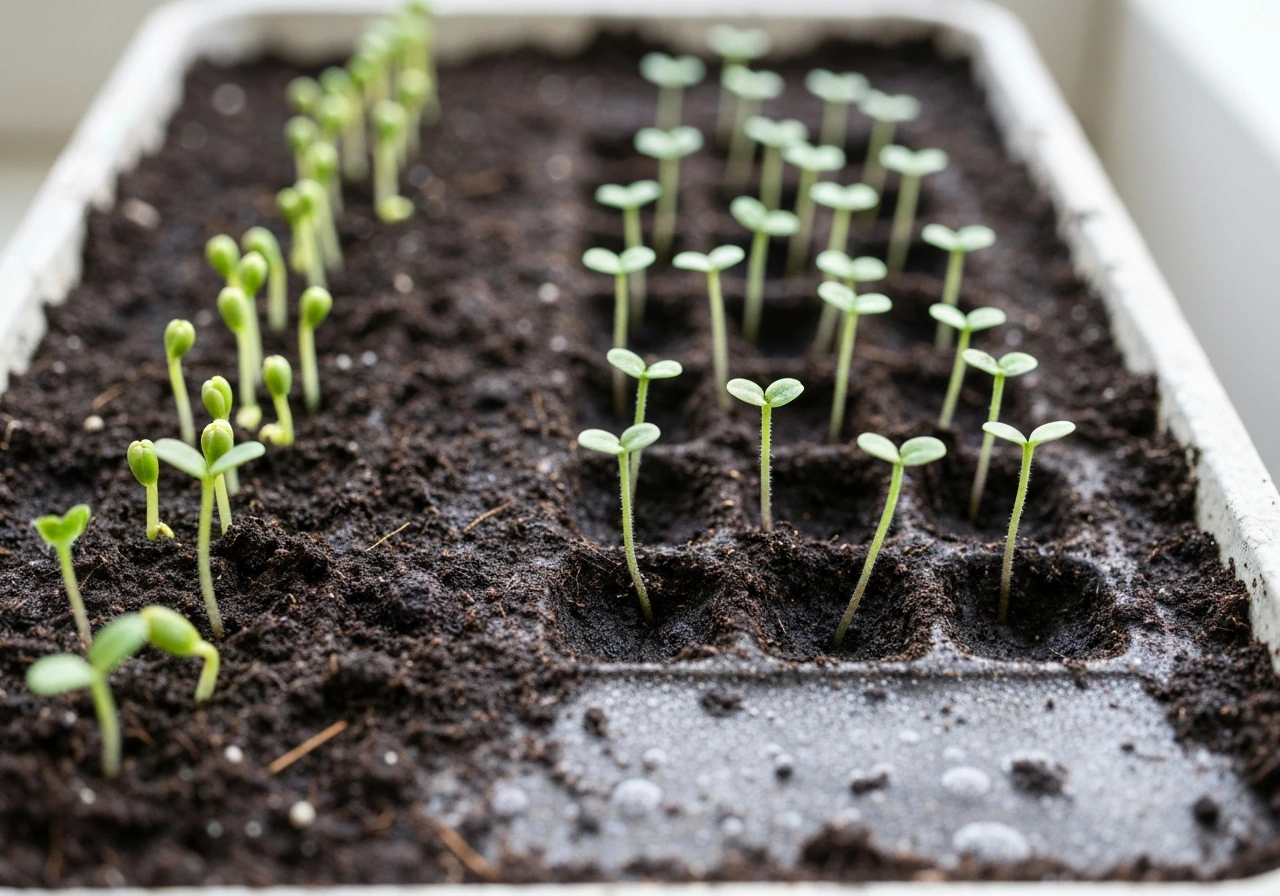
Papaver rhoeas typically germinates in 14–21 days at the right temperature. Iceland poppies take around 18 days. Oriental poppies are slower, expect 3–4 weeks, sometimes longer. Be patient. If the soil is too warm or too cold, germination stalls. Don't give up after two weeks and resow over the top; give it the full three to four weeks before deciding something's gone wrong.
Once seedlings are up, keep them from getting overcrowded. Crowded seedlings compete for light and airflow, which raises damping-off risk and produces weak plants. Thin P. rhoeas seedlings to 6–12 inches apart when they're about an inch tall. Iceland poppies can be thinned to 6–9 inches. Oriental poppies, because they're perennials that spread over time, can be given 18–24 inches of space.
Damping-off is the main threat to young seedlings, it's a fungal condition where seedlings collapse and rot at the base, seemingly overnight. Seedlings affected by damping-off can die, so prevention is the most important approach, as emphasized in the University of Wisconsin-Madison Extension fact sheet blank" rel="noopener noreferrer">damping-off will die. It's caused by keeping the growing medium too wet and is much easier to prevent than to cure. Damping-off is easier to prevent than to cure, and USU Extension emphasizes prevention as the key strategy. The main prevention strategies are:
- Use only sterile, soilless seed-starting mix for indoor sowing — never garden soil straight from the bed
- Water from below when possible (set pots in a tray of water and let them absorb it, then remove)
- Don't let seedlings sit in standing water
- Ensure good air circulation — don't pack seedlings tightly together under a cover
- If germination doesn't happen and you suspect damping-off killed seeds before emergence, the cause is usually a combination of moisture and pathogens in non-sterile media
For indoor seedlings, avoid leaving them in seed flats too long once they've germinated. Seedlings that outgrow their container before going outside become leggy and stressed. Move them to individual cells as soon as they have two true leaves, and get them outside into cooler conditions as quickly as conditions allow.
Watering, feeding, and weed control as they grow
Watering
Young poppy seedlings need consistent moisture while they're establishing, but once plants are a few inches tall and actively growing, they become quite drought-tolerant. Water deeply but infrequently rather than giving a little every day. Oriental poppies in particular do not handle overwatering, soggy roots are a faster way to lose them than drought is. The general rule: water when the top inch of soil is dry, and always aim at the base of the plant rather than overhead.
Feeding
Poppies grown in average garden soil rarely need feeding. They're not heavy feeders, and too much nitrogen pushes leafy, floppy growth at the expense of flowers. If your soil is genuinely poor, a single application of a balanced granular fertiliser worked in before sowing is plenty. Avoid high-nitrogen feeds once plants are growing. For Iceland poppies grown as a cool-season cut flower crop (particularly in containers or very depleted soil), a light liquid feed every few weeks during active growth can help sustain flowering.
Weed control
Keeping on top of weeds early is important because young poppy seedlings are easy to miss in a weedy bed. Hand-weed carefully around seedlings rather than hoeing, which can disturb shallow roots and damage emerging plants. Once plants are 4–6 inches tall and filling in, they'll shade out most weeds on their own. A thin layer of mulch around (but not touching) established plants helps suppress weeds and retain moisture without smothering the crowns.
Support, pest/disease watch, and troubleshooting
Do poppies need staking?
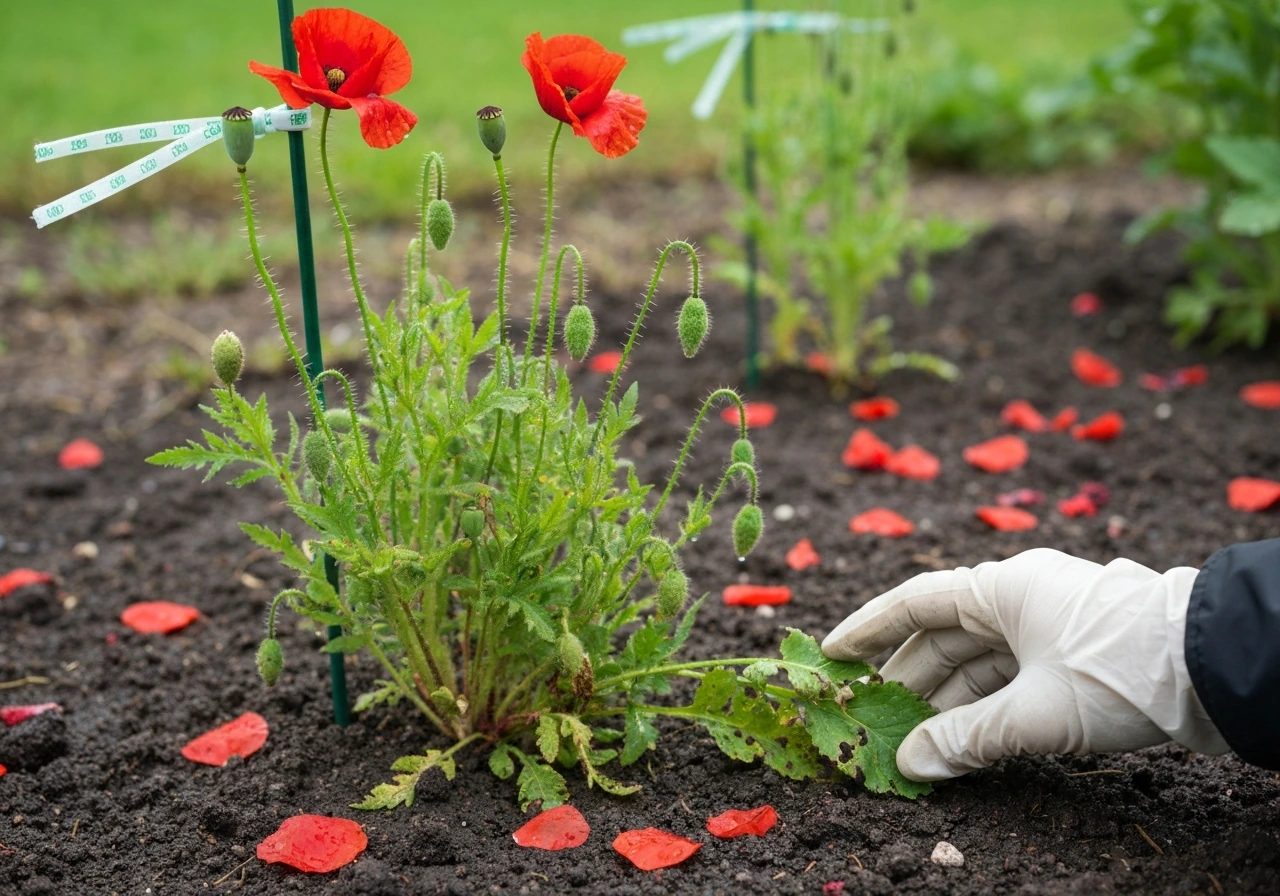
Most Papaver types have naturally strong stems and don't need staking. Taller varieties of P. rhoeas and large-flowered Oriental poppies can get top-heavy, especially after rain. If you're growing in a windy spot, loose ring supports or twiggy pea sticks placed around clumps when plants are about 6 inches tall will do the job without looking obtrusive.
Pests and diseases to watch for
Poppies are relatively trouble-free, which is one of the reasons they're so beginner-friendly. The main things to keep an eye on:
- Aphids: these cluster on new growth and stems in spring. A strong jet of water knocks most off; severe infestations can be treated with insecticidal soap
- Downy mildew: a grey-white coating on leaves, usually in cool, damp conditions with poor airflow. Thin overcrowded plants and avoid overhead watering
- Root rot: almost always caused by overwatering or poor drainage — Oriental poppies are especially susceptible
- Damping-off in seedlings: covered in the early-care section above; prevention through sterile media and good airflow is your best tool
Common problems and what's actually causing them
| Problem | Likely cause | Fix |
|---|---|---|
| No germination after 3+ weeks | Soil too warm, seed buried too deep (for light-requiring types), or seed too old | Resow in cooler conditions; check correct sowing depth for species |
| Seedlings collapse at soil level | Damping-off (fungal) | Improve airflow, reduce watering, use sterile mix next time |
| Leggy, stretched seedlings indoors | Not enough light, or seedlings left in flats too long | Move closer to light source; pot on or transplant sooner |
| Sparse or no flowers | Sown too late (warm soil), overfed with nitrogen, or plants too crowded | Sow earlier next year; avoid high-nitrogen feed; thin properly |
| Plants established but then die suddenly | Overwatering/root rot, especially in heavy soil | Improve drainage before next sowing; reduce watering frequency |
Harvesting flowers and managing self-seeding/finishing the season
Cutting poppies for the vase
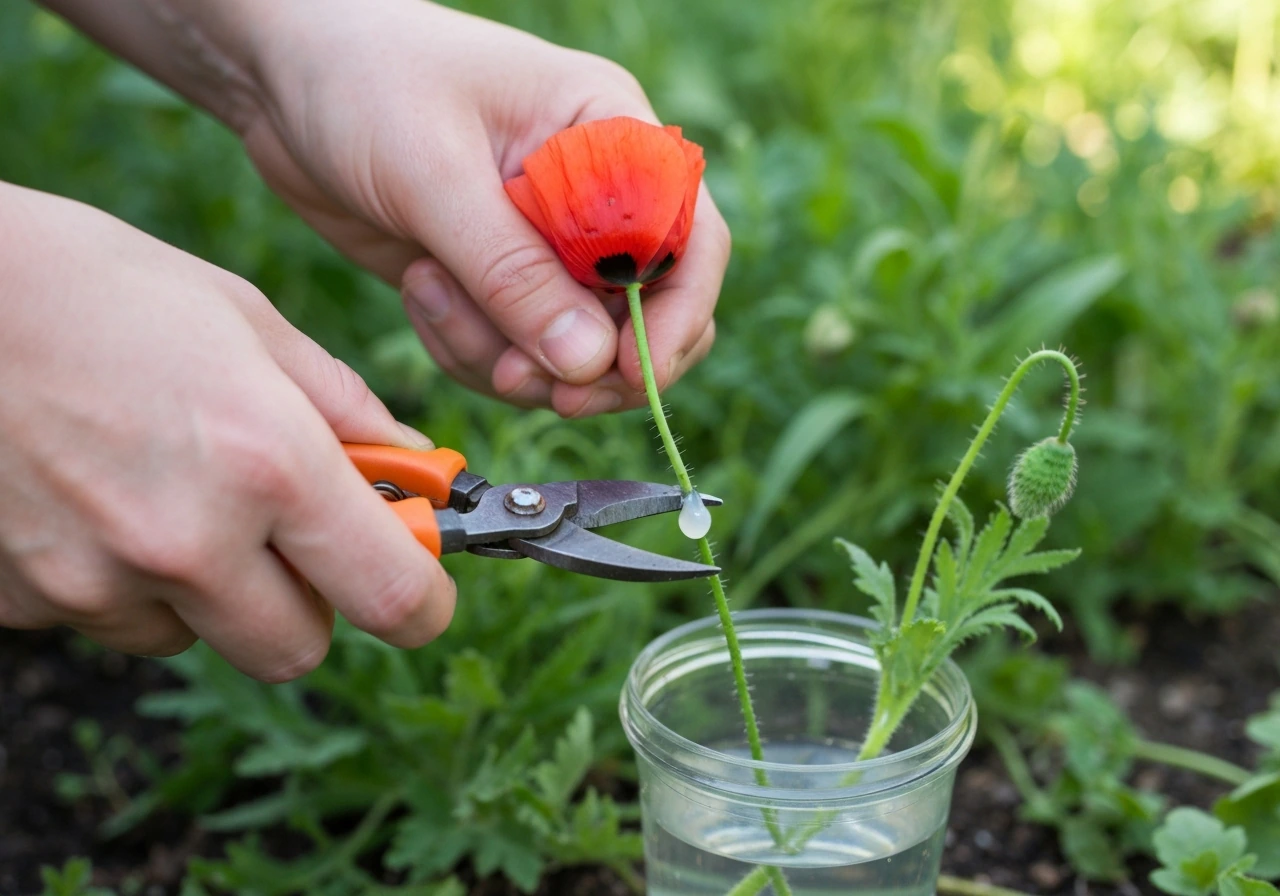
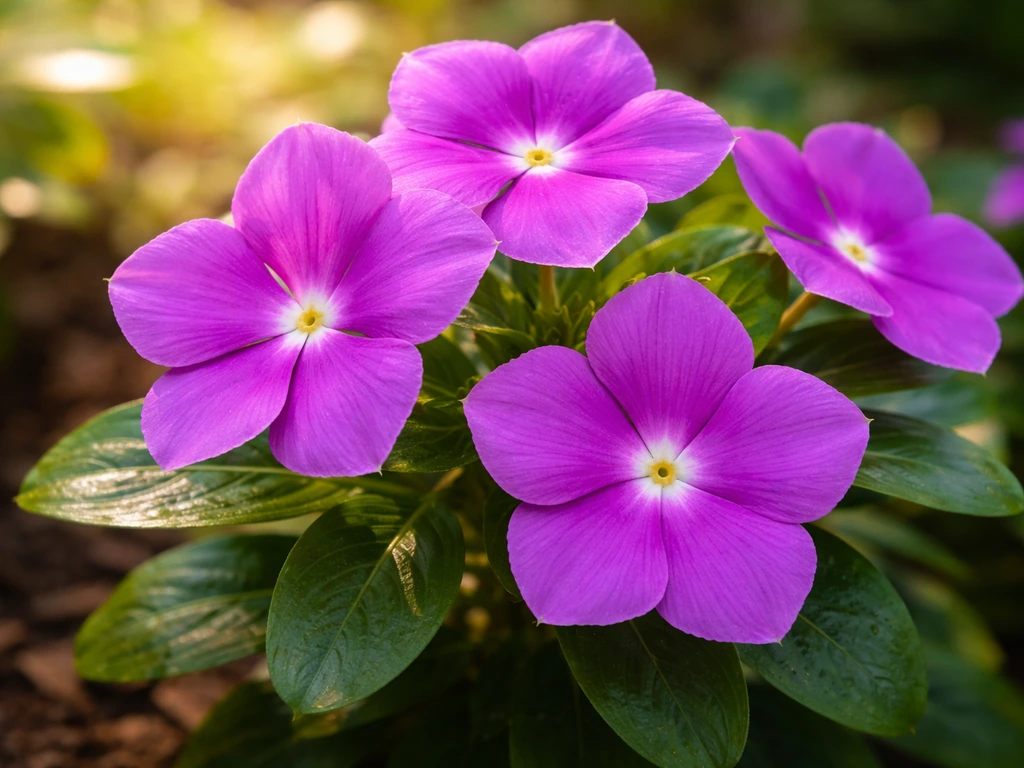
Poppies are excellent cut flowers, but their stems bleed a milky sap that shortens vase life dramatically if you don't condition them correctly. The trick is to cut stems when the buds are just beginning to crack open, not in full bloom, and immediately sear the freshly cut stem end in boiling water for 10–20 seconds. This seals the cut and stops sap loss. If you are also trying Madagascar periwinkle, learn how to grow it by starting from warm weather and using well-draining soil This seals the cut. Done properly, poppy blooms can last up to five days in a vase. Iceland poppies are particularly good for cutting and respond very well to this method. Regular cutting also encourages more blooms on P. rhoeas and Iceland poppies, so don't hold back.
Deadheading vs letting them self-seed
This is a choice worth thinking through before the season ends. If you deadhead spent flowers on P. rhoeas before the seed pods ripen, plants put energy into producing more blooms and the bed stays tidy. But if you leave some pods to mature and split, you'll get a colony of self-seeded plants the following year that come back reliably without any effort from you. P. rhoeas builds up a long-lived seed bank in the soil, seeds can lie dormant for years and germinate when the soil is disturbed, which is exactly why ploughed fields in wartime produced such vivid poppy blooms.
For Iceland poppies, allow at least a few seed heads to ripen if you want plants to return. They're not as aggressive self-seeders as P. rhoeas, so it pays to be intentional about leaving some heads in place rather than deadheading everything.
Collecting seed and finishing the bed
If you want to save seed, wait until the seed pods turn papery and brown, then snip them off into a paper bag and leave them to dry further in a warm, airy spot indoors for a couple of weeks. Store dry seed in a labelled envelope in a cool, dark place. Note that seed maturation can take up to five months from flowering on some types, so plan your sowing timeline accordingly, early sowing isn't just about getting flowers faster, it's also about having time to save mature seed before your first frost cuts the season short.
Once annual poppies finish flowering and the plants start looking ragged, pull them out and compost them. For Oriental poppies, the foliage dies back in summer after flowering, this is completely normal and not a sign of disease. Leave the crowns in place; they'll reshoot in autumn. Marking the spot (a small cane works) prevents you accidentally digging into a dormant clump while planting something else in the gap.
The best thing about growing Papaver is how quickly confidence builds. Nail P. rhoeas or an Iceland poppy this season and you'll find yourself naturally curious about the deeper rabbit hole, from the black-petaled novelties in the rhoeas family to the big perennial orientale types that will outlast you in the garden. To grow black swan poppy successfully, choose the right Papaver variety and follow the same cool-sowing and surface-sowing basics outlined above black-petaled novelties. Start with one type, get it right, and go from there.
FAQ
How do I know whether my papaver seed should be covered or left on the surface?
Use the species rule from the guide: corn poppy (Papaver rhoeas) is lightly raked in (about 1/4 inch), while Iceland (P. nudicaule) and Oriental (P. orientale) should be pressed to the surface. If you are unsure, err on the side of leaving surface types uncovered, because burying can dramatically reduce germination for those.
My poppy seeds sprouted but never took off. What should I check first?
Most often the soil is either too warm during germination or too wet after sprouting. Keep the early conditions cool, then shift to watering only when the top inch dries, and thin promptly so seedlings have airflow and space.
Can I grow Papaver in pots on a balcony or patio?
Yes, especially Iceland and annual types, as long as the pot drains freely. Use well-draining potting mix, avoid rich fertilizer, and water carefully (containers dry faster but overwatering is still a common failure). For Oriental, be more cautious because they dislike being disturbed.
What if my soil is heavy clay or stays wet after rain?
Improve drainage before sowing. Work in coarse grit or build raised beds so water moves through quickly, because soggy conditions raise damping-off risk for seedlings and root rot risk for established plants, especially Orientals.
Do poppies need fertilizer to flower well?
Usually no. Too much nitrogen encourages leafy growth and fewer blooms. If your soil is very poor, apply a modest balanced feed before sowing, then avoid high-nitrogen products once plants start growing.
How do I prevent damping-off if I start indoors?
Don’t keep seedlings sitting in a wet, stale environment. Use sterile soilless mix, keep temperatures in the mid 60s to mid 70s, and avoid leaving them in seed flats once they germinate. Move into individual cells after they develop two true leaves and get them outdoors as soon as conditions allow.
Is thinning really necessary for papavers, or can I just let them grow crowded?
Thinning is important. Crowding reduces airflow and light, which increases damping-off risk and produces weak plants. Thin according to the spacing targets in the guide so seedlings can develop strong stems.
How often should I water once seedlings are established?
Shift from frequent moisture to drought-tolerant watering. Water deeply but infrequently, when the top inch of soil is dry, and aim at the base. Overhead watering and daily misting often lead to problems.
My Oriental poppies are slow. How long is normal before I assume failure?
Expect a longer window than annuals. Oriental germination often takes 3 to 4 weeks or more, sometimes longer. If temperatures were off, germination may stall, so do not resow immediately and wait for the full window before concluding the seeds failed.
Can I transplant papavers if I change my mind about where to plant them?
It’s strongly discouraged for most Papaver types because the early taproot gets damaged easily. If you start Iceland indoors, transplant very early and move the entire root ball from small biodegradable containers when possible, and avoid shifting Orientals at all after they establish.
Why do my cut poppy stems bleed, and what is the best way to condition them?
The milky sap continues to flow after cutting, which shortens vase life unless you seal the cut. Cut when buds are beginning to crack open, then boil the fresh stem ends briefly (10 to 20 seconds) and place immediately. This is especially helpful for Iceland poppies.
Should I deadhead papaver to get more flowers, or leave pods for self-seeding?
For corn poppy (P. rhoeas), you can deadhead before pods ripen to encourage more blooms, or intentionally leave some pods to build a seed bank. For Iceland, leaving some seed heads can encourage return, but it is not as aggressive as rhoeas, so be selective.
How do I save Papaver seed and avoid losing it before it matures?
Harvest only when pods are dry and papery, then dry them further indoors in a warm, airy spot for a couple of weeks. Store fully dry seed in a labeled envelope in a cool, dark place, and plan for long maturation times (up to about five months from flowering on some types).
What should I do with Oriental poppy foliage after it dies back in summer?
Do not treat it as a disease. The foliage dieback after flowering is normal, leave the crowns in place so they reshoot in autumn, and mark the location so you don’t accidentally disturb dormant clumps while gardening nearby.
Next Article
Madagascar Periwinkle How to Grow: Step-by-Step Guide
Step-by-step guide to grow Madagascar periwinkle from seed, plus ideal climate, planting tips, and troubleshooting for b