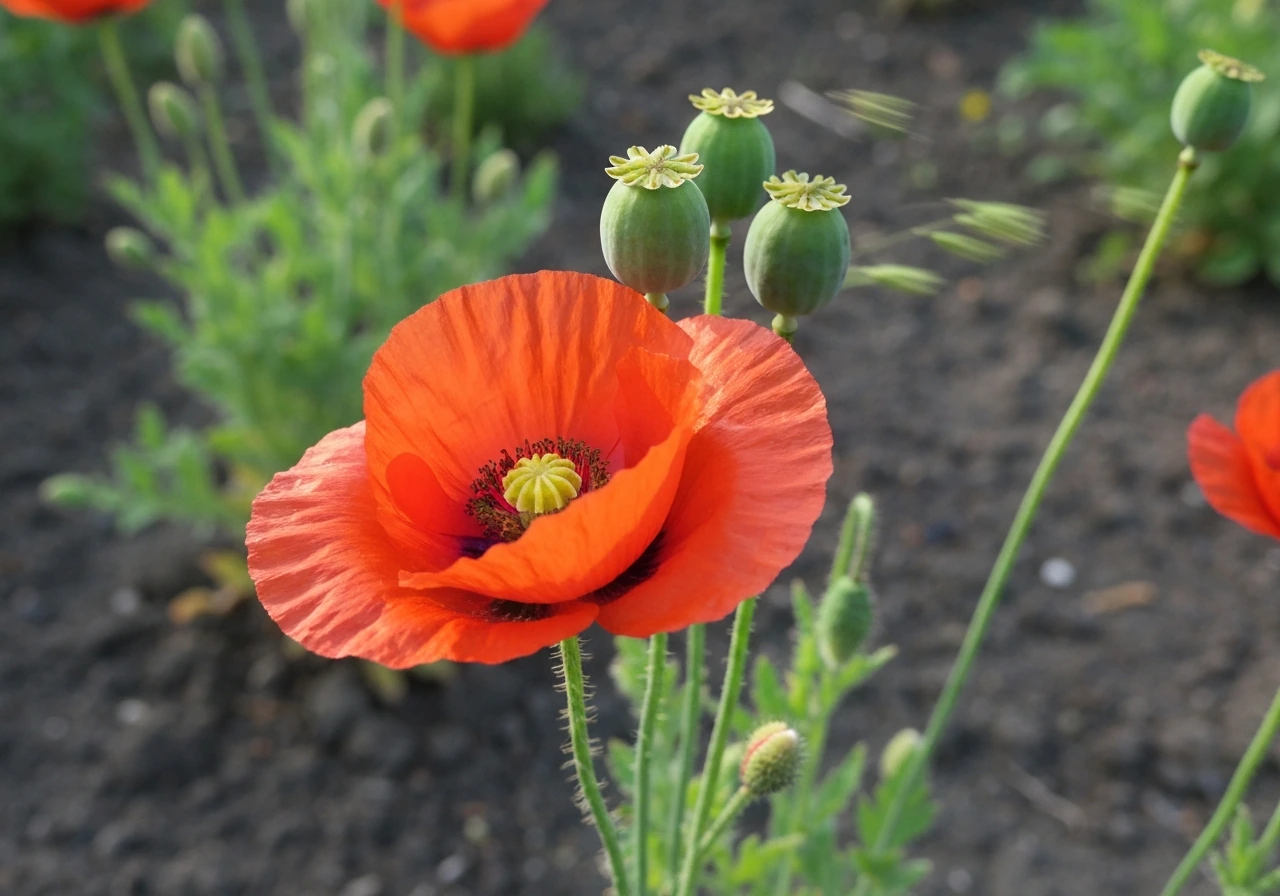
Black Swan poppy (Papaver somniferum 'Black Swan') blank" rel="noopener noreferrer">is a tall, dramatic annual that grows 28 to 32 inches high and produces deeply fringed, dark burgundy-red blooms so saturated they read as nearly black in certain light. It's a breadseed poppy, not a field poppy, and that distinction matters when you're buying seeds. Direct-sow the seeds straight into the ground in early spring (or autumn in mild climates), barely cover them because they need light to germinate, thin ruthlessly once seedlings appear, and you'll have blooms in roughly 60 to 90 days. That's the short version. Here's the full playbook.
Black Swan Poppy How to Grow From Seed Step by Step

Marcus Holloway
2 Jul 2026
What exactly is Black Swan poppy?
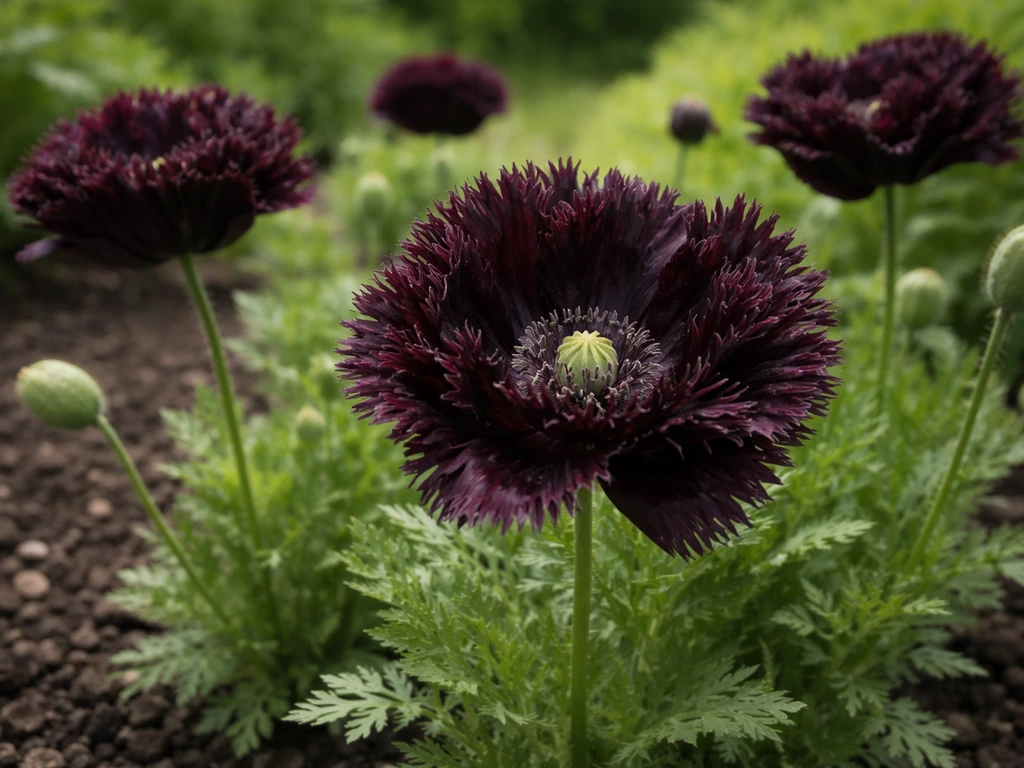
Black Swan is a cultivar of Papaver somniferum, the opium or breadseed poppy. The RHS lists it as Papaver somniferum (Laciniatum Group) 'Black Swan', which tells you the petals are deeply cut and fringed rather than plain and rounded. The flowers are dark burgundy-red, almost maroon-black, and they're followed by large barrel-shaped blue-green seed pods that are genuinely ornamental in their own right. At maturity the plants stand about 28 to 32 inches tall on sturdy stems, making them serious back-of-border plants or standout additions to a cutting garden.
The 'annual' label is important to flag. Unlike oriental poppies, which are perennials that come back each year from established roots, Black Swan completes its entire life cycle in a single season: germinate, grow, flower, set seed, die. What it does beautifully is self-sow, so if you let some pods ripen and shatter naturally, you'll get a volunteer colony the following year without doing anything. That's the real secret to a poppy patch that keeps giving.
If you've been browsing around for 'how to grow poppies' generally, it's worth knowing that the technique for Papaver somniferum differs in a few key ways from growing Papaver rhoeas (the classic red field poppy) and quite a lot from growing oriental poppies. If you want broader, general guidance on how to grow poppies (beyond Black Swan), follow the key steps for site, sowing, and timing. The seeds, timing, and expectations overlap, but breadseed types like Black Swan have larger pods, taller plants, and slightly different cold requirements, so keep that in mind if you're cross-referencing guides.
When to plant: timing by climate
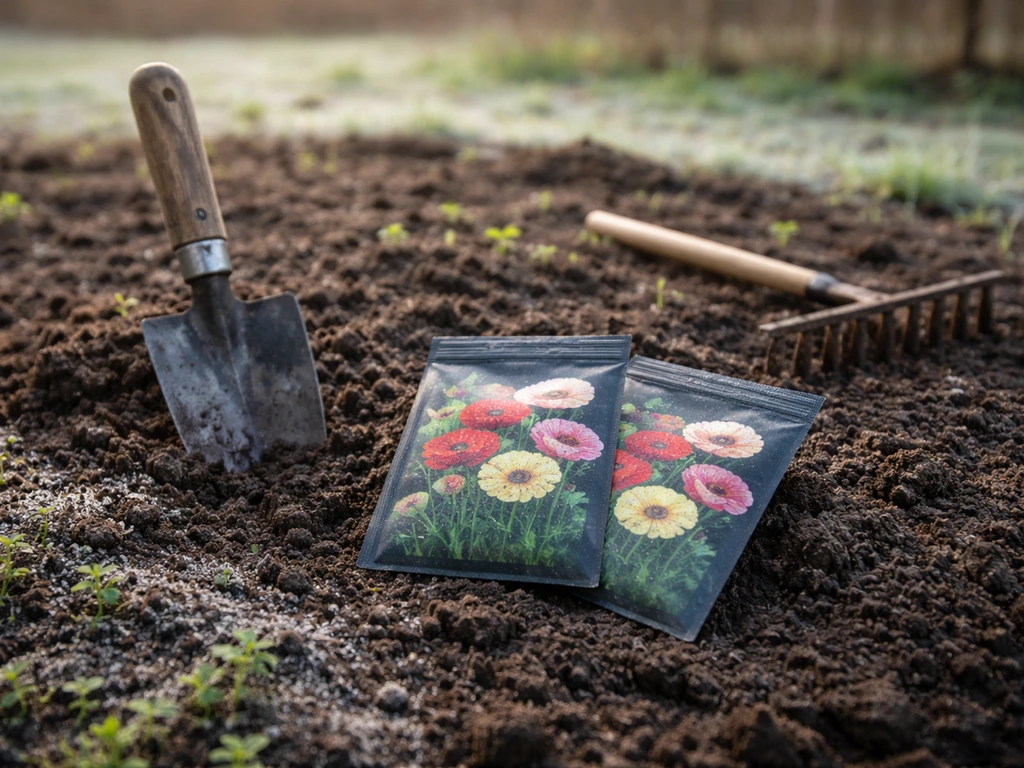
Poppies in general, and Papaver somniferum in particular, love cool soil and cool air. They germinate best at soil temperatures of 55 to 65°F (13 to 18°C) and can handle a light frost once they've sprouted. Heat stalls them and causes early bolting, so timing is everything.
| Climate | Outdoor sow timing | Notes |
|---|---|---|
| Cool/temperate (USDA zones 3–6) | Early spring, 4–6 weeks before last frost | Snow can fall on freshly sown seeds without harm; cool soil is ideal |
| Mild/moderate (zones 7–8) | Late winter (Feb–Mar) OR autumn (Oct–Nov) | Autumn sowing gives strongest plants; seeds stratify naturally over winter |
| Warm (zones 9–10) | Autumn to early winter (Oct–Dec) | Skip spring sowing; heat arrives before plants can establish |
| Cold with harsh winters (zones 2–3) | Very early spring as soon as ground is workable | Autumn sowing risky due to freeze-thaw cycles heaving seeds out |
Starting Black Swan poppy indoors is technically possible but generally not recommended. The long taproot that develops quickly after germination resents being disturbed, and transplant shock often sets plants back more than direct sowing gains. If you absolutely want a head start indoors, sow in biodegradable peat or coir pots that go straight into the ground without root disturbance, around four weeks before last frost. Keep the growing medium cool (around 60°F/15°C) and expect slightly patchy germination compared to direct-sown seeds.
Choosing a site and getting the soil right
Sun and aspect
Black Swan needs full sun, meaning at least six hours of direct sunlight per day. It will tolerate very light afternoon shade in warmer climates, but in anything less than full sun the stems get weak, the plants lean toward light, and flower color loses that intense near-black depth. Choose the sunniest spot you have, with reasonable airflow to help prevent fungal problems.
Soil prep

These poppies aren't soil snobs, but they do have preferences. They want well-drained, moderately fertile soil with a pH around 6.5 to 7.0. Heavy clay that stays wet is their worst enemy because the roots rot quickly in waterlogged conditions. Sandy or chalky soils work fine with a little organic matter mixed in. Before sowing, clear the area of weeds, loosen the top 4 to 6 inches with a fork, and rake to a fine, crumbly tilth. If your soil is heavy, work in a bucket of grit and a little compost per square meter. Avoid over-fertilizing at this stage: too much nitrogen at sowing produces lush leafy plants that are slow to flower.
Watering basics
At the sowing and germination stage, soil should be consistently moist but never soggy. Once established, Black Swan is reasonably drought-tolerant and needs watering mainly during extended dry spells. Overwatering mature plants is one of the most common beginner mistakes; let the top inch of soil dry out between waterings once plants are 6 inches tall.
How to sow Black Swan poppy seeds: step by step

Poppy seeds are tiny, roughly the size of a grain of sand, which catches a lot of beginners off guard. They need light to germinate, which means you do not bury them. Here's the exact method I use every season. For gardeners looking specifically for Madagascar periwinkle, the same idea applies: start with the right warmth, soil, and watering routine tailored to this species.
- Prepare your patch: clear weeds, loosen the soil, rake smooth. The surface should be crumbly, not cloddy.
- Water the bed lightly the day before sowing so the surface is damp but not muddy.
- Mix seeds with dry silver sand (about 1 part seed to 4 parts sand) in a small container. This extends the seeds, makes them visible against dark soil, and helps you sow more evenly.
- Scatter the seed-sand mix thinly across the prepared area. Aim for roughly 5 to 10 seeds per square foot. You can always thin later, but bare patches are harder to fix.
- Do not cover the seeds with soil. Instead, press them lightly into the surface by tamping gently with the flat of your hand or a board. This ensures good soil contact without burying them.
- Mist the surface gently with a fine spray. Avoid strong jets that wash seeds into clumps.
- Mark the area clearly. Poppy seedlings look like tiny weeds and are very easy to accidentally hoe out.
- Keep the surface moist until germination. In cool spring conditions, check daily and mist if the top of the soil looks dry.
What to expect at germination
At 55 to 65°F soil temperature, Black Swan typically germinates in 10 to 20 days. Don't panic if nothing happens in the first week; cool soil slows things down. The first sign is tiny, round, blue-green cotyledons (seed leaves) appearing at the surface. They're easy to miss. Once you see them, resist the urge to water heavily because this is when damping-off fungus is most dangerous.
If germination is sparse or patchy after three weeks, it's usually one of three things: seeds were buried too deep, the surface dried out before germination, or temperatures spiked above 70°F (21°C) before seeds sprouted. If it's a temperature issue in spring, wait for cooler weather and try again. Seeds are inexpensive enough that a second sowing is rarely a loss.
Seedling care: thinning, hardening off, and early problems
Thinning
Thinning is where most beginners go wrong with poppies. The instinct is to leave them all in because they look so fragile, but crowded plants produce weak stems, poor flowering, and more disease. Thin Black Swan to one plant every 10 to 12 inches. Do the first thin when seedlings reach about an inch tall, then a second thin when they're 3 to 4 inches, leaving the strongest individuals at final spacing. Snip or pinch surplus seedlings at soil level rather than pulling them out; pulling disturbs the roots of neighboring plants.
Hardening off (for indoor-started plants)
If you did start seeds indoors in biodegradable pots, harden off over 7 to 10 days before planting out. Set pots outside in a sheltered, shaded spot for a couple of hours on day one, gradually increasing outdoor exposure and sun each day. By day 7 or 8, leave them out overnight if no frost is forecast. Plant out when the soil is workable and plants have at least four true leaves. Water the pots before transplanting and plant them pot-and-all, disturbing the roots as little as possible.
Early problems to watch for
- Damping-off: seedlings collapse at the base in a ring pattern. Caused by overwatering and poor airflow. Prevention: water from below if possible, never let the surface stay soggy, and avoid crowding seedlings.
- Leggy seedlings: pale, stretched growth reaching for light. Fix: thin more aggressively and ensure the site gets genuine full sun.
- Slug and snail damage: ragged holes or entire seedlings disappearing overnight. Worst in damp conditions. Use iron phosphate pellets or go out at night with a torch and remove by hand.
- Mice and birds: seeds or young seedlings disturbed or eaten. Cover with fleece or fine netting immediately after sowing in areas with known pressure.
Ongoing care through the growing season
Watering and feeding
Once plants are established and 6 or more inches tall, water deeply once or twice a week during dry periods rather than little and often. Deep watering encourages roots to go down, which makes plants more drought-resilient. A weekly or fortnightly liquid feed with a balanced fertilizer (something like a 10-10-10 NPK) once buds start forming helps support flowering. Before that point, feeding is largely unnecessary and can actually delay blooming by pushing excess vegetative growth.
Staking and support
At 28 to 32 inches, Black Swan is a mid-tall plant that can topple in wind or heavy rain once the large flower heads develop. In an exposed garden, ring supports or single bamboo canes placed early (around the 12-inch growth stage) save a lot of heartache later. In a sheltered bed or cutting garden, most plants support themselves adequately. If stems do flop, it usually signals the plants are too crowded, too shaded, or have been overfed with nitrogen. If you are also interested in giant poppies, see our giant poppies how to grow guide for related tips on timing, spacing, and care.
Pest and disease watch-outs
- Aphids: particularly around bud formation. Check the undersides of leaves and around flower buds. A strong blast of water knocks them off; for heavy infestations, use insecticidal soap.
- Downy mildew: pale patches on leaf surfaces with a gray-white coating underneath. Caused by cool, damp, crowded conditions. Improve airflow by thinning plants and avoid overhead watering.
- Root rot: plants wilting despite moist soil, yellowing leaves from the base up. Almost always caused by waterlogged soil. Improve drainage before next sowing season.
- Viruses: distorted, mottled leaves with stunted growth. No cure; remove affected plants immediately to prevent spread via aphid vectors.
Deadheading, harvesting blooms, and seed-pod collection
Cutting for arrangements
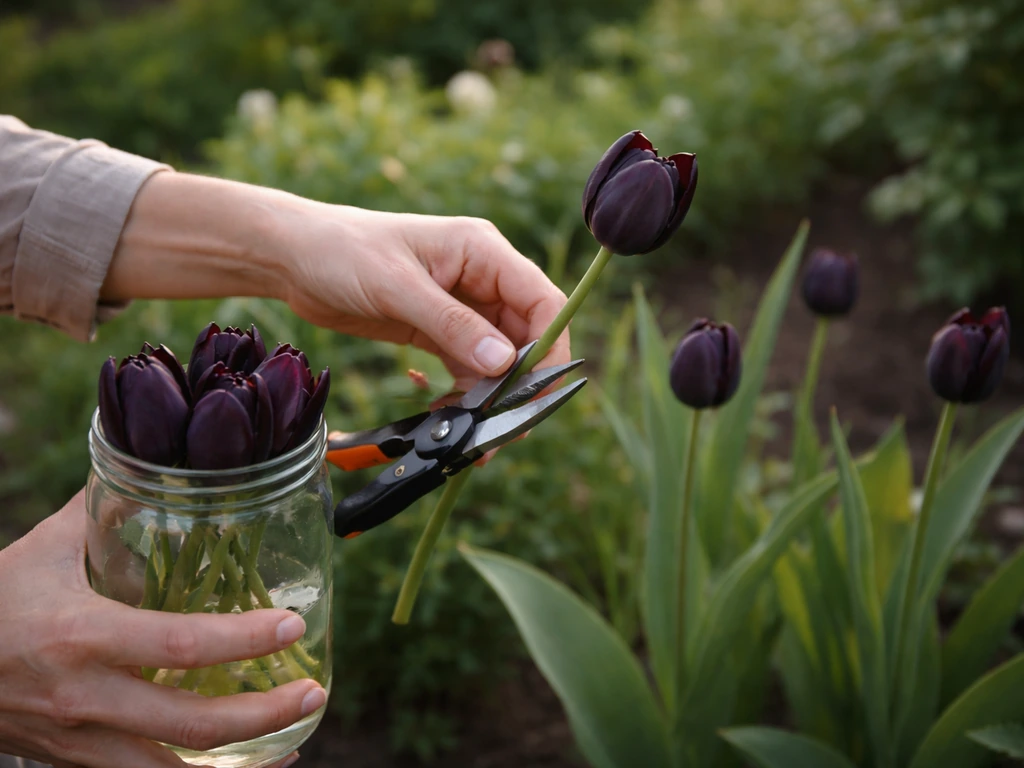
Black Swan blooms are stunning in cut arrangements, but timing the cut matters. Harvest the stem when the bud has just cracked open and you can see a sliver of dark petal. Cut in the morning, place stems immediately in cool water, and sear the cut end with a flame for a few seconds or dip it in boiling water for 10 seconds to stop the milky sap from sealing the stem. Without this step, the flower wilts fast. Conditioned properly, blooms last 5 to 7 days in a vase.
Deadheading to extend flowering
If you want the plant to keep producing flowers rather than putting energy into seed production, remove spent blooms before the petals drop by cutting the stem back to the next bud or leaf junction. Deadheading extends the flowering period by a couple of weeks. That said, the seed pods of Black Swan are genuinely beautiful, large barrel-shapes with a blue-green waxy sheen, and many gardeners leave at least some to develop.
Harvesting seed pods for drying and arrangements
For dried arrangements, cut pods when they're fully formed and firm but before the small holes at the top open and seeds start to escape. At this stage, the pods are at their most ornamental and will dry to a warm tan-grey color. Hang them upside down in bunches in a cool, airy spot for two to three weeks. For saving seeds for next year, leave pods on the plant until they rattle when shaken and the holes at the top have opened. Cut the stem, invert the pod into a paper bag or envelope, and shake. Store seeds in a cool, dry, dark location and they'll remain viable for two to three years.
Self-seeding and end-of-season cleanup
If you want Black Swan to self-sow and return without effort next year, leave a few pods to shatter naturally on the plant in autumn. The seeds will lie dormant in the soil over winter and germinate in early spring when conditions are right. Be aware that self-sown plants may not come true to the parent's exact color intensity; over a few generations, a poppy patch can drift toward the species type.
If maintaining that dark near-black color matters to you, save seeds from the most dramatically colored plants each year. At end of season, once plants have fully died back, pull or cut the dry stems and compost them unless you've seen disease, in which case bag and bin them rather than composting.
Common mistakes and quick fixes for beginners
| Mistake | What happens | Quick fix |
|---|---|---|
| Covering seeds too deeply | Poor or zero germination | Re-sow on the surface, pressing seeds in without covering |
| Not thinning seedlings | Weak, spindly plants, few flowers, more disease | Thin ruthlessly to 10–12 inch spacing; snip, don't pull |
| Sowing too late in warm climates | Seeds germinate but heat kills seedlings before flowering | Sow in autumn instead; aim for cool establishment period |
| Overwatering established plants | Root rot, yellowing leaves, plant collapse | Let top inch of soil dry out between waterings |
| Trying to transplant bare-root seedlings | Transplant shock, wilting, often fatal | Always direct sow, or use biodegradable pots if starting indoors |
| Skipping stem conditioning for cut flowers | Flowers wilt within hours in a vase | Sear stem ends in a flame immediately after cutting |
Your action plan from today
Since today is early July, if you're in a cool temperate climate you've missed the spring window for this season's best display. Your best move right now is to plan an autumn sow (October to November for zones 7 to 8, or a very early spring sow as soon as the ground thaws if you're in zones 3 to 6).
Use this time to prepare your bed, source good-quality Papaver somniferum 'Black Swan' seeds from a reputable supplier, and bookmark the steps above. If you want to grow Papaver somniferum, follow the same core steps for timing, sowing, and seedling care outlined in our Papaver how to grow guide. If you're in a warm climate (zones 9 to 10), an October sow is your prime window and it's closer than it feels.
- Source seeds now: look specifically for Papaver somniferum 'Black Swan' or the Laciniatum Group listing. Don't accept vague 'black poppy' substitutes.
- Choose and prepare your site: full sun, well-drained soil, raked to a fine tilth. Do this before sowing day.
- Mark your sow date on a calendar based on your climate zone using the table above.
- Mix seeds with sand before sowing to improve even distribution.
- Surface sow, press in, mist gently, and mark the area clearly.
- Thin seedlings twice: first at 1 inch height, second at 3 to 4 inches, to final spacing of 10 to 12 inches.
- Water deeply but infrequently once plants pass 6 inches.
- Begin a light balanced feed when buds form.
- Decide your harvest strategy: deadhead for more flowers, or leave pods to develop for drying or self-seeding.
FAQ
Is Black Swan poppy legal to grow where I live?
Black Swan poppy is typically grown for ornamental blooms and seed pods, but it is still a Papaver somniferum cultivar. Before buying or sowing, check your local regulations and any restrictions where you live, especially around saving seed or growing breadseed/opium poppies.
How moist should the soil be during germination for Black Swan poppy?
For the most reliable germination, keep the seedbed lightly moist until you see cotyledons at the surface. After that point, water with a gentle approach so the top layer dries slightly between watering, this reduces damping-off risk without letting the surface crust over.
Can I rake or lightly hoe after sowing, or will it ruin germination?
Yes, even direct-sown beds can get root disturbance if the area is raked too aggressively after sowing. Once seeds are down, avoid further hoeing or raking, and if the soil crusts, mist the surface rather than breaking it up.
What should I do if my Black Swan seedlings fail after sprouting?
If seedlings appear but then collapse at the base, it's often damping-off or a water and airflow problem. Remove the worst affected seedlings, improve airflow (avoid overcrowding, thin promptly), and stop heavy watering so the soil surface can dry slightly between waterings.
Why are my poppies tall but not blooming well, and do I need to thin them?
Thin as soon as seedlings are about 1 inch tall, and again when they reach 3 to 4 inches, leaving one plant every 10 to 12 inches. Crowding is one of the quickest ways to cause weak stems and poor flowering, even if other conditions are perfect.
My Black Swan sprouted in only a few spots. How do I troubleshoot patchy germination?
If you get patchy germination, focus on three causes: seeds buried too deep, the surface drying before roots establish, or temperatures above about 70°F (21°C) before sprouting. A practical fix is to resow with the same timing once the soil cools again, rather than trying to re-bury or relocate existing seedlings.
Will Black Swan poppies grow in partial shade, and what happens to the flowers?
Full sun matters for stem strength and the deepest bloom color. In partial shade, plants often stretch and lean, which not only looks untidy but can make flopping more likely, so prioritize the sunniest spot you have even if it means a slightly smaller bed.
My Black Swan plants are flopping. What are the most common causes and fixes?
If stems flop, check the basics first: crowding, nitrogen-heavy feeding, and shade. Also consider adding supports early, when plants are around 12 inches tall, because waiting until the flower heads are heavy makes it harder to save them.
When is the best time to collect Black Swan seed pods for next year?
For seed saving, leave pods until they rattle and the top openings have formed, then collect and dry them in a cool, airy place. Don’t shake pods too early, immature seeds can store poorly and have lower germination later.
If I let Black Swan self-sow, will the next generation look the same as the original?
Black Swan volunteers can drift away from the parent intensity over multiple years because seedlings may vary. To keep the near-black look, label and save seed only from the most deeply colored plants, and discard seeds from plants that show lighter maroon tones.
Should I deadhead Black Swan poppies or leave them for seed pods?
You can cut spent blooms or deadhead, but decide based on your goal. If you want more flowers, cut back to the next bud or leaf junction to suppress seed focus. If you want ornamental pods or seed, leave some pods to mature instead of deadheading everything.
Next Article
How to Grow Papaver rhoeas From Seed: Full Guide
Step-by-step guide to grow corn poppy from seed, with sowing timing, depth, care, troubleshooting, and seed harvest tips