Giant poppies are genuinely easy to grow from seed, and a single packet can fill a cutting bed or mixed border with flowers the size of teacups. Papaver somniferum, RHS cultivation and propagation notes (direct sow advice) notes that Extension and trial results consistently advise direct sowing for most true poppies because of their early, fast‑forming taproot and sensitivity to root disturbance; transplants often show reduced survival/flowering (RHS notes 'do not like to be transplanted'; multiple extension sources advise direct sow where plants will mature) Papaver somniferum — RHS cultivation and propagation notes (direct sow advice). The keys are sowing at the right time, barely covering those tiny seeds, and resisting the urge to transplant. Get those three things right and giant poppies practically grow themselves.
Giant Poppies How to Grow: Seed-to-Harvest Guide for Beginners

Why giant poppies deserve a spot in your garden
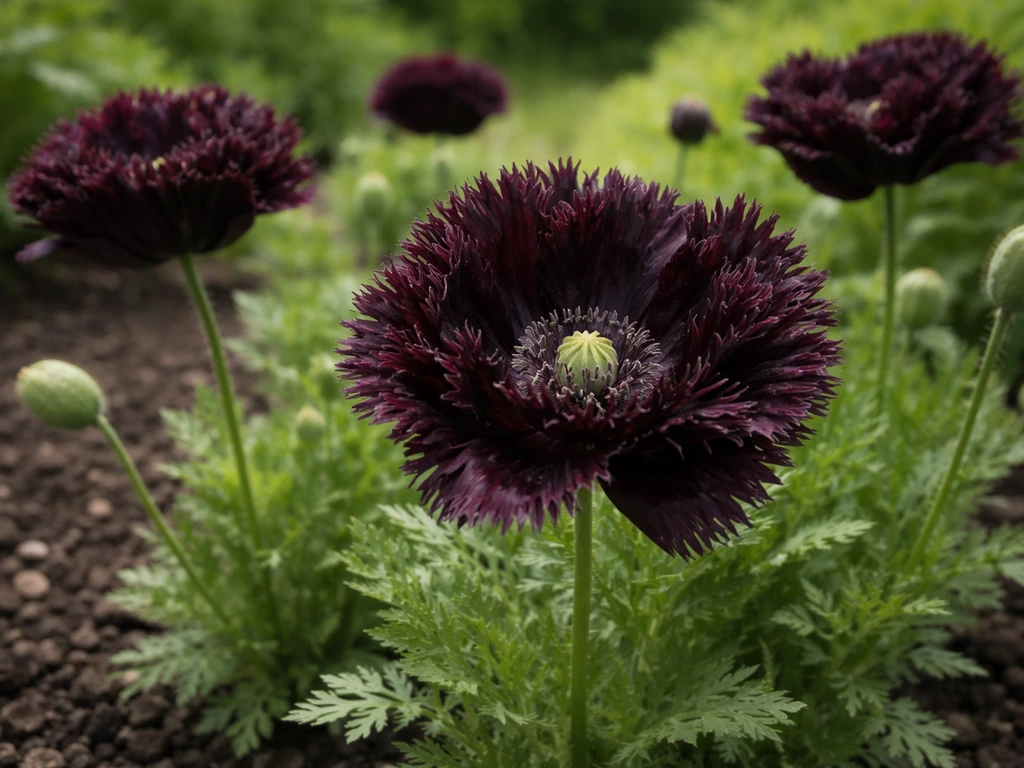
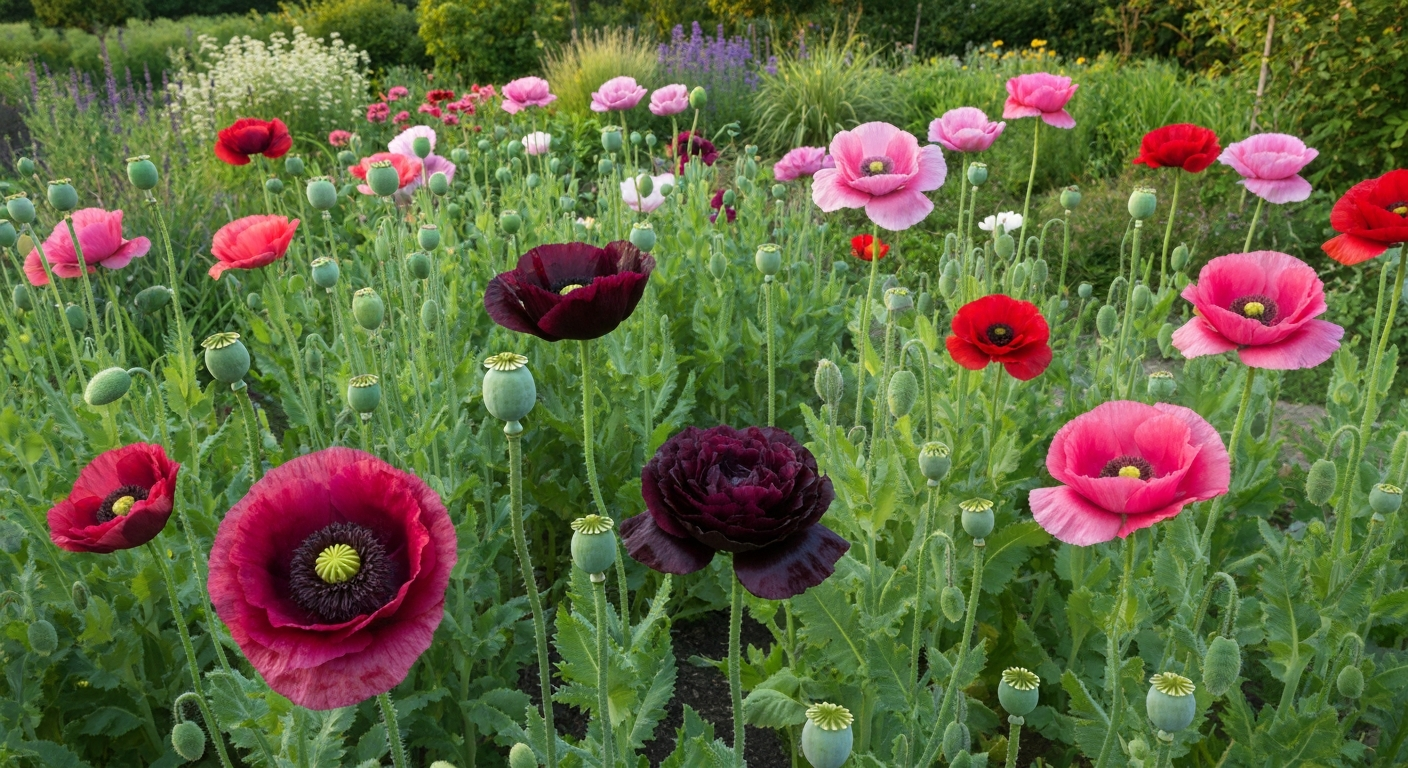
There are flashier flowers, but few that deliver the same drama for the same effort. A clump of large Papaver orientale in full bloom stops visitors mid-path. A block of 'Black Swan' somniferum in a cutting bed gives you deep, near-black petals on metre-tall stems that look expensive in a vase but cost almost nothing to grow. Even the humble Papaver rhoeas, the classic corn poppy, can put on a show when you choose a large-flowered strain and give it room. Beyond the blooms, you get ornamental seed pods for dried arrangements, self-seeding that fills gaps year after year, and the quiet satisfaction of watching tiny dust-like seeds become something genuinely spectacular. If you already grow cosmos or marigolds, giant poppies fit right into that same low-fuss, high-reward space in your garden.
Which giant poppies to choose
Not all big poppies behave the same way in the garden, and picking the right type for your space and goals makes everything downstream easier. Here are the three groups worth knowing.
Oriental poppies (Papaver orientale)
Oriental poppies are perennials, meaning you plant once and they come back every year, forming clumps roughly 50–100 cm tall and 50–100 cm wide. The flowers appear in early to mid summer and can be enormous, often 15–20 cm across, in shades ranging from white and pale pink through scarlet, salmon, and deep burgundy. Named cultivars like 'Beauty of Livermere' (crimson with a black blotch) and 'Patty's Plum' (smoky mauve) are cutting-garden standards. The trade-off is that orientale dies back completely after flowering, leaving a gap in the border. Plant something that fills in, ornamental grasses or late-season perennials work well beside them. For an easy summer filler that pairs well with oriental poppies, see Madagascar periwinkle, how to grow for tips on using it as a low-maintenance, late-season understory Madagascar periwinkle — how to grow.
Breadseed poppies (Papaver somniferum)
These are annuals (occasionally biennial) that grow to 50–100 cm and produce flowers that range from single to fully double, peony-style blooms in white, pink, red, purple, and near-black. Large-flowered cultivars are what most people mean when they talk about 'giant' poppies in a cutting context. 'Black Swan' (also sold as 'Schwarzer Drachen') is one of the most dramatic, with deep plum-black double flowers on tall stems. After the petals drop, you're left with beautiful glaucous seed pods that dry perfectly on the stem. Because heavy flowers can weigh stems down after rain, support is worth thinking about for tall varieties. Note: P. somniferum is subject to legal restrictions in some countries, see the legal caution section below before you order seeds.
Corn poppies (Papaver rhoeas)
Papaver rhoeas is the classic field poppy, and while the wild type is relatively small, large-flowered strains and the Shirley series can reach 60–90 cm with flowers 8–10 cm across. They are annuals and among the easiest of all poppies to grow because they tolerate poor soils and need almost no input once established. For detailed, step-by-step instructions on sowing, soil, and care, see our guide on how to grow Papaver rhoeas. They are not typically a cut-flower crop in the way that somniferum is, but they work beautifully in a meadow-style mixed border. Germination is reliable at 60–75°F (16–24°C) and usually takes 14–21 days.
Annual vs perennial poppies: why the lifecycle matters
This distinction changes almost everything about how and when you grow them. Annual poppies (P. somniferum, P. rhoeas) complete their whole life in one season: germinate, flower, set seed, and die. That means you sow every year, but you also get flowers in the first season. Perennial oriental poppies take 1–2 years to reach maturity from seed, so the first year you may see only foliage. The reward is a permanent, expanding clump that returns reliably each spring. For a cutting garden where you want flowers every summer without replanting, a combination of both types is ideal: orientale for long-term backbone, somniferum for annual volume. The care routines differ too. Annuals need new sowing each season and benefit from succession planting. Perennials need division every 4–5 years to stay vigorous and may need winter mulching in colder zones.
| Feature | Papaver orientale (Oriental) | Papaver somniferum (Breadseed) | Papaver rhoeas (Corn) |
|---|---|---|---|
| Lifecycle | Perennial | Annual (occasionally biennial) | Annual |
| Typical height | 50–100 cm | 50–100 cm | 30–90 cm |
| Time to first bloom from seed | 1–2 years | First season (~60–90 days) | First season (~60–90 days) |
| Best use | Mixed border, long-term cutting | Cutting garden, dried pods | Meadow, border, mixed planting |
| Transplant tolerance | Moderate (root cuttings preferred) | Poor — direct sow only | Poor — direct sow only |
| Self-seeds freely? | Rarely | Yes, prolifically | Yes, freely |
A legal note before you plant Papaver somniferum
I want to be direct about this because it catches people off guard. Papaver somniferum (the opium or breadseed poppy) is a legally controlled plant in several countries because it is the source of opium and opiate alkaloids. In the United States, it is named in federal drug law (Title 21, Chapter 13 of the U.S. Code), and the DEA has historically required registration for any lawful cultivation intended for opium or alkaloid production. Canada's Controlled Drugs and Substances Act places it in a regulated schedule. Canada’s Controlled Drugs and Substances Act and its regulations list Papaver somniferum and its preparations/alkaloids in controlled schedules and set conditions for cultivation and handling (Controlled Drugs and Substances Act, Government of Canada (Justice)) Controlled Drugs and Substances Act — Government of Canada (Justice). Australia's Office of Drug Control lists its seeds among controlled items. Germany requires a permit from the BfArM (Bundesopiumstelle) under the German Narcotics Act for most cultivation. The UK is an interesting case: as of a parliamentary written answer, no general Home Office licence is required to grow opium poppies for ornamental use in the UK, but processing or extracting opium is a different matter entirely.
The practical reality in many jurisdictions is that growing a modest number of P. somniferum plants in a garden for ornamental purposes has historically been tolerated, but the legal framework around them is real and varies by country, state, and local authority. Before ordering seeds or planting, check the laws in your specific location. Do not assume that because seeds are sold openly in garden centres they are unrestricted. This article is for informational purposes and does not constitute legal advice.
When to plant: timing your sowing by climate
Timing is probably the single biggest factor in poppy success. Most Papaver species want cool conditions to germinate and establish. That gives you two sowing windows: autumn (fall), where the seeds overwinter and germinate naturally as temperatures drop and rise, or very early spring, as soon as the soil can be worked and frost is still likely but not severe. Both work, the choice depends on your climate.
Fall sowing (zones 8–10 and mild UK/EU climates)
If you are in a mild zone where winters are cool rather than brutally cold, autumn sowing is the stronger option. Scatter seeds in October or November, let winter do the stratification for you, and watch them germinate and establish in the cool days of late winter and early spring. These plants develop better root systems and typically bloom earlier and more vigorously than spring-sown ones. This is the natural rhythm of field poppies, they shed seed in late summer, it sits through winter, and it germinates when conditions are right.
Early spring sowing (zones 3–7 and colder continental climates)
In colder regions, sow directly outdoors as early as the soil can be worked, typically 2–3 weeks before your average last frost date. The soil is still cool, frosts are still possible, and that is exactly what poppies want. Waiting until the soil warms up is a common beginner mistake that leads to poor germination or plants that bolt quickly in the summer heat without properly establishing.
| Climate / Zone | Recommended Sowing Window | Notes |
|---|---|---|
| USDA zones 3–5 (cold winters) | Late March – mid April (as soil is workable) | Frosts still likely; cool soil aids germination |
| USDA zones 6–7 (moderate winters) | Late February – early March OR October–November | Both windows viable; fall sowing gives stronger plants |
| USDA zones 8–10 / mild UK / mild EU | October – November (fall preferred) | Natural cold stratification; earlier, more vigorous bloom |
| UK / Northern Europe (most regions) | February–March (bare minimum indoors) OR Oct–Nov outdoors | RHS recommends direct sow; fall for outdoor beds |
| Mediterranean / Southern EU climates | October – November | Skip summer heat; let winter establish plants |
Sourcing seeds and picking the right cultivar
For giant poppies specifically, cultivar selection matters more than with many other flowers. A generic 'mixed poppy' packet may include small-flowered types that disappoint you in a cutting garden. Go to reputable seed suppliers (Baker Creek/RareSeeds, Botanical Interests, Chiltern Seeds, Thompson and Morgan) and look for cultivars with documented height and flower size. For P. somniferum, look for named peony-flowered or laciniatum types with stated heights of 90 cm or more. 'Black Swan' is excellent if you want drama and good stem length. For P. orientale, buy named cultivars from specialist nurseries as named perennial plants or divisions rather than from generic seed mixes, since orientale cultivars can vary enormously in flower size and colour trueness when grown from mixed seed. For P. rhoeas, the Shirley Mix and large-flowered individual colour strains are the most reliable for flower size.
Think about end use too. For cut flowers, you want tall stems (90–100 cm), double or semi-double flowers that hold their petals for a day or two, and cultivars noted for good vase life. For dried arrangements, you mainly want good pod size and glaucous colour, most large somniferum are excellent for this. For a border, height and colour are the primary criteria and you can mix types freely.
Seed preparation and cold stratification
Poppy seeds are tiny, genuinely dust-like in some cases, and they behave differently from bigger seeds that you pre-soak or nick. The key insight from germination research (Karlsson and Milberg's work on Papaver germination ecology is worth reading) is that P. somniferum generally has weak dormancy and will germinate without special treatment, while P. rhoeas shows a more distinct seasonal response and benefits from cool conditions. In practice, this means:
- P. somniferum: no cold stratification strictly necessary, but a 2–4 week cold-moist stratification (damp paper towel in a sealed bag in the fridge at around 4°C/39°F) can improve germination rates, especially for older or heirloom seed lines. Many growers simply fall-sow outdoors and let winter do this naturally.
- P. rhoeas: benefits most from cool germination conditions; the simplest approach is direct sowing in cool soil (below 18°C/65°F) rather than artificially stratifying. Fall sowing or early spring sowing achieves this automatically.
- P. orientale (from seed): sow fresh seed in summer or autumn; germination can be slow and uneven. Some growers refrigerate seed for 4–6 weeks before spring sowing to improve results. Expect 1–2 years before flowering.
How to cold-stratify in the fridge (step by step)
- Dampen a piece of kitchen paper or paper towel until moist but not dripping.
- Scatter your poppy seeds onto one half of the paper, then fold it over to cover them.
- Place the folded paper in a small labelled zip-lock bag and seal it.
- Put it in the fridge (not the freezer) at approximately 4°C (39°F).
- Leave for 2–4 weeks, checking weekly for any signs of premature germination.
- If seeds start to sprout, remove and sow immediately. If not, sow at your target outdoor date.
- Sow directly onto the soil surface — do not bury stratified seeds deeply or they may rot.
One shortcut I use: for fall sowing, I skip the fridge entirely and just broadcast seeds onto prepared soil in October. Winter provides all the stratification naturally. The fridge method is most useful if you are spring sowing and want to give seeds a head start in warm indoor conditions.
Direct sowing vs starting indoors
For nearly all Papaver species, direct sowing where plants will grow is the right default. For a step-by-step guide to sowing, caring for, and troubleshooting poppy cultivation, see papaver how to grow. For more detailed, step-by-step guidance on timing, sowing, and care, see our guide on how to grow poppies (0890ca47-bf6b-42bc-bdf0-a27b677b86ae). I want to be honest with you: poppies have delicate taproots that form fast and do not tolerate disturbance. Both P. rhoeas and P. somniferum will almost always outperform transplanted specimens when direct sown at the right time. The RHS advises against transplanting P. somniferum, and Johnny's makes the same recommendation for P. rhoeas. That said, there are situations where starting indoors makes sense, so here is a practical breakdown of both.
Direct sowing: the preferred method
- Prepare your bed: rake to a fine tilth, remove weeds, and if drainage is poor, work in some grit or sharp sand. Poppies do not need rich soil — moderately fertile and well-drained is ideal.
- Scatter seeds thinly over the surface. These seeds need light to germinate, so do not bury them. Press them gently into contact with the soil using your hand or a flat board.
- For P. rhoeas, Johnny's recommends a sowing depth of approximately 6 mm (¼ inch) — a very light covering of fine soil or vermiculite is fine, but no deeper.
- Water gently with a fine rose to avoid displacing seeds. A light misting is ideal.
- Germination takes 10–21 days for P. somniferum at 13–18°C (55–65°F), and 14–21 days for P. rhoeas at 16–24°C (60–75°F).
- When seedlings show their first true leaves, thin to 15–23 cm (6–9 inches) apart for P. rhoeas and P. somniferum. For large oriental types, eventual spacing should reach 45–60 cm (18–24 inches), though orientale is usually planted from divisions rather than seed.
- Discard thinned seedlings — do not try to transplant them.
Starting indoors: when it makes sense and how to do it carefully
Indoor sowing is mainly worth attempting for P. orientale (which takes 1–2 years to bloom and benefits from a controlled start) or if you have very limited outdoor growing space and want to start seeds in late winter. For annuals like somniferum and rhoeas, I genuinely recommend against it unless you are prepared for transplant losses. If you do go indoors:
- Sow 6–8 weeks before your outdoor transplant date (which should coincide with cool weather, ideally 2–4 weeks before last frost).
- Use individual biodegradable pots (root trainers or peat/coir pots) so you can plant pot and all without disturbing roots.
- Sow 2–3 seeds per pot on the surface of moist, fine seed compost. Do not cover or cover extremely lightly with vermiculite.
- Keep at 13–18°C (55–65°F) — a cool windowsill or unheated greenhouse is better than a warm propagator for these species.
- Once seedlings appear, thin to the strongest per pot by snipping (not pulling) the weaker ones.
- Harden off for 7–10 days before planting out by gradually exposing pots to outdoor conditions.
- Transplant with minimal root disturbance, planting the biodegradable pot directly into the ground. Water in well and do not allow to dry out in the first two weeks.
| Method | Best for | Pros | Cons | Transplant timing |
|---|---|---|---|---|
| Direct sow outdoors (fall) | P. somniferum, P. rhoeas — zones 6–10 | Strongest plants, natural stratification, no fuss | Not suitable in hard-freeze zones | N/A |
| Direct sow outdoors (early spring) | All species — zones 3–7 | Simple, high success rate, no transplant shock | Slightly later bloom than fall sowing | N/A |
| Indoors in biodegradable pots | P. orientale, limited-space gardeners | Controlled start, useful for perennials | Risk of transplant shock, extra work | 2–4 weeks before last frost, into cool soil |
| Cold stratification + early spring direct sow | P. somniferum heirloom lines, old seed | Improves germination of low-viability seed | Requires fridge space and planning ahead | N/A |
FAQ
Which giant poppy types should I choose for a cutting garden or mixed border?
Choose by lifespan, height, bloom time and legal considerations: - Papaver orientale (oriental poppy): herbaceous perennial, clump‑forming, 0.5–1.0 m tall, excellent for mixed borders and cutting gardens (early–mid summer bloom). - Papaver somniferum (large opium/breadseed poppies, cultivars such as 'Black Swan' or 'Schwarzer Drachen'): usually annual/biennial, 0.5–1.0 m tall, large dramatic flowers and seedpods for dried arrangements — check legal rules for your country before purchasing/sowing. - Papaver rhoeas (corn or Shirley poppy): annual, 30–60 cm tall, freely self‑sows, good for informal drifts and early summer color. For borders/cut flowers: orientale for perennial structure, P. somniferum for big single-season blooms and seedheads, rhoeas for quick annual color.
Are there legal issues I need to know before growing Papaver somniferum?
Yes. In many countries Papaver somniferum (opium poppy) is regulated because it produces opiate alkaloids. - United States, Canada, Australia, Germany and others have laws or licensing related to opium production and seed handling; the exact rules vary by jurisdiction. - In some places (e.g., UK) ornamental cultivation is commonly tolerated but processing/extraction or intent to produce opium is illegal. What to do: check your national and local laws (DEA/Health Canada/ODC/BfArM or local agricultural office) before buying seed or sowing. If in doubt, choose non‑regulated species (P. orientale or P. rhoeas) or contact local authorities for written guidance.
When is the best time to sow giant poppy seeds in my region?
Follow species and climate: - Warm/mild climates (USDA 8–10, mild UK/EU): fall sowing outdoors (Oct–Dec) gives natural cold stratification and earlier, stronger plants. - Cool climates (USDA 3–7): direct sow early spring as soon as soil can be worked and is not waterlogged — often 2–3 weeks before last frost. - P. somniferum lines are commonly direct‑sown in early spring (or fall in mild areas); P. rhoeas prefer early spring or fall for natural stratification; P. orientale can be sown in fall or early spring but often takes 1–2 seasons to flower from seed.
Should I start poppy seeds indoors or direct‑sow?
Default: direct‑sow. Most poppies have delicate taproots and resent transplanting. - Direct‑sowing outdoors at final position is recommended for P. rhoeas, P. somniferum and many P. orientale lines. - If you must start indoors (very short season): sow in peat‑free cells, use wide/deep pots to avoid root disturbance, keep cool (10–18°C/50–65°F), and transplant very carefully when seedlings have a couple true leaves. Expect weaker performance than direct‑sown plants.
How deep and how far apart should I sow poppy seeds?
Seed depth and spacing by seed size: - Tiny Papaver seeds: surface‑scatter and press into soil; do not bury — light helps germination. - Johnny’s guidance for corn poppy (P. rhoeas): ~1/4" (6 mm) depth acceptable. - Spacing: P. somniferum and P. orientale: 30–45 cm (12–18") between plants; thin seedlings to 20–30 cm (8–12") for border/flowers. - For mass drifts: sow at recommended packet sowing rate and thin only if overcrowded. Plant rows or drifts so spent blooms are reachable for cutting without trampling.
Do poppy seeds need stratification or special preparation?
Often not strictly required, but stratification can improve and synchronize germination for some lines: - P. rhoeas and many P. somniferum varieties germinate readily without long stratification; germination typically within 10–21 days at cool temperatures (13–18°C/55–65°F). - In mild climates or for slow cultivars, cold‑moist stratify seeds 2–4 weeks (refrigerator in moist medium) to mimic winter and improve germination. - Always follow vendor instructions for named cultivars; surface‑sow tiny seeds and press into firm seedbed.
Black Swan Poppy How to Grow From Seed Step by Step
Step by step guide to grow black swan poppy from seed, with planting timing, germination tips, and care for flowers and