Poppies are one of the most rewarding flowers you can grow from seed, but only if you work with how they actually want to grow. The single most important thing to know upfront: grow them outdoors from direct-sown seed. Skip the seed trays and transplanting entirely. Once you accept that rule, almost everything else falls into place.
How to Grow Poppies: A Step-by-Step Guide for Beginners
Marcus Holloway
17 Apr 2026
Pick the right poppy type first
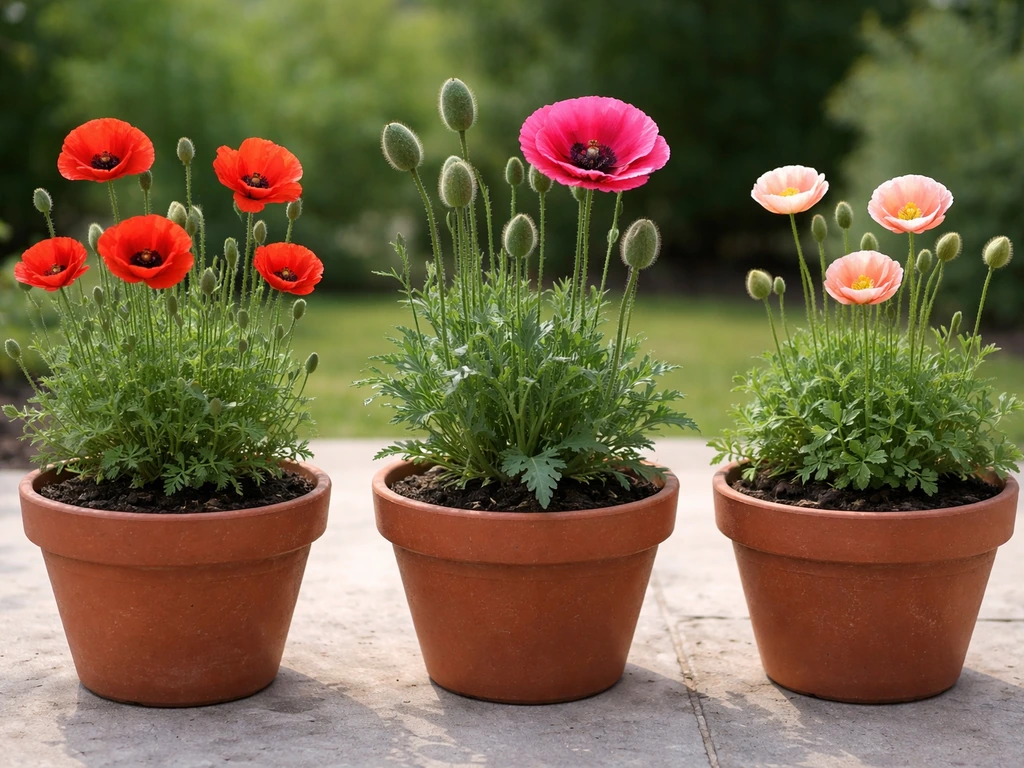
Poppies span a surprisingly wide range of plants, and which type you grow determines your timing, spacing, and what happens at the end of the season. The genus Papaver covers most of what home gardeners want, but the species matter a lot in practice.
Annual poppies are the easiest entry point. Papaver rhoeas, the classic corn or field poppy, gives you those tissue-paper red and pink blooms and self-seeds readily once established. If you want a deep dive into this species specifically, how to grow Papaver rhoeas covers it in full detail. The Shirley series falls under rhoeas and is a staple of cutting gardens. Papaver somniferum, the opium or breadseed poppy, is also an annual but grows bigger with those spectacular seed pods that dry beautifully.
Oriental poppies (Papaver orientale) are perennials and behave completely differently. They go dormant in summer, flower in late spring, and come back year after year. Because of their long taproots, growing oriental poppies requires a different approach to timing and placement compared to annuals. Wild poppies, including corn poppies naturalized in meadow mixes, are essentially treated the same as annual types for sowing purposes.
If you want statement-making blooms with oversized flowers, giant poppies are worth exploring as a separate category, since they often need a little extra space and some staking in exposed spots. And if you are after something dramatic and unusual, the black swan poppy is a stunning dark-flowered variety that follows the same basic direct-sow method but deserves its own attention for color and staging in the garden.
| Type | Annual or Perennial | Bloom Time | Best For | Difficulty |
|---|---|---|---|---|
| Papaver rhoeas (corn/field poppy) | Annual | Early to midsummer | Meadows, cutting gardens, wild looks | Very easy |
| Papaver somniferum (breadseed poppy) | Annual | Early to midsummer | Cutting gardens, seed pods, cottage beds | Easy |
| Papaver orientale (oriental poppy) | Perennial | Late spring | Borders, long-term plantings | Moderate |
| Giant/ornamental varieties | Usually annual | Early to midsummer | Focal points, large displays | Easy to moderate |
| Black swan and novelty types | Annual | Early to midsummer | Cutting gardens, dramatic color | Easy |
What growing conditions poppies actually need
Poppies are not fussy, but they do have non-negotiable preferences. Get these right and they practically grow themselves.
Full sun is essential. Give them at least six hours of direct sunlight daily, and eight is better. In partial shade you will get leggy plants and far fewer flowers. The soil does not need to be rich, but it absolutely must drain well. Poppies sitting in wet or waterlogged soil will rot at the crown or fail to germinate at all. Lean, even slightly sandy or gravelly soil suits them perfectly because it mimics the disturbed, well-draining ground they colonize naturally in the wild.
Temperature is another key factor. Annual poppies are cool-season growers, meaning they germinate and establish best when the soil is cool, in the 60 to 70 degrees Fahrenheit range. Hot summer temperatures actually slow or stop their growth, which is why timing your sow correctly matters so much. Oriental poppies are frost-hardy perennials and can handle winter temperatures without protection once established.
If you are preparing a bed, a light dig to loosen compaction is enough. Avoid adding heavy amounts of compost or high-nitrogen fertilizer before sowing. Too-rich soil produces lush foliage at the expense of flowers. A neutral to slightly alkaline pH of around 7.0 is ideal, but poppies are genuinely tolerant of a wide range.
When to sow poppies outdoors
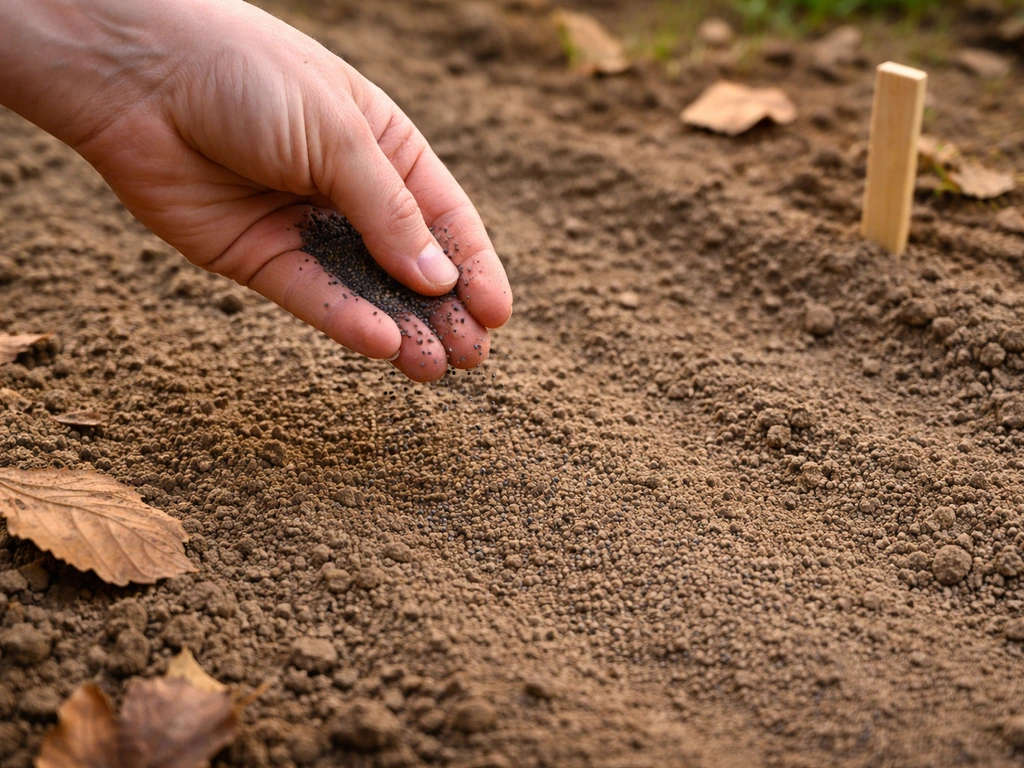
Timing is probably the most misunderstood part of growing poppies, and getting it wrong is the number one reason seeds fail to germinate. The good news is that you have two solid windows to work with.
The best approach, if you are willing to plan ahead, is a fall sow. Scatter seed outdoors in late fall, after your first hard frost. The seeds will sit dormant through winter, then germinate naturally in early spring as temperatures begin to rise after the freeze-thaw cycle. Utah State University Extension specifically notes that germination improves after freezing and thawing, which is exactly what a fall sow gives you for free. This method also produces the earliest, most vigorous bloomers.
If you miss the fall window, sow as early in spring as you can work the soil, ideally four to six weeks before your last expected frost. The seeds can handle cold and a late frost will not kill them. What you want to avoid is sowing into warm soil in late spring or summer, when germination becomes unreliable and the plants barely have time to flower before heat shuts them down.
For oriental poppies specifically, fall sowing also works well and is the preferred method for getting them established in their permanent spot.
How to sow poppy seeds for reliable results
Direct sowing is the only method I recommend for poppies, and the research backs this up completely. Both corn poppies and oriental poppies develop taproots early, which makes transplanting from seed trays almost always fatal or deeply stressful. Sow where they are going to grow, full stop.
Poppy seeds are tiny and dust-like, which makes precise sowing tricky. The best technique is to mix the seeds with a small amount of dry sand in a container, then broadcast the mixture over your prepared bed. This helps distribute the seeds more evenly and makes it easier to see where you have already sown. Rake the surface very lightly afterward, or simply press the seeds in with the flat of your hand. Do not bury them, they need light to germinate and should be no deeper than 1 to 2 millimeters below the surface.
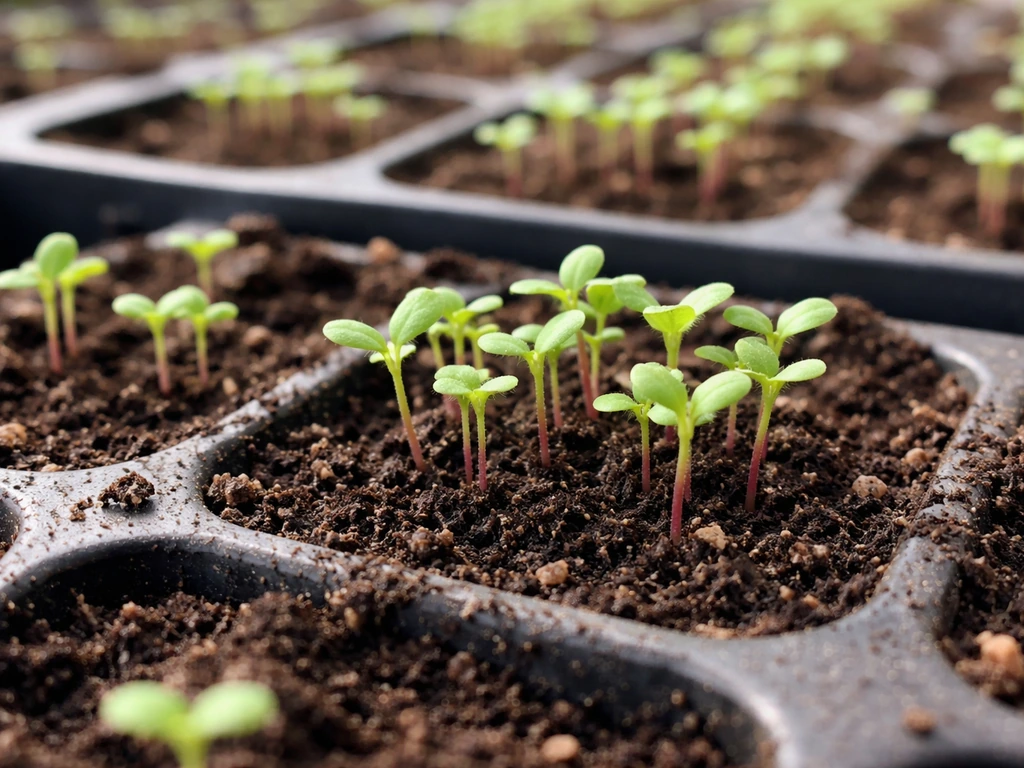
Water gently after sowing, using a fine mist setting if possible to avoid washing the seeds into clumps. Then be patient. Germination typically takes 10 to 30 days depending on soil temperature, and seeds sown in cold spring soil will take longer than those sown in a mild fall. You will see tiny, pale green seedlings that look almost like grass at first.
For a field-scale planting, the approach scales easily. Simply increase your seed quantity and broadcast across the area in passes, using the sand-mixing trick to get even coverage. Sowing a little thicker than you think you need is smart, because you will thin later and it accounts for uneven germination. A general starting guide for large areas is roughly 1 gram of seed per square meter for corn poppies, adjusted by variety.
One question that comes up a lot: what about starting poppies indoors? It is generally not worth it. Even with careful handling, transplanting poppy seedlings from trays to garden beds causes enough root disturbance to set them back significantly or kill them. If you are growing a variety in the broader Papaver family and want to understand the genus-level approach to papaver growing methods in detail, that resource will help. But the short answer for almost all types is: direct sow outdoors.
Watering, feeding, and thinning as they establish
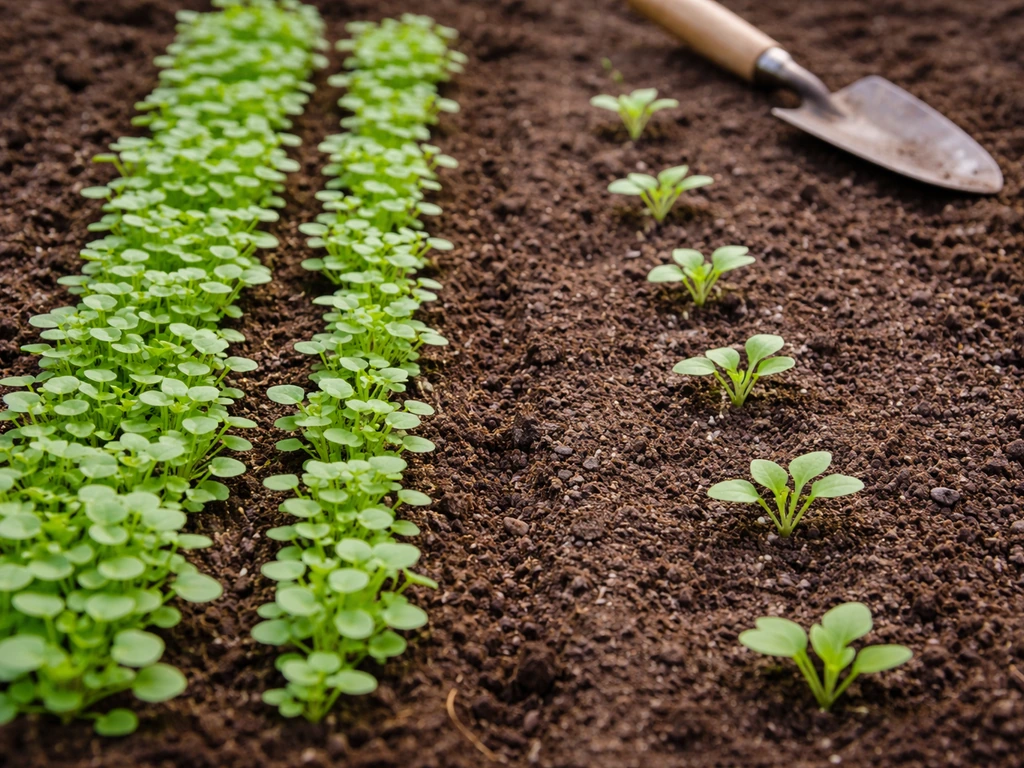
Once seedlings are visible, the main job is keeping the soil consistently moist but not soggy. A light watering every few days is usually enough in spring, depending on rainfall. As the plants develop their own root system they become more drought-tolerant, but do not let newly germinated seedlings dry out during their first few weeks.
Thinning is one of those tasks that feels wrong but makes a real difference. When your seedlings reach about 5 centimeters tall, thin them so each plant has room to develop properly. For annual poppies, aim for roughly 15 to 30 centimeters between plants depending on the variety. Oriental and giant types want more space, around 30 to 45 centimeters. To thin without disturbing the taproots of neighbors, use small scissors to snip unwanted seedlings at soil level rather than pulling them out. This is the approach K-State Extension master gardeners recommend for achieving target spacing when you have sown thickly. The seedlings you remove can go in a salad if you like, poppy greens are edible.
Feeding is mostly unnecessary if your soil is reasonably decent. In very poor or sandy soil, a single low-nitrogen liquid feed when plants are around 15 centimeters tall can help. Avoid high-nitrogen feeds at any point because they push leafy growth instead of flowers. Once flower buds appear, leave the plants alone completely.
Setting up your garden for the best display
Poppies work in almost any garden format, but how you set them up affects how good the display looks and how practical they are to manage.
Beds and borders
In a traditional bed or border, scatter annual poppies among other plants or in drifts. They look spectacular grown in loose groupings rather than rows. Because they bloom and then die back, plant them where their gap will not leave a hole in your display. Oriental poppies in a border are best placed behind other plants that will fill in when they go dormant in midsummer.
Cutting gardens
For a cutting garden, grow poppies in blocks or rows to make harvesting easier. The somniferum and Shirley types are the best picks for cut flowers. Cut them just as the bud is cracking open, not fully open, for the longest vase life. Dip the stem ends in boiling water for a few seconds immediately after cutting, then transfer to cool water. This seals the latex that bleeds from the cut and dramatically extends how long they last in a vase.
Containers
Poppies in containers can work, but it is not their natural habitat. If you try it, use a large, deep container with excellent drainage, at least 30 centimeters deep to accommodate the taproot. Direct sow into the pot rather than transplanting. Container poppies dry out faster so they need more attentive watering, and their roots heat up in warm weather, which shortens their season. That said, a large planter of Shirley poppies on a sunny terrace is genuinely beautiful.
Field displays and meadow patches
Growing a field of poppies is completely achievable for a home gardener with a larger space. The key is soil preparation. You do not need rich soil but you do need good seed-to-soil contact and suppressed competition from weeds and grass. Lightly scrape or scarify the surface before sowing, broadcast your seed generously, and firm the area down with your feet or a roller. A fall sow into a cleared area gives the best results. Mix with other annual wildflower seed for a more natural look, but make sure all companions are also direct-sow types.
As you plan a larger planting, it is worth noting that companion flowers with similar needs can be planted alongside poppies. For instance, if you are building out a broader annual flower planting, madagascar periwinkle is a warm-season annual that complements poppies in color-themed beds even though it goes in after the cool season is done, effectively filling the gap left by poppies as summer heats up.
Common problems and how to fix them
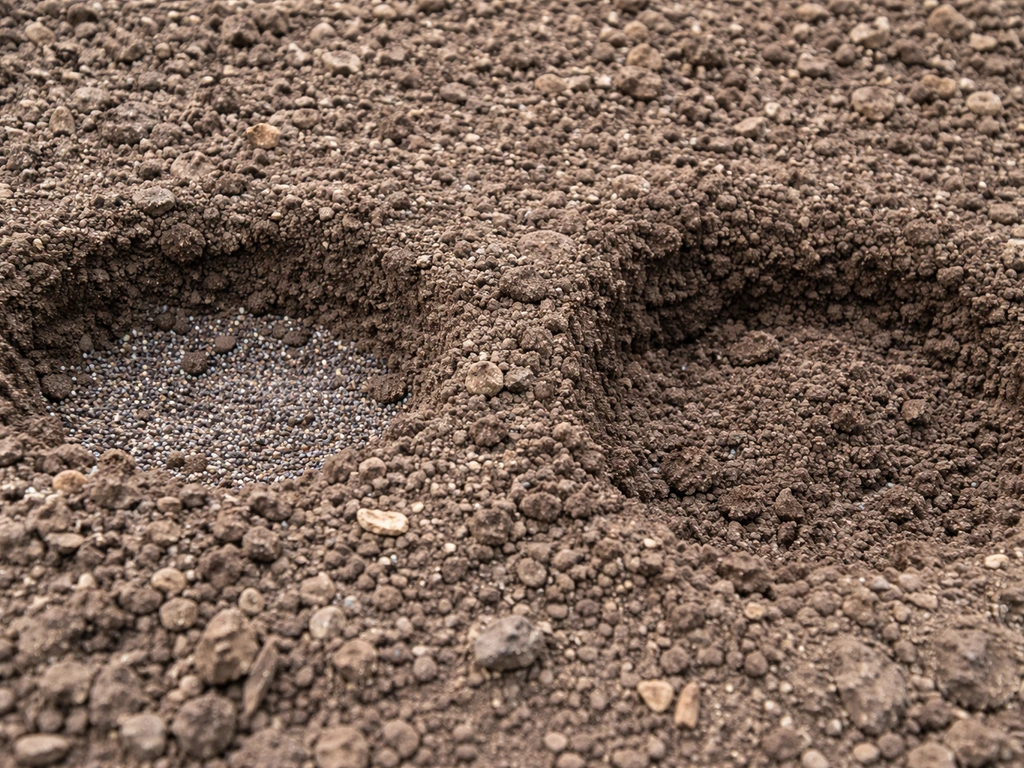
The most common complaint I hear is that seeds did not germinate at all. Before assuming the seeds are bad, check these things first:
- Seeds buried too deep: poppy seeds need light to germinate and should barely be covered. If you raked them in more than a few millimeters deep, germination will be poor or absent.
- Sowing into warm soil: if you sowed in late spring or summer when soil temperatures were above 70°F, germination rates drop sharply. Cool soil is a non-negotiable requirement.
- Drying out after sowing: the top layer of soil must stay consistently moist during germination. If it dried out even once in the first two weeks, many seeds may have died.
- Expecting instant results: germination can take up to 30 days, especially in cool spring soil. Mark where you sowed and wait before giving up.
- Slug damage: small poppy seedlings are extremely vulnerable to slugs. Tiny stems nibbled at soil level with no seedling visible above is a classic slug problem. Use organic slug pellets or a barrier of grit around the area.
Downy mildew is the main disease issue to watch for, showing up as a gray-white coating on lower leaves in damp, cool conditions. Improve air circulation by thinning plants properly, and avoid overhead watering in the evening. Aphids occasionally cluster on buds, but a firm spray of water knocks most off and beneficial insects usually take care of the rest without any intervention needed.
Leggy, floppy plants with few flowers are almost always a sign of too much shade or too-rich soil. Move next year's planting to a sunnier spot and skip the fertilizer. Giant varieties may need some loose staking with bamboo and garden twine if you are growing them in an exposed or windy location.
After flowering: saving seed, re-seeding, and next steps
One of the best things about growing poppies is what happens after the flowers fade. The plants do the work for you if you let them.
For annual types like rhoeas and somniferum, after the petals drop, the plant produces seed pods. Leave these on the plant until the pod turns papery and a small hole appears at the top of the capsule. At that point the seeds are ripe and the plant will naturally start shaking them out in the breeze, exactly how it self-seeds in the wild. If you want to save seed to sow elsewhere or next season, cut the whole pod just before it opens fully and let it finish drying in a paper bag indoors. Store in a cool, dry place and the seed remains viable for one to two years.
If you are happy for your poppies to naturalize in place, simply leave the spent plants alone and they will re-seed themselves for next year. This works especially well in meadow-style plantings where some disturbance of the soil surface helps seeds make contact and germinate. Over time, a naturalized poppy patch builds its own seed bank and blooms more reliably each year without any effort from you.
For oriental poppies, the end-of-season routine is different. After flowering, the foliage yellows and dies back completely by midsummer. This is normal dormancy, not disease. Leave the roots in the ground. If you need to divide or move a plant, White Flower Farm notes the only safe window is during dormancy, around August, when the taproot is least active. Attempting to move them while in active growth almost always fails due to that long taproot. New foliage will reappear in fall and the plant will overwinter and bloom again the following late spring.
One thing that comes up occasionally is the idea of growing new plants from cut flowers. To be clear: you cannot propagate poppies from a cut stem placed in water. Poppies grow exclusively from seed. If someone mentions growing poppies from flowers, they mean allowing the existing flower to set seed and using that seed to start the next generation, either by self-seeding in place or by collecting and sowing fresh.
Growing poppies well really does come down to a few core habits: sow direct into well-drained, sunny ground at the right time of year, keep the seeds moist until they germinate, thin properly once they are up, and then step back and let them do their thing. They are generous plants that reward a light-touch approach far more than fussing and over-managing.
FAQ
How deep should I sow poppy seeds, and does it matter if they get buried a little?
Aim for surface sowing, no deeper than about 1 to 2 millimeters. If seeds end up buried slightly deeper, germination drops because poppies need light at the surface for best results.
My poppy seeds germinated but the seedlings look like they are dying off. What should I do?
Check for drying out in the first few weeks, since tiny seedlings have limited root reserves. Keep the top layer consistently lightly moist, and avoid heavy watering that can form a crust or wash seedlings into clumps.
Do poppies need to be thinned, or can I leave them crowded?
Thinning usually improves flowering and reduces disease pressure. Crowded seedlings end up leggy and produce fewer blooms, and popping latex-rich stems in tight spacing also increases competition for light.
What is the best way to prevent washouts after watering?
Use a fine mist or gentle watering can setting right after sowing. If you notice a groove or bare spots from runoff, re-sow lightly over the affected areas rather than trying to “rescue” displaced seedlings.
Can I grow poppies in partial shade or under trees?
You can try, but expect leggy plants and reduced flower numbers. If your garden only gets 4 to 5 hours of direct sun, choose a sunnier site or treat poppies as a short-lived, less showy planting.
Should I fertilize poppies once they come up?
Generally no, especially once you see buds forming. If you do fertilize, keep it low-nitrogen and only early, because extra nitrogen pushes foliage and can delay or reduce blooms.
How do I handle weeds when poppies are still tiny?
Wait until poppy seedlings are clearly visible, then thin and spot-weed carefully. Since poppies dislike root disturbance, avoid hoeing deeply or pulling aggressively between seedlings.
How do I tell annual poppies from oriental poppies in my garden?
Annual types usually grow, flower, and then die back within the season after seed pods form. Oriental poppies flower in late spring and then go dormant in summer with foliage dying down completely, returning the next year.
Can I collect seed and guarantee the same flowers next year?
For most home gardens, yes, but there is no guarantee of identical results across all varieties, especially if multiple similar Papaver types cross or if volunteers mix in. Save seed from the plants you want, and consider labeling and keeping spacing if you grow several varieties.
Is it safe to move poppies after they have started growing?
For direct-sown poppies, avoid transplanting. If you need to move an oriental poppy, do it only during summer dormancy (around August), because their taproots are most vulnerable during active growth.
Why did my poppy seeds not germinate even though I watered and waited?
Common causes are sowing into warm late-season soil, incorrect depth, poor drainage, or a surface that dries and crusts before sprouting. Also re-check temperature timing, annual poppies germinate best in cooler conditions.
Can I grow poppies from saved seed indoors and then plant out later?
Indoor starting is usually not worth it because transplanting stresses or kills seedlings with early taproots. If you must start early, keep it minimal and plan to direct sow outdoors when conditions fit, rather than transplanting from trays.
How do I extend the vase life of cut poppies beyond just cutting at the bud stage?
After cutting, the latex needs to be managed. Dip the stem ends briefly in boiling water as described in the article, then immediately place in cool clean water, change water regularly, and keep stems out of direct sun.
Will poppies attract pests or diseases that could harm other plants?
Aphids can cluster on buds, and downy mildew can show up in damp, cool conditions. Since you can reduce mildew by improving airflow and avoiding evening overhead watering, watch poppies early to stop problems from spreading.
Next Article
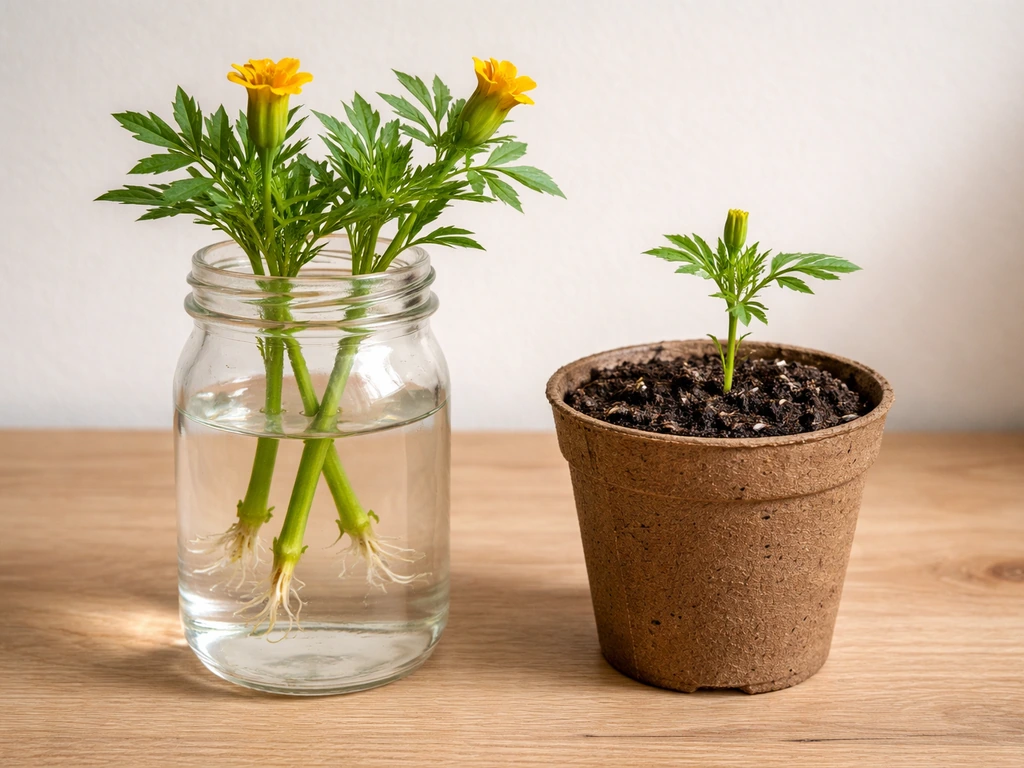
How to Grow Marigold From Stem Cutting: Step-by-Step
Learn how to grow marigold from stem cuttings, root in water or soil, avoid rot and mold, and transplant to flower.