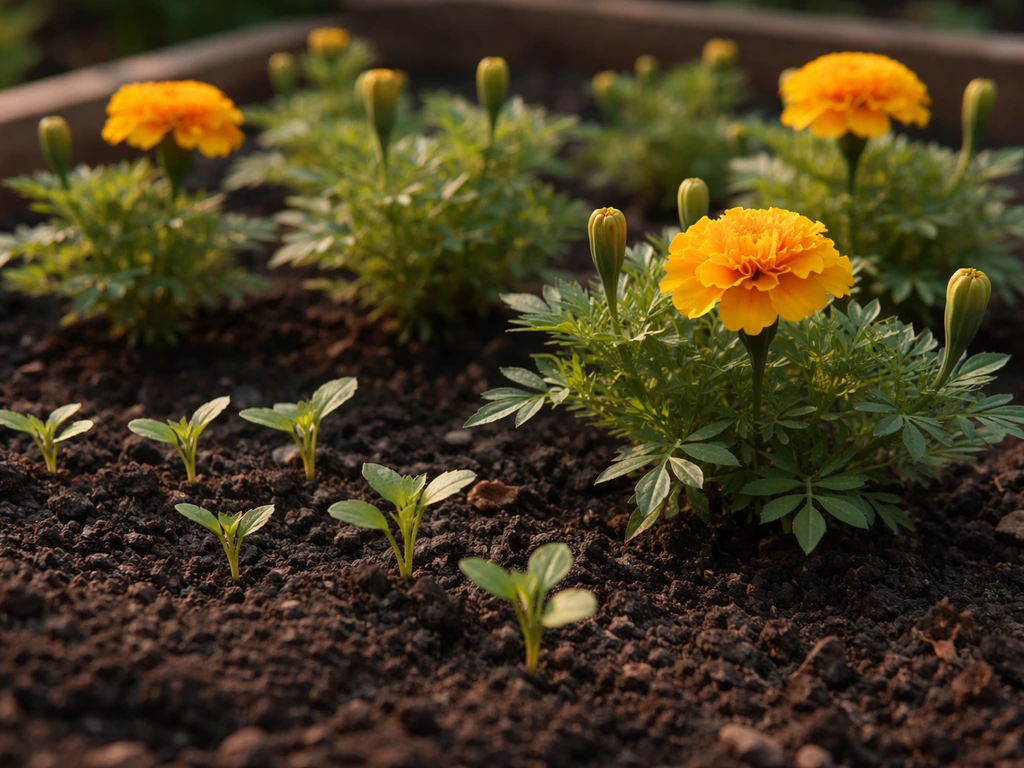
To get marigolds to grow tall, start with a Tagetes erecta variety (African or American marigold) like 'Crackerjack' or a Giant series, sow seeds 1/4 inch deep in well-drained soil with a pH between 6.0 and 7.0, give plants full sun for at least 6 hours a day, keep soil consistently moist but never waterlogged, feed with a balanced fertilizer every 3 to 4 weeks, and, crucially, resist pinching the central stem. Leave that main shoot alone and the plant will put its energy into growing up rather than branching out. Do those things consistently and you can realistically expect 24 to 36 inches of height, with some giant types pushing past 48 inches under ideal conditions.
How to Get Marigolds to Grow Tall: Beginner's Step Guide

Marcus Holloway
13 Aug 2026
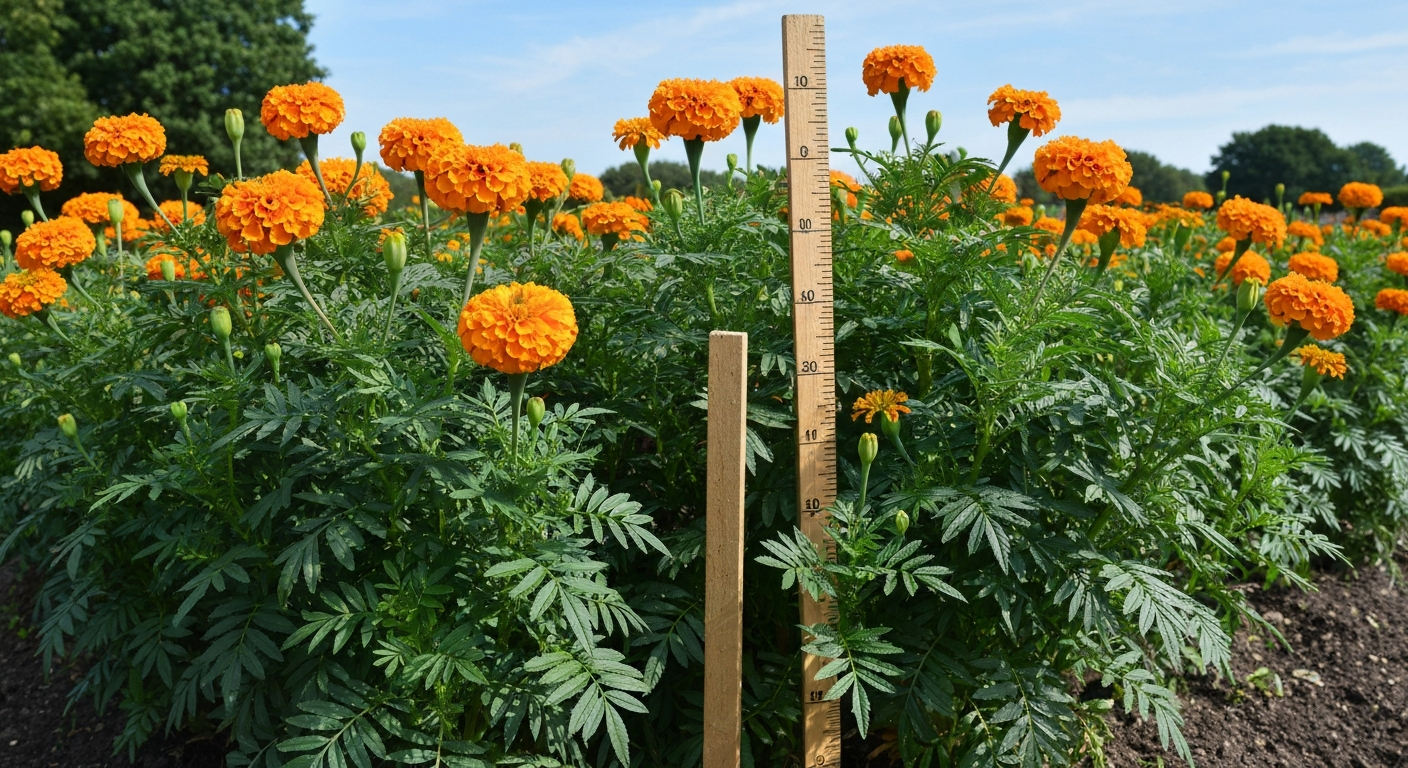
Quick-start checklist before you sow
Keep this list handy when you are planning your bed or setting up your seed-starting station. Every number here is something you can actually measure.
- Choose a Tagetes erecta (African/American marigold) variety labeled 'tall' or 'giant', targeting 24–48 inches at maturity
- Start seeds indoors 4–6 weeks before your average last spring frost date
- Sow seeds 1/4 inch (0.6 cm) deep, one seed per cell if using trays
- Maintain germination medium at 65–80°F (18–27°C); use a heat mat if your indoor space is cool
- Prepare outdoor beds with 2 inches of compost mixed into the top 6–8 inches of soil
- Target soil pH of 6.0–7.0 (commercial growers aim for 6.2–6.5)
- Harden off seedlings for 7–10 days before transplanting outdoors
- Transplant only after frost danger has passed and soil has warmed
- Space tall African types 10–18 inches apart depending on cultivar
- Thin direct-sown seedlings when they reach 2–3 inches tall
- Plant in full sun (6 or more hours of direct light daily)
- Do not pinch the central leader if maximum height is your goal
- Begin fertilizing every 3–4 weeks once plants are established outdoors
- Deadhead spent blooms to keep energy directed toward growth and new flowers
- Expect first blooms 65–75 days from seed, with full height reached by mid to late summer
Choose the right variety, this is half the battle
Not all marigolds want to be tall. French marigolds (Tagetes patula) are compact plants that typically top out at 10 to 16 inches. Signet types (Tagetes tenuifolia) are even shorter and more spreading. If you plant those and wonder why your marigolds never get impressive, the variety is working against you. The species you want is Tagetes erecta, African or American marigold, which is bred specifically for upright, tall growth. Within T. erecta, there is still a range, so it pays to check the label before you buy.
| Variety / Series | Species | Expected Height | Notes |
|---|---|---|---|
| Crackerjack | Tagetes erecta | 24–36 in (60–90 cm) | Classic tall/giant series; good for borders and cutting |
| Kilimanjaro | Tagetes erecta | 18–24 in (45–60 cm) | 65–75 days to maturity; reliable in home gardens |
| Giants / Giant Double | Tagetes erecta | 30–48 in (75–120 cm) | Top-end height; may need staking in exposed spots |
| Inca Series | Tagetes erecta | 12–14 in (30–35 cm) | Shorter African type; better for pots than tall beds |
| French marigold mix | Tagetes patula | 10–16 in (25–40 cm) | Compact; not suitable if height is your goal |
| Signet / Gem types | Tagetes tenuifolia | 8–12 in (20–30 cm) | Edible flowers; very low growing |
If you want the tallest possible plants, go with 'Crackerjack' or a Giant series. They are widely available from seed catalogs and most large garden centers carry transplants labeled as tall African marigolds in spring. Read the tag, if it just says 'marigold' without a species or height, look for something more specific.
Seed vs. transplant: which gives you taller plants?
Both methods work, but they have real tradeoffs when height is your priority. Here is the honest comparison.
| Factor | Starting from Seed | Buying Transplants |
|---|---|---|
| Variety selection | Wide — you can find any tall/giant cultivar | Limited to what your local nursery stocks |
| Cost | Very low (a packet of Crackerjack costs a few dollars) | Higher per plant, but saves setup time |
| Height potential | Full — undisturbed taproot develops naturally | Good, but transplant shock can briefly stall growth |
| Risk of legginess | Higher if light is insufficient indoors | Lower — nursery plugs are usually stocky |
| Control over timing | Full control over start date | Dependent on when stock arrives at stores |
| Beginner ease | Straightforward but requires 4–6 weeks of attention | Easier — just harden off and plant out |
My recommendation: start from seed if you want a specific tall variety and have a sunny windowsill or grow lights. The 'Crackerjack' and Giant series are rarely sold as transplants, so seeds are often your only option for the very tallest results. If you go the transplant route, choose the stockiest plants you can find, not the tallest ones in the tray, tall, spindly transplants are already stressed and will struggle to catch up.
When to start: timing by frost dates and temperature
Timing is where a lot of beginners go wrong. Start too early and you end up with overgrown, rootbound seedlings that stall after transplanting. Start too late and your plants are still short when summer peaks. The target is to transplant outdoors when the soil has warmed and frost risk is gone, and to work backward from that date to figure out when to sow indoors.
- Find your average last spring frost date (your local cooperative extension office or a gardening weather site will have this for your zip code or region)
- Count back 4–6 weeks from that date — that is your indoor sowing window
- Sow seeds in a warm space where you can maintain 65–80°F (18–27°C) in the growing medium; this is the sweet spot for fast, even germination
- Expect seedlings to emerge in 5–7 days at optimal temperatures
- Grow seedlings indoors under bright light for 3–6 weeks until they have 3–4 true leaves
- Begin hardening off 7–10 days before your planned transplant date: set trays outside in a sheltered spot for a few hours each day, gradually increasing exposure
- Transplant outdoors after your last frost date, ideally when soil temperature at 2-inch depth is at least 60°F (15°C)
- For direct sowing outdoors, wait until soil has warmed to at least 65°F (18°C) and all frost risk has passed
As a practical example: if your last frost date is May 15, you would sow seeds indoors between March 25 and April 15, then transplant outside around May 15 to May 20 after a week of hardening off. That timeline gives you plants reaching full height by mid to late July with blooms well into fall.
Getting the soil right for maximum height
Marigolds are often called tough plants, and they are, but 'tough' does not mean they thrive in bad soil. For tall growth, the roots need to run deep and access nutrients freely. That means drainage, the right pH, and some organic matter.
Drainage first
Marigolds perform best in sandy loam to loam soil with good drainage. Heavy clay that stays wet after rain is a direct path to root rot and stunted plants. If your soil clumps and drains slowly, work in coarse sand or perlite along with compost to open up the texture. You should be able to squeeze a handful of prepared soil, open your hand, and have it crumble apart rather than hold a tight ball.
pH target: 6.0–7.0
Marigolds do best in slightly acidic to neutral soil, right in the 6. How to Grow and Care for Marigolds, Clemson Cooperative Extension (HGIC) notes marigolds perform best in slightly acidic to neutral soils (pH about 6.0–7.0), with pH below ~5.5 sometimes causing leaf symptoms from micronutrient imbalances How to Grow and Care for Marigolds — Clemson Cooperative Extension (HGIC). 0 to 7.0 range. Commercial growers using plug trays narrow it down to 6.2–6.5 for the most consistent results. Below pH 5.5, micronutrient imbalances start to affect leaf color and plant vigor, you might see yellowing between leaf veins even when you have fertilized. A cheap pH meter or test kit from a garden center takes the guesswork out. If your soil tests too acidic, lime raises pH. If it is too alkaline, sulfur or composted pine bark brings it down.
Compost and amendments
Before planting, spread 2 inches (about 5 cm) of well-finished compost across the bed surface and work it into the top 6 to 8 inches (15 to 20 cm) of soil. Mulching for soil and garden health, University of Minnesota Extension recommends applying 2–4 inches of compost and mixing it into the topsoil for annual beds Mulching for soil and garden health — University of Minnesota Extension. This improves both water retention and drainage simultaneously (compost is genuinely good at both), adds slow-release nutrients, and encourages the soil structure that lets roots penetrate deeply. If your soil is very poor or compacted, you can go up to 3 to 4 inches of compost, just make sure it is fully decomposed or it can temporarily tie up nitrogen as it breaks down further.
Sowing depth, spacing, and thinning
These numbers matter more than most beginners expect. Depth affects germination speed, and spacing directly affects how tall and strong each plant grows. Crowded marigolds compete for light, water, and nutrients, and the result is tall, weak, spindly stems rather than sturdy upright plants.
Sowing depth
Sow marigold seeds at 1/4 inch (0.6 cm) depth. Some growers go as shallow as 1/8 inch (0.3 cm). Either works, the key is that the seed is barely covered, pressed into firm contact with moist medium, and not buried deep. Deep sowing delays or prevents emergence. When starting in cell trays, place one seed per cell. Single-seed sowing gives you one strong seedling per cell with no competition and eliminates the need to thin trays.
Spacing guidelines by variety size
| Variety Type | Mature Height | Recommended Spacing |
|---|---|---|
| Tall/Giant African (e.g., Crackerjack, Giants) | 24–48 in (60–120 cm) | 12–18 in (30–45 cm) apart |
| Medium African (e.g., Kilimanjaro) | 18–24 in (45–60 cm) | 10–12 in (25–30 cm) apart |
| French marigold (compact) | 10–16 in (25–40 cm) | 6–9 in (15–23 cm) apart |
Thinning direct-sown seedlings
If you direct-sow outdoors, you will likely have clusters of seedlings germinating together. Wait until seedlings are 2 to 3 inches (5 to 7 cm) tall before thinning, at that stage you can see which ones are healthiest. Use small scissors to snip out the extras at soil level rather than pulling, which disturbs the roots of the seedlings you are keeping. Thinning feels ruthless the first time, but it is one of the most effective things you can do to encourage tall, robust growth.
Sunlight and soil warmth: the two biggest height drivers
If I had to pick the two factors that most reliably separate tall marigolds from mediocre ones, it would be these. For quick methods and step-by-step tips on how to make marigolds grow faster, see our focused guide. For a quick overview of what marigolds need to grow, see the companion guide on what do marigolds need to grow. Inadequate sun produces stretched, floppy stems that look tall but are structurally weak. Cold soil slows everything down to a crawl even in spring sunshine.
Full sun is non-negotiable
Marigolds need at least 6 hours of direct sun per day, and for maximum height in Tagetes erecta types, 8 hours is better. A spot that gets morning sun and afternoon shade might produce flowering plants, but they will lean toward the light and stay shorter than their potential. Choose the sunniest spot in your garden. If you are growing near a fence or wall, make sure it is a south or west-facing aspect (in the Northern Hemisphere) so the plants are not shaded during the hottest part of the day.
Soil temperature and warming tricks
Cold soil is one of the main reasons transplants stall after planting. Even if air temperatures are mild, soil below 60°F (15°C) slows root establishment and nutrient uptake significantly. There are two easy, low-cost tricks to warm soil faster in spring.
- Black plastic mulch: lay sheets of black plastic over the bed 1 to 2 weeks before planting. It absorbs solar heat and can raise soil temperature by 5–10°F (3–6°C) compared to bare soil. Cut X-shaped slits to plant through and leave the plastic in place for early-season warmth.
- Heat mats indoors: for seed starting, a seedling heat mat set to 70–75°F (21–24°C) brings germination medium into the ideal 65–80°F range and speeds up germination noticeably, often getting seedlings up in 5 days rather than 10–14 in cool indoor conditions.
- Dark-colored containers: if growing in pots, use dark-colored containers rather than white or light terracotta — they absorb more heat and keep root-zone temperatures higher on cool spring days.
- Row covers/fleece: a lightweight floating row cover over transplants in the first week after planting traps warmth and protects against unexpected cold snaps without blocking light significantly.
The number one technique: do not pinch the central stem
This is the tip most beginners have never heard, and it makes a real difference. Pinching, snipping the growing tip out of a young plant, is a common technique for bushy, multi-stemmed plants with lots of flowers. It works by breaking apical dominance, which is the tendency of the main central shoot to suppress side branches. When you remove the tip, side shoots get released and the plant becomes wider and fuller. The catch is that you also remove the central leader, so the plant stops growing upward. For tall marigolds, that is the exact opposite of what you want. Leave the main stem completely intact. Let apical dominance do its job, and the plant will channel its energy into vertical extension.
Pinching delays first bloom by about 8 to 15 days in commercial growing practice and creates a shorter, bushier plant. If you want a few more flowers per plant and do not mind less height, pinching is fine. But if height is the goal, hands off that central shoot.
Watering, mulching, and feeding for strong, tall growth
Watering
Marigolds want consistently moist soil, not waterlogged and not bone dry. A good rule of thumb is to water deeply when the top inch of soil feels dry, then let it dry slightly before watering again. Deep, infrequent watering encourages roots to grow down in search of moisture, which directly supports taller, more stable plants. Shallow, frequent watering keeps roots near the surface and produces shorter, weaker plants. In hot weather, tall African marigolds in the ground may need water every 2 to 3 days. In cooler, cloudier spells, once a week may be plenty.
Mulching
A 2-inch layer of organic mulch (straw, shredded leaves, or wood chips) around the base of plants does several useful things at once: it retains soil moisture so you water less, moderates soil temperature, and suppresses weeds that compete for nutrients. Keep mulch a couple of inches away from the base of the stem to prevent rot. Mulching is one of those steps that feels minor but pays back consistently across the whole season.
Fertilizer schedule
Marigolds are not heavy feeders, but a regular light feeding schedule supports the sustained upward growth you want from tall varieties. At transplanting, incorporate a balanced slow-release granular fertilizer (something like a 10-10-10 or 5-10-5 formulation) into the planting hole or top-dress around transplants. Once plants are established and actively growing, feed every 3 to 4 weeks with a balanced liquid fertilizer. Commercial growers use 100 to 175 ppm of nitrogen in fertigation solutions during finishing, at home, a half-strength balanced liquid fertilizer every 3 to 4 weeks is a practical equivalent. Avoid very high-nitrogen fertilizers mid-season: too much nitrogen pushes lush leafy growth at the expense of strong stems and flowers.
Staking tall varieties
African marigolds pushing past 24 to 30 inches can become top-heavy when in full bloom, especially in windy gardens. Staking is not complicated, a single bamboo cane pushed into the soil beside the stem, tied loosely with garden twine or a soft clip, is usually enough. Do this when plants are about 12 to 15 inches tall, before they need it, so you do not risk damaging roots by pushing stakes into established root zones. The tie should hold the stem upright without constricting it, you want support, not a tourniquet.
Deadheading and pruning: what actually helps height
Deadheading (removing spent flowers before they set seed) redirects the plant's energy away from seed production and back into vegetative growth and new blooms. It will not directly make the plant taller, but it keeps the plant in a vigorous, actively growing state through the season, which means the stems keep extending and the plant reaches its full potential height rather than topping out early. Remove faded flowers by pinching or cutting them off just below the bloom head. Do this every week or so during the peak season. If you let African marigolds go to seed, growth slows noticeably and the plant starts to look tired by midsummer.
Pests and diseases to watch for
Marigolds have a reputation as pest-resistant plants, and that is mostly earned, but they are not immune. The issues below are the ones most likely to affect height and overall vigor.
- Spider mites: these tiny pests cause stippled, yellowing leaves and fine webbing on undersides of foliage. They thrive in hot, dry conditions. Improve air circulation, keep plants well-watered, and spray undersides of leaves with a strong water blast or insecticidal soap if mites are present.
- Aphids: clusters of soft-bodied insects on new growth and buds. Knock off with a water spray or apply neem oil. A heavy aphid infestation will visibly distort new growth and stall upward development.
- Botrytis (gray mold): a fuzzy gray rot that appears on spent flowers and damaged stems in cool, wet conditions. Remove affected tissue promptly and improve airflow around plants by spacing correctly.
- Damping-off (seedlings): a fungal issue in seed-starting trays that causes seedlings to collapse at the base. Prevent it by using sterile seed-starting mix, not overwatering, and providing good airflow. Bottom-watering (from a tray) rather than watering from above helps a lot.
- Root rot from poor drainage: standing water around roots invites Pythium and related pathogens. The fix is always at the soil level — improve drainage before planting rather than trying to treat it afterward.
Troubleshooting: why your marigolds are not growing tall
If your plants are underperforming in height, run through this diagnostic list before assuming the worst. Most issues have a simple fix when caught early. If you need more targeted help, see our troubleshooting guide on why won't my marigolds grow for step-by-step fixes and diagnostic checks.
| Symptom | Likely Cause | Fix |
|---|---|---|
| Slow or no germination | Cold medium (below 65°F/18°C) or seed buried too deep | Use a heat mat; check sowing depth (1/4 in max) |
| Spindly, leaning seedlings | Insufficient light indoors | Move to a sunnier windowsill or add grow lights 2–3 in above seedlings |
| Stunted growth after transplanting | Transplant shock, cold soil, or rootbound seedlings | Harden off fully; wait for warm soil; do not let plants sit too long in cells |
| Yellow leaves | pH too low (below 6.0), nutrient deficiency, or overwatering | Test soil pH; adjust if needed; reduce watering frequency |
| Short plants despite tall variety | Wrong variety, pinching, or crowded spacing | Confirm species is T. erecta; avoid pinching central stem; check spacing |
| Wilting despite watering | Root rot from waterlogged soil | Improve drainage; reduce watering; check for soggy soil at root zone |
| No blooms by midsummer | Started too late, too much nitrogen, or pinching | Adjust start timing next season; switch to a lower-N fertilizer |
| Stems flopping or breaking | Insufficient support on tall types, too much shade | Stake plants at 12–15 in height; move to sunnier spot |
Realistic growth timeline: what to expect week by week
Knowing what is normal at each stage helps you recognize problems early and avoid unnecessary panic. These timelines assume indoor seed starting at optimal temperatures (65–80°F) and outdoor conditions that are warm and sunny.
| Stage | Timing from Sowing | What You Should See |
|---|---|---|
| Germination | Days 5–10 | Seedlings emerging; seed coat may still be attached |
| Seedling (cotyledons) | Week 1–2 | Two small seed leaves open; stem upright |
| First true leaves | Week 2–3 | First set of true marigold-shaped leaves appearing |
| Transplant-ready size | Week 4–6 | 3–4 true leaves; stocky stem; root system fills cell |
| Established outdoors | 2 weeks after transplant | Active new growth visible; plant anchored and upright |
| Rapid vegetative growth | Weeks 4–8 outdoors | Height increasing noticeably; stem thickening |
| First buds | Weeks 6–10 outdoors | Flower buds forming at stem tips |
| First blooms / harvest | 65–75 days from seed | Open flowers on tall varieties; full height nearly reached |
| Full height | 10–14 weeks from seed | 24–48 in depending on variety and conditions |
Companion planting with tall marigolds
Tall African marigolds are genuinely useful companions in the garden, not just decorative. Their height makes them natural back-of-border plants, and their strong scent is widely reported to deter certain insect pests from neighboring vegetables. They pair well with tomatoes, peppers, and brassicas as a border planting. For more ideas on what to grow with marigolds and thoughtful placement in mixed beds, see our guide on what to grow with marigolds. Keep in mind that very tall varieties (24 inches and above) can shade shorter neighbors, so position them thoughtfully, taller plants on the north side of a bed in the Northern Hemisphere so they cast shade away from lower-growing companions. For ideas on what works best around marigolds, it is worth exploring companion planting combinations in more depth.
A few final tips from experience
Marigolds reward consistency more than fuss. Get the variety right (Tagetes erecta, a named tall or giant series), start on schedule, give them warmth, light, and decent drainage, and step back. The most common mistake I see is choosing a French or compact marigold and then wondering why it never gets tall, that is a variety problem, not a technique problem. The second most common mistake is pinching because it 'seems like the right thing to do.' For maximum height, let that central shoot run. Feed lightly and regularly, water deeply and less often, stake before you think you need to, and deadhead every week or so. Do those things and you will have tall, impressive African marigolds that make the whole border look intentional, even if you have never grown flowers from seed before. For step-by-step guidance and troubleshooting on how to help marigolds grow, see our detailed how to help marigolds grow guide.
FAQ
Which marigold types grow tallest and which varieties should I choose for maximum height?
Choose Tagetes erecta (African/American marigolds) or varieties specifically labeled 'tall/giant' (Crackerjack, Giants, Giant Double, some Inca or Kilimanjaro series). These typically reach 18–48 in (45–120 cm) depending on cultivar and conditions; avoid French (T. patula) and signet types which are compact (<10–16 in/25–40 cm).
When should I sow marigold seed or transplant to get the tallest plants?
Start indoors 4–6 weeks before your average last spring frost. Transplant outdoors after all danger of frost has passed, once seedlings have 3–4 true leaves and have been hardened off for 7–10 days. For faster establishment, wait until soil temps are consistently ≥60°F (≈16°C).
How deep do I sow marigold seeds and how do I space them for tall growth?
Sow very shallow: press seed on surface and cover with 1/8–1/4 in (0.3–0.6 cm) of medium. For transplants, space tall African types 10–18 in (25–45 cm) apart depending on cultivar (use the wider end for 'giant' types). If sowing direct, thin to these spacings when seedlings reach 2–3 in (5–7 cm).
What soil pH, texture and preparation produce tall marigolds?
Target pH about 6.0–6.5 (acceptable 6.0–7.0). Use a well‑drained sandy loam or loam. Incorporate 2 in (5 cm) of well‑finished compost mixed into the top 6–8 in (15–20 cm) of soil. Improve drainage for heavy clay (raised bed or added coarse sand/compost).
How much sun and water do tall marigolds need?
Full sun: at least 6–8 hours of direct sun daily (more light favors vertical growth). Water regularly to keep soil evenly moist but not waterlogged—about 1 in (2.5 cm) per week from rainfall+irrigation; increase to maintain consistent moisture during establishment and hot spells. Mulch 1–2 in (2.5–5 cm) to conserve moisture and moderate soil temps.
What fertilizer schedule and type helps marigolds grow taller and faster?
Use a balanced starter at transplant (e.g., 10-10-10 at label rate or a liquid 5-10-5 starter) and then a moderate N feeding during vegetative growth—aim for roughly 75–150 ppm N in regular liquid feedings for framed garden practice. Avoid excessive high N as it can encourage soft growth and flop; switch to a bloom‑supporting fertilizer (lower N, higher P/K) once flower buds set. Follow product label rates.
Next Article
How to Help Marigolds Grow: Seed to Flower Guide
Step-by-step seed to flower tips for how to help marigolds grow: planting, watering, soil, feeding, and troubleshooting.