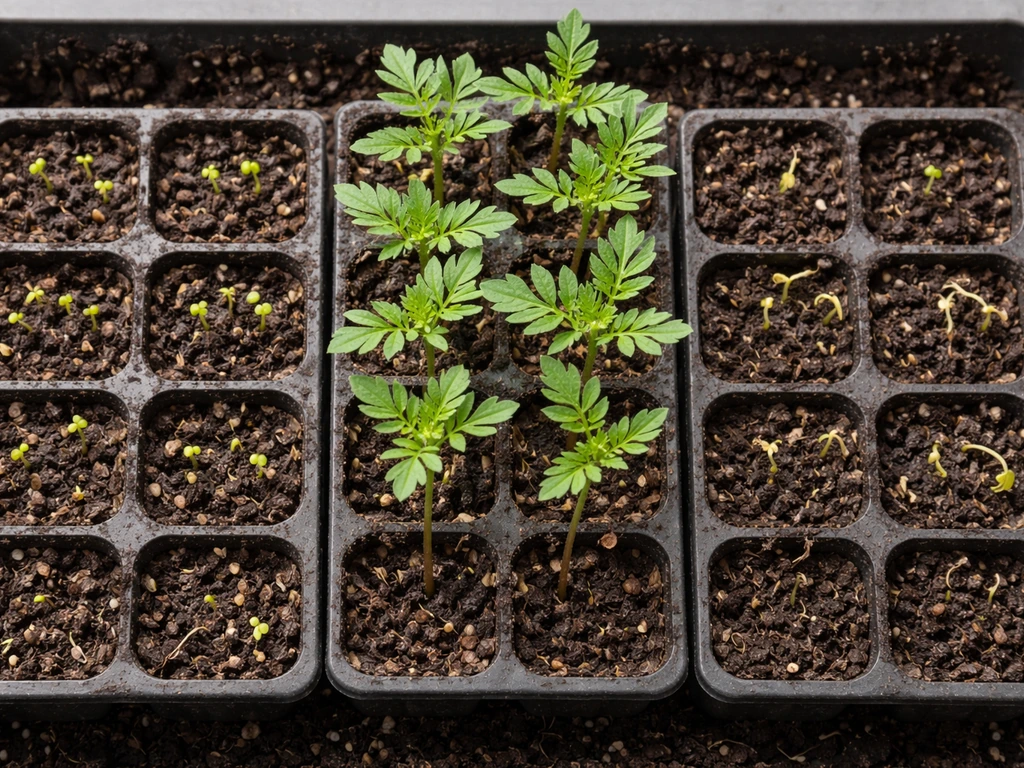
Marigolds are one of the easiest flowers you can grow, but "easy" still means doing a few things right. Give them full sun, well-drained soil, and a light hand with fertilizer, and they'll reward you with blooms from early summer straight through to frost. The most common reasons marigolds struggle are too little light, overwatering, or too much nitrogen pushing leafy growth instead of flowers. Get those three things right and everything else falls into place. If you are wondering what to grow with marigolds, you can pair them with compatible flowers and herbs that share the same sun and drainage needs.
How to Help Marigolds Grow: Seed to Flower Guide

Marcus Holloway
13 Jun 2026
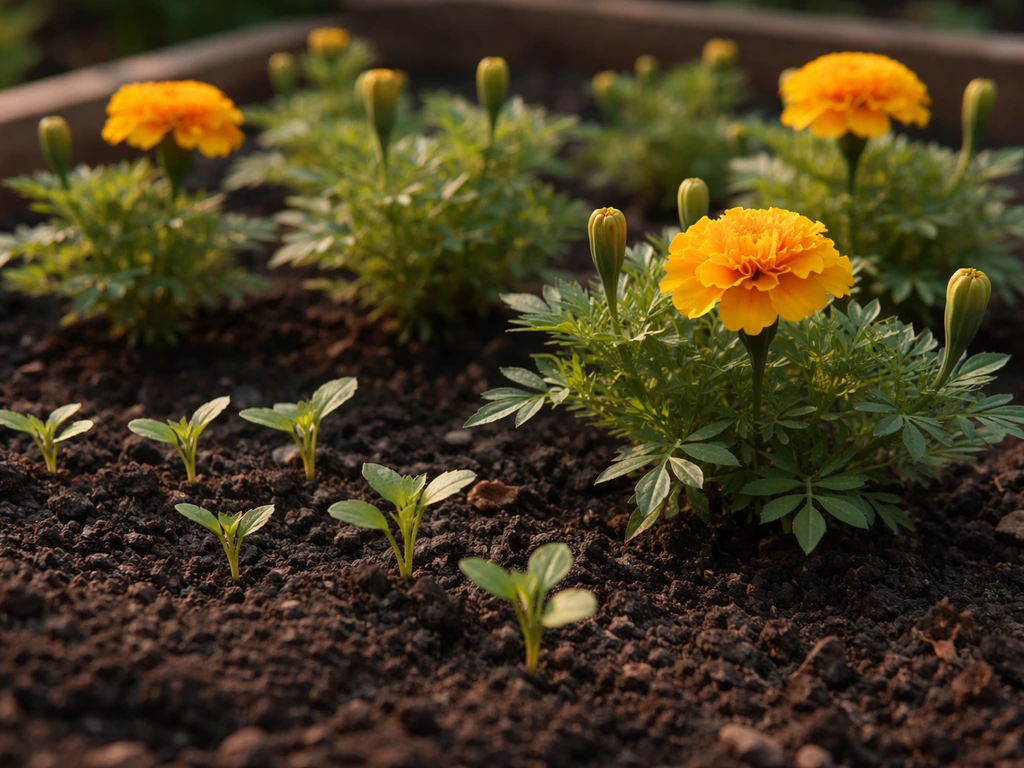
Pick the right marigold type and planting timing
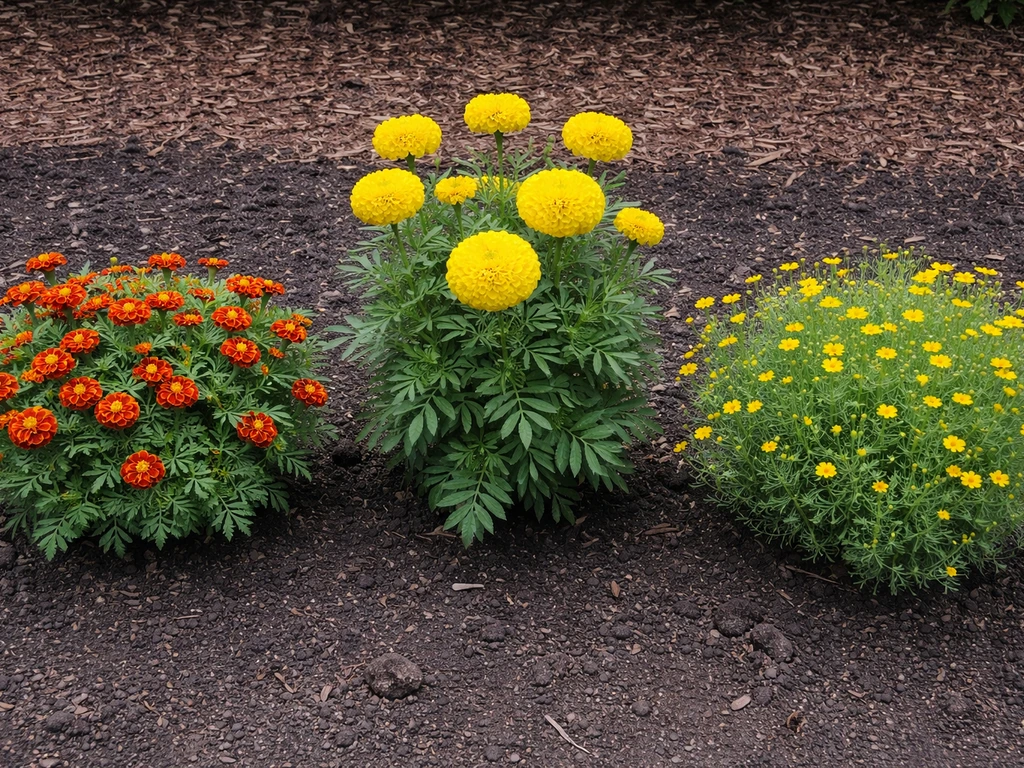
The marigold family has three main types, and each one suits a slightly different purpose in the garden. Knowing which one you're planting changes your expectations around size, bloom time, and how much patience you need.
| Type | Latin name | Height | Bloom size | Best for |
|---|---|---|---|---|
| French marigold | Tagetes patula | 6–18 inches | Small to medium | Beginners, borders, containers, fastest to bloom |
| African marigold | Tagetes erecta | 1–4 feet (30–120 cm) | 2–4 inches across | Cut flowers, back of border, dramatic displays |
| Signet/pot marigold | Tagetes tenuifolia | 8–30 inches | 0.5–1 inch, daisy-like | Edible flowers, lacy texture, cottage look |
For beginners, French marigolds are the go-to. They're compact, bushy, faster to bloom, and incredibly forgiving. African marigolds take longer to mature (roughly 70–90 days to full flowering) but produce those big, impressive 3-inch blooms that look stunning in a vase. Signet marigolds are less common but worth growing if you want edible petals or a fine-textured look in containers.
Timing matters most for African marigolds. Because they take longer to reach bloom, start them indoors 6–8 weeks before your last frost date. French and signet marigolds are quicker and more flexible: start them indoors 4–6 weeks before the last frost, or direct sow them outdoors once soil temperatures are consistently above 65°F. Do not rush transplants outside. Marigolds are warm-season annuals and cold soil (below about 65°F) will stall or damage young plants.
Get the soil and sunlight conditions right
Sun is non-negotiable. Marigolds need at least 6–8 hours of direct sunlight every day. French marigolds can tolerate a bit of partial shade, but they'll stretch toward the light and bloom less. NC State Extension Gardener Plant Toolbox notes that French marigold (Tagetes patula) needs full sun, meaning 6 or more hours of direct sunlight each day blank" rel="noopener noreferrer">French marigold needs full sun (6 or more hours of direct sunlight daily). African marigolds especially demand full sun for abundant flowering. If you're placing them in a spot that gets afternoon shade, you'll end up with more leaves and fewer flowers than you want.
Soil quality matters, but marigolds are not fussy about richness. What they absolutely need is good drainage. Sitting in wet soil is one of the fastest ways to kill a marigold. A loamy, moderately fertile soil with decent drainage is ideal. For soil pH, aim for somewhere between 6.0 and 7.0. They'll tolerate a slightly wider range (about 5.5–7.5) but that 6.0–7.0 sweet spot keeps nutrients most available to the plant.
Before planting, work in a thin layer of compost (about 1–2 inches) to improve soil structure and add a baseline of nutrition. If your soil is heavy clay, mix in some coarse grit or perlite to help drainage. If it's very sandy, the compost also helps retain just enough moisture. You don't need rich, amended garden soil to grow marigolds well. In fact, overly rich soil encourages leafy growth at the expense of blooms.
Start seeds (or transplant) with proper sowing and spacing
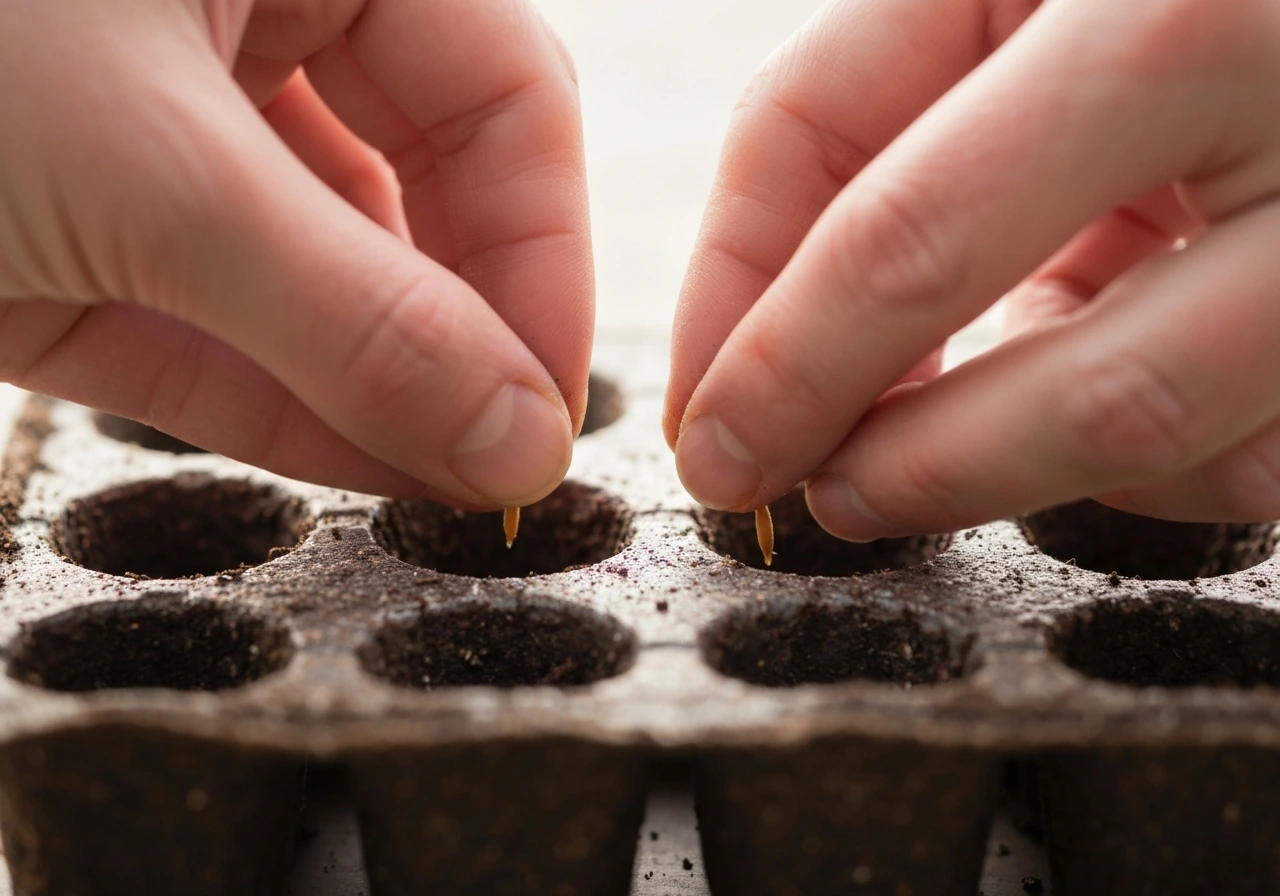
Starting seeds indoors
Fill small pots or seed trays with a quality seed-starting mix. Marigold seeds are large enough to handle individually, which makes sowing straightforward. Push each seed about a quarter inch deep and lightly cover. Water gently from below if you can, to avoid disturbing the seeds.
Keep the growing medium at 72–75°F for best results: at this temperature, you can expect germination in as little as 3–5 days for African marigolds and 2–4 days for French marigolds. Keep the growing medium warm and get consistent germination so your marigolds can build strength quickly and start flowering sooner best results. Johnny's Selected Seeds puts the full germination window at 4–7 days when soil temps are in the 75–80°F range. Light is not required for germination itself, so a heat mat under the tray is more useful than grow lights at this stage.
Once seedlings emerge, move them to bright light immediately to prevent legginess.
Direct sowing outdoors
Wait until soil temperatures are reliably above 65°F and all frost risk has passed. Scratch the soil lightly, sow seeds about a quarter inch deep, and space them roughly 6 inches apart to allow for thinning later. Water gently and keep the area consistently moist until seedlings appear. Thin to final spacing once they're a few inches tall.
Spacing by type
- French marigolds: 6–9 inches apart (they spread 6–9 inches wide)
- African marigolds: 12–18 inches apart (they get big and need airflow)
- Signet marigolds: 8–12 inches apart
If you bought transplants from a nursery, harden them off for 5–7 days before planting out. Set them outside in a sheltered spot for a few hours each day, gradually increasing exposure to direct sun and wind. This step prevents transplant shock and gives your plants the best possible start.
Watering and feeding for strong growth and lots of blooms
How to water marigolds
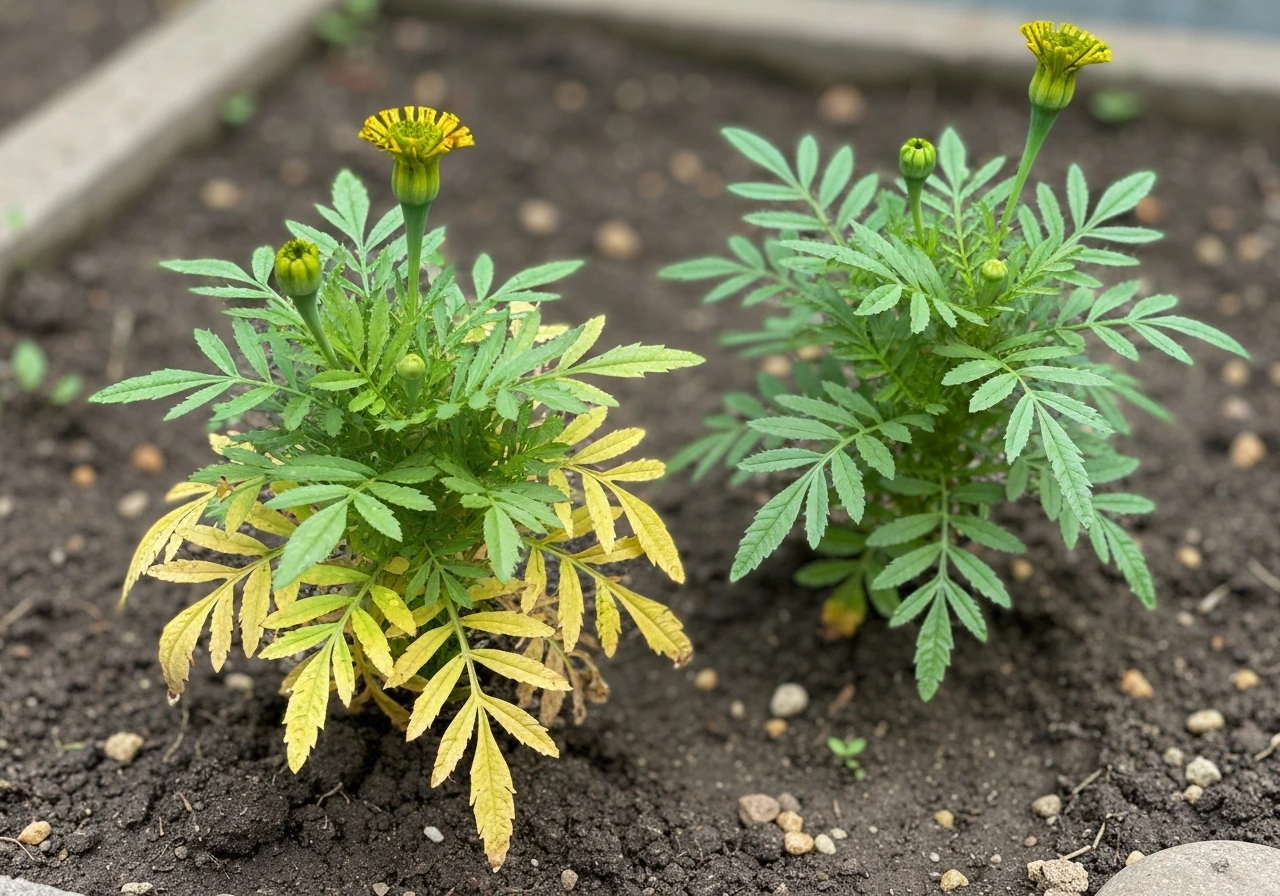
Water deeply but infrequently. Once established, marigolds are reasonably drought tolerant and actually prefer to dry out a little between waterings. A good rule of thumb is to water when the top inch of soil feels dry. Then water thoroughly so moisture reaches the roots, and let the soil drain before watering again. Avoid getting water on the foliage, which encourages fungal problems like powdery mildew. Water at the base of the plant in the morning so any splash dries quickly.
Overwatering is the single most common mistake with marigolds. Soggy soil leads to root and crown rots, and the first signs often look like dull, wilting foliage followed by yellowing leaves. If your plants look off despite regular watering, that's often a sign you're watering too much, not too little. When in doubt, hold off and check the soil before reaching for the hose.
How to feed marigolds
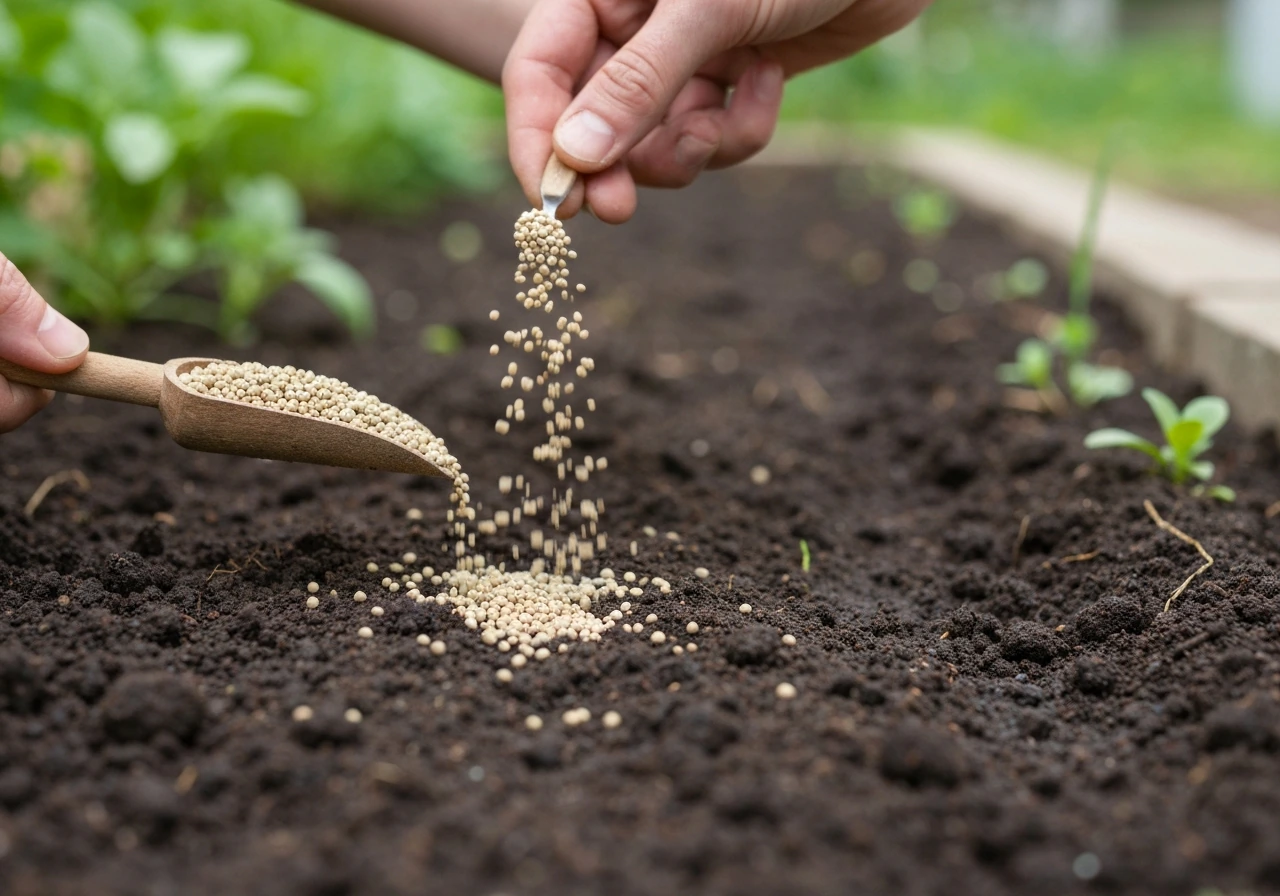
Less is more with marigold fertilizing. At planting, work a balanced granular fertilizer (equal N-P-K ratios, like a 10-10-10) into the top few inches of soil according to the package rate. This gives the plant a steady foundation without overdoing it. After that, marigolds in reasonably fertile soil often don't need regular feeding at all. If you do feed during the season, stick to a balanced formula and avoid anything high in nitrogen. High nitrogen pushes the plant to produce lush green growth and actually delays or reduces flowering. If your marigolds look all leaves and no blooms, nitrogen overload is often the culprit.
Maintenance: thinning, mulching, deadheading, and plant support
Thinning for airflow
If you direct sowed, thin seedlings to their recommended spacing once they're 2–3 inches tall. Crowded marigolds compete for light and water, and poor airflow sets up conditions for fungal disease. Thinning feels painful but it genuinely makes the remaining plants stronger and better-looking. Use scissors to snip seedlings at the soil line rather than pulling them out, which disturbs roots of neighboring plants.
Mulching
A 1–2 inch layer of mulch (straw, shredded bark, or even dry grass clippings) around your marigolds does several things at once: it keeps moisture in the soil, suppresses weeds that would compete for water and nutrients, and keeps soil from splashing onto lower leaves during rain. Keep mulch a few inches away from the stems to prevent moisture sitting against the base of the plant.
Deadheading for more blooms
Deadheading is the single best thing you can do to keep marigolds blooming all season. When a flower starts to fade and go brown, snip it off just above the next bud or set of leaves below it. This redirects the plant's energy away from seed production and back into making new flowers. French marigolds are so prolific that some varieties rebloom without much deadheading, but all marigolds respond well to regular removal of spent blooms. Make it a weekly habit when you're in the garden.
Supporting tall African marigolds
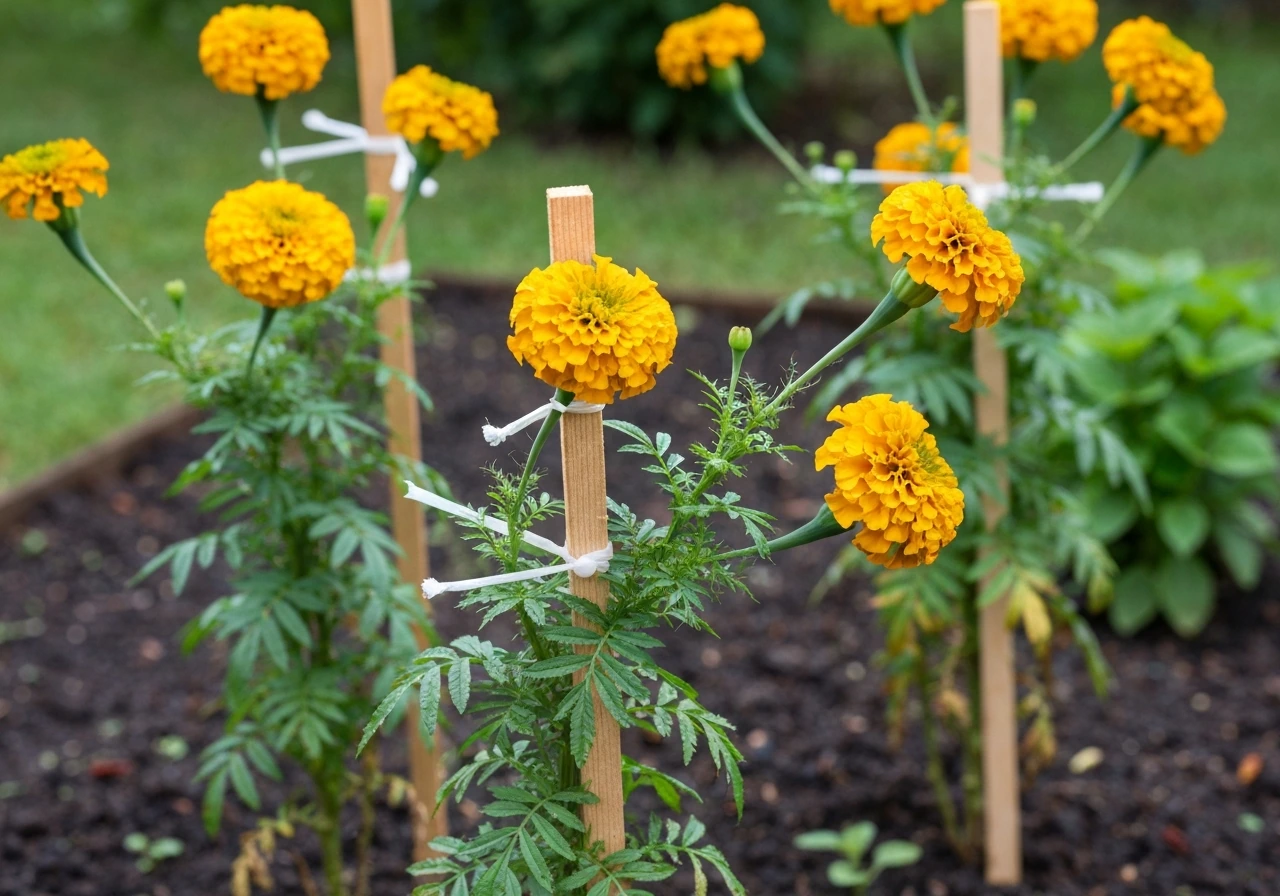
African marigolds can reach 3–4 feet tall with heavy double blooms that weigh down stems after rain or wind. Stake tall varieties when plants are about 12 inches tall, before they actually need it. A simple bamboo cane and soft garden twine per plant is plenty. Alternatively, plant African marigolds close enough together that they support each other (around 12 inches apart) and use a low wire grid or ring support over the whole group.
Troubleshooting when marigolds struggle
Poor or slow germination
If seeds aren't sprouting after 10 days, the most likely cause is soil temperature. Marigold seeds need warmth (ideally 72–80°F) to germinate quickly. Cold soil dramatically slows or prevents germination altogether. Use a heat mat indoors or wait for genuinely warm outdoor conditions before direct sowing. Old or poorly stored seed can also be the issue: buy fresh seed each year for best results.
Leggy, stretched seedlings
Leggy seedlings that reach and flop are almost always a light problem. Indoors, seedlings need very bright light the moment they emerge: a sunny south-facing window can work, but a simple grow light positioned just 2–4 inches above the seedlings works better. Keep the light on for 14–16 hours per day. If seedlings are already leggy, pot them up a little deeper to bury some of the stretched stem, and get them under better light immediately.
Yellow leaves
Yellowing leaves have a few common causes. Overwatering and root rot show up as yellowing that starts at the lower leaves and spreads upward, often accompanied by wilting even when the soil is wet. If that sounds like your plant, reduce watering immediately and check if the soil is draining properly. Nutrient deficiency (especially in very sandy or depleted soil) can also cause yellowing, but this is less common. A light balanced feed can help if overwatering isn't the issue.
Powdery mildew
Powdery mildew shows up as a white or gray talcum-powder-like coating on the leaves and stems, usually later in the season when days are warm and nights are cool. It's more common when plants are crowded with poor air circulation, or when foliage gets regularly wet. To manage it: improve spacing, water at the base rather than overhead, and remove badly affected leaves. A spray of diluted neem oil or a baking soda solution can slow its spread on remaining healthy growth.
Aphids and other pests
Aphids cluster on new growth and the undersides of leaves, sucking sap and causing distorted, sticky foliage. Check for them regularly by turning over leaves. A strong blast of water from a hose knocks most aphids off, and repeated treatment over a few days usually gets them under control. For persistent infestations, insecticidal soap or neem oil works well and won't harm beneficial insects as harshly as synthetic sprays. Spider mites can also appear in hot, dry conditions and show up as fine webbing on leaves with a dusty, bronzed look. Increase humidity around the plant and use a miticide or neem oil if needed.
Stunted or stalled growth
If marigolds just aren't growing, run through the basics: Are they getting 6+ hours of direct sun? If you’re still figuring out marigolds how to grow, start by matching the type to your conditions and calendar, then adjust watering and feeding as needed. Is the soil draining freely? Are temperatures consistently warm? Marigolds really do stall in cool conditions, especially African types. A plant that looks fine but isn't growing is often simply waiting for the weather to warm up. Give it time before assuming something is wrong. Following the right sun, watering, and fertilizer routine is one of the fastest ways to make marigolds grow faster and bloom sooner.
A simple week-by-week timeline after planting
- Week 1–2 (seeds indoors): Sow seeds at 72–80°F, expect germination in 4–7 days. Move seedlings to bright light the moment they emerge.
- Week 3–4 (seedling stage): Pot up if roots are crowded. Begin hardening off transplants a week before outdoor planting date.
- Week 5–6 (transplant or direct sow outdoors): Plant out after last frost when soil is above 65°F. Apply mulch. Water in well.
- Week 6–8 (establishment): Water when top inch of soil is dry. Watch for aphids and leggy growth. Plants should show noticeable growth once temps are warm.
- Week 8–10 (first buds): French marigolds will start blooming. African marigolds may still be a few weeks out. Begin deadheading as soon as flowers fade.
- Week 10–12 and beyond (peak bloom): Deadhead weekly. Stake tall African types if needed. Enjoy continuous blooms until frost.
Cutting and harvesting marigold flowers
If you're growing marigolds for cutting, African marigolds are your best bet: those big 3-inch double blooms hold up beautifully in a vase. Cut stems in the morning when flowers are just fully open, using clean sharp scissors or snips. Cut long stems just above a leaf node or side shoot so the plant branches and produces more blooms. Change the vase water every couple of days and strip any leaves that would sit below the waterline. French and signet marigolds are shorter-stemmed but still worth cutting for small arrangements or using petals as edible garnishes.
Keeping flowers cut, whether for the vase or just through deadheading, is the best ongoing investment you can make in your plants. Every spent bloom you remove is a signal to the plant to keep producing, and marigolds are remarkably responsive to this. A little attention each week goes a long way toward a garden that looks full and colorful right up until the first hard frost.
FAQ
My marigolds are green but not growing, what should I check first?
If seedlings look healthy but growth stalls, check soil temperature first. Marigolds, especially African types, often stop growing when nights are cool or soil stays near the mid-60s Fahrenheit, even if daytime sun looks great. Use a thermometer at root depth, and wait to direct sow or transplant until it’s consistently warm.
Can I grow marigolds in partial shade?
Yes, but only if you can still give them strong light. French marigolds tolerate some partial shade, while African marigolds usually bloom less with afternoon shade. If you must use a shadier spot, plan on stretching and fewer flowers, and consider moving container plants to the sunniest area each week.
How can I tell if I’m overwatering versus underwatering marigolds?
Overwatering can look like underwatering at first because wilting may happen when roots are already struggling from low oxygen in soggy soil. Before watering, feel the top inch and also check drainage by digging one test hole, if it stays wet for days, adjust watering and improve soil drainage.
What’s different about how to help marigolds grow in containers?
For containers, use a pot with drainage holes and a mix that is light and fast-draining. Marigolds in pots dry out faster, so water based on the top inch feeling dry, not on a calendar, and avoid heavy garden soil because it can stay wet and trigger root and crown rots.
Do marigolds need deadheading to keep blooming?
If flowers fade and seeds form, deadheading is still the best lever. Snip spent blooms just above the next bud or leaf set, and keep deadheading weekly. Letting marigolds go to seed reduces new flowering for most varieties.
What happens if I don’t thin marigold seedlings?
Thin them promptly. Crowding reduces airflow and competition for light, which can lead to fungal issues and smaller blooms. Snip extra seedlings at the soil line with scissors after they’re a few inches tall rather than pulling, so you don’t disturb nearby roots.
How do I know whether I should fertilize marigolds at all?
If you’re fertilizing in-ground and plants are already producing, skip extra feeding. If you do add nutrition, use a balanced fertilizer and keep it light, too much nitrogen often shows up as lots of leafy growth with delayed or reduced flowering.
Should I mulch marigolds, and how close can mulch be to the stems?
Mulch helps, but keep it away from the stem base. Leave a gap so moisture does not sit against the crown, and use only a 1 to 2 inch layer. Thick mulch can stay wet and increase the risk of crown rot, especially in rainy weather.
What’s the best way to prevent powdery mildew on marigolds?
Powdery mildew is usually worse when leaves stay wet and plants are crowded. Improve spacing, water at the base in the morning, remove heavily affected leaves, and treat early. If you wait until many leaves are covered, control is harder.
My African marigolds are falling over after rain, how do I fix it?
If marigolds flop, it’s usually either tall African varieties without support, or uneven moisture that makes stems weaker. Stake African marigolds when they’re about 12 inches tall, and water deeply then let the top inch dry slightly between waterings to strengthen stems.
Can I overwinter marigolds or save seed from my plants?
Marigolds generally don’t need overwintering because they’re warm-season annuals, but you can save seeds instead. Let a few flowers fully mature and dry on the plant, then harvest and store in a cool, dry place for next season. Don’t expect them to survive frost outdoors.
Next Article
Why Won’t My Marigolds Grow? Fix Germination and Stalls
Troubleshoot marigolds not growing: seed germination, damping-off, light, watering, soil and spacing fixes plus next-ste