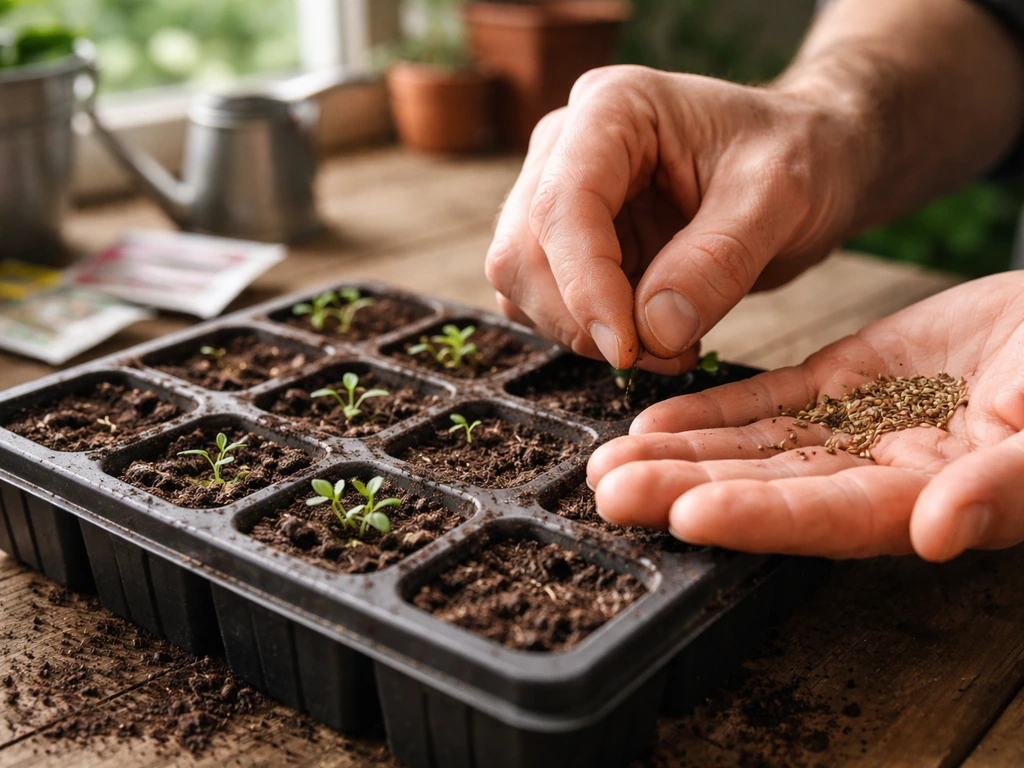
Marigolds are one of the best flowers you can grow, full stop. They germinate fast, bloom for months, shrug off neglect, attract bees and hoverflies, and earn their spot in any vegetable garden as a companion plant. If you have never started a flower from seed before, marigolds are the place to start. This guide covers everything: the difference between true marigolds (Tagetes) and calendula, variety picks, how and when to sow, spacing and site requirements, growing in hot climates like Florida, and what to do with the flowers once you have them.
Why Grow Marigolds: Seed-to-Harvest Guide for Beginners

Marcus Holloway
17 Jul 2026
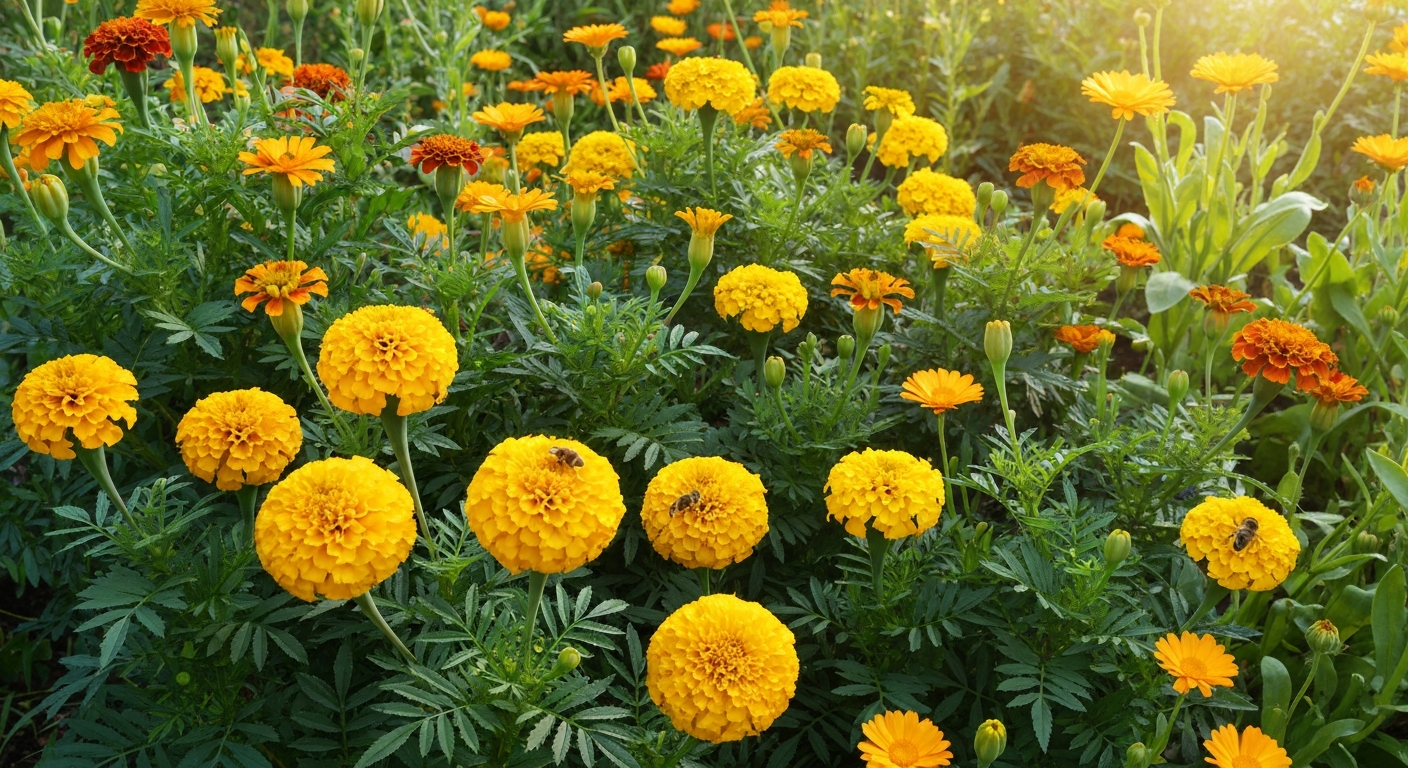
Why marigolds deserve a spot in your garden
There are very few flowers that do as many jobs at once. Marigolds bloom quickly from seed, typically within 50 to 90 days depending on species, so beginners get real results without a long wait. The flowers come in yellow, gold, orange, and deep burgundy-red, and they keep going until frost if you deadhead regularly. Pollinators, particularly bees and hoverflies, visit the more open-flowered types regularly. Research confirms that single and semi-double forms score higher for pollinator visits than very double, heavily bred cultivars, so variety choice matters if supporting insects is one of your goals. In the vegetable patch, certain French marigold cultivars (including Nemagold, Queen Sophia, and Tangerine) have demonstrated genuine nematode suppression when grown as a solid cover crop for a full season, though interplanting a few plants between tomatoes provides more limited benefit. See UF/IFAS Extension bulletin ENY‑056/NG045 for cultivar reaction data and regional recommendations, which advises following local county extension guidance for cultivar selection and management in nematode‑prone soils. As cut flowers, African marigolds in particular give you bold, long-lasting stems for vases. For a beginner, that combination of fast results, practical usefulness, and visual impact makes marigolds about as close to a guaranteed win as gardening gets.
True marigolds vs calendula: which is which?
This trips up almost every new gardener. 'Marigold' gets applied to two entirely different plant genera. True marigolds are Tagetes, a large genus that includes French marigolds (Tagetes patula), African or Aztec marigolds (Tagetes erecta), and signet marigolds (Tagetes tenuifolia). Calendula (Calendula officinalis), often sold as 'pot marigold,' is a separate genus altogether. Both are in the daisy family (Asteraceae), but they have different growing seasons, different uses, and different cultural requirements. Tagetes love heat and die the moment frost arrives. Calendula actually prefers cool weather and can tolerate light frosts, making it a spring and autumn plant in most climates. In terms of uses, Tagetes are primarily ornamental and used for companion planting and cutting; calendula petals are edible and widely used medicinally, in teas, salves, and as a garnish. If a recipe or herbal remedy calls for 'marigold petals,' it almost certainly means calendula, not Tagetes.
| Feature | Tagetes (true marigold) | Calendula officinalis (pot marigold) |
|---|---|---|
| Season preference | Warm/hot season | Cool season (spring, autumn) |
| Frost tolerance | None — killed by frost | Tolerates light frost |
| Typical height | 6 inches to 4 feet depending on type | 12 to 24 inches |
| Main use | Ornamental, companion planting, cut flower | Ornamental, edible petals, herbal/medicinal |
| Edible? | Signet marigold flowers are edible; Tagetes patula petals used with caution | Yes — petals widely used in food and herbal preparations |
| Germination time | 5 to 14 days | 7 to 14 days |
| Days to flower | 50 to 90 days | 45 to 65 days |
The main types and what to expect from each
Knowing which type you are growing changes everything about timing, spacing, and what you get at the end. Here is a practical rundown of the four main groups.
French marigold (Tagetes patula)
French marigolds are compact and bushy, usually 6 to 12 inches tall, and they are the most widely grown type for good reason. They flower quickly, handle a wider range of soil conditions, and bloom continuously through summer with minimal fuss. Single and bicolored forms are especially attractive to pollinators. This is also the group with the best-documented nematode-suppression track record when grown as a dense cover crop.
African marigold (Tagetes erecta)
African marigolds grow tall, 24 to 48 inches, and produce large, globe-shaped blooms in yellow, orange, and gold. They take a bit longer to flower than French types and need a longer season, so starting them indoors 4 to 6 weeks before your last frost date pays off. They are the go-to choice for cut flowers because the stems are long and the blooms are showy. African types need heat to thrive, so do not rush transplanting.
Signet marigold (Tagetes tenuifolia)
Signets are low-growing, ferny-leaved plants with masses of small, single flowers. They are genuine edible flowers with a citrusy flavour, and they work well as a border edging. One important note: signet marigolds do not suppress nematodes and can actually allow nematode populations to reproduce on their roots, so do not use them for that purpose.
Calendula (Calendula officinalis)
Calendula produces daisy-like flowers in yellow, orange, and cream. It is a cool-season plant, which makes it useful in early spring and autumn slots when Tagetes would not survive. The petals are edible raw in salads, can be dried for herbal teas, and are used in skin salves. If you want a flower that bridges ornamental and practical growing, calendula is hard to beat.
Spotlight: Calendula 'Pacific Beauty'
Pacific Beauty Mix is one of the best-known open-pollinated calendula varieties available, and it is genuinely easy to grow from seed. It produces large, semi-double to fully double flowers in a warm mix of yellow, apricot, cream, and deep orange on stems reaching about 18 to 24 inches. Because it is open-pollinated, you can save seeds from your best plants year after year, which makes it especially good value. The flowers are large enough to use for cutting and attractive enough for a border, and the petals are fully edible and commonly used as a garnish or dried for herbal use. Direct sow seeds about half an inch deep in early spring as soon as your soil can be worked, or start indoors 4 to 6 weeks before your last frost date. Thin or space plants to about 9 to 12 inches apart. Pacific Beauty is an excellent first calendula for beginners because it is vigorous, reliable, and gives you a lot of flowering stems per plant.
Spotlight: Mexican marigold (Tagetes erecta)
Mexican marigold, often called African marigold in seed catalogs (Tagetes erecta), is native to Mexico and Central America despite the confusing common names. It is the tallest and most imposing of the Tagetes species, reaching up to 4 feet, with large pompom flowers that last well in a vase. In Mexico it holds cultural significance, particularly for the Dia de los Muertos celebrations, where the deep orange flowers are used extensively. From a growing perspective, it demands heat and a longer season than French types. Start seeds indoors 4 to 6 weeks before your last frost, maintain soil temperature around 70 to 75°F for good germination, and do not transplant until nighttime temperatures are reliably above 50°F. Once established in warm soil with full sun, these plants are genuinely robust. For step-by-step instructions on timing, soil, and transplanting, see our guide on how to grow Mexican marigold (fc497a09-70cc-40c5-9f8c-91d8592a2186). Tall varieties may need staking if you are in a windy spot. If you are interested in growing Mexican marigold as a distinct herbal plant (sometimes called Mexican mint marigold or Mexican tarragon, which is Tagetes lucida), that is a different species with anise-scented foliage used in cooking.
Is calendula actually easy for beginners?
Yes, with one important caveat: calendula is easy in cool weather and difficult in heat. If you are gardening in a temperate climate with mild springs, calendula is about as straightforward as flowers get. Direct sow in early spring, keep the soil moist until germination (7 to 14 days), thin to 9 to 12 inches, and you will have flowers in roughly 6 to 8 weeks. For step-by-step instructions on planting, spacing, and seasonal care, see our guide on how to grow calendulas. The plants are robust, seedlings are easy to handle, and they will self-seed modestly if you let a few flowers go to seed. The challenge comes in summer. Calendula struggles when temperatures consistently exceed 80°F. In hot climates, plants get leggy, stop blooming, and often develop powdery mildew. The practical solution is to treat calendula as a spring and autumn crop, not a summer one. In warm climates including most of Florida, you grow it in the cooler months and let it wind down as heat arrives. If you set your expectations to match the season rather than forcing it through a hot summer, calendula is genuinely one of the most beginner-friendly flowers you can grow. See our short guide 'Is calendula easy to grow' for a quick, practical checklist on success with this cool-season flower.
Where to grow marigolds: beds, borders, containers and raised beds
Marigolds are adaptable to most garden setups, but giving them the right space makes a real difference. Here is a practical guide to common growing situations. For more detail on where to grow marigolds, see our guide.
Garden beds and borders
French marigolds work brilliantly as a border edging around vegetable plots or flower beds. Space them 6 to 9 inches apart. African marigolds belong in the middle or back of a border given their height; space them 12 to 18 inches apart. Calendula fits naturally into cottage-style mixed borders and combines well with spring bulbs and early annuals.
Containers and pots
French and signet marigolds are particularly well-suited to container growing. Use a pot at least 8 inches deep with drainage holes, fill with good-quality potting mix, and plant two or three French marigolds per 10-inch pot. Water more frequently than you would in the ground since containers dry out fast. African marigolds can grow in large containers (12 inches or more) but they look better and perform more reliably in the ground. Calendula does well in containers too, especially in spring.
Raised beds
Raised beds are an ideal spot for marigolds, especially if your native soil is heavy clay. The improved drainage reduces the risk of root rot, and the slightly warmer soil temperature in a raised bed gives Tagetes species a head start in spring. French marigolds planted around the perimeter of a raised vegetable bed serve a dual purpose: they look attractive and can help deter some pests. Use the same spacing as you would in open ground.
Growing marigolds in hot, humid climates including Florida
Florida and other hot, humid regions require a different strategy than temperate gardens. UF/IFAS extension guidance for Florida specifically recommends avoiding transplanting marigolds into the hottest months of summer in southern parts of the state, where heat and humidity combine to encourage fungal diseases and heat stress. For most of Florida, the ideal planting window for Tagetes is late winter through spring (February to April) and again in late summer to early autumn (August to October) to catch the milder shoulder seasons. Calendula in Florida is strictly a cool-season crop: plant it October through February. Drainage is critical in humid climates, where sitting moisture around roots leads to root rot quickly. Raised beds and containers with excellent drainage solve this problem. Choose heat-tolerant Tagetes varieties and give them the best-draining soil you can manage. Where possible, use afternoon shade (from a fence or taller plants) to reduce heat stress in the hottest parts of summer without sacrificing the morning sun that marigolds need. For state-specific timing and variety recommendations, see how to grow marigolds in Florida.
Light, soil, and site: getting the basics right
Both Tagetes and calendula need full sun, which means a minimum of 6 hours of direct sunlight per day. In practice, 8 hours or more produces the best flowering. Well-drained soil is non-negotiable: both genera are susceptible to root rot in waterlogged conditions. Marigolds perform well in average garden soil and do not need rich compost-heavy beds. In fact, overly fertile, nitrogen-rich soil tends to push leaf growth at the expense of flowers. A moderately fertile, slightly acidic to neutral soil (pH 6.0 to 7.0) is ideal. If your soil is heavy clay, work in some coarse grit or compost to improve drainage before planting. Sandy soils drain well but may need light compost additions to retain some moisture. No elaborate soil prep is needed: a simple dig to loosen compaction, removal of weeds, and a balanced granular fertiliser worked into the surface will set you up well.
When to sow and plant: timing it right
Getting timing right is where most beginners go wrong, either sowing too early (producing leggy, oversized transplants that struggle) or too late (missing the best blooming window). Here is the framework to follow based on your situation.
| Type | Sow indoors | Direct sow outdoors | Transplant out | Days to flower |
|---|---|---|---|---|
| French marigold (Tagetes patula) | 4 to 6 weeks before last frost | After last frost, soil above 60°F | After last frost | 50 to 60 days |
| African/Mexican marigold (Tagetes erecta) | 4 to 6 weeks before last frost | After last frost, soil above 65°F | After last frost, nights above 50°F | 70 to 90 days |
| Signet marigold (Tagetes tenuifolia) | 4 to 6 weeks before last frost | After last frost | After last frost | 55 to 65 days |
| Calendula (Calendula officinalis) | 4 to 6 weeks before last frost | Early spring (as soon as soil workable) or autumn | 2 to 4 weeks before last frost (tolerates light frost) | 45 to 65 days |
If you are direct sowing Tagetes, wait until both air and soil temperatures are reliably warm. Cold, damp soil produces slow germination and damping-off problems. Calendula is the exception: it prefers being sown into cool soil and will actually outperform spring-sown seeds if you get them in early enough to establish before summer heat arrives.
How to sow and transplant: step by step
Starting seeds indoors
- Fill small cells or a seed tray with a fine, moist seed-starting mix. Do not use garden soil — it compacts and can harbour disease.
- Sow Tagetes seeds very shallowly: about 1/8 to 1/4 inch deep, lightly pressing the seed into the surface and covering with a thin layer of mix.
- Sow calendula seeds about 1/2 inch deep.
- Water gently with a fine mist so you do not displace seeds.
- Place in a warm spot: 70 to 75°F for African marigolds; 60 to 70°F is fine for French, signet, and calendula.
- Expect germination in 5 to 14 days for Tagetes and 7 to 14 days for calendula. Once you see sprouts, move seedlings immediately to the brightest windowsill or under grow lights to prevent legginess.
- Water when the top of the mix feels dry. Keep seedlings slightly on the drier side rather than constantly wet to prevent damping-off.
- Once seedlings have two sets of true leaves, pot up into individual 3-inch pots if they are crowded.
Hardening off and transplanting
- About 7 to 10 days before your planned transplant date, begin hardening off by placing seedlings outside in a sheltered spot for a couple of hours each day, gradually increasing exposure over the week.
- Bring plants back inside if temperatures drop below 45°F (for Tagetes) or below 28°F (for calendula).
- Transplant on a calm, overcast day if possible to reduce transplant shock.
- Dig a hole slightly larger than the root ball. For Tagetes, plant at the same depth as the pot. For leggy calendula seedlings, you can plant slightly deeper.
- Water well immediately after transplanting and keep the soil moist for the first week while roots establish.
Variety-specific sowing notes
- French marigolds are the most flexible: they tolerate slight cold and bounce back from a late cool snap better than African types.
- African/Mexican marigolds need warmth at every stage: cold soil or cold nights will stall them significantly. Be patient and do not rush the transplant.
- Signet marigolds are small-seeded and light: barely cover seeds, just press them into the surface.
- Calendula seeds are distinctively curved and easy to handle. Sow them more deeply (1/2 inch) and they germinate reliably in cool soil. They can also be autumn-sown outdoors in mild climates for overwinter germination and very early spring flowering.
Watering, feeding, and day-to-day care
Established marigolds are genuinely low-maintenance, but a few habits make the difference between plants that just survive and plants that bloom hard all season. Water deeply but infrequently rather than giving a little every day. Deep, occasional watering encourages roots to grow downward and makes plants more drought-tolerant. In the ground, watering every 2 to 3 days in summer is usually adequate; containers may need daily watering in hot weather. Always water at the base of the plant rather than overhead to reduce the risk of botrytis and powdery mildew on foliage. For feeding, marigolds do not need heavy fertilising. A balanced granular fertiliser (such as a 10-10-10 formula) mixed into the soil at planting time is usually enough. If you want to give a mid-season boost, a dilute liquid feed once a month is plenty. Overfeeding with nitrogen produces lush green plants with fewer flowers. Mulching around plants with a 2-inch layer of organic mulch conserves moisture, moderates soil temperature, and reduces weed competition.
Deadheading, pinching, and shaping for more blooms
Deadheading is the single highest-impact thing you can do to extend marigold flowering. When a bloom fades, the plant's energy shifts toward setting seed. Remove spent flowers before they mature and the plant redirects that energy into producing more buds. For French and signet types, you can deadhead by simply pinching off finished flowers with your fingers every few days. For African marigolds, use small scissors or snip just below the spent bloom. Pinching out the growing tip of young transplants when they are 6 to 8 inches tall encourages branching and a bushier, more productive plant. This is especially worth doing with African marigolds, which can otherwise grow as a single central stem before branching. For calendula, deadhead frequently and do not let seed heads form unless you are deliberately saving seed, since plants left to set seed stop blooming quickly.
Succession planting for blooms all season
A single sowing of French marigolds will give you flowers for most of the summer if you deadhead consistently, but succession sowing gives you younger, more vigorous plants coming into the window when earlier plantings start to look tired. Sow a second batch indoors 3 to 4 weeks after the first, then transplant when the first batch starts to slow down in late summer. For calendula, succession sowing is especially useful: make a first sowing in early spring, a second 3 to 4 weeks later, and then plan an autumn sowing in late summer for flowers in September and October. In hot climates where calendula takes a forced summer break, treat the autumn sowing as your main planting.
Pest and disease troubleshooting
Marigolds have a reputation for being trouble-free, and largely they are, but a few problems are worth knowing in advance so you can act early rather than wondering why your plants look off.
| Problem | Likely cause | What to do |
|---|---|---|
| Damping-off (seedlings collapse at soil level) | Overwatering, poor drainage, cold conditions | Use sterile seed-starting mix, water less frequently, improve airflow around seedlings |
| Leggy, weak seedlings | Insufficient light | Move to brighter position or add grow lights immediately after germination |
| Powdery mildew on foliage | High humidity, poor airflow, overhead watering | Water at the base, increase plant spacing, remove affected leaves; worst in calendula in warm weather |
| Botrytis (grey mould) on flowers | Wet conditions, cool temperatures, crowded plants | Remove affected blooms promptly, improve airflow, avoid wetting foliage |
| Aphids on stem tips | Common in spring especially on calendula | Knock off with a jet of water; introduce or encourage ladybirds; heavy infestations can be treated with insecticidal soap |
| Slugs on young seedlings | Wet conditions, young transplants | Use copper tape around containers, hand-pick at night, use iron phosphate pellets |
| No flowers despite healthy growth | Over-fertilising with nitrogen, too much shade | Cut back feeding, ensure minimum 6 hours direct sun |
| Plants stop blooming mid-summer | Heat stress (calendula) or failure to deadhead | For calendula in heat: pull plants and re-sow for autumn; for Tagetes: deadhead and water deeply |
A note on 'blue marigolds' and 'margarita flowers'
You may have come across references to blue marigolds online. For more information and alternatives, see our guide on how to grow blue marigolds, which explains why true blue marigolds aren’t real and suggests genuine blue-flowering substitutes. To be direct: there are no true blue marigolds. Neither Tagetes nor Calendula produces blue pigments. Seeds sold as 'blue marigolds' are either mislabeled, fraudulent listings (common on certain online marketplaces), or a misidentified plant entirely. If you are looking for a blue daisy-family flower to grow alongside marigolds, options like Nigella, bachelor's buttons (Centaurea), or Scabiosa are all easy to grow from seed and provide genuine blue tones. Similarly, 'margarita flower' is a common name sometimes applied to several different plants including Argyranthemum (marguerite daisy) and various Leucanthemum species. If you are searching for information about growing a daisy-like flower with white petals and a yellow centre, you are likely looking at a marguerite or shasta daisy rather than a marigold. For specific growing advice on marguerite (margarita) flowers, see our guide on how to grow margarita flower.
Harvesting marigolds and calendula: cut flowers, drying, and edible uses
Cut flowers
For the longest vase life, cut African marigold stems in the morning when flowers are just fully open, cutting to just above a leaf node to encourage side shoots. Strip lower foliage that would sit below the waterline. French marigolds are shorter-stemmed but still work well in small arrangements and posies. Change vase water every couple of days. Marigold stems have a strong scent that some people find unpleasant; this is characteristic of Tagetes and completely normal.
Drying blooms
Both Tagetes and calendula flowers can be dried. For air drying, cut flowers with long stems just before full bloom, bundle loosely, and hang upside down in a dry, dark, well-ventilated space for 2 to 3 weeks. Calendula petals dry particularly well: separate the petals from the flower head and spread them on a clean mesh tray in a warm, airy spot. Dried calendula petals keep their colour well and are ready when they feel papery and fully dry to the touch.
Edible and medicinal calendula uses
Calendula petals (Calendula officinalis) are the edible and medicinally used part of the plant. Fresh petals can be scattered over salads, stirred into rice dishes for a golden colour, or used as a garnish. Dried petals are used in herbal teas, infused oils, and skin salves. It is worth being clear that the main medicinal uses of calendula are topical and in traditional herbal practice: the scientific evidence for calendula in skin care and wound healing is more established than for most other herbal remedies, and it is widely used in commercial skincare products. To harvest for drying, pick flower heads on dry days just after they fully open, and process them quickly to avoid mould.
Companion planting timing
If you are using French marigolds for nematode suppression, timing the planting matters. Plant a solid stand before your main vegetable crop goes in, or use them as a full-season bed preparation in the year before planting susceptible crops like tomatoes and peppers. A thin perimeter planting around vegetables provides some deterrence for aphids and whitefly (the scent is thought to confuse or deter certain pests), but the nematode benefit specifically requires a dense, season-long planting rather than a scattered few plants. Remove marigolds and turn them into the soil at the end of the season to return organic matter.
Which type should you grow? A quick recommendation
If you are growing your first marigolds ever, start with French marigolds. They are the fastest, most forgiving, and most versatile option. Buy a packet of a mixed variety, direct sow after your last frost date, and you will have flowers within two months. If you want long-stemmed cut flowers, add a few African marigold plants started indoors. If you want edible petals and a cool-season flower for spring and autumn, grow calendula alongside them, and try Pacific Beauty Mix as your starting variety. Avoid buying 'blue marigold' seeds from unknown sources online. Grow what works, learn your local timing, and you will find marigolds become one of those flowers you grow every single year without much thought because they just deliver.
FAQ
Why should home gardeners grow marigolds?
Marigolds are easy, fast‑flowering annuals that provide color, attract pollinators, and can serve as useful companion plants. Tagetes (French, African, signet) add pest‑management benefits in some situations (nematode suppression with correct cultivars and solid stands), while Calendula officinalis (pot marigold) offers edible petals, medicinal uses, and cool‑season performance. They work in beds, borders and containers and are excellent for beginner gardeners.
What's the difference between Tagetes (marigolds) and Calendula (pot marigold)?
They are different genera. Tagetes species (e.g., T. patula, T. erecta, T. tenuifolia) are the common garden 'marigolds'—warm‑season, often strongly scented, with French/African/signet forms. Calendula officinalis (pot marigold) is a separate genus in Asteraceae, usually grown as a cool‑season annual with flatter, daisy‑like flowers whose petals are edible and used medicinally. Horticultural use commonly calls both 'marigold,' so check the botanical name on seed packets.
When should I sow marigold and calendula seeds?
Tagetes: start indoors 4–6 weeks before last frost or direct‑sow after danger of frost and soil warms; French types germinate quicker and flower earlier than African types. Calendula: direct‑sow or start indoors 4–6 weeks before last frost for spring; in mild climates you can also sow in fall for winter/spring blooms. Adjust timing for local climate (e.g., avoid midsummer sowing in very hot, humid Florida without heat‑tolerant varieties).
How deep and how do I sow seeds for best germination?
Shallow sowing. Tagetes seeds: very lightly cover or press into soil ~1/8–1/4 inch; keep soil 60–80°F (optimal ~70–75°F) and moist — germination 5–14 days. Calendula: sow ~1/4–1/2 inch deep or surface sow with a thin cover; maintain cool to moderate temps and expect germination in ~7–14 days.
What soil, light and spacing do marigolds and calendula need?
Light: full sun (minimum ~6 hours daily). Soil: well‑drained, moderate fertility—too rich soil gives leggy plants and fewer flowers. Spacing: French marigolds 6–12" apart, signet varieties 4–6", African (tall) 12–18+". Calendula: 9–12" between plants. In containers use a well‑draining potting mix and allow adequate air space for airflow.
How do I transplant seedlings and harden them off?
Harden off seedlings over 7–10 days by gradually increasing outdoor exposure and reducing watering. Transplant after frost risk passes (Tagetes) when seedlings have several true leaves; plant at same depth as started. Water well at transplant, hold off heavy fertilizer until established.
Next Article
How to Grow Margarita Flower From Seed to Bloom
Step-by-step guide to grow margarita flower from seed to bloom, with timing, soil, watering, care, pests, and next seaso