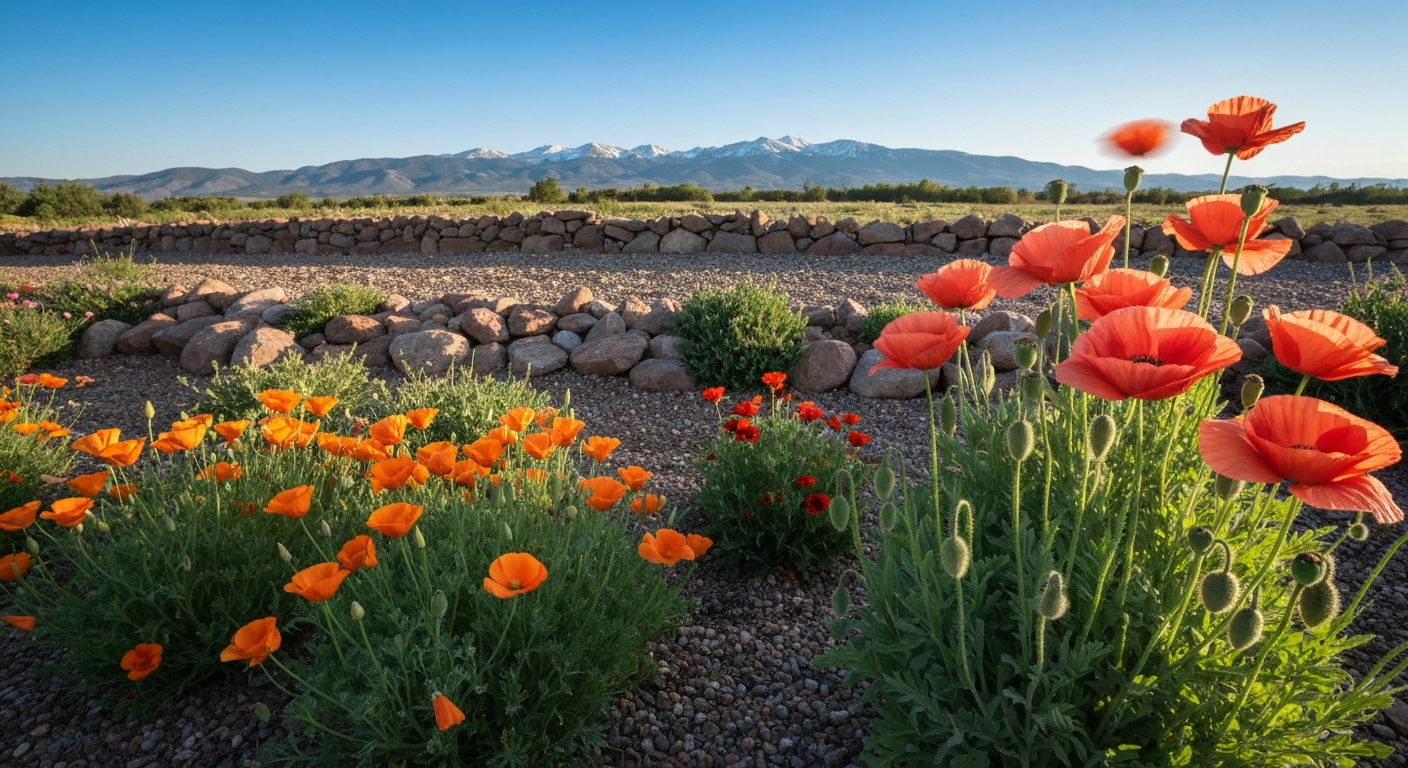
Orange poppies are genuinely easy to grow, and most beginners succeed on their first try. Sow California poppy seeds directly onto the soil surface in early spring or fall, keep them moist until they sprout in 14 to 21 days, and you will have vivid orange blooms within about 60 days. Oriental poppies take a full season to establish but reward you with dinner-plate flowers every spring for years. The key is choosing the right species for your climate, sowing at the right time, and not overcomplicating the soil prep.
How to Grow Orange Poppy Flower: A Practical Step-by-Step Guide
Marcus Holloway
5 Aug 2026
Who this guide is for
This guide is written for home gardeners who want reliable orange color in the garden without a complicated growing program. Whether you have a sunny border, a cutting garden, or just a container on a patio, at least one orange poppy species will work for your situation. I have grown all four main types covered here, and I will flag which ones reward patience and which ones practically grow themselves. By the end, you will know exactly what to sow, when to sow it, and how deep to press the seed into the soil.
The main types of orange poppies
Four species cover nearly every orange poppy you will encounter in seed catalogs or garden centers. Each behaves differently in the garden, so matching the right species to your goals saves a lot of frustration.
California poppy (Eschscholzia californica)
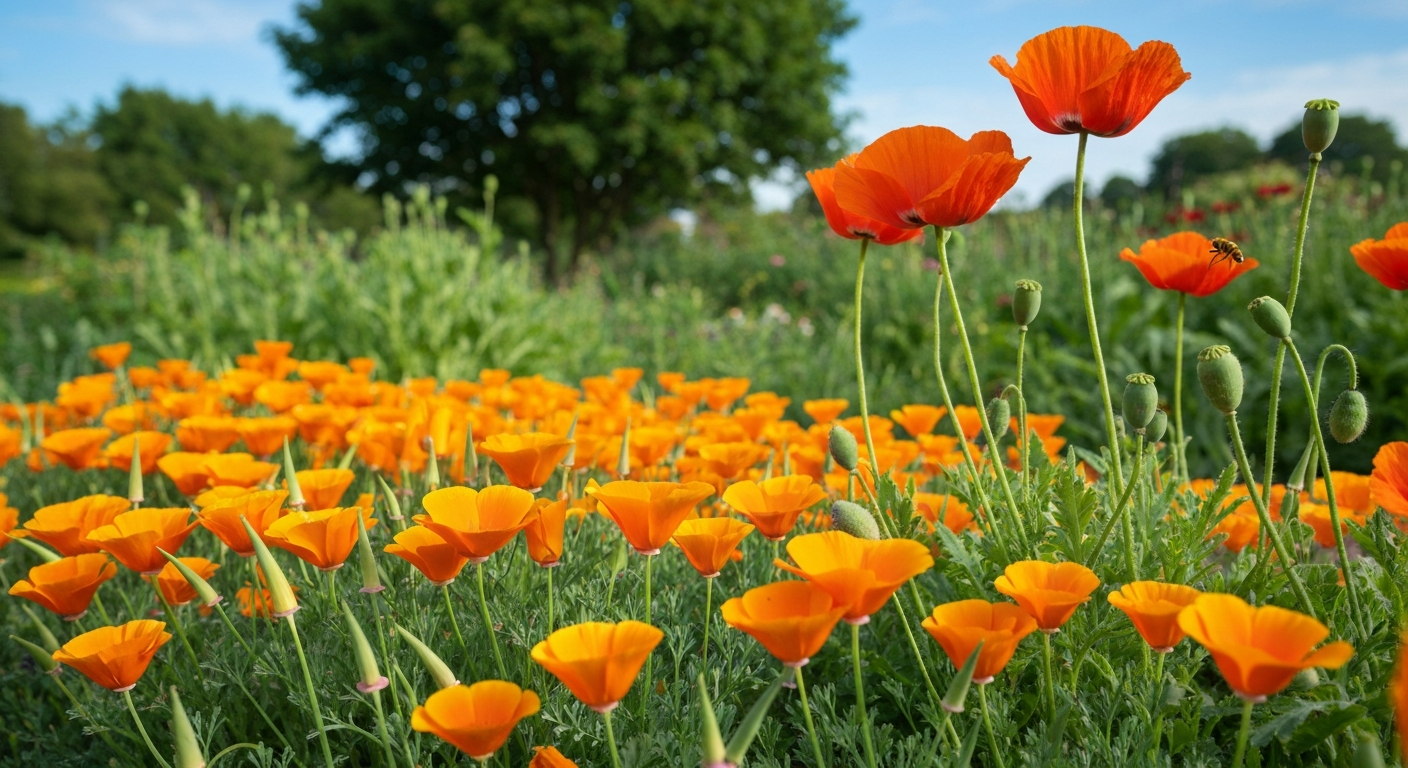
This is the easiest orange poppy you can grow. California poppy is a tough annual or short-lived perennial that grows 6 inches to 2 feet tall and produces cheerful four-petaled flowers in classic bright orange, as well as yellow, apricot, white, and pink. It blooms from March through October, self-seeds readily, tolerates poor sandy soil, and is genuinely drought-tolerant once established. It naturally grows at elevations up to around 7,000 feet in California and Oregon, which makes it unusually versatile across climates. If you are a complete beginner, start here.
Oriental poppy (Papaver orientale)
Oriental poppies are herbaceous perennials with some of the most dramatic flowers in the garden. Plants grow 24 to 30 inches tall and carry crinkled, tissue-paper blooms that can reach 4 to 6 inches across in late spring. Orange cultivars like 'Prince of Orange' and 'Beauty of Livermere' (in orange-red tones) are especially striking. The honest caveat: Oriental poppies go dormant in summer, leaving a gap in the border that you need to plan around. Oriental poppies perform best in regions with cold winters and cooler summers; they commonly go summer‑dormant after flowering and require excellent winter drainage to avoid crown rot blank" rel="noopener noreferrer">Oriental poppies perform best in cold winters and cooler summers. They also form deep taproots and really dislike being moved once established. blank" rel="noopener noreferrer">Direct sow or plant young bare-root starts and leave them alone.
Iceland poppy (Papaver nudicaule)
Iceland poppies are short-lived perennials or biennials typically grown as cool-season annuals. They reach 12 to 24 inches tall and flower in white, yellow, orange, salmon, and pink. They are at their best in cool spring weather and are one of the finest cutting-garden poppies because the stems are long and the flowers open beautifully in a vase. They are hardy in zones 2 through 7 depending on the strain. Treat them as a biennial in mild climates: start them in summer for winter and spring bloom, or start them in early spring for late-spring color.
Flanders-type and ornamental orange Papaver rhoeas cultivars
Papaver rhoeas, the corn or Flanders poppy, is a direct-seeded annual that most people know in red, but selective breeding has produced orange and yellow cultivars and blended mixes. These are excellent for wildflower meadow effects and mass plantings. They are similar in culture to other annual poppies: direct sow, surface-sow or cover extremely lightly, and thin to about 6 inches. If you are interested in the traditional red Flanders types, the guides on how to grow red poppies and how to grow red Flanders poppies go deeper into that side of the species.
Variety picks by use
Choosing a variety before you order seeds saves you from growing something that does not fit your space or goals. Here are my practical recommendations across three common use cases.
| Use | Best species/cultivars | Notes |
|---|---|---|
| Border and edging | California poppy 'Orange King', 'Mikado'; Oriental poppy 'Prince of Orange' | California poppy fills gaps fast; Oriental adds height and drama at the back of a border |
| Mass plantings and meadows | California poppy straight species; Papaver rhoeas orange blend mixes | Both self-seed aggressively, filling large areas with minimal effort |
| Cutting garden | Iceland poppy 'Champagne Bubbles' (orange/salmon); Oriental poppy (use as accent) | Iceland stems are longer and more vase-ready; cut buds just as the sepal splits for best vase life |
| Containers and pots | California poppy compact cultivars; Iceland poppy | Use a well-drained mix; California poppy tolerates drier conditions between waterings |
Matching varieties to your climate and USDA zone
Climate is the single biggest variable in poppy growing. Getting this right means you spend less time fighting the plant and more time enjoying it.
| Species | USDA Zones | Climate notes |
|---|---|---|
| California poppy (Eschscholzia californica) | All zones as annual; perennial in zones 8–10 | Thrives in dry, sunny, Mediterranean-style climates. Tolerates high elevation (to ~7,000 ft). Treat as a cool-season annual in hot humid climates. |
| Oriental poppy (Papaver orientale) | Zones 3–7 as perennial | Needs cold winters and cool summers. Struggles and declines in zones 8+ with hot summers. Excellent in zones 4–6. |
| Iceland poppy (Papaver nudicaule) | Zones 2–7 (varies by strain) | Best as a cool-season annual everywhere. In zones 8–10, treat as a winter annual; sow in fall for late winter/spring bloom. |
| Flanders/corn poppy (Papaver rhoeas) | All zones as annual | Performs best in cool spring conditions. Direct sow in early spring as soon as soil can be worked. |
If you garden in a cool, high-elevation area like Colorado, you are in good company. California poppies naturally grow at high elevation and handle temperature swings well. Oriental poppies are actually at their best in the cold-winter zones of the Mountain West: the hard freeze they need to perform well is never a problem there, and the low humidity reduces the crown rot risk that plagues them in wet climates. For Colorado-specific timing and considerations, the guide on how to grow poppies in Colorado covers the frost-date variables in more detail.
Planting calendars by region and zone
Timing is everything with poppies. Sow too late in spring and the plants hit the summer heat before they can bloom properly. The tables below give you the sowing and bloom windows I work with for each region.
California poppy sowing calendar
| Region / Zone | Spring sow (direct) | Fall sow (direct) | Expected bloom |
|---|---|---|---|
| Pacific Coast / Zones 8–10 | February–March | October–November (preferred) | March–June (fall-sown); May–July (spring-sown) |
| Southwest / Zones 7–9 | February–March | October–November | April–June |
| Midwest & Great Plains / Zones 4–6 | March–April (as soon as soil thaws) | Not reliable — hard freeze kills seedlings | June–August |
| Mountain West & Colorado / Zones 4–6 | April–May after last hard frost | Not recommended above zone 6 | July–September |
| Northeast & Mid-Atlantic / Zones 5–7 | March–April (direct sow on snow if frozen soil is a barrier) | October in milder microclimates (zone 7) | June–August |
| Southeast / Zones 7–9 | February–March | October–November | April–June |
Oriental poppy sowing and bloom calendar
| Zone range | Best sowing window | First bloom | Notes |
|---|---|---|---|
| Zones 3–5 | Late summer (August) or early fall for established plants by winter | Late May–June | Allow full first season to establish; expect best flowering in year 2+ |
| Zones 6–7 | Late summer (August–September) | Late April–May | Same principle — establish in fall, flower the following spring |
| Zones 3–7 (general) | Spring direct sow is possible but bloom delayed by one full year | Second spring after sowing | Start from purchased plants if you want bloom in year one |
Succession sowing for extended color
California poppies and Papaver rhoeas types are ideal for succession sowing. Make a first sowing as early in spring as the soil can be worked, then follow with a second sowing two to three weeks later. A third sowing in early summer can extend bloom into fall in cooler zones. In mild climates, an additional fall sowing gives you a fresh flush of spring color. Succession sowing is the single easiest way to keep your garden in orange for months rather than weeks.
Site selection and soil preparation
Sun
All orange poppies want full sun: at least 6 hours of direct light per day, with 8 hours ideal. California poppy in particular will stretch and produce fewer flowers in partial shade. Oriental poppies will survive light shade but flower poorly. Pick your sunniest, most open spot.
Drainage and soil type
Drainage matters more than fertility. California poppy actively prefers poor, lean, sandy soil and struggles in rich, heavily amended beds, too much fertility produces floppy green growth with fewer flowers. Oriental and Iceland poppies want average to moderately fertile, well-drained soil. The one non-negotiable for all species is that water cannot sit around the crown: standing water causes root rot, and Oriental poppies are particularly vulnerable to crown rot in wet winters. If your soil is heavy clay, raise the bed by 4 to 6 inches or grow in containers.
Soil pH and amendments
Poppies are tolerant of a wide pH range: somewhere between 5.5 and 7.5 suits all four species. You rarely need to adjust pH dramatically. For California poppy, skip the fertilizer and compost amendments entirely, just loosen the top 2 to 3 inches of soil and rake it smooth. For Oriental and Iceland poppies, work a 2-inch layer of compost into the top 6 inches of soil before planting to improve structure without going overboard on nutrients.
Raised beds and containers
Raised beds are an excellent choice if your native soil is clay-heavy or poorly draining. Fill with a mix of 50% topsoil and 50% coarse horticultural grit or perlite for California poppies, or a standard well-drained garden mix for Oriental and Iceland types. Containers work beautifully for California poppy and Iceland poppy. Use a pot at least 8 inches deep with drainage holes. Avoid terracotta in very hot climates as it dries out too fast for Iceland poppies, which prefer consistent moisture.
Direct sow vs. indoor starting
The honest answer is that most poppies genuinely prefer to be direct-sown in place. Their taproots resent disturbance, and transplanting often sets them back more than the head start gained from indoor sowing is worth. That said, there are situations where indoor starting makes sense.
| Method | Best for | Pros | Cons |
|---|---|---|---|
| Direct sow | California poppy, Papaver rhoeas, Papaver somniferum | No transplant shock; seeds are cheap enough to sow generously; promotes natural self-seeding | Subject to weather; slugs and birds can hit seedlings; germination is less predictable in dry springs |
| Indoor starting | Iceland poppy (for early transplants); Oriental poppy (rarely recommended) | Control over germination temperature; earlier bloom in short-season climates | High transplant failure rate for Oriental poppy due to taproot; requires careful hardening off; more time and equipment |
| Winter/outdoor cold sowing | Oriental poppy; any species needing cold stratification | Mimics natural conditions; low-effort stratification with no refrigerator needed | Timing depends on your winter; not suitable for mild-winter climates |
My default rule: if the seed packet says 'direct sow,' do exactly that and resist the urge to start indoors. The only exception I make regularly is for Iceland poppies, which I start in small cells indoors 8 to 10 weeks before the last frost date, taking care to use deep cell trays that minimize root disturbance at transplanting time.
Step-by-step sowing instructions
Step 1: Check and treat your seeds
- Check seed age: if your packet is more than two years old, do a paper-towel germination test first. Place 10 seeds between two damp paper towels, seal in a plastic bag, and leave at room temperature for 21 days. If fewer than 5 sprout (50% germination), sow more densely or buy fresh seed.
- Cold stratification for Oriental poppies: if you are starting Oriental poppies indoors or have old seed, place seeds in a sealed bag with a pinch of barely damp vermiculite and refrigerate at 34 to 41°F (1 to 5°C) for 4 to 6 weeks before sowing. California poppy and Papaver rhoeas do not need stratification for spring sowing, but fall-sown California poppy gets its natural cold treatment in the ground.
- Store any remaining seeds immediately in a sealed glass jar in the refrigerator with a small packet of silica gel desiccant to preserve viability for next season.
Step 2: Prepare the sowing surface
- Loosen the top 2 to 3 inches of soil with a hand fork or rake. Remove any debris, clods, or large stones.
- Rake the surface to a fine, crumbly texture. Poppies need good seed-to-soil contact, so a smooth, firm seedbed matters.
- Water the prepared area the day before sowing if the soil is dry. You want moist but not waterlogged soil at sowing time.
- For containers: fill to within 1 inch of the rim with your chosen mix, firm lightly, and water thoroughly 24 hours before sowing.
Step 3: Sow the seeds
Poppy seeds are tiny and the depth rule is critical. Here are the exact depths and light requirements by species:
| Species | Sowing depth | Light requirement | Notes |
|---|---|---|---|
| California poppy (Eschscholzia californica) | 1/4 inch (6 mm) | Surface light helpful but can tolerate shallow cover | Press seeds in firmly after covering; do not bury deeper |
| Oriental poppy (Papaver orientale) | Surface sow — press onto soil surface, do not cover | Light-dependent germinator; needs light to germinate | Mist gently to settle seeds without washing them away |
| Iceland poppy (Papaver nudicaule) | Surface sow or 1/16 inch (1–2 mm) maximum | Light-dependent germinator | Best started indoors in cells; press seeds onto the surface of moist seed-starting mix |
| Flanders/corn poppy (Papaver rhoeas) | Surface sow or cover extremely lightly — no more than 1/8 inch (3 mm) | Light-dependent germinator | Mix seeds with a small amount of sand to help distribute them evenly over a large area |
- For large areas: mix seeds with a small amount of dry sand (about 1 part seed to 5 parts sand by volume) and scatter the mixture evenly across the prepared bed. This prevents clumping and makes sparse seed go further.
- For rows or defined patches: scatter seeds thinly and press them gently into the surface using a flat board or the palm of your hand.
- After sowing, mist the surface gently with a watering can fitted with a fine rose head or a spray bottle. Avoid a heavy stream that will wash seeds into clumps.
- Do not mulch over sown areas — poppies need light and mulch will block germination.
Step 4: Maintain moisture until germination
- Keep the seedbed or container consistently moist but not soggy. In dry or windy weather, mist once or twice a day.
- Expect California poppy to germinate in 14 to 21 days at 60 to 65°F (16 to 18°C). Annual Papaver types germinate in 10 to 28 days at 65 to 75°F (18 to 24°C). Oriental poppies can take 1 to 4 weeks, sometimes longer with old seed.
- If temperatures rise above 75°F (24°C) during germination, move containers to a cooler spot or provide light afternoon shade in the garden. Heat slows or prevents germination in most poppy species.
- Once seedlings show their first true leaves, reduce watering frequency and allow the top 1/2 inch of soil to dry slightly between waterings.
Step 5: Thin seedlings to final spacing
- Thin California poppy seedlings to 6 inches (15 cm) apart when they are 1 to 2 inches tall. Use scissors to snip extras at soil level rather than pulling, which disturbs remaining roots.
- Thin Oriental poppies to 12 to 18 inches apart. They need room to form their spreading clumps.
- Thin Iceland poppies to 9 to 12 inches apart.
- Thin Papaver rhoeas types to 6 to 8 inches apart.
- Do not skip thinning — overcrowded poppies produce smaller flowers, stretch toward light, and are more susceptible to fungal disease.
Transplanting and container care
If you have started Iceland poppies indoors, transplant them on an overcast day or in the evening to reduce wilting stress. Water the cells thoroughly an hour before transplanting. Gently tip each plant out, keeping the root ball intact, and set it at the same depth it was growing in the cell. Firm the soil around it and water again. Harden off indoor-started seedlings over 7 to 10 days by setting them outside in a sheltered spot for increasing periods before planting out. For containers, repot into a final container when roots begin showing from the drainage holes, using the same well-draining mix.
Watering, feeding, and routine care
Watering
California poppy is the drought hero of this group: once established (about 4 to 6 weeks after germination), it can survive on rainfall alone in most climates and actually performs better with less supplemental water. Oriental poppies need regular watering during spring growth and flowering, then very little during summer dormancy. Iceland poppies prefer consistently moist soil throughout their cool-season blooming period. A good rule for containers: water when the top inch of soil feels dry, and always make sure the drainage hole is not blocked.
Feeding
Less is more with poppies. California poppy needs no fertilizer and will produce leafy, floppy plants with fewer flowers if you feed it. Oriental and Iceland poppies benefit from a single application of a balanced, low-nitrogen fertilizer (such as a 5-10-10 formula) in early spring as new growth emerges. Avoid high-nitrogen feeds throughout the season, which push foliage at the expense of flowers. Container-grown plants can receive a diluted liquid feed (half-strength balanced fertilizer) once every three to four weeks during active growth.
Staking
California poppies and Papaver rhoeas types are self-supporting at their natural heights. Oriental poppies growing in rich soil or part shade may need light staking. Use a single bamboo cane per clump and a loose loop of garden twine to support the stem cluster before it flops. Place stakes early in the season when plants are about 12 inches tall, before the flower stems develop.
Deadheading and cutting for bouquets
Deadheading
For California poppy and Papaver rhoeas types, regular deadheading (removing spent flowers before the seed pods swell) extends the blooming period significantly. Snip or pinch off the developing seed pod and stem just above a leaf node. If you want the plants to self-seed for next year, stop deadheading in late summer and allow seed pods to mature and dry on the plant. For Oriental poppies, cut the entire flower stem back to the base after flowering. The plant will go dormant, this is normal, not a sign of death.
Cutting for bouquets
Cut poppy stems for the vase just as the sepals (the green outer casing) are splitting and the first blush of petal color shows through. This is the bud-break stage. Immediately after cutting, sear the bottom 1/2 inch of the stem in a flame for 5 to 10 seconds, or dip it in boiling water for 30 seconds, this seals the milky sap and dramatically extends vase life. Place in cool, deep water immediately. Iceland poppies are the best cut-flower performers among the group, lasting 5 to 7 days in a vase when conditioned this way.
Winter care and division for perennial types
California poppy self-seeds so freely that winter care is mostly a matter of deciding how much to let it spread. Cut back spent plants in fall or simply pull them; the seeds in the soil will take care of next year. For Oriental poppies in zones 3 to 7, cut back the foliage to the ground after summer dormancy sets in and mark the spot so you do not accidentally dig up the dormant crown. In poorly draining sites, mound a small amount of coarse grit around the crown to improve drainage over winter. Divide Oriental poppy clumps every 4 to 5 years in late summer (August to September) when they are dormant. Use a sharp spade to cut the clump into sections, each with at least two growth buds, and replant at the same depth. Expect some sulking in the first season after division.
Saving seeds and propagating your own plants
Poppy seeds are wonderfully easy to save. Allow seed pods to mature fully on the plant until they turn brown and feel dry and rattling. On a dry day, snip the pods into a paper bag and allow them to dry further indoors for one to two weeks in a warm, well-ventilated spot. Then shake the pods to release the seeds, pour them through a fine sieve to remove pod debris, and store them in a labeled, sealed glass jar in the refrigerator. For best germination rates, use saved seeds within two years. Test older stored seeds with the paper-towel method before committing them to a full sowing. California poppy and Papaver rhoeas are open-pollinated and breed true from saved seed. Oriental poppy cultivars may not come true from seed if different varieties are growing nearby.
Pests, diseases, and troubleshooting
Orange poppies are relatively trouble-free, but a handful of problems come up regularly. Here is what to watch for and what to do.
| Problem | Likely cause | Fix |
|---|---|---|
| Seeds fail to germinate after 28+ days | Seeds covered too deeply; old/low-viability seed; soil too hot (above 75°F) | Surface-sow a fresh batch; test seed viability first; sow earlier in spring when temperatures are cooler |
| Seedlings collapse at soil level (damping off) | Fungal rot from overwatering or poor drainage | Reduce watering; improve airflow; sow in sterile seed-starting mix; do not overcrowd seedlings |
| Leggy, stretched seedlings indoors | Insufficient light | Move to a south-facing window or add a grow light 2 to 4 inches above seedlings; 14–16 hours of light per day |
| Wilting despite regular watering | Root rot from waterlogged soil | Improve drainage; reduce watering frequency; check that container drainage holes are clear |
| Few flowers, lots of foliage | Soil too fertile (especially California poppy); not enough sun | Avoid fertilizing California poppy; ensure full sun; thin plants to reduce competition |
| Oriental poppy disappears in summer | Normal summer dormancy — not dead | Mark the location; fill the gap with annuals; resume normal care in early fall when foliage reappears |
| Aphids on new stems | Common on soft new growth in spring | Knock off with a strong water jet; introduce ladybugs; spray with insecticidal soap if heavy infestation |
| Powdery mildew on foliage | Humid conditions, poor airflow | Improve spacing (thin plants); avoid overhead watering; remove affected leaves promptly |
Companion plants and what to grow nearby
Orange poppies pair beautifully with plants that flower at the same time and fill in the gaps after poppies go dormant or decline. California poppies look brilliant alongside blue bachelor's buttons (Centaurea cyanus), white alyssum, and ornamental grasses. Oriental poppies combine well with hardy geraniums, catmint (Nepeta), and daylilies: the geraniums and catmint flow over the dormant poppy crown in summer, hiding the gap naturally. For a warm-toned cutting garden, plant orange Iceland poppies alongside yellow and apricot cosmos, goldenrod, and strawflower. If you are drawn to other poppy species for contrast, the guides on how to grow purple poppies and how to grow red poppies are worth reading alongside this one for a complete poppy border picture. For another relevant comparison, see how to grow purple poppies. For tips on growing the classic red cornflower-type poppy, see our guide on how to grow red Flanders poppies.
FAQ
Which orange poppy types should I consider and how do I pick the right one for my garden?
Common orange types: California poppy (Eschscholzia californica) — low, 6"–24", bright orange, drought‑tolerant, annual/short‑lived perennial; Oriental poppy (Papaver orientale) — tall 24"–30", large late‑spring blooms, perennial, prefers cold winters; Iceland poppy (Papaver nudicaule) — 12"–24", early season, short‑lived perennial/biennial; Flanders/corn poppy (Papaver rhoeas) — annual, good for massing. Choose by use: borders/cottage: Oriental or Iceland; mass drifts/wildflower: California or Flanders; cutting garden: varieties with longer stems (Oriental, select taller California cultivars). Match to your climate: California poppy for warm/dry or Mediterranean climates and poor soil; Oriental for cold‑winter regions (USDA zones ~3–7) with good summer drainage; Iceland in cool climates or high elevations where it tolerates colder winters.
How do I match poppy varieties to USDA hardiness zones and high‑elevation/cool sites?
California poppy: generally performs in zones ~6–10 and as far as high‑elevation sites where it’s native (reported up to ~7,000 ft) if summers are not excessively wet. Oriental poppy: best in cooler climates, hardy about zones 3–7; often goes summer‑dormant after flowering. Iceland poppy: hardy in very cold regions (often zones 2–7 depending on strain). For high‑elevation/Colorado‑type sites, favor cold‑tolerant species (Oriental, Iceland) and fall or very early spring sowing for California poppy so seedlings establish in cool, drier conditions. Always check cultivar-specific zone ratings from the seed/plant supplier.
What is the planting calendar by region/USDA zone?
General calendar: Zone 3–5 (cold): Sow Oriental and Iceland poppy seed outdoors in early spring as soon as soil can be worked; California poppy: sow in late spring after last frost or fall‑sow for spring bloom. Zone 6–8 (temperate/Mediterranean): Fall sow California poppy for spring blooms; spring sow 2–4 weeks before last frost for summer flowers; Oriental and Iceland sow early spring. Zone 9–10 (mild winters/hot summers): Fall sow California poppy where winters are cool; in hot summer areas, plant in late fall or very early spring to avoid summer heat; oriental poppy struggles in hot summers — choose shade/extra drainage or avoid. High elevation/cool sites: sow as early as soil is workable for spring establishment; fall sowing works where winter snow provides stratification. Adjust locally by 2–3 weeks based on frost dates; when in doubt, direct‑sow California and Flanders poppies after soil temps reach ~50°F (10°C) for better germination.
Exact step‑by‑step instructions for direct sowing orange poppy seeds
1) Choose a full‑sun, well‑drained spot (sandy/loamy soil preferred). 2) Prepare seedbed: remove weeds, rake smooth; avoid high fertility. 3) Broadcast seeds thinly or sow in rows. Poppy seeds are tiny — aim for final spacing after thinning: California ~6" (15 cm) apart, Oriental/Iceland ~12"–18" (30–45 cm) apart. 4) Surface‑sow or cover very lightly: either press seeds into soil or cover with 1/16"–1/4" (0.5–6 mm) of fine soil or vermiculite; many poppies need light to germinate. 5) Water gently to settle soil; keep surface evenly moist until germination. 6) Germination: expect 10–21 days (varies by species, temperature, seed age). 7) Thin seedlings to target spacing when 1–2 true leaves appear. 8) Mulch sparingly around but not on top of tiny seedlings to conserve moisture and suppress weeds.
Should I cold‑stratify poppy seeds or use winter sowing?
Many poppy species germinate better with cold‑moist stratification, especially older seed and some perennial species. Stratification guideline: place seeds mixed with moist medium in a sealed bag or container at refrigerator temperatures (~34–41°F / 1–5°C) for 4–8 weeks. Alternatively, winter sowing (outdoor containers left through winter) provides natural stratification. For California poppy in Mediterranean climates, fall direct sowing replaces artificial stratification because rain and winter cold do the job.
Can I start poppies indoors and transplant them? Any special tips?
Most poppies are best direct‑sown because many species (Oriental and some perennials) develop long taproots and resent transplanting. California and Flanders poppies can be started indoors in shallow trays only if necessary, but minimize root disturbance: use deep individual cells, start 3–4 weeks before last frost, transplant when seedlings have 2–3 true leaves and soil is cool. For Oriental poppy, avoid transplanting seedlings unless using very large, deep pots and planting out while still very small to preserve taproot integrity.
Next Article
How to Grow Poppies in Colorado: A Zone-by-Zone Guide
How to grow poppies in Colorado: step-by-step, elevation-timed calendar, best varieties, sowing & care tips.