
Purple poppies are absolutely worth growing, but the first thing you need to nail down is which purple poppy you actually want. That single decision changes everything: when you sow, how deep, whether you can start indoors, and how much patience you need. The most accessible purple poppies for home gardeners are Papaver somniferum (opium or breadseed poppy) in lavender or deep purple cultivars, Papaver rhoeas varieties like 'Mother of Pearl' that include soft purple and lilac shades, and the purple form of California poppy (Eschscholzia californica 'Purple Gleam'). Each one has its own rhythm. Pick the right one, follow the steps below, and you will have purple blooms reliably.
How to Grow Purple Poppies: Complete Beginner Guide

Marcus Holloway
10 Jul 2026
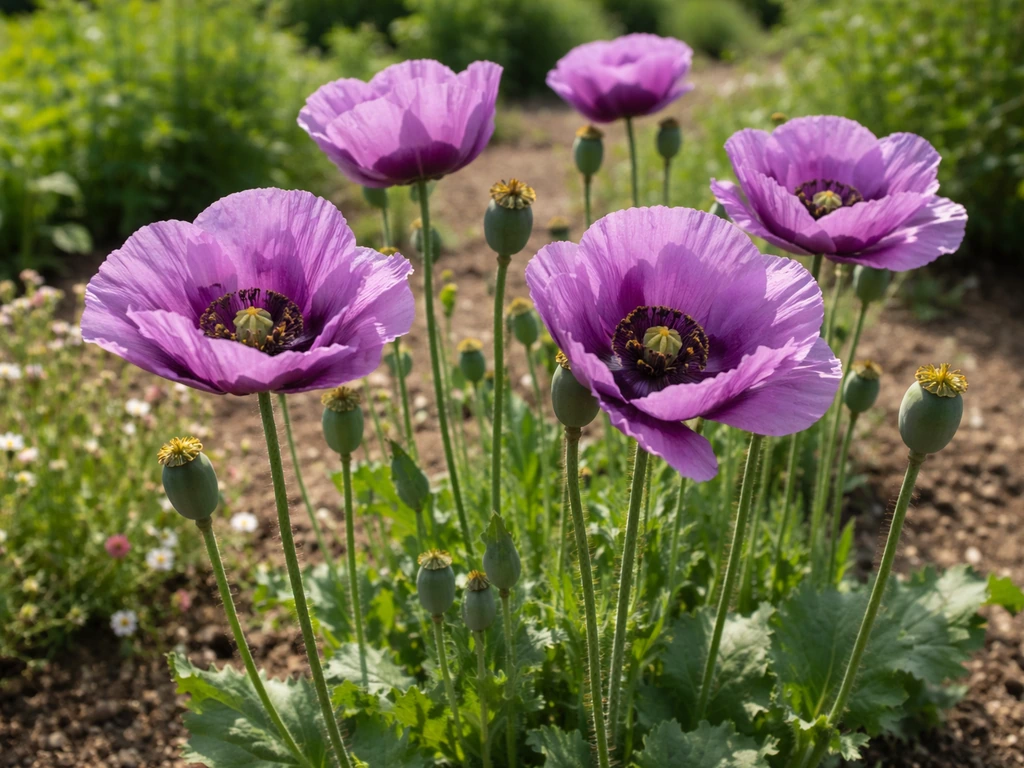
Which purple poppy are you actually growing?
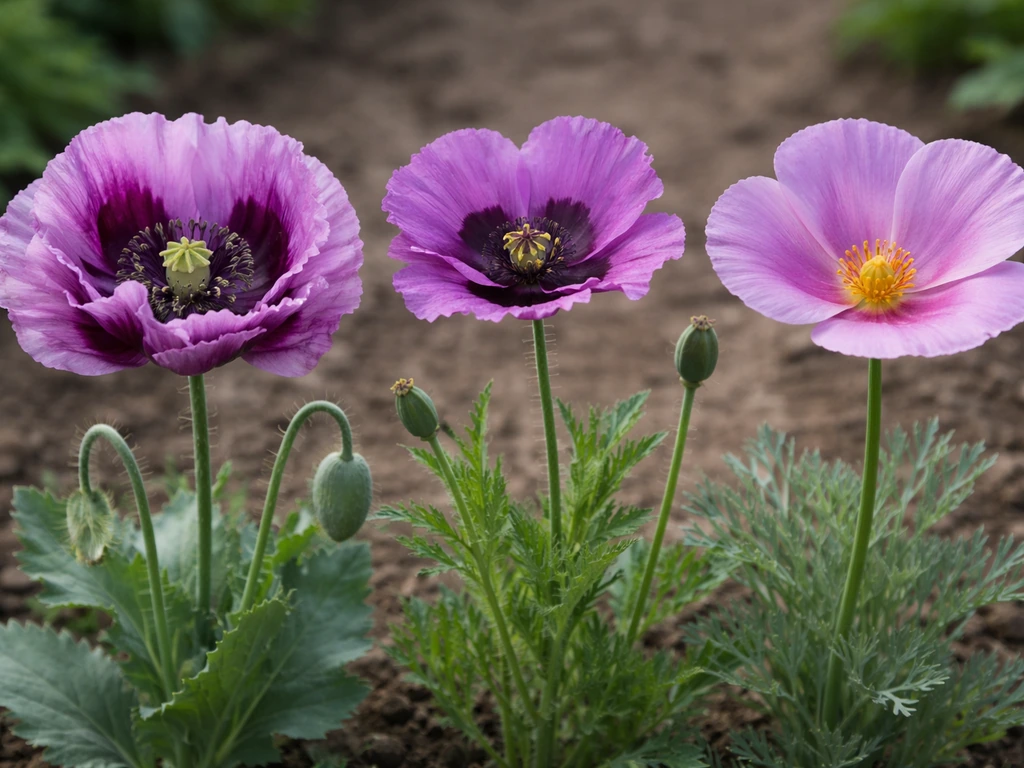
This is the part most guides skip, and it is the part that causes the most confusion. 'Purple poppy' is not a single species. It is a loose description that gets applied to several very different plants. Before you buy a single packet of seeds, get clear on what you have.
| Type | Latin name | Color range | Difficulty | Best for |
|---|---|---|---|---|
| Breadseed / opium poppy | Papaver somniferum | Deep purple, lilac, mauve, double forms | Easy | Most home gardeners; cutting garden |
| Corn / Flanders poppy | Papaver rhoeas | Soft purple, lilac, bicolor (variety dependent) | Easy | Wildflower beds, borders |
| Purple Gleam California poppy | Eschscholzia californica 'Purple Gleam' | Rosy purple, creamy edges | Easy | Dry, sunny spots; low-water gardens |
| Himalayan / blue poppy | Meconopsis spp. | Blue-purple, scarlet (M. punicea) | Very challenging | Experienced gardeners in cool, moist climates only |
For most people reading this, Papaver somniferum is the sweet spot. It produces large, showy blooms in rich purples and lilacs, self-seeds freely once established, and is genuinely forgiving for beginners. Cultivars like 'Lauren's Grape' give you deep violet single flowers the size of a tennis ball, while 'Lilac Pompom' delivers pale lilac doubled blooms with beautiful blue-green seed pods. Papaver rhoeas 'Mother of Pearl' is your best bet if you want softer, pastel purples in a meadow-style planting.
'Purple Gleam' California poppy is the one to reach for if your spot gets baked in full sun and you hate watering. Meconopsis is a different beast entirely and is honest-to-goodness hard; unless you garden in the cool, damp Pacific Northwest or Scotland, I would set it aside for now.
If you are curious about red or orange poppy relatives, growing red poppies and growing orange poppy flowers follow similar direct-sow principles but use different variety timing and spacing. If you are wondering how to grow red poppies, the key principles are the same: pick the right type and direct-sow in cool conditions with full sun. The steps below focus on the purple types, with notes where the species differ from each other.
When and where to plant your purple poppies
Timing: earlier than you think
Papaver somniferum and Papaver rhoeas are cool-season annuals. They want to germinate and put on leafy growth while temperatures are still chilly, then bloom as things warm up. That means direct sowing as soon as the soil can be worked in early spring, typically 4 to 6 weeks before your average last frost date. For exact timing in your location, use the guidance in our Colorado-specific section: how to grow poppies in Colorado.
You can also sow in fall in USDA zones 6 and warmer for earlier spring blooms. For climate-zone planning, North Carolina State University CES notes Papaver rhoeas using [USDA hardiness context](https://www. ces. ncsu.
edu/plants/papaver-rhoeas/) alongside baseline growing information. A fall-sown poppy overwinters as a small rosette and often blooms two to three weeks ahead of a spring-sown batch.
'Purple Gleam' California poppy is even more cold-tolerant for germination. Sow it in early spring at soil temperatures around 60 to 65°F. It actually prefers cool soil and will stall or fail if sown into warm ground. Timing your sow just before a stretch of rain is a real trick worth using because the seeds need consistent moisture to germinate but you do not want to stand over them with a hose.
Site: sun is non-negotiable for most types

Papaver somniferum, Papaver rhoeas, and Eschscholzia californica all want full sun, meaning at least 6 hours of direct light per day. Orange poppy flowers are similar to other poppies in that they do best in full sun with good drainage. More is better. A spot that gets morning sun and a little afternoon shade in hot climates will extend the bloom period, but if you have to choose between shade and full sun, always go with full sun. Meconopsis is the exception: it actually needs dappled or full shade and cool, moist conditions, and it will scorch and die in a sunny, dry spot.
Soil prep and containers vs. in-ground planting
Poppies are not fussy about soil fertility. In fact, rich, heavily amended soil tends to produce lots of lush leaves and weak, floppy stems with fewer flowers. What they do need is good drainage. Soggy soil rots poppy seeds and seedling roots fast. If your garden soil stays wet for more than a day after rain, work in some coarse sand or fine grit before sowing. Loosen the top 4 to 6 inches of soil, remove any clumps or rocks, and rake it to a fine, even surface. That smooth, firm seedbed is what lets you sow those tiny seeds at a consistent shallow depth.
Containers work well for Papaver somniferum and Papaver rhoeas, provided the pot is at least 10 to 12 inches deep (poppies develop a taproot early on) and has drainage holes you can actually see water coming out of. Use a free-draining compost mix rather than a dense potting soil. For Eschscholzia californica, containers are trickier because its thick taproot dislikes any restriction. If you go that route, use a deep pot (12 inches minimum) and accept that in-ground plants will almost always outperform potted ones.
How to sow purple poppy seeds
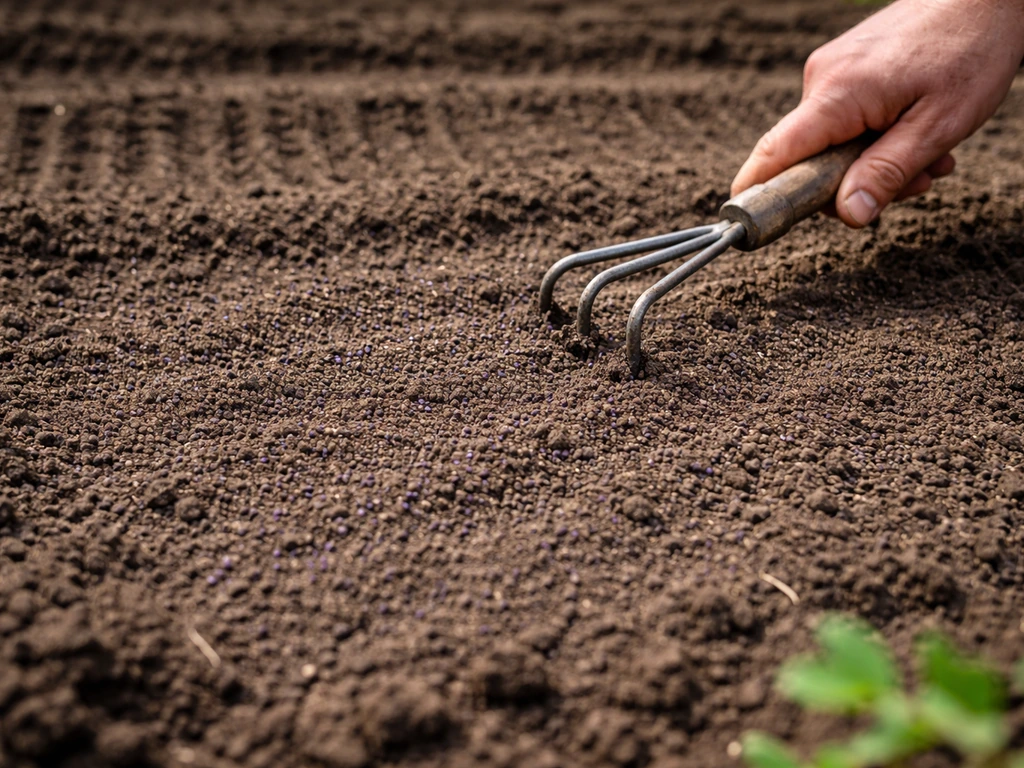
Here is the most important thing about sowing poppies: they need light to germinate. Do not bury these seeds. Papaver somniferum, Papaver rhoeas, and Meconopsis seeds all need to be surface-sown or barely covered. Eschscholzia californica is slightly more forgiving and can be covered with about 1/8 to 1/4 inch of fine soil, but even then, shallower is better.
Direct sowing (the method to use for almost all purple poppies)
- Prepare your seedbed: rake the surface smooth and firm it lightly with the back of your hand or a flat board.
- Scatter seeds thinly across the prepared area. Papaver somniferum and rhoeas can be mixed with a little dry sand to help distribute them evenly and avoid clumping.
- For Papaver somniferum and rhoeas: press seeds gently into the surface with your palm. Do not cover them with soil. They need light contact with the soil surface.
- For 'Purple Gleam' Eschscholzia: scatter seeds and then rake over lightly with a fine-toothed rake or dust with no more than 1/8 to 1/4 inch of fine soil.
- Water in gently with a fine rose watering can or a mister. You want the surface damp, not drenched.
- Keep the seedbed consistently moist until seedlings emerge. This is the stage where most people fail: letting the surface dry out even once can kill germinating seeds.
Should you ever start purple poppies indoors?
Honestly, for Papaver somniferum, Papaver rhoeas, and Eschscholzia californica, the answer is usually no. All three have taproots that resent disturbance. If you try to transplant them, they tend to wilt, stall, and sometimes give up entirely. The USU Extension puts it plainly: poppies do not transplant well.
Direct sowing is the right method here. Red Flanders poppies are a great option if you want a classic red version, and the same general timing and sowing basics will help you succeed. The only exception worth considering is Papaver somniferum in very short-season climates (zones 3 to 4), where you might sow into deep cell trays and transplant extremely carefully as very young seedlings before the taproot gets established.
But for everyone else, save yourself the headache and sow direct.
A note on Meconopsis sowing
Meconopsis is genuinely different. Seeds should be surface-sown in late winter (January to February) in pots or trays, placed under cover, and never allowed to dry out at any point. Meconopsis punicea (the scarlet/red-purple Himalayan poppy) must ideally be sown fresh from harvest and then experience freezing temperatures over winter for germination to occur. Spring-sown seed of this species may not germinate until the following year. These seeds are expensive and hard to source, so do not experiment with them the same way you would with a 50-cent packet of Papaver somniferum.
Light, temperature, watering, and care during germination
Germination for Papaver somniferum typically happens in 7 to 15 days when soil temperatures are around 55 to 65°F. Papaver rhoeas is similar. 'Purple Gleam' Eschscholzia usually takes 2 to 3 weeks at soil temperatures of 60 to 65°F. During this window, the seedbed needs to stay evenly moist. Not soaking, not dry, just consistently damp on the surface. A light mist twice a day is better than one heavy watering that compacts the soil and buries those tiny seeds deeper.
Do not try to speed germination up with heat. These are cool-season plants. Warm soil actually slows or stops germination in Papaver and Eschscholzia types. If you are sowing in spring and temperatures are already climbing into the 70s during the day, sow in the early morning and consider a light shade cloth over the bed until the seedlings are up. If germination is poor, the most common culprits are soil that dried out during the germination window, seeds buried too deep, or sowing when soil temperatures were already too warm.
Thinning, transplanting, and ongoing care
Thinning: do not skip this step
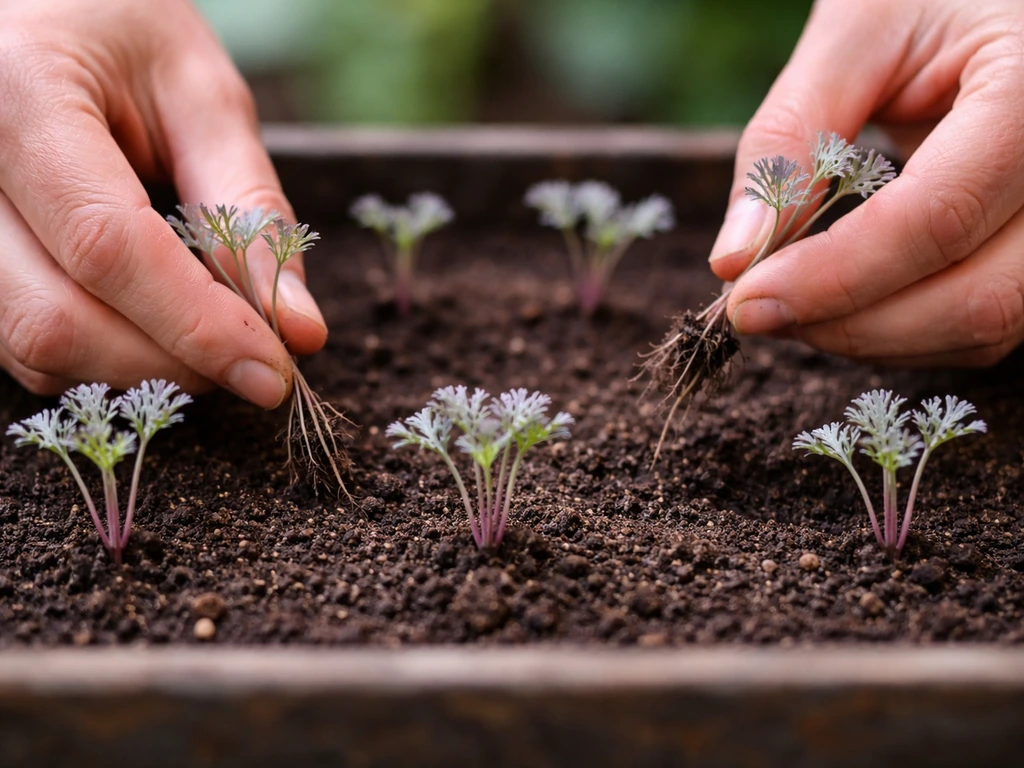
Once your seedlings are 1 to 2 inches tall and have their first true leaves, start thinning. This is the step beginners resist the most because it feels like you are throwing away plants. But overcrowded poppies produce small, weak plants with fewer flowers and are much more prone to mildew and fungal problems. Aim for a final spacing of 6 to 8 inches between plants for Papaver somniferum and rhoeas. Thin in stages rather than all at once: remove the weakest seedlings first when they are 1 to 2 inches, then revisit when plants are 3 to 4 inches and thin to final spacing. Snip rather than pull to avoid disturbing roots of neighboring seedlings.
For 'Purple Gleam' Eschscholzia, thin to about 6 inches apart. The plants spread and sprawl a bit, so giving them room pays off in later summer flowering.
Ongoing care once plants are established
Once your poppies are past the seedling stage and have developed a small rosette of leaves, they become surprisingly self-sufficient. Water deeply but infrequently rather than little and often. This encourages roots to go deeper and makes plants more drought-tolerant. A layer of organic mulch around (not over) established plants helps retain soil moisture and suppresses weeds. Shallow cultivation near plants is fine for weeding, but avoid going deep near the crowns where surface roots are developing. Poppies grown in average to lean soil generally do not need fertilizing. If your soil is very poor, a single light application of balanced fertilizer early in the season is enough.
Flowering, deadheading, and saving your seeds
When to expect blooms
Spring-sown Papaver somniferum typically blooms about 90 days from germination. So if you sow in early March and seeds germinate by mid-March, expect flowers from mid-June onward. Papaver rhoeas is similar in timeline. 'Purple Gleam' Eschscholzia often starts blooming slightly earlier relative to sow date and continues through summer and into fall in cooler climates. The flowers themselves are short-lived, usually 3 to 5 days per bloom, but a healthy, well-spaced plant will produce multiple buds in succession over several weeks.
To deadhead or not to deadhead
Deadheading (removing spent blooms before the seed pod develops) encourages Papaver somniferum and rhoeas to produce more flowers because the plant is not putting energy into seed production. If you want to maximize the blooming period, deadhead regularly. If you want seeds for next year or want the plant to self-sow, stop deadheading in the last few weeks of the flowering period and let the pods form and mature. You can do both: deadhead the first flush heavily for more blooms, then let the last few pods go to seed.
Harvesting and saving seeds
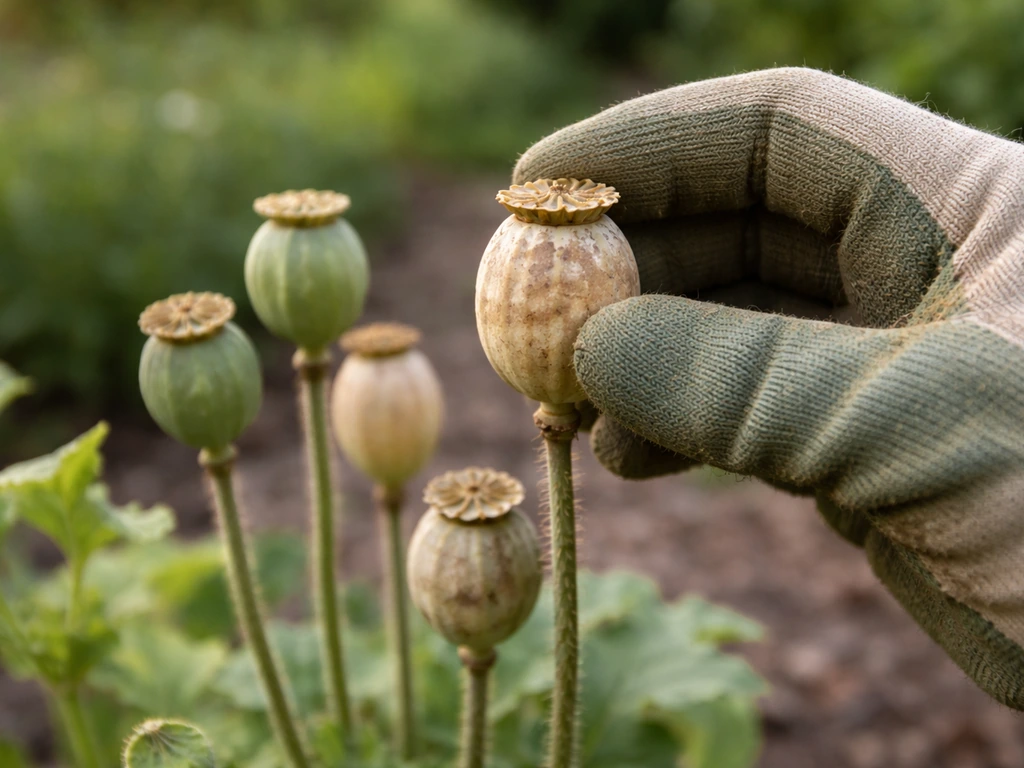
Poppy seed pods are ready to harvest when they turn from green to tan or beige, feel dry and firm, and rattle when you shake them gently. The small openings at the top of the capsule (called pores) may start to open slightly in ripe pods. Do not wait too long: if the pores open fully, the plant will scatter seed on its own.
Cut the pods from the plant with a short stem attached, place them upside down in a paper bag, and leave them somewhere dry and airy for a week or two. The remaining seeds will shake out into the bag. Label carefully, especially if you are saving from a specific cultivar like 'Lauren's Grape' or 'Lilac Pompom. ' Store seeds in a cool, dry place in a paper envelope, not a plastic bag.
Papaver somniferum self-seeds prolifically if you allow it to. In mild climates, you can simply leave a few pods on the plant at the end of the season and let nature do the work. Next spring, you will likely find seedlings popping up without any effort. This is part of the joy of growing it, though it can become weedy if left unchecked. Just thin the volunteers to your desired spacing and carry on.
Troubleshooting the most common problems
- No germination after two to three weeks: The seeds likely dried out during germination, were buried too deep, or soil was too warm. Re-sow on the surface and keep moisture consistent.
- Leggy, pale seedlings: Almost always a light problem. Make sure the seedbed gets full sun from day one. Thin immediately to reduce competition.
- Seedlings collapsing at soil level (damping off): Caused by overwatering and poor air circulation. Water in the morning, not the evening, and thin crowded seedlings to improve airflow.
- Plants going to seed very quickly without many blooms: Heat is usually the trigger. Poppies stop blooming and rush to seed when temperatures climb above 80 to 85°F. Next season, sow earlier to get more blooming time before heat arrives.
- Poor germination from saved seeds: Check that you saved from fully ripe pods and stored in a cool, dry spot. Papaver somniferum and rhoeas seeds stay viable for 2 to 3 years if stored well. Eschscholzia seeds are shorter-lived; use within one to two seasons.
Your practical next steps
If it is early spring right now and your soil is workable, you are in the ideal window to sow Papaver somniferum or rhoeas directly. Get your seeds, rake a smooth bed in full sun, press them onto the surface, water gently, and check daily for moisture for the next two weeks. If you are in midsummer, wait until early fall for a fall sow in zones 6 and warmer, or plan for early next spring.
If you are gardening in a dry, sunny spot, grab a packet of 'Purple Gleam' California poppy and scatter it now in that neglected sunny corner. If you are instead asking how to grow goldenrod, the timing, site, and watering needs are very different from these poppies 'Purple Gleam' California poppy. The hardest part is restraint: do not overwater, do not bury the seeds, and do not panic if nothing seems to happen in week one.
Give it two to three weeks of consistent moisture and you will see those tiny seedlings appear, which is honestly one of the most satisfying sights in the garden.
FAQ
How do I get longer flowering, should I deadhead or leave pods?
If your poppies are in the ground and you want more blooms, focus on what you are doing with the spent flowers. Deadhead early flushes to prevent seed formation, then leave a few pods at the end of the season if you want self-sown seedlings next year. For Papaver somniferum and Papaver rhoeas, this timing can extend flowering without suppressing all seed set.
Can I use mulch right after sowing purple poppy seeds?
Yes, but with a caveat. Covering the soil with mulch is fine once seedlings are established, and keep mulch away from the crown so air can reach the base. During germination, skip mulch and instead keep the surface evenly damp, because thick organic layers can bury or block tiny seeds that need light.
What should I do if my purple poppy seedlings are crowded or leggy?
If your seeds sprout but seedlings look weak or spaced badly, thin as soon as you have true leaves (typically when plants are a couple inches tall). Use scissors or snip individual plants at the soil line rather than pulling, so you do not disturb neighboring roots. This reduces mildew risk because crowded poppies have poor airflow.
My poppy seeds did not germinate, what are the most common reasons?
Usually it is either timing or seed-depth. Poppy seeds should be on the surface or barely covered, and germination often fails when soil is too warm, too dry during the germination window, or seeds get buried deeper than a thin dusting. If it is already hot (70s during the day), sow in the morning and consider light shade until seedlings are up.
How often should I water purple poppies during germination versus after they establish?
For Papaver somniferum and Papaver rhoeas, watering frequency should change after germination. Keep the seedbed consistently moist until seedlings appear, then switch to deep but infrequent watering once roots are established. Little-and-often watering tends to keep surface roots shallow and increases the chance of fungal issues.
Can I transplant purple poppies from seedlings I started indoors?
Not reliably, so treat it as a last resort. Because poppies develop taproots early, transplanting commonly causes wilting or stalled growth. The exception is very specific use of Papaver somniferum in short-season areas, where you transplant only very young seedlings and handle them with extreme care.
What is the minimum pot size and soil type for growing purple poppies in containers?
Choose containers by depth first. A pot should be at least 10 to 12 inches deep with obvious drainage, because a shallow container restricts the taproot. Also use a free-draining compost mix, not dense potting soil, since staying wet too long is a fast path to rot.
When is the right time to harvest purple poppy seed pods, and how do I prevent unwanted self-seeding?
If you want to save seed, avoid letting pods fully open in the garden. Harvest when pods turn tan or beige, feel dry and firm, and rattle lightly when shaken. If pores open fully, many seeds scatter and you lose control over where they land next.
Will purple poppies become weeds in my yard, and can I control their spread?
Yes, but the strategy is different by type. In mild climates, Papaver somniferum can self-sow if you leave a few pods, and you can thin volunteers next spring. If you want tidy beds, remove pods consistently or harvest seed promptly so volunteers do not take over.
Do purple poppies need fertilizer to bloom well, or will they do fine without it?
You can, and for poppies it is usually better to under-fertilize than overdo it. Poppies often respond poorly to rich soil with lots of foliage and fewer blooms. If your soil is very poor, apply a single light dose of balanced fertilizer early in the season, then stop.
Next Article
How to Grow Red Poppies From Seed Step by Step
Step-by-step guide to grow red poppies from seed: sowing, soil and sun needs, thinning, and getting blooms fast