You can absolutely grow poppies in Colorado, and they reward you with surprisingly little effort once you understand one thing: timing is everything here. Most poppies want cool soil and cool air to germinate, which makes Colorado's wild spring swings and high-elevation cold snaps an asset rather than a problem. Direct-sow into prepared ground in early spring as soon as the soil is workable, or even better, scatter seed in fall before the ground freezes and let winter do the stratification work for you. Choose the right species for your elevation, keep the soil lean and fast-draining, and you will have poppies blooming from late spring through early summer with almost no fussing.
How to Grow Poppies in Colorado: A Zone-by-Zone Guide
Marcus Holloway
29 Jul 2026
Why Colorado is actually a great place for poppies
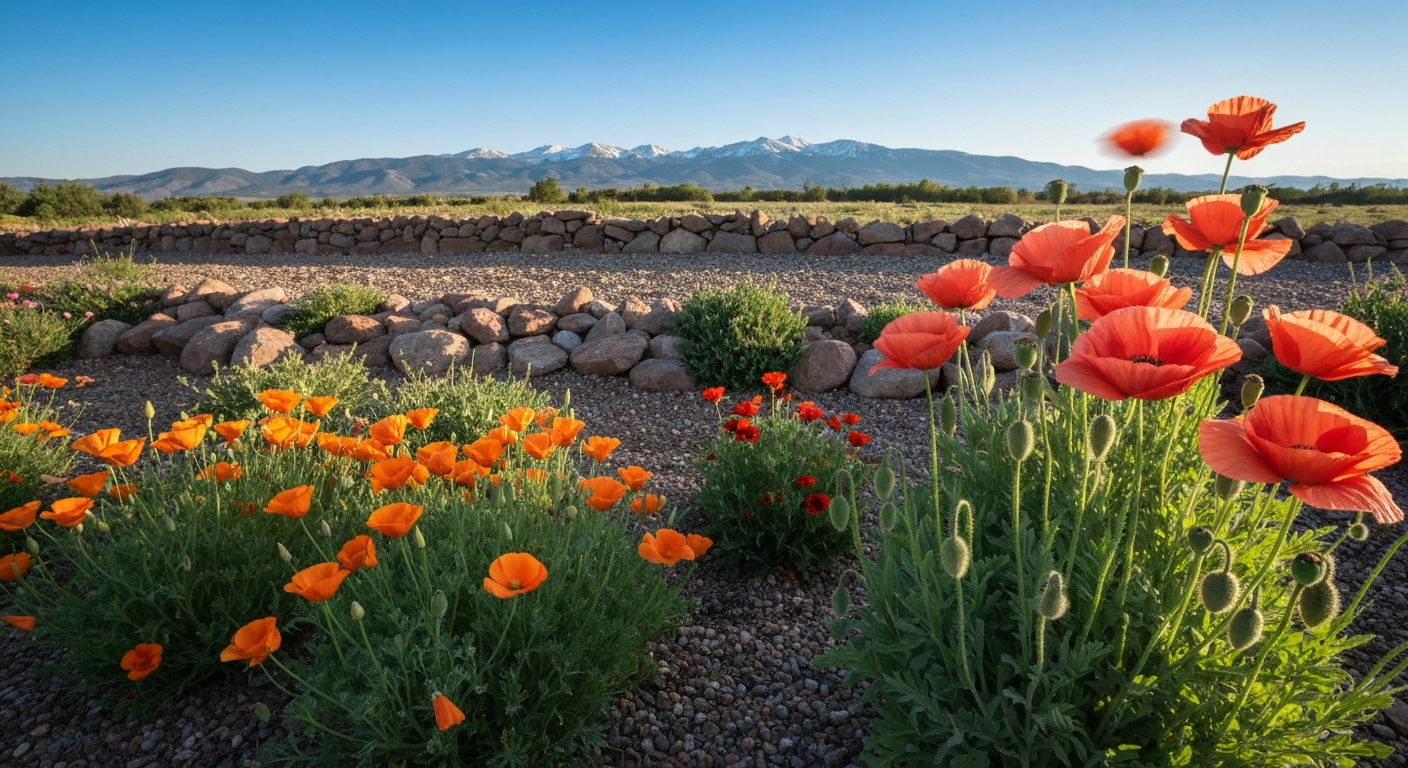
Colorado gardeners sometimes assume the state's dry air, intense sun, and unpredictable frosts work against growing flowers. For poppies, the opposite is true. Most poppy species originate in Mediterranean climates, mountain meadows, and dry grasslands, environments that look a lot like the Front Range or the Western Slope foothills. They tolerate rocky, nutrient-poor soils, they shrug off cool nights, and they actually bloom better in lean conditions than in rich, heavily amended beds. The state's low humidity also reduces the fungal problems that plague poppies in wetter climates. If you have ever tried to grow poppies in a humid southeastern state and watched them rot off at the crown, Colorado feels like cheating.
There is also the matter of color. Colorado's high-altitude light is intense and clear, and poppy petals, whether you are growing translucent orange California poppies, scarlet Flanders types, or silky Oriental blooms in coral and white, glow against that blue sky in a way that photographs almost unfairly well. It is one of the more visually satisfying things you can do with a patch of dry, sun-baked soil.
A quick look at poppy types suited to Colorado
Not every poppy species behaves the same way in Colorado's climate, so it is worth knowing the main players before you order seeds. Here is a plain-language overview of the types you will actually want to grow here.
| Poppy type | Species | Annual or perennial | Best elevation range | Key trait for Colorado |
|---|---|---|---|---|
| California poppy | Eschscholzia californica | Short-lived perennial/annual | Plains to 8,500 ft | Extreme drought tolerance, reseeds freely |
| Flanders / red field poppy | Papaver rhoeas | Annual | Plains to 9,000 ft | Fast-growing, easy direct-sow, vivid scarlet blooms |
| Oriental poppy | Papaver orientale | Perennial (zones 3–9) | 4,500–9,000 ft | Long-lived, large showy flowers, goes summer-dormant |
| Iceland poppy | Papaver nudicaule | Short-lived perennial/biennial | 5,000–10,000 ft | Loves cool temps; ideal for high-elevation gardens |
| Orange poppy | Eschscholzia / P. orientale vars. | Annual or perennial | Plains to 9,000 ft | Wide color range from gold to deep tangerine |
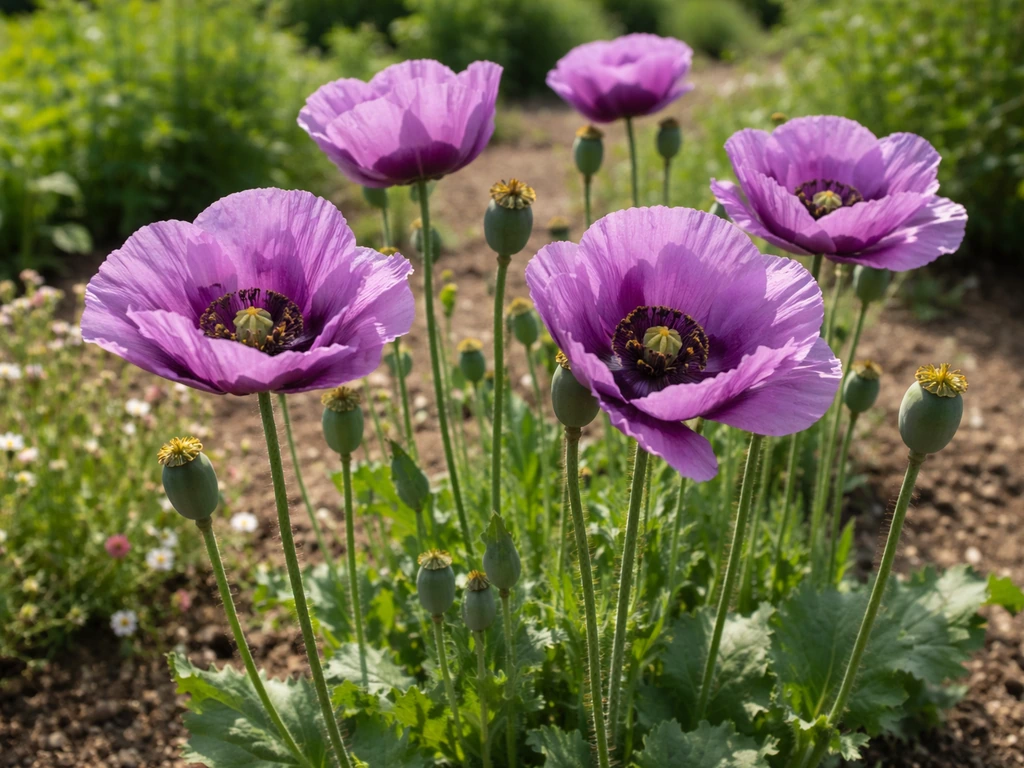
| Purple poppy | Papaver rhoeas / P. orientale vars. | Annual or perennial | Plains to 9,000 ft | Unusual, eye-catching; same cultural needs as red types |
One important legal note before you order: Papaver somniferum (the opium poppy, often sold as 'breadseed poppy') is singled out by name in both federal law (21 U.S.C. §802) and Colorado state statute as a controlled plant, its cultivation is legally sensitive, and Colorado's definition of 'production' explicitly includes planting and growing. Federal law defines “opium poppy” as the plant of the species Papaver somniferum L. (except its seed) and treats its cultivation as a legally sensitive activity (21 U.S.C. §802, Definitions (includes definition of 'opium poppy')) 21 U.S.C. §802 — Definitions (includes definition of 'opium poppy'). The garden poppies covered in this guide (California, Oriental, Iceland, Flanders/red, and standard orange and purple varieties) are legal ornamentals and do not carry that classification. Stick with those and you have nothing to worry about.
Colorado planting calendar: month-by-month by elevation and zone
Colorado spans USDA hardiness zones 3b through 7b. The warmest pockets (sheltered Western Slope valleys, low-elevation river bottoms near Pueblo and Grand Junction) reach zone 6b–7b, while the highest mountain valleys sit at zone 3b–4a. The densely populated Front Range corridor from Fort Collins to Pueblo generally falls between zones 4b and 6a depending on exact elevation and local heat islands. Your county-specific last spring freeze and first fall freeze dates are available through the Colorado Climate Center's Station Normals tool, it is worth looking up your nearest NOAA station because even a few hundred feet of elevation can shift your frost dates by a week or two in either direction.
| Elevation band | Approx. USDA zone | Mean last spring frost | Mean first fall frost | Direct-sow window (spring) | Fall-sow window |
|---|---|---|---|---|---|
| Below 5,500 ft (plains, Pueblo area) | 5b–6b | Mid-April | Late October | Late March – early April | Late October – November |
| 5,500–7,000 ft (Front Range foothills, Denver suburbs) | 5a–5b | Late April – early May | Early–mid October | Mid-April – early May | Mid-October – early November |
| 7,000–9,000 ft (mountain foothill towns, Conifer, Evergreen, Salida) | 4a–4b | Mid-May | Mid-September | Late April – mid-May | Late September – mid-October |
| Above 9,000 ft (mountain communities, ski towns) | 3b–4a | Late May – early June | Early September | Mid-May – late May | Early–mid September |
Month-by-month guide
- January–February: Order seeds. Plan your beds. If you want a head start on Oriental poppies or Iceland poppies, start seed indoors under lights 8–10 weeks before your last frost date (use biodegradable pots to avoid transplant shock).
- March (low elevations only): As soon as the soil is thawed and crumbly — not frozen, not mud — broadcast California poppy and Flanders poppy seed directly onto prepared beds. A light freeze after sowing is fine; the seeds expect it.
- April: Front Range gardeners can direct-sow from mid-month onward once nighttime temps consistently stay above 28°F. Foothills gardeners wait until late April or early May.
- May: Prime direct-sow month for most of Colorado. Mountain gardeners (above 7,000 ft) begin sowing mid-to-late May. Set out any indoor-started transplants after your last frost date, handling roots with extreme care.
- June–July: Enjoy early blooms on California poppies and Flanders types. Deadhead regularly to extend the season. Oriental poppies bloom heavily in June at mid-elevations and begin going dormant by July.
- August: Collect seed from plants that have finished. Let some seed heads shatter in place for natural reseeding. At high elevations, late-season sowings of California poppies can still establish before frost if done by early August.
- September–October: Fall-sow window opens. Scatter seed once average daytime temps drop below 60°F and before the ground freezes hard. Low-elevation gardeners sow through October; foothills gardeners aim for September.
- November–December: Soil freezes. Seeds are stratifying naturally under the surface. Mark your bed so you do not disturb it. Mulch lightly with straw if you are in a very exposed, windswept spot above 8,000 ft.
Choosing species and varieties for your elevation
California poppy (Eschscholzia californica) is the easiest choice at almost any Colorado elevation and is the one I always recommend to beginners. It is drought-tolerant, reseeds freely, and CSU Extension explicitly lists it as a xeriscape-friendly ornamental. At lower elevations it behaves as a short-lived perennial, returning from self-sown seed year after year. Above 8,000 feet it acts as a true annual, but still germinates reliably from fall-sown or early-spring-sown seed. Orange is the classic color, but cultivars like 'Mahogany Red', 'Purple Gleam', and 'Thai Silk' series open up a full warm-color palette.
Oriental poppies (Papaver orientale) are the big showstoppers, dinner-plate-sized flowers in coral, red, white, and salmon pink that emerge in late May and June at mid-elevations. They are long-lived perennials that CSU Extension notes perform well between roughly 4,500 and 9,000 feet. The catch is that they go completely dormant by midsummer, leaving a gap in the bed. Plan to fill that space with a late-season annual. 'Allegro', 'Beauty of Livermere', and 'Patty's Plum' are reliable varieties with strong Colorado track records. If you are drawn to orange or purple selections, Oriental poppy cultivars cover both ends of that spectrum well, see the related guides on growing orange and purple poppies for deeper variety breakdowns.
Iceland poppies (Papaver nudicaule) are the sleeper hit for high-elevation Colorado gardens. They are naturally adapted to subarctic and alpine conditions, which makes them exceptionally tough once established. They actually prefer cooler growing seasons and will underperform in the hot, dry summers of the lower Front Range. If you are gardening above 7,000 feet, Iceland poppies are worth prioritizing. Look for the 'Champagne Bubbles' or 'Meadow Pastels' series for a wide color mix.
Flanders poppies (Papaver rhoeas), the bright scarlet field poppies of European meadows, are reliable annuals across most of Colorado. They direct-sow easily, bloom quickly, and naturalize well in disturbed or poor soils. If red poppies are your goal, the Flanders type is your most straightforward path. The related guide on growing red Flanders poppies goes into specific variety and sowing detail for this species.
Sun, wind, and finding the right microclimate
Poppies want full sun, which in Colorado means at least six hours of direct sunlight daily. That is rarely the limiting factor here, the bigger concern is wind. Colorado's Front Range and mountain foothills are famously windy, and tall poppy stems (Oriental poppies especially can reach 24–36 inches) will snap or lodge badly in exposed spots. Chinook winds in late winter and early spring, when poppies are just establishing, can also desiccate seedlings faster than the soil can rehydrate.
Look for a site with a windbreak to the north or west, a fence, a low hedge, a garden wall, or the south-facing side of a building. South-facing slopes warm up earlier in spring, which is useful for getting a jump on the season. Avoid low-lying frost pockets: cold air drains downhill and settles in depressions, and a late May frost event in a basin can kill seedlings that would have been fine on a slightly elevated bed ten feet away. In high-elevation gardens, the south side of a rock outcrop or a boulder grouping can create a microclimate that is effectively one hardiness zone warmer than the surrounding area, a useful trick for pushing California and Oriental poppies higher up the mountain than their usual range suggests.
Preparing your soil the Colorado way
Here is the single biggest mistake Colorado gardeners make with poppies: over-amending the soil. Poppies evolved in lean, gritty, nutrient-poor conditions. When you load a bed with heavy compost or high-nitrogen fertilizer, you get lush green foliage and far fewer flowers. In Colorado's alkaline, often clay-heavy soils, the goal is not to enrich the bed but to improve drainage. CSU Extension, Xeriscaping perennials & annual flowers (drainage and soil comments) recommends very well‑drained, lean to moderate‑fertility soils (sandy or gritty) and warns that waterlogged clay encourages crown and root rots CSU Extension — Xeriscaping perennials & annual flowers (drainage and soil comments).
- Loosen the top 6–8 inches of soil with a fork or tiller. You do not need to go deeper than this for California poppies or Flanders types; Oriental poppies appreciate a bit more depth, down to 10–12 inches, because their root crowns expand over years.
- If your soil is heavy clay (common in the Denver metro and Colorado Springs areas), work in coarse builder's sand, horticultural grit, or poultry grit at a rate of roughly one part grit to three parts native soil by volume. This is about drainage, not nutrition.
- If your soil is already sandy or rocky (common on the Western Slope and at higher elevations), you may not need to amend at all — just loosen it and remove weeds.
- If you want to add any organic matter, limit it to a thin layer of mature compost worked into the top 2–3 inches. A small amount helps with moisture retention in very sandy soils without creating the overly rich conditions that push poppies toward foliage over flowers.
- Colorado soils are often alkaline (pH 7.0–8.0). Poppies tolerate mild alkalinity well and do not require pH correction unless your soil tests above 8.0, which is rare in most garden settings.
- Rake the surface smooth and fine before sowing. Tiny poppy seeds need good soil contact with a level, debris-free surface.
For containers, use a free-draining soilless potting mix (peat or coir base plus perlite) with no more than 25–30% compost mixed in. Oriental poppies and larger Papaver types need containers at least 12–18 inches (30–45 cm) deep to accommodate their root crowns. Smaller California poppies can manage in shallower pots of 8–10 inches, but they bloom better and last longer with more root room. Always confirm your container has drainage holes, sitting in water is one of the few things that will reliably kill a poppy.
Direct sowing vs. starting seeds indoors
For most poppies in Colorado, direct sowing is the better approach, and it is not even close. Poppy seeds are tiny, we are talking specks of dust, and they need light to germinate. You surface-sow them: scatter them on top of the prepared soil, press them in gently with your palm or a flat board for seed-to-soil contact, and do not cover them at all. Even a thin layer of soil over the top reduces germination substantially. Trying to transplant the resulting seedlings is also a real problem: all Papaver species have delicate taproots that resent disturbance, and Oriental poppies in particular, as CSU Extension notes, 'do not transplant well.' Moving them almost always sets them back and reduces first-year flowering.
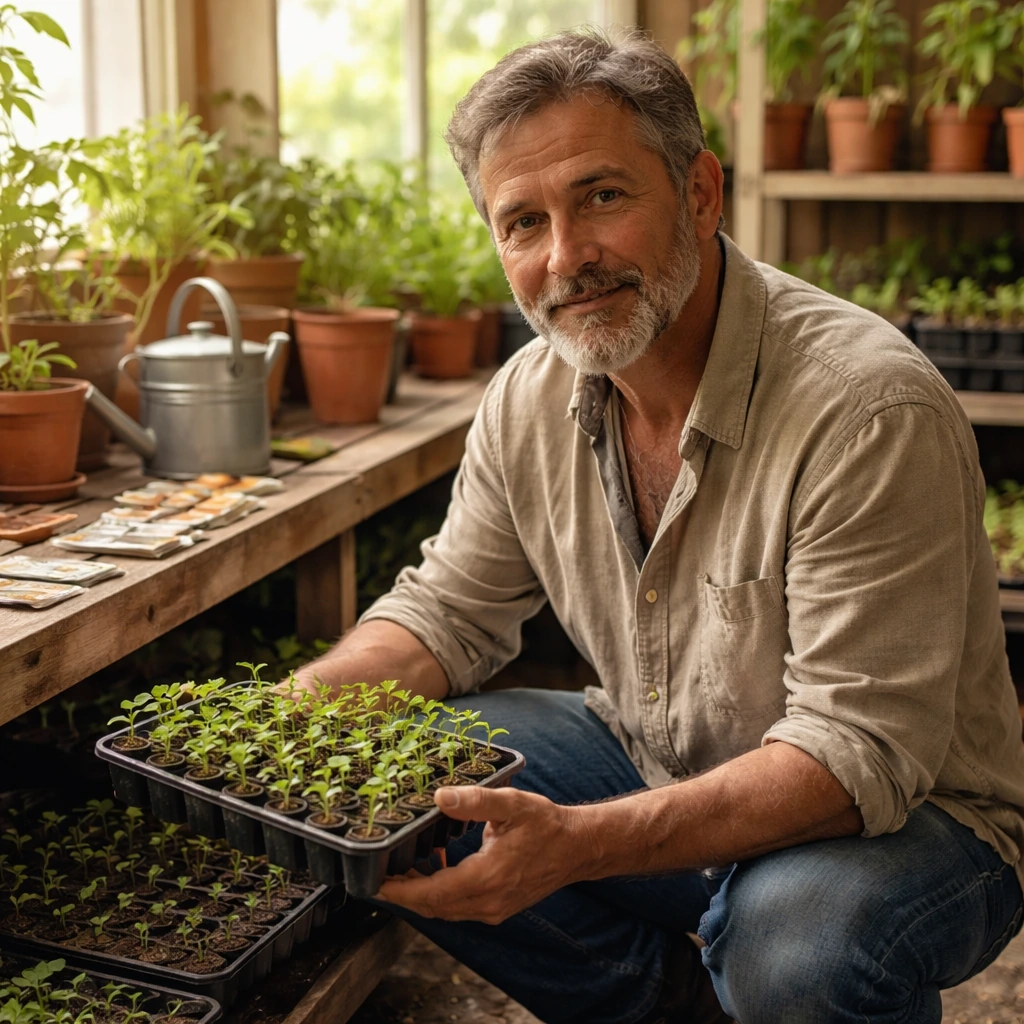
That said, there are situations where starting indoors makes sense. If you want a very early start for Iceland poppies at high elevations where the outdoor sowing window is short, or if you are working with expensive named Oriental poppy cultivars and want to maximize germination success, starting indoors 8–10 weeks before your last frost date in biodegradable peat or coir pots is reasonable. The key is planting the entire pot into the ground without disturbing the roots at all. Never bare-root a poppy seedling. For California poppies and Flanders types, do not bother with indoor starts at all, they hate root disturbance, they are cheap enough to direct-sow freely, and they germinate fast enough outdoors that you gain almost nothing by starting them inside.
| Method | Best for | Colorado advantage | Main risk |
|---|---|---|---|
| Direct sow (spring) | All types, especially California and Flanders | Aligns with cool-soil germination preferences; no transplant shock | Late freeze can kill just-germinated seedlings; re-sow if needed |
| Direct sow (fall) | All types; especially Oriental and Iceland | Natural cold stratification; earlier spring blooms | Seed loss to birds or heavy rain before soil freezes |
| Indoor start in biodegradable pots | Iceland and Oriental poppies at high elevations | Extends short mountain growing season | Root disturbance at planting; damping-off if overwatered |
| Container sowing | Any type on patios, balconies, or small spaces | Portable; easier soil control | Dries out faster; needs consistent watering in Colorado sun |
Cold stratification and fall sowing: step by step
Fall sowing is the method I trust most for Colorado poppies, and once you try it you will probably default to it every year. You are essentially mimicking what happens in nature: seeds drop from the plant in late summer, sit through autumn rains, freeze and thaw through winter, and sprout in the first warm days of early spring. The result is seedlings that emerge earlier, develop stronger root systems in cool soil, and bloom weeks ahead of spring-sown batches. Research on Papaver species confirms that many have dormancy patterns that respond well to cold treatment, and this plays out exactly the way you would expect in a Colorado fall.
Fall sowing in the ground: step by step
- Prepare your bed in September (high elevations) or October (plains and Front Range) exactly as described in the soil preparation section above. The bed should be clear of weeds and raked smooth.
- Wait until average daytime temperatures consistently drop below 60°F and nighttime temps are regularly in the 40s. You want the seeds to stay dormant through fall and not sprout prematurely before freeze.
- Scatter seed thinly and evenly across the surface. Mix the tiny seeds with dry sand at roughly a 1:4 ratio (seed to sand) in a small cup and shake to distribute — this gives you a more even spread and helps you see where you have sown.
- Press the seed firmly into the soil surface using a flat board, the back of a trowel, or your gloved palm. Every seed needs contact with the soil. Do not rake or cover.
- Water gently once with a fine mist to settle seeds without displacing them. After that, let rain and snow do the work.
- Mark the bed with stakes or a weather-proof label so you do not accidentally disturb it during fall cleanup or early spring garden prep.
- In spring, watch for the distinctive feathery or lobed seedling leaves emerging once soil temps reach 50–55°F. Thin to final spacing once seedlings have two to three true leaves: California poppies to 6–12 inches, Flanders types to 8–12 inches, Oriental poppies to 18–24 inches.
Cold stratification in the refrigerator (for indoor starts)
If you prefer to start seed indoors but want the cold-stratification benefit, you can replicate winter in your refrigerator. This is particularly useful for Iceland poppy seed, which germinates more reliably after cold treatment, and for any poppy seed you are sowing indoors in late winter for an early-spring transplant.
- Fold a small piece of damp paper towel and place the seeds inside. Seal it in a small zip-lock bag and label it with the variety and date.
- Place the bag in the back of the refrigerator (not the freezer) at 33–40°F for 3–4 weeks.
- Check every few days to make sure the paper towel stays barely moist, not dripping wet. If you see premature sprouting, move to step 4 immediately.
- After stratification, surface-sow the seeds onto pre-moistened seed-starting mix in a flat or small biodegradable pots. Press seeds onto the surface — no covering. Place under grow lights or in a bright window at 55–65°F.
- Keep the surface evenly moist but not waterlogged. Germination typically occurs within 10–21 days after stratification.
- Thin to one seedling per cell or pot once the first true leaves appear. Do not disturb roots when thinning — snip unwanted seedlings at soil level with scissors.
Caring for your poppies through the Colorado season
Once established, poppies in Colorado need very little from you. The main jobs are watering correctly, not over-feeding, and dealing with the aftermath of the summer bloom before plants go dormant.
Watering in a dry climate
Young seedlings need consistent moisture, the top inch of soil should not dry out completely until plants are at least 4–6 inches tall. After that, taper back. Established California poppies are genuinely drought-tolerant and bloom better with infrequent deep watering (once a week or less) rather than frequent shallow irrigation. Oriental poppies and Iceland poppies want moderate moisture during their active growing period but should be kept on the dry side once flowering finishes and dormancy begins. Overwatering a dormant Oriental poppy crown is the most common way to lose the plant.
Feeding (less is more)
Do not fertilize poppies routinely. A single light application of a balanced, low-nitrogen fertilizer (something like 5-10-10) at planting time is sufficient for a full season, and many growers skip fertilizer entirely in reasonably decent soil. High nitrogen produces leafy plants with disappointing flower counts. If you amended your soil well before sowing, you almost certainly do not need to feed at all.
Deadheading and staking
Deadheading (removing spent flowers before seed pods swell) extends the bloom season substantially on annual types like California and Flanders poppies. Snip the stem back to just above a lateral bud or leaf. If you want seeds for saving or for reseeding the bed, leave the last flush of flowers to develop pods. Oriental poppies set seed quickly and do not respond to deadheading the way annuals do, you can remove the spent petals for tidiness, but the plant will go dormant on its schedule regardless. For staking, Oriental poppies in exposed windy spots often need a single bamboo cane and a loose tie placed when stems are about 12 inches tall, before they start to lean.
Managing summer dormancy in Oriental poppies
Oriental poppies go fully dormant after blooming, typically by mid-July at Front Range elevations. The foliage yellows and collapses, which looks alarming if you have never seen it before. This is completely normal. Leave the crowns in place, do not dig them up. Mark their location clearly and fill the gap with a fast-growing annual (bachelor's buttons, zinnias, or annual cosmos work well) planted around the dormant crown to carry the bed through summer. If you prefer a native perennial alternative that provides late-season color and pollinator benefits, consider goldenrod, see how to grow goldenrod. The Oriental poppy will re-emerge as fresh rosette foliage in late August or September and overwinter successfully, blooming again the following spring.
Pests, disease, and common problems in Colorado
Colorado's dry air is genuinely protective against many of the fungal diseases that devastate poppies in humid climates. Crown rot and root rot (caused by Rhizoctonia and Phytophthora) are the most serious threats, and both are almost entirely preventable with good drainage and avoiding overwatering. If you see plants collapsing at the base with brown, mushy stems, that is almost always a drainage or overwatering problem, not a pest issue. The fix is soil structure improvement before the next planting.
- Aphids: common on Oriental poppy buds in late spring. A strong blast from the hose removes most colonies. Serious infestations can be treated with insecticidal soap, but aphids rarely cause lasting damage.
- Damping-off: affects indoor seedlings kept too wet or too warm. Use a sterile seed-starting mix, water from below when possible, and ensure good air circulation around seedling trays.
- Powdery mildew: occasionally appears on Oriental poppy foliage late in the season, especially in wet years. Since plants are heading toward dormancy anyway, treatment is rarely necessary. Improve air circulation with proper spacing (18–24 inches between plants) to reduce incidence.
- Poor germination: usually caused by seed covered with too much soil (remember: surface sow only), soil that dried out during the germination period, or seed that was too old (poppy seed viability drops significantly after 2–3 years). Always use fresh seed and keep the surface moist until germination.
- Leggy seedlings: a sign of insufficient light when starting indoors. Move flats as close to a grow light or bright south-facing window as possible, and keep indoor temperatures cool (55–65°F) to slow stretching.
Harvesting poppies for cut flowers
Poppies make exceptional cut flowers if you harvest them at exactly the right moment: just as the sepals (the papery outer covering) begin to split and the petals are starting to push through, but before the flower is fully open. This sounds fussy but becomes instinctive after the first season. Harvest in the early morning when stems are most turgid, and immediately sear the cut end of each stem in a flame for 5–10 seconds or dip it in boiling water for 20–30 seconds. This stops the milky sap from sealing off the stem and dramatically extends vase life from one day to four or five days. Place immediately in deep, cool water and move to a cool room or refrigerator for an hour before arranging.
Saving poppy seeds for next season
Saving poppy seed is one of the most satisfying parts of growing them. Wait until the seed pods (capsules) are fully dry on the plant, they turn tan or brown and the small holes around the top of the pod open up. At that point, you can either shake the pod over a paper bag to collect the seeds or cut the entire dry stem and hang it upside down in a paper bag in a warm, dry place for a week. Sift out the chaff, transfer the clean seed to a labeled paper envelope (not plastic, which traps moisture), and store in a cool, dark, dry location. Properly stored poppy seed stays viable for 2–3 years, though germination rates drop after year two. California poppy seed is particularly easy to save and produces reliable offspring; Oriental poppy cultivars may not breed true from seed if different varieties are growing in proximity.
FAQ
When is the best time to sow poppy seed in Colorado (by elevation/zone and frost dates)?
Use your local station normals for last-spring and first-fall freeze to pick windows. General guidance: - Fall (preferred where practical): late summer to autumn (August–October) for most Front Range/plains and lower-elevation Western Slope sites — surface-sowing lets natural cold stratification occur and yields earlier spring blooms. - Spring (alternative): sow as soon as soil can be worked and is not waterlogged (typically after last frost). - Elevation notes: in high-elevation/zone 3–4 (short season, late last spring frost) favor fall sowing for annuals and Iceland poppies; mid-elevations/zone 4–6 can use fall or early-spring sowing; low-elevation/zone 6–7 spring sowing works but fall is still beneficial. Always map your exact site to the NOAA/Colorado Climate Center station normals to align dates to your property.
Which poppy species and varieties are best for Colorado conditions?
Safe, commonly recommended ornamentals: - California poppy (Eschscholzia californica): drought-tolerant, often a short-lived perennial or reseeding annual depending on elevation; great for gravelly, poor soils. - Oriental poppy (Papaver orientale): long-lived perennial, large blooms; prefers to be established in place (doesn’t transplant well); needs good winter drainage. - Iceland poppy (Papaver nudicaule): cool-season poppy that thrives at higher elevations/colder springs. - Field/Flanders poppy (Papaver rhoeas) and other annual Papaver species: good for cut flowers and massing. Avoid Papaver somniferum (opium poppy) unless you have verified federal and state legal permissions — it is legally sensitive. Choose varieties labeled for color/height and match spacing: California poppies 6–12" apart; annual Papaver 8–12"; Oriental 18–24".
Are any poppies illegal to grow in Colorado?
Papaver somniferum (opium poppy) is specifically defined in federal law and Colorado controlled-substances rules as an opium poppy; planting/cultivating it is legally sensitive and could be regulated. Most ornamental poppies (California, Oriental, Iceland, field poppies/Papaver rhoeas) are legal. If you’re uncertain, avoid P. somniferum or check federal/state guidance before planting.
How should I prepare the planting site and soil for poppies in Colorado?
Poppies need very well-drained, lean to moderately fertile soil. Steps: 1) Choose a sunny site (full sun 6+ hours). 2) Loosen top 6–8 inches; remove large rocks/roots. 3) Improve drainage if soil is heavy clay: incorporate coarse sand, grit, pea gravel, or horticultural grit (10–30% by volume) rather than lots of compost. 4) Avoid high-N/very rich soils — lean soils encourage more blooms and less leggy growth. 5) For raised beds, use a gritty mix and keep crowns above the wettest zone.
Should I direct-sow poppy seed or start it indoors?
Prefer direct-sowing for most poppies in Colorado because seeds are tiny, light-sensitive, and many species resent transplanting. - Direct-sow: best for California, Iceland, field poppies, many annual mixes, and Oriental poppies (establish in place). - Starting indoors: possible for protected low-elevation gardens or to get a head start on annual mixes, but use peat/coir pots to avoid root disturbance and thin carefully. For Oriental poppies, starting indoors often causes transplant shock; if you must, transplant very young with an intact root ball.
Do poppy seeds need cold stratification?
Many Papaver and Eschscholzia seeds benefit from a cold period, which fall sowing naturally provides. Practical rules: - Fall surface-sowing gives the cold stratification many seed lots need; it’s the simplest method. - If starting indoors in spring, you can cold-stratify seed in the refrigerator for 2–4 weeks on moist media (follow packet instructions) for some Papaver types — but germination response varies by species and seed lot. - Regardless, seeds require light to germinate: surface-sow and press seeds into contact with soil; do not bury.
Next Article
How to Grow Purple Poppies: Complete Beginner Guide
Step-by-step guide to grow purple poppies: choose varieties, sow correctly, manage moisture, care, bloom timing, and sav