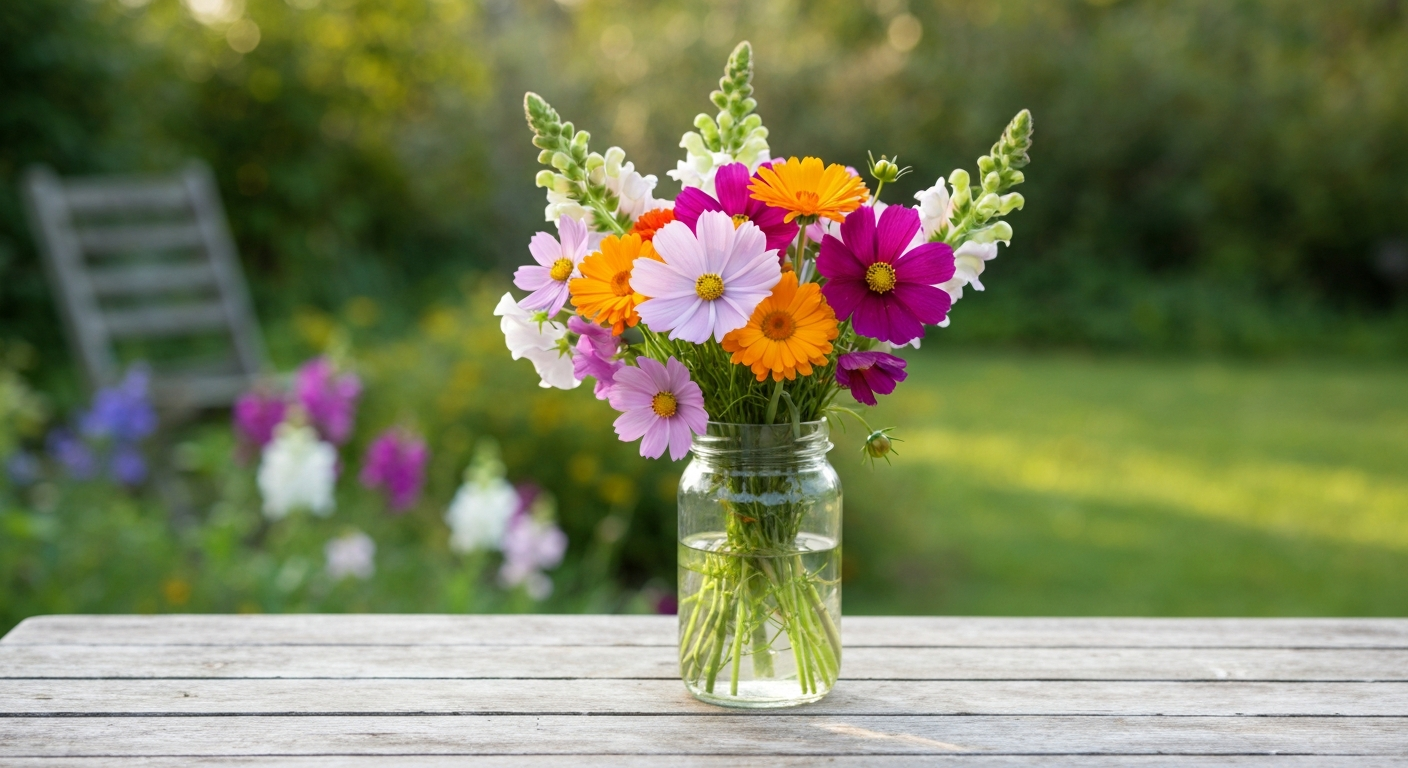
Flora Flex growing comes down to matching each flower to the right timing, soil, and propagation method from the start. Whether you are growing phlox, Blue Mist Flower, Blue Moon Phlox, Diamonds Blue delphinium, or a cheerful posy mix, the core framework is the same: start seeds or divisions at the right temperature, get them into well-drained, compost-rich soil at the right moment relative to your last frost date, and keep up with a handful of routine tasks like pinching, feeding, and deadheading. Get those fundamentals right and almost every flower on this list will reward you, even if you have only a few containers and a single raised bed.
Flora Flex How to Grow: Step-by-Step Guide for Garden
Marcus Holloway
8 Aug 2026
What this guide covers and your one-page success plan
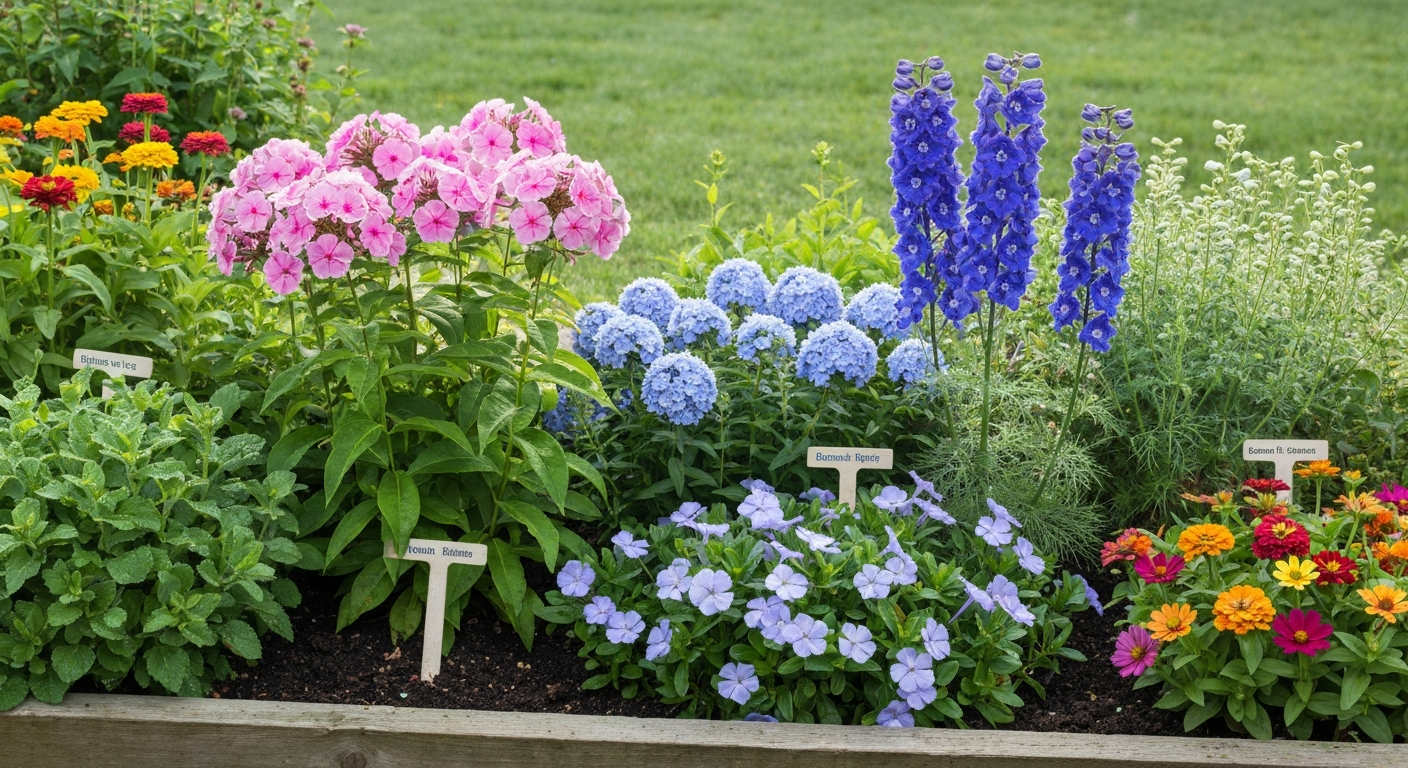
This guide is a practical, start-to-harvest walkthrough for five flower types that work beautifully together in cutting beds, cottage borders, and containers: garden phlox (Phlox paniculata), Blue Mist Flower (Conoclinium coelestinum), Blue Moon Phlox (Phlox divaricata 'Blue Moon'), Diamonds Blue delphinium, and mixed posy blends. Each has its quirks, but every single one responds to the same backbone of good soil, sensible timing, and attentive watering. The sections below move in the order you will actually need them, from deciding what to grow and where, through sowing and transplanting, into routine care and troubleshooting, and finally to cutting and harvest.
If you want a one-page plan, here it is: check your USDA hardiness zone and local last frost date, amend your bed or pot with 3 to 4 inches of compost, start your delphinium and phlox indoors 8 to 10 weeks before last frost, direct-sow your posy mix and Blue Mist Flower seeds after frost risk passes, harden off all transplants for 7 to 14 days before moving them outside, then water deeply and consistently, feed monthly with a balanced fertilizer, and deadhead spent blooms to keep stems coming. That is genuinely the whole system. The rest of this guide fills in the specific numbers.
Decision checklist before you plant anything
Before you order a single seed packet, run through this checklist. It will save you from planting a shade-lover in full blazing sun or crowding a 4-foot delphinium into a 1-gallon pot. These are the decisions that determine whether you succeed or spend the summer troubleshooting.
- Find your USDA hardiness zone using the 2023 USDA Plant Hardiness Zone Map (a free ZIP-code lookup). This tells you which perennials will survive your winters and gives you a starting point for frost dates.
- Look up your average last spring frost date and first fall frost date from NOAA's National Weather Service frost climatology tables. These 30-year climate normals are more reliable than guessing from a single year's memory.
- Decide between a cutting bed, a mixed border, or containers. Delphiniums and tall phlox need at least 3 to 5 gallons of root space per plant if containerized and perform best in open ground. Blue Mist Flower spreads by rhizomes and will take over a small container quickly — give it a raised bed or a large pot it can fill.
- Choose varieties suited to your light. Garden phlox and Diamonds Blue delphinium want full sun (6+ hours). Blue Moon Phlox and Blue Mist Flower tolerate part shade and will actually sulk in relentless afternoon sun in hot climates.
- Set your harvest goal. If you want cut flowers for vases, prioritize long-stemmed varieties and plan succession sowings every 2 weeks for continuous production. If you just want a pretty bed, a single sowing works fine.
- Check your soil pH now, not after planting. Garden phlox, Blue Moon Phlox, and delphiniums all prefer a pH around 6.0 to 7.0. A simple soil test from your local extension office will tell you whether you need lime or sulfur before you plant.
Timing and planting calendar
Getting the timing right is probably the single biggest factor separating a thriving cutting bed from a frustrating one. Most beginners either sow too late or rush transplants outside before the soil is ready. Here is how to build a reliable calendar around your local frost dates.
Starting indoors vs. direct sowing
Delphiniums and phlox are both better started indoors because they need a longer lead time and, in the case of delphiniums, sometimes benefit from a short cold-moist stratification period before germination becomes reliable. Start both 8 to 10 weeks before your average last frost date. Blue Mist Flower can be direct-sown after your last frost date or started indoors 6 to 8 weeks early for a head start. Posy mixes (annuals like zinnias and mixed cutting blends) are typically direct-sown after frost risk has passed, spacing sowings every 2 weeks from last frost through midsummer for continuous blooms.
Succession sowing for continuous stems
Succession sowing is the single best habit you can build if cut flowers are your goal. Rather than sowing everything at once and getting a two-week glut followed by bare vases, stagger your sowings every 14 days. For posy mixes and Blue Mist Flower, make three or four successive sowings between last frost and early summer. For delphiniums, one main indoor start plus a second sowing 3 weeks later gives you an earlier flush and a follow-up flush, which matters because individual delphinium spikes do not last long on the plant.
Timing quick chart
| Flower | Start Indoors (weeks before last frost) | Germination Temp (°F) | Direct Sow Timing | Transplant Outdoors | First Bloom |
|---|---|---|---|---|---|
| Garden Phlox (Phlox paniculata) | 8–10 weeks (or fall sow outdoors) | 65–70°F | Fall sow for spring emergence; needs cold stratification | After last frost, once soil is 55°F+ | Summer (Year 1 if transplanted; Year 2 from seed) |
| Blue Moon Phlox (P. divaricata) | 8–10 weeks | 60–65°F | Fall sow with natural cold stratification | 2–4 weeks before last frost (tolerates light frost) | Spring, Year 1 from transplant |
| Blue Mist Flower (Conoclinium coelestinum) | 6–8 weeks | 65–70°F | After last frost; soil 60°F+ | After last frost | Late summer to fall |
| Diamonds Blue Delphinium | 8–10 weeks (cold-stratify seed 1–2 weeks first) | 50–65°F (cool medium is key) | Fall sow in mild climates only | 2–3 weeks before last frost (frost-tolerant) | Early summer, 14–16 weeks from sowing |
| Posy Mix (annuals) | 4–6 weeks for head start | 68–75°F | After last frost; succession sow every 2 weeks | After last frost | 8–12 weeks from sowing |
Picking the right seeds and where to buy them
Seed quality matters more than most beginners expect. Old, poorly stored seed is the number one cause of disappointing germination rates, especially for delphiniums and phlox, which already need a little extra coaxing. Here is what to look for before you buy.
- Buy fresh seed dated for the current season. Delphinium seed loses viability quickly; seed more than one year old often germinates at well under 50%.
- For cut flowers, choose varieties with long stems. Diamonds Blue delphinium produces tall, dense spikes bred specifically for cutting. For phlox, look for tall Phlox paniculata cultivars (24–36 inches) rather than compact ground-cover types.
- For small gardens and containers, choose compact or dwarf series. Dwarf phlox varieties and shorter posy mixes suit 3 to 5 gallon containers without becoming top-heavy.
- Look for seed packets that list germination percentage on the label (aim for 75% or higher) and check that packets are sealed against moisture.
- Order from reputable cut-flower seed suppliers or specialist native plant nurseries. Many carry Blue Mist Flower seed alongside detailed sowing notes, which is useful for a plant that is still less common in mainstream garden centers.
- If you cannot find Blue Moon Phlox seed, buy vigorous nursery transplants instead. The Mt. Cuba Center trial specifically recommends starting with good-quality transplants for Phlox divaricata cultivars because seed-grown plants are slower and less predictable.
Propagation options: seed, division, and cuttings
Not every flower on this list is best grown from seed every time. Understanding when to choose a different propagation method will save you weeks of waiting and give you more reliable plants.
Seed sowing
Seed sowing is the right choice for annuals like posy mixes and for starting fresh plants of any variety. It is also the only real option for Diamonds Blue delphinium if you want specific cultivars, since vegetative propagation does not always preserve named delphinium traits reliably at the home gardener scale. The trade-off is time: expect 8 to 10 weeks of indoor growing before you have transplant-ready seedlings.
Division
Division is the quickest way to multiply established garden phlox, Blue Moon Phlox, and Blue Mist Flower, and it is the method that keeps named cultivars true to type. Divide crowded clumps every 2 to 4 years in early spring (when shoots are just emerging) or early fall (at least 6 weeks before your first frost). Lift the clump, break or cut it into sections each with at least 3 to 5 healthy shoots and a good root mass, replant at the same depth, and water in well. Division instantly gives you multiple full-size plants without any of the seed-starting complexity.
Softwood and hardwood cuttings
Softwood cuttings taken in early summer (June to early July) work well for garden phlox and Blue Mist Flower. Take 3 to 4 inch tip cuttings, strip the lower leaves, dip the base in a rooting hormone powder or gel containing IBA at roughly 1,000 to 3,000 ppm (check your product label), and stick them into a sterile, well-drained rooting medium. Optimizing propagation and rooting, NC State / production research summary (auxin concentration findings cited) summarizes production trials showing species- and cutting-type dependent IBA responses: many woody cuttings root best with basal dips around 2,000–8,000 ppm while many herbaceous softwood cuttings root well with about 1,000–3,000 ppm, and it advises trialing small batches and following product label safety directions Optimizing propagation and rooting — NC State / production research summary (auxin concentration findings cited). Keep humidity high under a clear dome or tent until roots form, typically 2 to 4 weeks. Hardwood cuttings are less common for these herbaceous and semi-herbaceous plants but can be used for woody-based phlox in late autumn at IBA concentrations up to 8,000 ppm for more recalcitrant material. Always test a small batch first before treating a whole crop of cuttings.
When to choose each method
| Situation | Best Method | Why |
|---|---|---|
| Starting posy mix or delphinium from scratch | Seed sowing | Only practical option; annuals must be grown from seed each year |
| Multiplying named phlox cultivar (Blue Moon, etc.) | Division or cuttings | Keeps the plant true to type; faster than seed |
| Filling a new bed quickly from one existing plant | Division (spring or fall) | Produces multiple transplant-ready plants in one step |
| Propagating Blue Mist Flower to fill a larger area | Division or stem cuttings | Spreads readily; division is the simplest approach |
| Creating extra cutting-bed plants mid-season | Softwood cuttings (June–July) | Quick turnaround; adds plants without waiting for seed |
Step-by-step seed sowing
This is where a lot of beginners lose confidence, but the process is genuinely straightforward once you know the variables that actually matter: sterile medium, the right temperature, and consistent moisture. Here is the process I use.
- Fill clean seed trays or containers 2 to 3.5 inches deep with a sterile, fine-textured soilless mix — sphagnum peat or coir combined with perlite or vermiculite. Do not use garden soil, which compacts and carries pathogens.
- Moisten the medium thoroughly before sowing. It should feel like a wrung-out sponge — damp throughout but not dripping.
- Sow at the right depth. The general rule is to cover seed with growing medium equal to about 1 to 2 times the seed's diameter. For tiny phlox and delphinium seeds, that means very shallow — about 1/16 to 1/8 inch at most. Some sources recommend simply pressing delphinium seeds onto the surface and covering them with a thin layer of fine vermiculite, which retains moisture and lets in just enough light.
- Label every tray immediately. It is almost impossible to tell phlox from delphinium seedlings at the cotyledon stage.
- Cover trays with a clear humidity dome to maintain even moisture until germination. Check daily and mist lightly if the surface begins to dry.
- Place trays on a seedling heat mat set to roughly 65 to 70°F for most of these flowers. Delphiniums are an exception — they prefer a cooler substrate around 50 to 65°F, so skip the heat mat for delphinium trays or keep them on a cool shelf.
- As soon as sprouts appear (usually within 7 to 21 days), remove the dome and move trays under supplemental grow lights positioned 2 to 4 inches above the canopy. Run lights for 16 hours per day. This prevents the leggy, weak seedlings that happen when young plants stretch toward a distant window.
- Water from the bottom by setting trays in a shallow container of water for 10 to 15 minutes rather than pouring over the top. This technique dramatically reduces damping-off, the fungal collapse that kills seedlings at the soil line. If you must water from above, use a fine-mist bottle and let the surface dry slightly between waterings.
- Thin seedlings once they have their first true leaves, leaving one strong plant per cell. Crowded seedlings compete for light and air and are more vulnerable to damping-off.
Transplanting and hardening off
Hardening off is the step most beginners skip, and then wonder why their seedlings wilt or sunburn within a day of going outside. Indoor seedlings have never felt wind, direct outdoor sun, or temperature swings. You need to introduce those stresses gradually over 7 to 14 days before transplanting for good.
How to harden off
- Day 1 to 3: set trays outside in a sheltered, lightly shaded spot for 1 to 2 hours in the morning, then bring them back in.
- Day 4 to 7: extend outdoor time to 4 to 6 hours, gradually introducing more direct sun.
- Day 8 to 14: leave seedlings outside all day and, if frost is not forecast, overnight. They are ready to transplant once they show no stress signs (wilting, leaf curl) after a full day outdoors.
Container sizes and spacing
Container size directly affects how well your plants perform. Small bedding annuals and compact posy varieties manage in 1 to 2 gallon pots, but garden phlox, delphiniums, and Blue Mist Flower all need 3 to 5 gallons or more per plant for adequate root space, moisture retention, and stem support. Underpotted plants dry out fast, go hungry faster, and often produce weak stems that flop before you get to cut them. In a cutting bed, space garden phlox 18 to 24 inches apart, delphiniums 18 inches apart, and Blue Mist Flower 18 to 24 inches apart (it will fill the gap quickly via rhizomes). Posy mixes vary by species, so follow the packet spacing, but 6 to 12 inches is typical for cutting-bed rows.
When to transplant outdoors
Frost-tolerant plants like Diamonds Blue delphinium and Blue Moon Phlox can go out 2 to 3 weeks before your last frost date as long as temperatures are not dropping below 28°F. Garden phlox, Blue Mist Flower, and most posy annuals should wait until after your last frost date and ideally until the soil temperature is at least 55°F. Transplanting into cold soil stresses roots, stalls growth, and makes plants more vulnerable to soil-borne diseases. A cheap soil thermometer costs just a few dollars and removes all the guesswork.
Soil prep, drainage, light, and growing conditions
All five flowers on this list will tolerate imperfect conditions but thrive when you invest a little effort in the bed before planting. Incorporate 3 to 4 inches of compost into the top 12 inches of your bed before planting. This improves drainage in clay soils, adds moisture retention in sandy soils, and provides a slow nutrient release that new transplants appreciate. Target a soil pH of 6.0 to 7.0, which suits garden phlox, Blue Moon Phlox, and delphiniums equally. Blue Mist Flower is more flexible and tolerates slightly wetter, heavier soils than the others, it is one of the few plants here that genuinely likes consistently moist ground. If drainage is poor, raised beds or mounded planting rows will keep phlox and delphinium roots from sitting in waterlogged soil over winter.
For light: garden phlox and Diamonds Blue delphinium need at least 6 hours of direct sun for dense stems and good bloom. Blue Moon Phlox and Blue Mist Flower will both flower well in part shade (3 to 5 hours of direct sun), which makes them valuable for the shadier corners of a cutting garden where you might also consider growing other shade-tolerant companions.
Watering, feeding, staking, and spacing
Water garden phlox and delphiniums deeply but infrequently, aim to wet the soil to 6 inches and then allow the top inch to dry before watering again. Shallow, frequent watering encourages surface roots and makes plants drought-sensitive. Blue Mist Flower is genuinely tolerant of wet conditions and can handle more consistent moisture. Containers dry out much faster than beds and may need daily watering in summer heat, so check them every morning during hot spells.
Feed all of these plants with a balanced granular fertilizer (something in the range of 10-10-10 or similar) once a month from planting through midsummer. Avoid high-nitrogen formulas late in the season, which push leafy growth at the expense of flowers and reduce winter hardiness in perennials. For containers, use a liquid balanced fertilizer every 7 to 10 days since nutrients leach out with frequent watering.
Delphiniums absolutely need staking. Even compact Diamonds Blue plants will lean or snap in wind once the flower spikes are heavy. Place bamboo canes or grow-through supports at transplant time rather than waiting until the plant has already flopped, trying to stake a fallen stem without creasing it is genuinely annoying. Tall garden phlox benefits from a simple ring support or light caging to prevent sprawl in windy or wet-summer gardens.
Routine care: pinching, deadheading, and overwintering
Pinch the growing tips of young garden phlox and Blue Mist Flower plants once when they reach about 6 inches tall. This encourages branching and produces more flowering stems rather than a single tall shoot. Do not pinch delphiniums, they produce a central spike and do not branch in the same way.
Deadhead spent flowers on garden phlox and posy annuals regularly, ideally every few days during peak season. On phlox, removing spent flower clusters before seeds set prevents unwanted self-seeding (seedlings rarely match the parent cultivar) and encourages a second flush of bloom later in summer. On delphiniums, cut the main spike back to a lateral bud or to basal growth after the first flush and you will usually get a second, smaller flowering in late summer.
For overwintering: cut garden phlox and Blue Mist Flower stems back to a few inches above ground after the first hard frost. Mulch the crowns with 2 to 3 inches of straw or shredded leaves in zones 4 to 5 for extra protection. Delphiniums are a little more sensitive, mulch crowns generously and ensure drainage is excellent over winter since wet crowns are the main cause of winter loss. Blue Moon Phlox is rated hardy in zones 3 to 8 and is genuinely tough; a light mulch is all it needs.
Variety-specific notes and common pitfalls
Garden phlox (Phlox paniculata)
The biggest pitfall with garden phlox is powdery mildew, which appears as a white coating on leaves in humid summers, especially when plants are overcrowded or air circulation is poor. Space plants at least 18 inches apart, avoid wetting foliage when watering, and choose mildew-resistant cultivars when available. Propagate named cultivars by division rather than seed, garden phlox seed needs cold, moist stratification (4 to 8 weeks at 34 to 40°F) or fall sowing to germinate reliably, and seedlings often do not match the parent plant's flower color or mildew resistance.
Blue Moon Phlox (Phlox divaricata 'Blue Moon')
This is one of the better-performing shade phlox varieties, rated highly in the Mt. Mt. Cuba Center's 2015–2017 trial rated Phlox divaricata 'Blue Moon' among the top shade performers, recommended buying vigorous transplants, and reported trial soil pH around 6.5. Cuba Center trial in zones 3 to 8. It blooms in spring, not summer, so plan it as an early-season companion that will be finished flowering by the time your delphiniums hit their peak. Buy vigorous nursery transplants rather than starting from seed if you want blooms in the first year. After flowering, cut stems back by about a third to keep the plant tidy and occasionally it will rebloom in fall.
Blue Mist Flower (Conoclinium coelestinum)
Blue Mist Flower is one of the easiest plants on this list but also the most aggressive in good conditions. It spreads via rhizomes and self-seeds, so site it where spread is welcome, a naturalized area, a large container it can fill, or a designated patch where you can mow the edges to contain it. In a small garden, plan to divide it every year or two to keep it in bounds. The flowers are ageratum-blue and appear in late summer to fall, which makes them excellent fillers when delphiniums and phlox are finished.
Diamonds Blue Delphinium
Delphiniums are the most demanding plant on this list, but the payoff, those tall, electric-blue spikes, is worth the effort. The main pitfalls are poor germination from old seed (buy fresh every year), damping-off in seedling trays (use sterile medium, bottom-water only, and keep air moving), and crown rot in heavy wet soil (improve drainage before planting). Sow seed very shallow, keep the germination medium cool (50 to 65°F), and be patient, germination can take 2 to 3 weeks even under good conditions. Once established, delphiniums are surprisingly tough; the difficulty is almost entirely in the seedling stage.
Posy mixes
Posy mixes are the easiest entry point on this list. They are typically annual cutting-flower blends that you direct-sow after frost, thin to the recommended spacing, and harvest continuously by cutting stems that are just opening. For a step-by-step primer on how to grow posies, see our guide on how to grow posies. Follow succession sowing every 14 days from last frost through early summer, cutting at least twice a week during peak flowering to keep stems coming. The main mistake beginners make is letting flowers go to seed on the plant, which signals the plant to stop producing. Cut generously and cut often.
Troubleshooting: pests, diseases, and nutrient problems
| Problem | Symptoms | Likely Cause | Fix |
|---|---|---|---|
| Damping-off | Seedlings collapse at soil line | Fungal pathogens in wet, warm medium | Use sterile soilless mix; bottom-water only; improve air circulation around trays |
| Leggy seedlings | Tall, thin stems that flop over | Insufficient light or lights too far away | Move lights to 2–4" above canopy; run 16 hours/day |
| Powdery mildew (phlox) | White powder on leaves | Poor air circulation, overhead watering in humid weather | Increase spacing; water at soil level; choose resistant varieties |
| Poor germination (delphinium/phlox) | Few or no sprouts after 3+ weeks | Old seed, wrong temperature, or insufficient stratification | Use fresh seed; check temperature; cold-stratify before sowing |
| Crown rot (delphinium) | Plant collapses at crown, blackened base | Waterlogged soil, especially in winter | Improve drainage; plant on raised row; mulch but don't bury crown |
| Aphids | Sticky residue, distorted new growth | Aphid colonies on stems/buds | Knock off with a firm water jet; use insecticidal soap if persistent |
| Yellowing leaves (all types) | Uniform yellowing across older leaves | Nitrogen deficiency or waterlogging | Feed with balanced fertilizer; check drainage; adjust watering frequency |
| No blooms on phlox (year 1 from seed) | Healthy plant but no flowers | Normal for seed-grown garden phlox in first year | Be patient; use transplants for first-year flowers; divide for more plants |
Cutting and harvest: getting the best vase life
Cutting flowers at the right stage makes the difference between a vase that lasts 5 days and one that lasts 10. The general rule for most of these flowers is to cut when the first one or two florets on a stem are open but the rest are still in bud. This gives you the longest vase life because the remaining buds will continue to open indoors. For delphinium, cut when roughly one third of the florets on the spike are open. For phlox clusters, cut when about half the individual flowers in the cluster are open.
Always cut in the morning when stems are most hydrated, use clean, sharp scissors or pruners (dull blades crush the stem and block water uptake), and plunge stems immediately into a bucket of cool water. Re-cut stems at a 45-degree angle underwater when you arrange them in a vase to maximise water uptake. Strip any leaves that will sit below the waterline. Change the vase water every 2 days. For delphiniums, which have hollow stems, there is an old florist trick of inverting the stem, filling the hollow with water, and plugging it lightly with a small piece of wet cotton wool before placing it in the vase. It sounds fiddly but it genuinely extends vase life by several days.
Quick comparison: which flower suits your situation
| Flower | Difficulty | Best For | Light | Key Challenge | Vase Life |
|---|---|---|---|---|---|
| Garden Phlox | Moderate | Borders, cutting beds | Full sun | Powdery mildew; seed needs stratification | 5–7 days |
| Blue Moon Phlox | Easy | Shade gardens, spring cutting | Part shade to full shade | Spring only; buy transplants for Year 1 blooms | 4–6 days |
| Blue Mist Flower | Easy | Late-season filler, naturalized areas | Sun to part shade | Aggressive spreading via rhizomes | 5–7 days |
| Diamonds Blue Delphinium | Challenging | Tall cutting stems, feature borders | Full sun | Seed viability, cool germination, crown rot risk | 5–8 days |
| Posy Mix | Very easy | Continuous cutting bed, beginners | Full sun | Letting flowers set seed; succession sowing needed | 5–10 days (variety-dependent) |
If you are brand new to cutting flowers, start with a posy mix and add Blue Mist Flower as a late-season companion. Once you have a season of confidence, bring in garden phlox and then tackle delphiniums. Blue Moon Phlox is a natural addition if you have a shady spot that needs spring color, it pairs beautifully with other shade-tolerant perennials and fills a timing gap that most cutting beds leave empty. All five of these plants reward the same core habits: good soil preparation, attention to timing around frost dates, and consistent deadheading or cutting throughout the season.
FAQ
What is the quickest way to decide whether to start seeds indoors or direct‑sow for my zone?
Check your USDA hardiness zone and local average last frost date (NOAA/NCEI). If a flower needs a long season (delphinium, many phlox cultivars) or slow germination/cold stratification, start indoors 6–12 weeks before last frost or fall‑sow outdoors for natural stratification. Fast‑maturing annual posies and many cutting annuals can be direct‑sown after the last frost or when soil temps reach recommended ranges. Quick decision rule: if seed needs >4–8 weeks to flower or requires stratification, start indoors or fall‑sow; otherwise direct‑sow after frost risk passes.
When exactly should I sow or transplant (indoors vs direct) — timing table for quick reference?
Timing table (use your local last frost date): - Phlox (P. paniculata): Fall sow outdoors or start indoors 8–10 weeks before last frost; transplant after last frost/soil workable. Divide in early spring or early fall every 2–4 years. - Blue Moon Phlox (shade varieties): Start indoors 6–8 weeks before last frost or buy transplants; plant after last frost; tolerates part shade. - Blue Mist Flower (Conoclinium): Sow indoors 6–8 weeks before last frost or direct‑sow after last frost; divides/rhizomes in spring. - Diamonds Blue delphinium: Start indoors 10–12 weeks before last frost (delphinium often needs cool germination); or fall sow for spring germination. Transplant when 3–4 true leaves; stake at planting. - General posies (annual cutting mix): Direct‑sow after last frost or start indoors 4–6 weeks before last frost for earlier blooms. Use local average last frost: Indoor start date = last frost date minus starter weeks; direct‑sow = after last frost (or when soil ≥50–60°F for many seeds).
How should I prepare seed‑starting medium, containers and light/temperature conditions?
Use a sterile, fine‑textured soilless mix (peat or coir + perlite/vermiculite). Containers: 2–3.5" trays for seedlings; transplant into 3"+ cells before moving to garden. Germination conditions: keep medium uniformly moist under a dome; bottom heat around 70°F helps many flower seeds (use cautiously for cool‑preferring seeds like delphinium). Provide 14–16 hours/day of grow light positioned 2–4" above seedlings immediately after germination. Harden off 7–14 days before transplanting.
What are exact sowing depths and seed handling tips for phlox, delphinium, and posies?
General rule: cover seed with medium equal to 1–2× seed diameter. Specifics: - Phlox (garden phlox): very shallow, ~1/8"; many need cold stratification (4–8 weeks moist cold) or fall sowing. - Delphinium: very shallow to surface sowing (surface to 1/16–1/8"); keep cool (50–65°F) and moist; cold‑moist stratify can improve germination. - Posies/cutting annuals: follow 1–2× rule (e.g., zinnias ~1/4"); press tiny seeds onto surface and do not bury deeply. Label trays and maintain even moisture under humidity dome.
How do I decide between seed, division, or cuttings for propagation?
Decision points: - Seed: best for annual posies, producing many plants, or breeding new varieties; use when seed germination reliable or fall‑sow for stratification. - Division: best for clumping perennials like garden phlox and aggressive spreaders (blue mistflower) to rejuvenate and control size; divide in early spring or early fall every 2–4 years. - Cuttings: useful for preserving cultivar traits (true‑to‑type) and producing transplants quickly (softwood cuttings early summer). If you need exact cultivar form, prefer division or cuttings over seed.
What soil and site prep steps guarantee good establishment?
Prepare bed by removing weeds and incorporating 3–4" of well‑aged compost into top 6–8" of soil. Ensure good drainage — raise beds or add grit in heavy clay. Target pH ~6.0–7.0 for phlox; test soil and amend per extension guidance. For containers use a well‑draining commercial potting mix. Space plants according to mature habit (see spacing list below) and water in thoroughly at transplant.
Next Article
How to Grow Posies: Seed-to-Harvest Guide for Beginners & Bouquets
Grow posies from seed to vase: sowing times, soil, watering, staking, pest care, harvesting & bouquet tips.