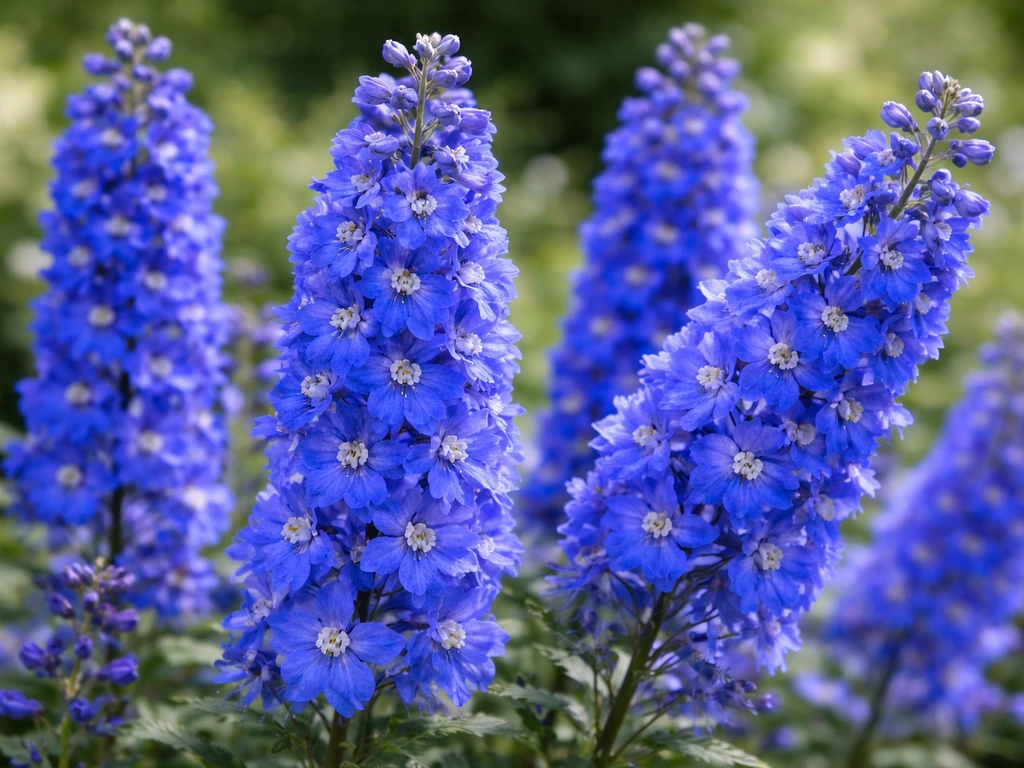
Diamonds Blue delphinium (Delphinium 'Diamonds Blue' F1 from PanAmerican Seed) is an electric-blue, spurless delphinium you can actually grow reliably from seed. It germinates up to 25% better than older open-pollinated types, tops out around 18–24 inches tall with cerulean blue flower spikes, and works beautifully as a cut flower. Start seeds indoors 10–12 weeks before your last frost, move plants out once temperatures are reliably above 50°F at night, give them full sun and excellent drainage, stake early, and you'll have a standout cutting-garden plant that can rebloom if you manage it right.
How to Grow Blue Delphinium Diamonds Blue From Seed

Marcus Holloway
31 May 2026
What 'Diamonds Blue' actually is (and what to buy)
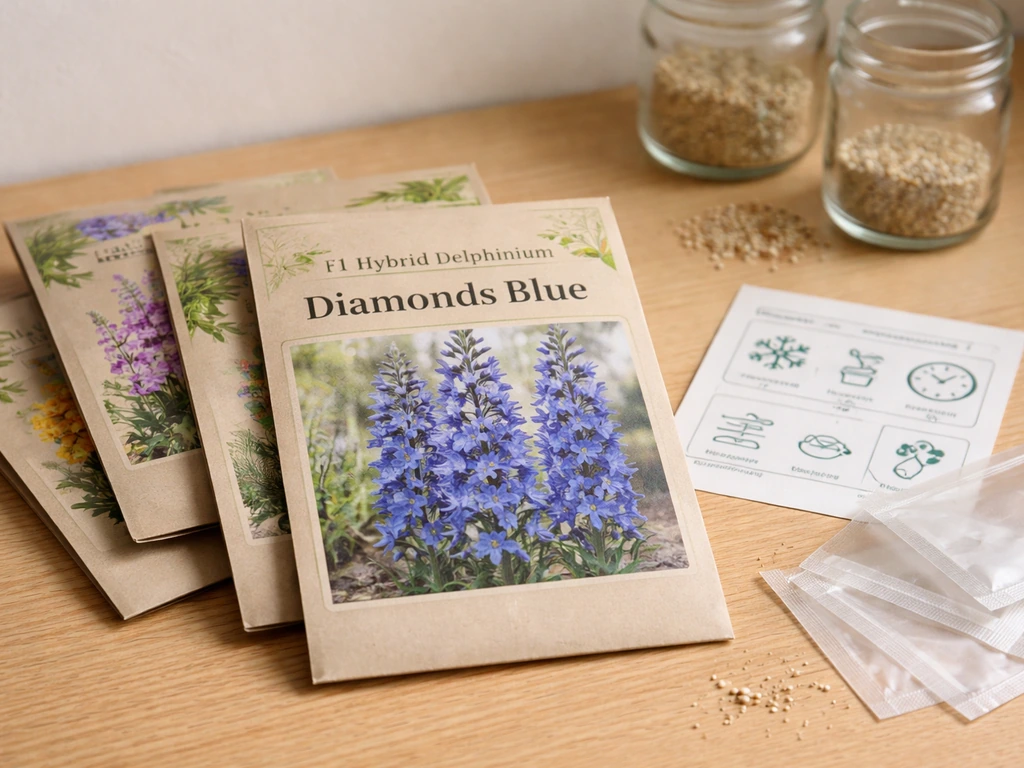
'Diamonds Blue' is not your grandmother's tall border delphinium. It's an F1 hybrid, which means it's been bred for consistency and better germination. The key thing to know: it's spurless, meaning each individual bloom lacks the traditional nectar spur, which gives the flower clusters a rounder, denser look than classic delphiniums. The color is a true cerulean to electric blue, and the foliage is finely divided and attractive even before it flowers.
It's sold primarily as seed by PanAmerican Seed and through distributors like Ball Seed, so you're most likely to find it as a seed packet rather than a garden center transplant. If your local nursery does carry transplants labeled 'Diamonds Blue,' that's great, but sourcing seed is completely practical here because germination rates are genuinely good for a delphinium.
Before you buy anything, know that delphiniums are cool-season plants. They bloom in spring and early summer, struggle through heat, and can often push out a second flush in fall if you cut them back at the right time. In warm climates (USDA zones 8 and above), they're sometimes grown as cool-season annuals, blooming from winter into spring much like you'd treat a snapdragon. In zones 3–7, they behave more like short-lived perennials. Plan your whole timeline around that cool-season preference.
- Buy 'Diamonds Blue' seeds from PanAmerican Seed, Ball Seed, or a reputable online seed supplier
- Check the packet for F1 labeling to make sure you're getting the hybrid, not a generic 'blue delphinium' mix
- Pick up seed-starting mix, small cells or 3-inch pots, a heat mat (optional but helpful), and a grow light if you don't have a bright south-facing window
- Grab bamboo stakes and soft garden twine before the plants go in the ground, you'll need them sooner than you think
Timing, sun, soil, and spacing
Timing is everything with delphiniums. They need cool temperatures to germinate and cool temperatures to set their best blooms. For most of the US, that means starting seeds indoors in late winter, roughly 10–12 weeks before your average last frost date. If your last frost is around April 15, you're sowing seeds in late January or early February. In mild-winter climates (zones 8–10), you can sow in late summer or early fall for winter and spring blooms.
For site selection: full sun is non-negotiable. Delphiniums want at least 6 hours of direct sun daily, and in hotter climates, some afternoon shade can actually help prolong blooms. The soil needs to drain fast. Delphiniums are prone to root rot if they sit in soggy ground, so if your bed stays wet after rain, raise it or amend heavily with grit and compost. They prefer a slightly alkaline to neutral soil pH, somewhere between 6.5 and 7.5. Work in a 2–3 inch layer of compost before planting and loosen the bed to at least 12 inches deep because the roots go down.
Space 'Diamonds Blue' plants 30–35 inches apart (about 76–89 cm). That might feel generous when you're putting in small transplants, but delphiniums need airflow between them to reduce the risk of powdery mildew and botrytis. Crowding is one of the most common mistakes, and it leads directly to disease problems and floppy, weak stems.
| Factor | What 'Diamonds Blue' Needs |
|---|---|
| Sun | Full sun, 6+ hours; afternoon shade in zones 8+ |
| Soil pH | 6.5–7.5 (neutral to slightly alkaline) |
| Drainage | Excellent; will rot in wet or compacted soil |
| Spacing | 30–35 inches (76–89 cm) between plants |
| Ideal outdoor temp | 50–75°F; struggles above 85°F |
| Hardiness | Perennial zones 3–7; cool-season annual in zones 8–10 |
Starting from seed: the step-by-step
This is where a lot of gardeners get tripped up, so let me walk through every step. If you want to learn how to grow blue mist flower from seed, follow the same early-start principles and adjust timing to your frost dates Starting from seed. The good news is that 'Diamonds Blue' F1 germinates better than most delphiniums, but the seed still needs cold or cool conditions to sprout reliably. For a step-by-step guide to the full flora flex how to grow workflow, focus on cold prep, consistent moisture, and enough light to prevent leggy seedlings grow from seed. Do not try to germinate this in a warm room without any prep.
Sowing method
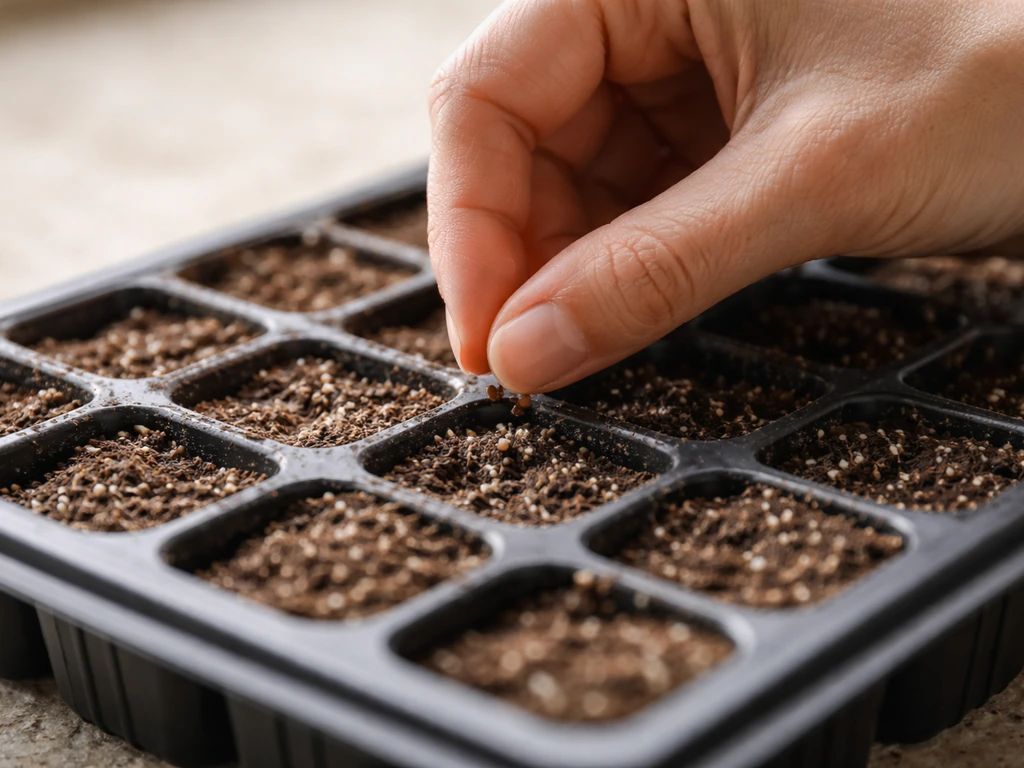
- Fill small cells or 3-inch pots with moist seed-starting mix. Do not use garden soil, it's too heavy and holds too much moisture.
- Place 1–2 seeds per cell on the surface of the mix, then cover with about 1/8 inch (3mm) of mix or a thin layer of vermiculite. Delphinium seeds need darkness to germinate.
- Mist the surface gently to settle the covering without washing seeds around.
- Slip the tray into a plastic bag or cover with a humidity dome and place it in the refrigerator for 7–10 days. This cold stratification step dramatically improves germination rates. Alternatively, place the covered tray somewhere cool, around 50–55°F, for the same period.
- After the cold period, move the tray to a bright, cool location or under grow lights. Ideal germination temperature is 60–65°F. Do not put these on a heat mat at high settings; warmth inhibits germination.
- Keep the mix evenly moist but never soggy. Check daily.
- Expect germination in 14–21 days. Some seeds may pop in as few as 10 days with good cold stratification.
Germination troubleshooting
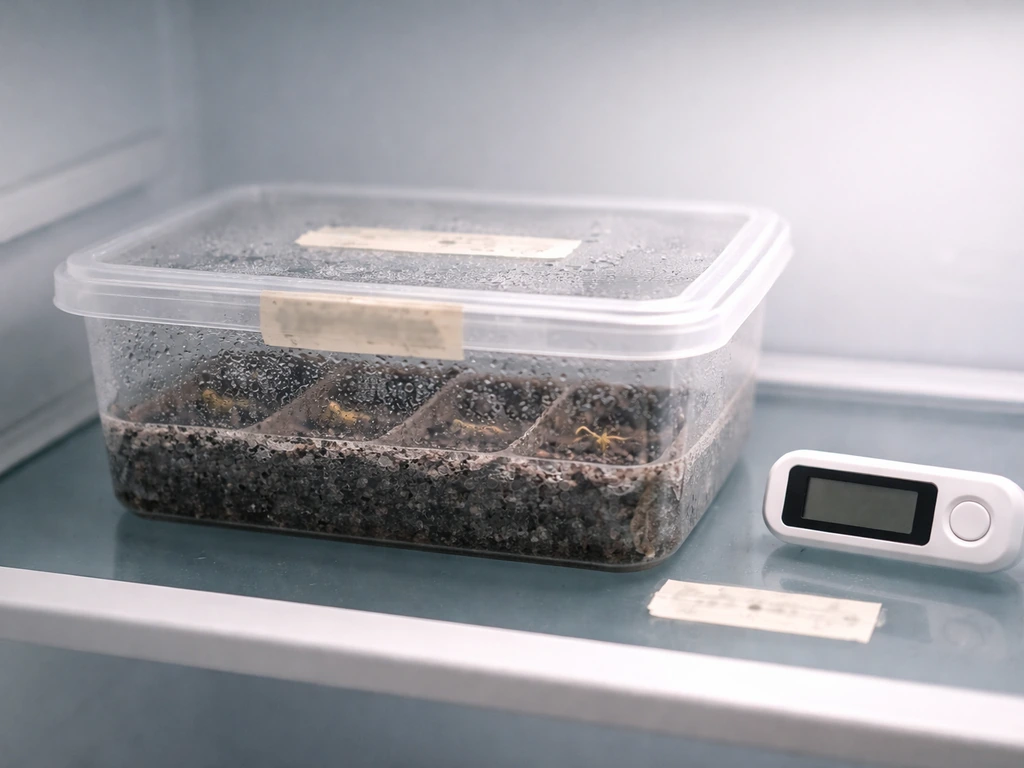
No sprouts after 3 weeks? The most common causes are skipping the cold stratification step, soil that's too warm (above 70°F), or seeds that dried out. Try the fridge method on a second batch. Seeds sitting in soggy mix will rot before they sprout, so make sure there's drainage in your cells and you're not overwatering. If you see white fuzzy mold on the soil surface, it's usually saprophytic mold from overwatering and high humidity, not fatal, but back off on the moisture and increase airflow.
Leggy seedlings are a light problem, not a watering problem. If your seedlings are stretching toward the window and flopping over, they need more light. Move them closer to a grow light (2–4 inches below a standard LED grow panel) or to your sunniest window. Damping off, where seedlings suddenly collapse at the soil line, is caused by fungal pathogens in wet, poorly ventilated conditions. Prevent it by using fresh seed-starting mix, not overwatering, and running a small fan nearby for a few hours each day to keep air moving.
Transplanting and early care
Hardening off
Never take seedlings straight from indoors to a garden bed. Spend 7–10 days hardening them off: start with an hour of outdoor shade, increase to a few hours of morning sun, and work up to a full day outside before planting. This toughens up stems and prevents transplant shock. Skip this step and you'll see scorched leaves and stunned growth that takes weeks to recover.
Planting out
Transplant into prepared beds once nighttime temperatures are consistently above 50°F and all frost risk has passed. Plant at the same depth the seedling was growing in its pot. Do not bury the crown. Water in well with plain water, no fertilizer on planting day, the roots need a chance to settle before you push growth. If you're transplanting on a warm day, do it in the evening to reduce stress.
Watering and feeding
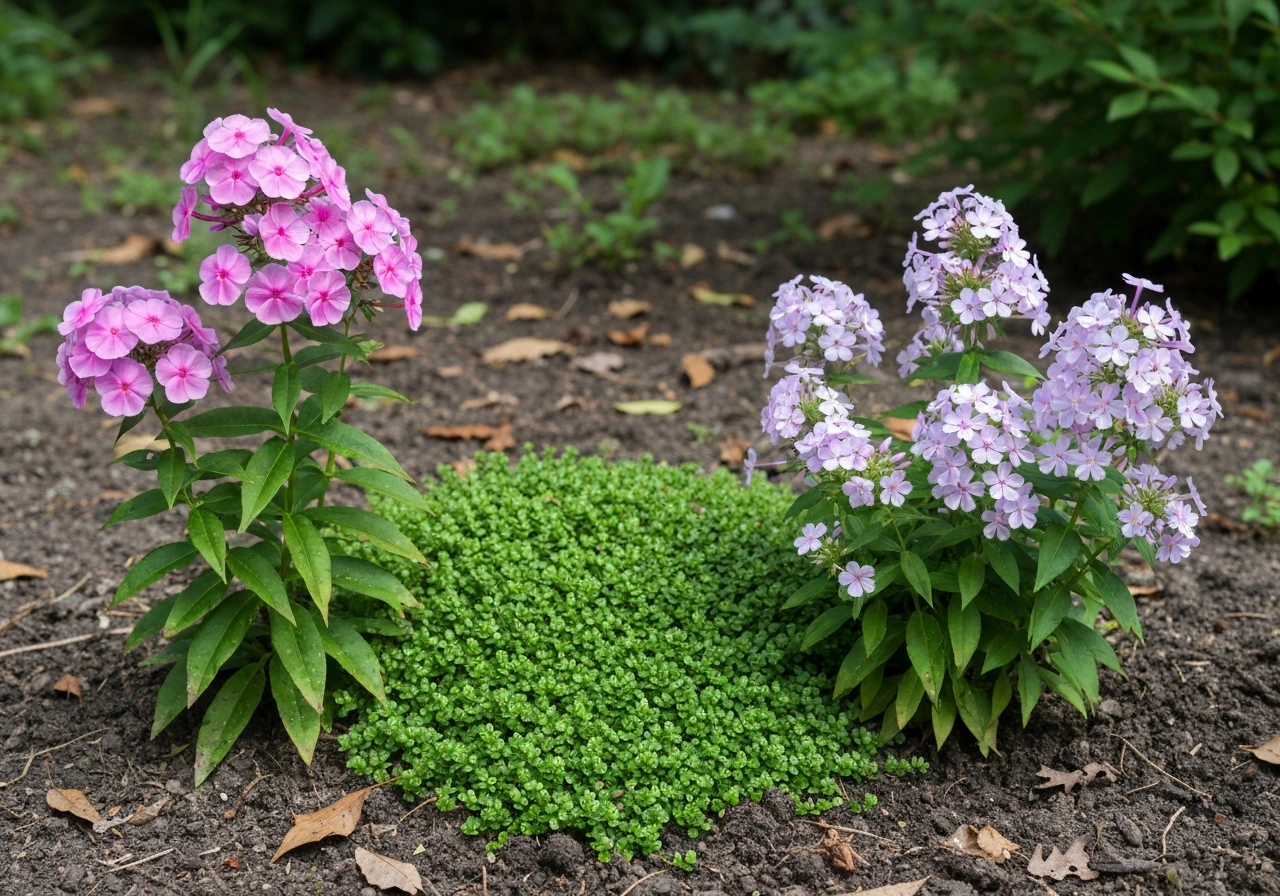
Water deeply and then let the soil dry slightly before watering again. Delphiniums hate wet feet but wilt quickly in drought, so check soil moisture at 2 inches deep every couple of days during hot spells. If you’re specifically wondering how to grow phlox, the general approach is to match varieties to your climate, plant in well-drained soil, and keep consistent moisture without overwatering. About 1 inch of water per week is a good baseline, more if you're in a hot or windy spot. Mulch around plants with 2 inches of compost to retain moisture and keep roots cool.
For feeding, use a balanced slow-release granular fertilizer (10-10-10 or similar) worked into the soil at planting, then switch to a low-nitrogen liquid fertilizer, something like a 5-10-10, once buds start forming. Too much nitrogen gives you lush leaves and weak, floppy flower spikes. Side-dress with compost or a diluted liquid feed every 3–4 weeks through the growing season. Stop fertilizing once temperatures climb above 80°F and plants start slowing down.
Staking, support, and keeping plants upright
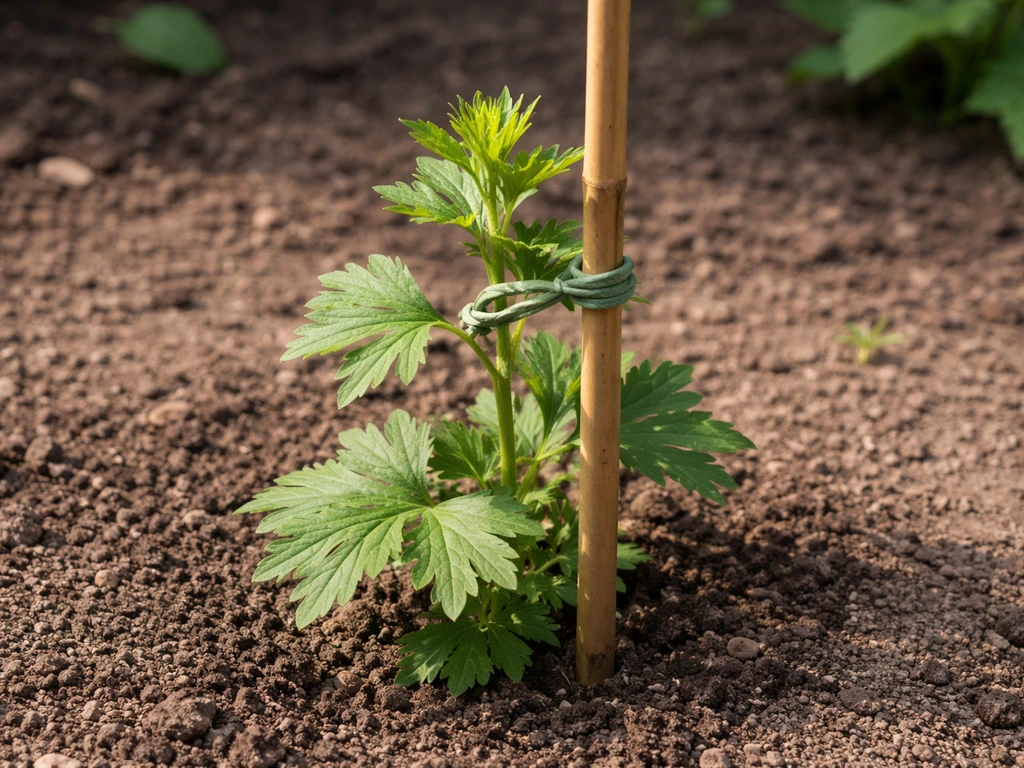
This is non-negotiable. Even though 'Diamonds Blue' is on the shorter end for delphiniums, flower spikes catch wind and snap without support. Stake early, before the plants actually need it, because trying to stake a toppled plant usually causes more damage than it prevents.
- When plants reach about 6–8 inches tall, push one bamboo stake (at least 24 inches tall) into the ground 2–3 inches away from each plant's main stem.
- Loosely tie the main stem to the stake with soft garden twine or stretchy plant tape using a figure-eight knot, not a tight loop that could cut into the stem.
- As flower spikes develop, add a second tie higher up the stake.
- For a multi-stem clump, a ring support or a few stakes connected with twine around the perimeter works better than a single central stake.
- Check ties after wind or rain and adjust as needed.
Planting near a fence, hedge, or other windbreak helps a lot. If you're in a naturally windy spot, consider growing delphiniums in large containers that you can move to a sheltered location during storms. Wind breakage is probably the single biggest cause of lost flower spikes in the home garden.
Pests, diseases, and fixing common failures
Delphiniums have a few dedicated enemies. Knowing them ahead of time means you can catch problems before they wipe out a whole planting.
The main threats
| Problem | Signs | Fix/Prevention |
|---|---|---|
| Slugs and snails | Ragged holes in leaves, especially on young plants and at night | Set out slug traps or iron phosphate bait; remove mulch from right around stems |
| Aphids | Clusters of soft insects on stems and buds, sticky residue | Knock off with a strong water spray; introduce ladybugs; use insecticidal soap if heavy |
| Powdery mildew | White powdery coating on leaves, usually in warm and humid conditions | Space plants properly (30–35 inches); improve airflow; apply diluted neem oil at first sign |
| Botrytis (gray mold) | Gray fuzzy rot on stems or flowers, usually in wet, cool weather | Remove affected tissue immediately; avoid wetting foliage; improve drainage and airflow |
| Crown rot/root rot | Plant wilts and collapses despite adequate water; stem base turns dark | Improve drainage before planting; do not overwater; avoid planting in low spots |
| Cyclamen mite | Distorted, curled new growth; stunted buds | Remove affected leaves; use miticide if severe; do not compost affected material |
Cyclamen mites are specific to delphiniums and are worth knowing about even though you may never see them. If your new growth looks twisted and small buds fail to open properly, suspect mites before blaming nutrition or watering. A magnifying glass will confirm tiny mites on new leaves. For most home gardeners, removing the affected growth and treating with an appropriate miticide handles it.
Common failure fixes at a glance
- No germination: skipped cold stratification, soil too warm, or seeds dried out. Restart with the fridge method.
- Leggy seedlings: not enough light. Move closer to grow lights immediately.
- Damping off: overwatering and poor airflow. Use fresh mix, water less, run a fan.
- Poor blooms: too much nitrogen fertilizer or not enough sun. Switch to a bloom-boosting fertilizer and reassess your site.
- Plants flopping: staked too late or stakes too short. Get stakes in at 6–8 inches of plant height next time.
- Leaves turning yellow: could be overwatering, poor drainage, or nutrient deficiency. Check drainage first.
Cutting flowers and encouraging a second flush
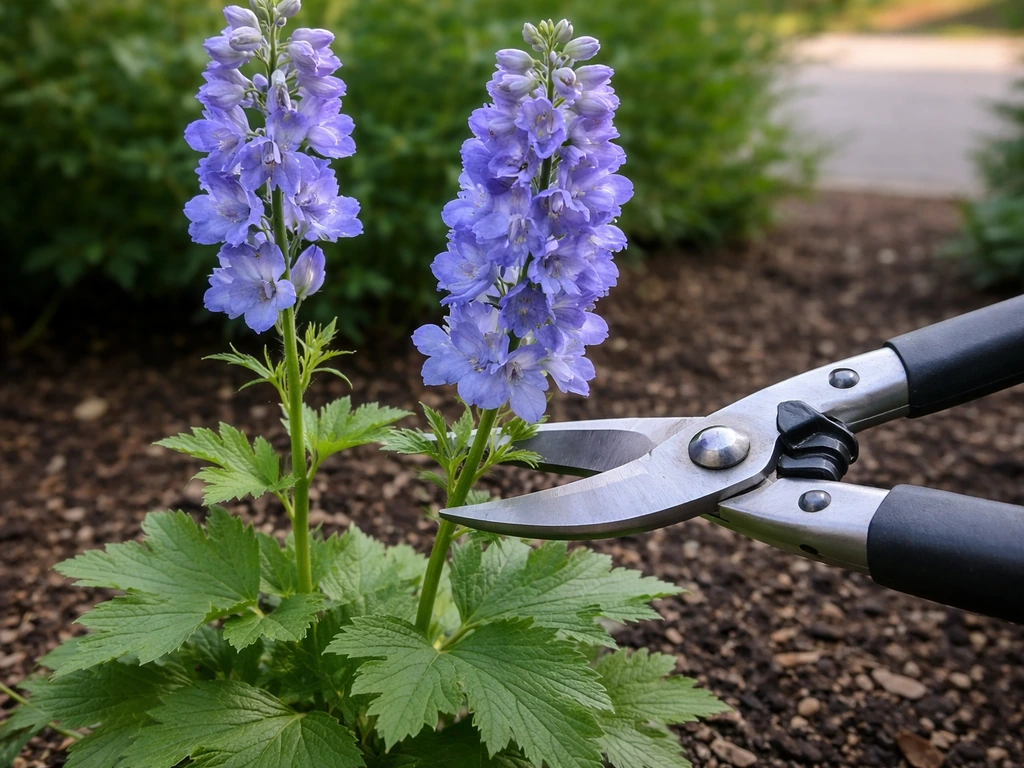
The payoff for all that care is those electric-blue spikes, and 'Diamonds Blue' makes excellent cut flowers. Cut stems in the morning when about one-third to half of the florets on a spike are open. Use clean, sharp scissors or snips, and cut at an angle just above a leaf node or side bud. Strip the lower leaves, plunge the stems immediately into cool water, and recut the stems underwater if you want maximum vase life. Change the water every 2 days. In the vase, delphiniums can last 7–10 days with good care.
To encourage reblooming, cut flower spikes back to just above a healthy set of leaves once the main flush is spent. Do not cut all the way to the ground unless the spike is completely done. Leave some foliage on the plant so it can keep photosynthesizing. After cutting back, give the plant a light liquid feed and a good deep watering. In zones 3–7, you can often get a second (smaller) flush of blooms in late summer or early fall when temperatures cool back down. In warm climates, plants may go dormant in summer and revive in fall.
If you want to maximize your cutting garden output, consider a small succession: start one batch of seeds in late January and a second batch 3–4 weeks later. If you want more variety in your cutting garden, learning how to grow other flowers alongside delphiniums can help you plan color and bloom times how to grow posies. The staggered planting gives you a longer harvest window rather than all plants peaking at once.
This is a trick that works well with other cool-season flowers too, and if you enjoy growing blue-themed gardens, it pairs naturally with plants like blue mist flower or blue moon phlox for a layered seasonal display. If you want more options, the same cool-season flower approach can also guide how to grow phlox for a layered, colorful garden blue moon phlox.
A simple season calendar to follow
| Timing (relative to last frost) | What to do |
|---|---|
| 12 weeks before last frost | Sow seeds indoors; cold-stratify in fridge for 7–10 days first |
| 10 weeks before last frost | Move stratified trays to cool, bright spot or under grow lights at 60–65°F |
| 8 weeks before last frost | Pot up seedlings to 3-inch pots once they have 2 true leaves |
| 2 weeks before last frost | Begin hardening off outdoors: start with shade, increase sun exposure daily |
| At last frost date (or just after) | Transplant into prepared beds once nights stay above 50°F; stake immediately |
| 4–6 weeks after transplant | Switch to low-nitrogen fertilizer as buds form; check stakes and ties |
| First bloom (typically 10–14 weeks after sowing) | Begin cutting flowers as lower third of spike opens |
| After first flush fades | Cut back spent spikes above a leaf node; feed and water for rebloom |
| Fall (zones 3–7) | Watch for second flush; mulch crowns before hard frost for winter protection |
FAQ
Do I really need to cold stratify Diamonds Blue delphinium seed, or will warmth work?
Cold or cool conditions are the main trigger for reliable sprouting. If your second batch fails, try a fridge-based method and keep the starting mix consistently cool, not just “not hot.” Warm room germination without prep is the most common reason seeds sit for weeks.
What should the moisture level look like during germination, so seeds do not rot?
Aim for evenly damp, not wet, mix. A good test is if the mix holds shape when squeezed but does not drip. Use cells with drainage and water from the bottom when possible, because standing moisture at the top is where rot and mold start.
How do I prevent leggy seedlings if I do not have a strong grow light?
Use the brightest option you have and move seedlings as close as safely possible to the light, then rotate trays daily so they do not lean. If growth is stretching, increase light intensity first, because extra watering will not fix weak stems and can increase damping off risk.
My seedlings collapsed at the soil line, what caused it and how can I fix it?
That pattern usually points to damping off from fungal pathogens in wet, stagnant conditions. Stop watering from above, improve airflow with a gentle fan, switch to fresh sterile seed-starting mix for future batches, and keep the surface slightly less wet.
When exactly can I transplant, and what if nights are still a bit chilly?
Transplant only after nighttime temps stay reliably above 50°F and the last frost is truly past. If you must plant earlier, protect with row cover at night, but avoid leaving them under cover in warm midday sun where overheating can stress them.
Should I fertilize seedlings before planting or after they bloom starts?
Avoid fertilizing on planting day, focus on root establishment first. After planting, start a gentle feeding only after buds form, and keep nitrogen low because too much leaf growth leads to weaker, floppy flower spikes.
How do I stake Diamonds Blue, and how early is early enough?
Stake when plants are small, before wind forces them to bend. If you wait until the spike is already leaning, you risk damaging stems and you often end up with an uneven flower display.
What spacing should I use, and is closer ever better for more flowers?
Keep the recommended 30 to 35 inch spacing. Closer planting may look productive early, but it increases humidity trapped around stems, which raises powdery mildew and botrytis risk and often reduces overall bloom quality.
Why are my flower spikes failing or not opening fully, could it be mites?
Twisted, stunted new growth with buds that fail to open can indicate cyclamen mites. Use a magnifying glass on young leaves, remove heavily affected growth promptly, and treat correctly for mites rather than increasing fertilizer or changing watering alone.
Can I grow this in a container, and how do I handle wind and drainage?
Yes, containers help with wind protection, and you can move plants during storms. Use a potting mix that drains quickly, do not let water sit in the saucer, and ensure the container is large enough to support a deep root system.
How do I water correctly once plants are established, especially during hot spells?
Water deeply, then let the top layer dry slightly, check moisture about 2 inches down, and do not keep the soil constantly wet. Delphiniums can wilt quickly in drought but also suffer from root rot if they stay soggy, so aim for consistent but not wet.
Will cutting flower spikes for bouquets prevent reblooming?
You can cut for bouquets and still encourage a second flush. After the main bloom finishes, cut spikes back to just above healthy leaf sets, keep some foliage on the plant, then give a light feed and a deep watering.
How do I know when to cut spikes for the longest vase life?
Cut in the morning when roughly one-third to half the florets on the spike are open. Cooler handling matters too, plunge immediately into cool water, and change the vase water every 2 days for best longevity.
What’s a good plan if I want a longer harvest window instead of one big peak?
Use succession sowing, start one batch 10–12 weeks before your last frost, then sow a second batch 3–4 weeks later. Staggering helps spread bloom dates and reduces the “all at once” spike that can be hard to manage.
Next Article
How to Grow Phlox: Seeds, Root Propagation, and Care
Step-by-step phlox growth from seed or roots, for tall phlox, creeping phlox, and wild types with care and troubleshooti