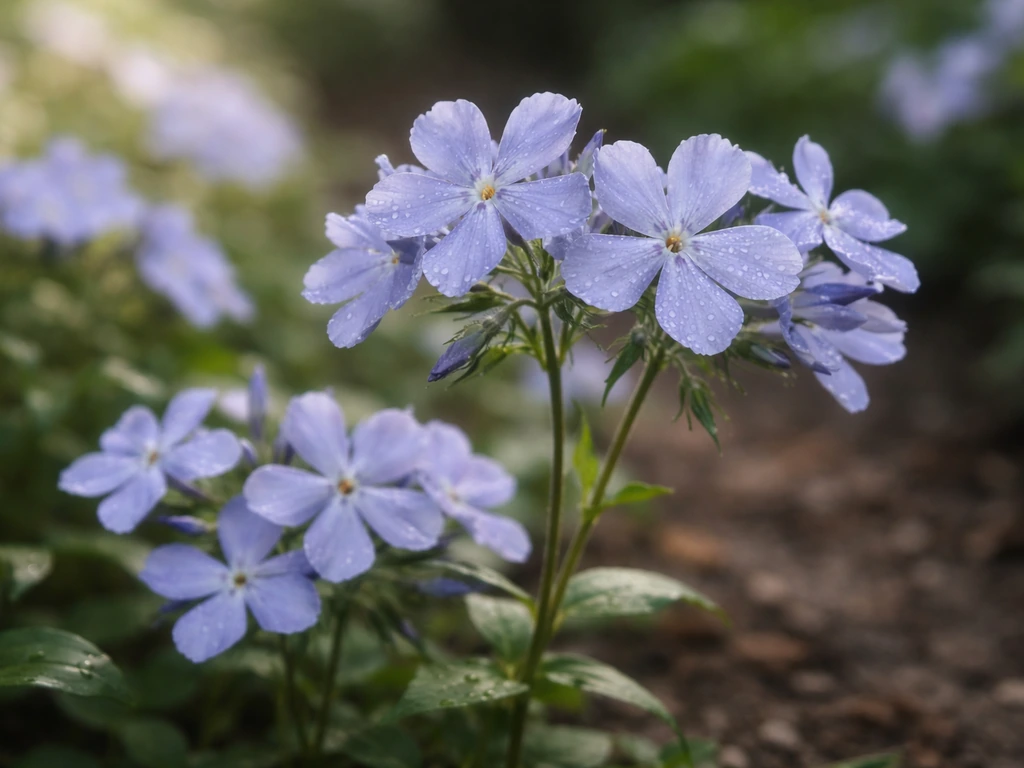
Blue mist flower is one of those names that covers two genuinely different plants, and knowing which one you are growing changes almost everything about how you start it, where you plant it, and what you can expect at the end of summer. Conoclinium coelestinum, the true blue mistflower, is a spreading herbaceous perennial wildflower with fluffy, haze-like blue-violet blooms from late summer into fall. Caryopteris x clandonensis, called bluebeard or blue mist shrub, is a compact woody subshrub with aromatic grey-green foliage and clusters of vivid blue flowers in late summer. Both are genuinely beautiful, both attract pollinators in droves, and both earn a place in a home garden, but they need very different care from day one.
How to Grow Blue Mist Flower: Complete Guide for Gardeners

Marcus Holloway
18 Jul 2026
Two plants, one name: what gardeners mean by blue mist
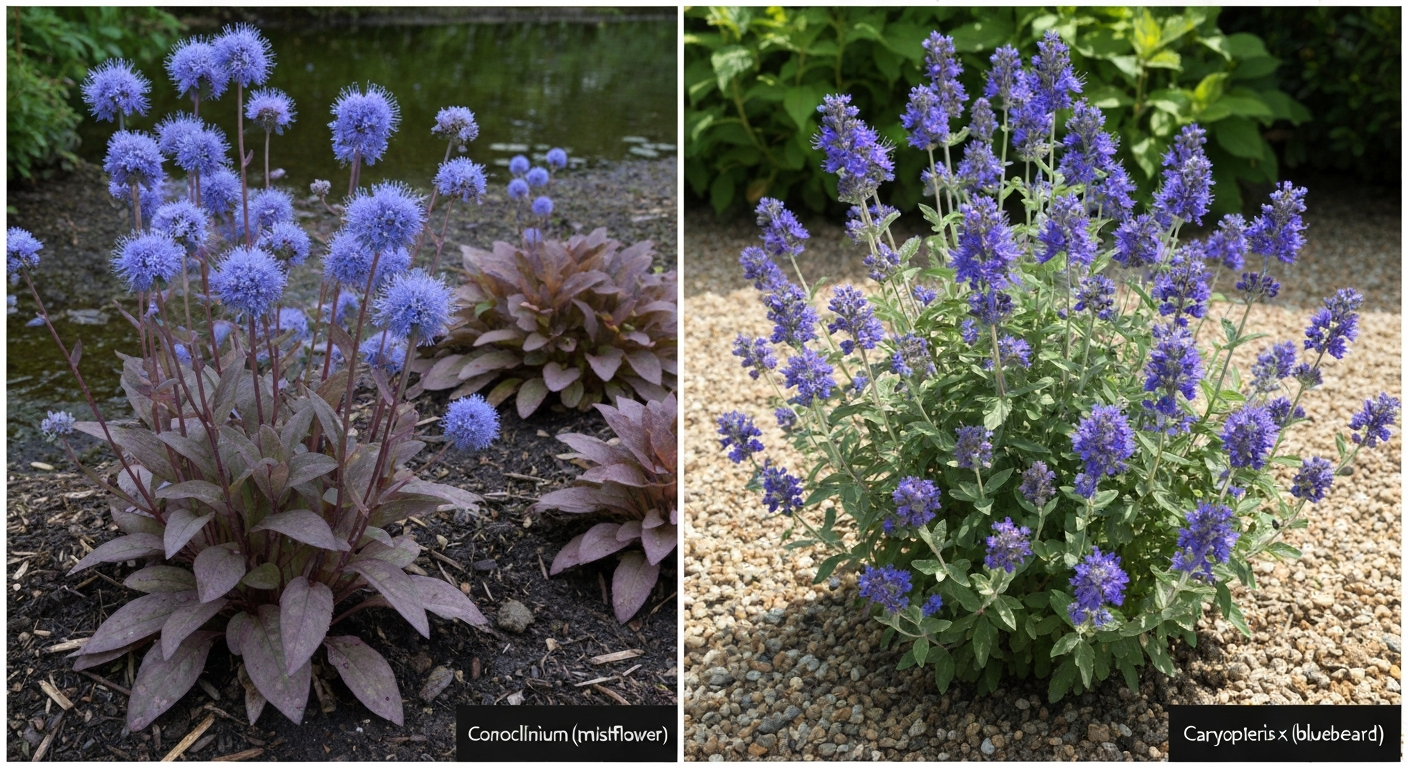
Walk into any garden center in late summer and you may see the label 'blue mist flower' on a flat of bushy, silver-leaved shrublets or on a pot of soft, airy wildflower stems. Both are legitimately called blue mist by someone, somewhere. The confusion matters because the two plants belong to completely different plant families, have completely different growing needs, and are propagated in completely different ways. Conoclinium coelestinum (blue mistflower) is in the daisy family, Asteraceae, and spreads by underground rhizomes the way a mint or a bee balm does. Caryopteris x clandonensis (bluebeard or blue mist shrub) is in the mint family, Lamiaceae, and forms a neat woody mound that behaves more like a lavender or a small deciduous shrub. Treat them like the same plant and you will almost certainly run into trouble. This guide covers both, so you can grow whichever one suits your space.
How to tell them apart: plant identification
If you are standing in front of a plant and not sure which blue mist you have, here are the things to look at. Mistflower (Conoclinium) has soft, herbaceous stems that die back to the ground in winter. The leaves are broad, ovate to triangular, and coarsely toothed, sitting opposite on purplish-tinged downy stems. The flowers themselves are tiny, fluffy disc florets, no ray petals at all, just a dense, flat-topped corymb of small tubular blue-violet heads that look almost like a soft cloud when massed. Bluebeard (Caryopteris) is noticeably different: the stems are square in cross-section (a classic mint-family trait you can feel by rolling a stem between your fingers), the foliage is narrow-to-oval, grey-green, and distinctly aromatic when crushed, and the flowers are tubular, two-lipped corollas typical of the mint family rather than daisy-style composites. Caryopteris also stays as a low woody mound rather than dying completely to the ground, and it does not spread by rhizomes.
| Feature | Mistflower (Conoclinium coelestinum) | Bluebeard (Caryopteris x clandonensis) |
|---|---|---|
| Plant family | Asteraceae (daisy family) | Lamiaceae (mint family) |
| Stem type | Soft, herbaceous, purplish, dies back fully | Square, woody at base, persistent woody crown |
| Leaf shape | Broad, ovate-deltoid, coarsely toothed | Narrow-oval, grey-green, aromatic when crushed |
| Flower type | Dense flat-topped corymbs of disc florets only (no ray petals) | Tubular, two-lipped (bilabiate) corollas in clusters |
| Flower colour | Blue-violet, fluffy/haze effect | Rich blue to violet-blue, clean and vivid |
| Spread habit | Spreads by rhizomes (can be aggressive) | Clump-forming, no rhizome spread |
| Mature size | 60–90 cm tall, spreading colonies | Roughly 50–100 cm tall and wide |
| USDA hardiness | Zones 5–10 | Zones 5–9 (cultivar-dependent; some to 6a) |
| Bloom time | July–October | Late July–September |
| Primary propagation | Division, seed (with stratification) | Softwood cuttings (seed not reliably true) |
Choosing the right species and variety for your garden
Both plants are legitimately rewarding, but they suit different situations. Mistflower is the better choice if you want a tough native wildflower for a moist, partly shaded spot, a rain garden edge, or a pollinator patch where you do not mind some spreading. Bluebeard is a better fit for a sunny, dry border, a gravel garden, a low hedge, or a container on a sunny patio where you want a neat, manageable mound that never takes over.
Mistflower varieties worth growing
The straight species, Conoclinium coelestinum, is easy to find as seed or divisions from native plant nurseries and is the most vigorous option. The named cultivar 'Cori' is a more compact selection that tends to stay tidier in a border setting and blooms a little later in the season, which is useful if you are gardening in a zone where early frosts cut the season short. If you garden in the southwestern United States, Conoclinium greggii (Gregg's mistflower) is a regional relative that handles heat and drought better than the eastern species.
Bluebeard varieties worth growing
Most bluebeard sold in garden centers is a Caryopteris x clandonensis hybrid, and there are enough named cultivars now that it is worth picking deliberately. 'Dark Knight' is one of the most popular, deep blue flowers, upright habit, 60–90 cm tall, and reliable across a wide range. 'Longwood Blue' is more vigorous and slightly taller with soft blue flowers. 'Worcester Gold' is grown as much for its gold-tinted foliage as its blue blooms. If you want a container plant or you have a small garden, 'Heavenly Baby' is a genuinely dwarf selection that stays compact and works well in a pot. For reliability in zone 6 and colder parts of zone 7, check the cultivar label carefully: 'Grand Bleu' is rated from zone 6a and some others are slightly less cold-hardy.
Best site, soil, and sun conditions
This is where the two plants really diverge, so do not mix up their requirements.
For mistflower (Conoclinium)
Mistflower is one of the more adaptable native perennials. It will bloom well in full sun but it also handles part shade, which makes it genuinely useful under open tree canopies or on the north side of a fence. It prefers moist to medium-wet, humus-rich fertile soil and will thrive on a pond margin or in a rain garden where water sits briefly after heavy rain. It does not want bone-dry conditions for long periods. In a container, you need a large pot (at least 30–40 cm), a moisture-retentive mix with added compost, and you should be prepared to water frequently through summer.
For bluebeard (Caryopteris)
Bluebeard is the opposite: it needs full sun of at least six hours per day and it specifically wants light, free-draining soil. Sandy loam, gritty soil, or even poor, low-fertility ground suits it well because lean soil encourages flower production over leafy growth. The single most important thing to get right for bluebeard is drainage: wet soil in winter causes far more dieback and plant loss than cold temperatures alone. If your soil is heavy clay, either build a raised bed, add plenty of grit when planting, or grow bluebeard in a container with a loam-based, free-draining potting mix. It tolerates a wide soil pH range from acidic to mildly alkaline, so most garden soils are fine without amendment.
When to plant: timing by zone
Getting timing right is especially important with mistflower seed, which can take a full growing season to germinate without proper treatment. Here is the breakdown by method and plant type.
| Method | Mistflower (Conoclinium) | Bluebeard (Caryopteris) |
|---|---|---|
| Cold stratification start | Autumn or November–January (refrigerator) | Not typically required for cuttings |
| Indoor seed sowing | Late winter/early spring (after stratification) | Early spring (note: seedlings vary from cultivars) |
| Direct sow outdoors | Early spring after last frost (zones 5–7); late winter in zones 8–10 | Not recommended for named cultivars |
| Softwood cuttings | Not the primary method (use division) | Early summer (May–June in zones 5–7; April–May in zones 8–9) |
| Division | Early spring, just as new growth appears | Not applicable (woody shrub, not divided) |
| Transplanting outdoors | After last frost; soil temp ≥10°C (50°F) | After last frost; established plants prefer spring planting |
In zones 5 and 6, the last frost typically falls between late April and mid-May, so plan your indoor starts eight to ten weeks before that window. In zones 8 through 10, both plants can go in the ground earlier in spring, and mistflower in these warmer zones may not need the full cold stratification treatment that northern gardeners rely on.
Starting mistflower from seed, step by step
Mistflower seed is one of those genuinely tricky ones that rewards patience. UGA Extension researchers describe what they call double dormancy: the seed needs a period of cold, moist stratification followed by warmth before it will germinate reliably. UGA Extension's Native Plants for Georgia Part III: Wildflowers, Blue Mistflower (UGA Extension) notes Conoclinium seeds exhibit 'double dormancy' and recommends cold, moist stratification (for example overwintering seeds in moist sphagnum in the refrigerator) followed by spring sowing, as germination can be slow or may take a full year Native Plants for Georgia Part III: Wildflowers — Blue Mistflower (UGA Extension). Skip this step and you can end up with a flat of compost that shows nothing for weeks. Do it properly and germination, while still slow, becomes predictable. For a detailed, practical protocol on substrate, moisture and environmental control for reliable germination, see Flora Flex how to grow.
Seed treatment: cold stratification
- In November or December, place mistflower seeds in a small zip-lock bag with a generous pinch of moist sphagnum moss or moist paper towel. The seeds should be damp but not sitting in free water.
- Seal the bag, label it with the date, and place it in the back of your refrigerator (aim for around 4°C / 39°F).
- Leave the seeds in the refrigerator for 8–12 weeks. Check monthly to make sure the moss has not dried out.
- In late winter or early spring (January–March depending on your zone), remove the seeds and sow them immediately.
Sowing the seeds
- Fill a seed tray or small pots with a sterile, peat-free seed compost. Firm it lightly and water from below until the surface is evenly moist but not saturated.
- Scatter the tiny seeds on the surface of the compost. Mistflower seeds are dust-like and need light to germinate, so do not bury them — simply press them gently onto the surface with a finger or the flat of a ruler.
- Cover the tray loosely with a clear plastic lid or a sheet of cling film to hold humidity. Set it somewhere warm: 18–21°C (65–70°F) is ideal.
- Keep the compost consistently moist by misting the surface with a spray bottle. Bottom-watering (setting the tray in a shallow dish of water) reduces the risk of washing tiny seeds around.
- Germination can take anywhere from two to six weeks after the cold stratification period. Some seeds may not appear until the following season — this is normal for a native wildflower with complex dormancy. Do not throw the tray away too soon.
- Once seedlings have two true leaves, pot them on individually into 7–9 cm pots with a multipurpose compost.
A quick note on Caryopteris seed: it is technically possible to grow bluebeard from seed, but named cultivars like 'Dark Knight' or 'Worcester Gold' will not come true from seed. The seedlings you get will be variable in flower colour and habit. If you want a specific cultivar, propagate by cuttings (see below) or buy a named plant from a nursery. Seed-grown bluebeard can still be a pleasant surprise in a mixed border, but do not rely on it for a specific colour scheme.
Direct sowing and planting out
Planting mistflower divisions and transplants
- Choose a site with full sun to part shade and moist, fertile soil. Dig in a generous amount of garden compost before planting if your soil is sandy or low in organic matter.
- Dig a hole roughly twice the width of the root ball and the same depth. The crown (where stem meets root) should sit at the same level it was in the pot — not buried deeper.
- Set the plant in, backfill with the removed soil, and firm gently with your hands.
- Water thoroughly straight after planting to settle the soil around the roots.
- Space plants 45–60 cm apart. Mistflower spreads by rhizomes and will fill gaps over two or three seasons, so do not crowd it initially but also do not leave vast gaps expecting nothing to happen.
- Mulch around (not over) the crown with a 5–7 cm layer of bark mulch or composted leaf mould to retain moisture.
Planting bluebeard in the ground
- Choose a full-sun site with well-draining soil. If your soil is clay-heavy, mix in coarse horticultural grit (at least 20–30% by volume) before planting, or build a low raised mound.
- Dig a hole the same depth as the pot but slightly wider. Do not add rich compost or fertiliser to the hole — lean soil encourages more flowers.
- Place the plant in the hole so the crown sits level with the surrounding soil. Backfill and firm.
- Water well after planting, but from this point on, water only when the top few centimetres of soil are dry.
- Space plants 60–90 cm apart to allow for their eventual spread and to give good air circulation.
Propagating bluebeard from softwood cuttings
Taking cuttings is the right way to propagate bluebeard, and once you have got the technique down it is genuinely satisfying. Softwood cuttings taken in early summer root readily, and you can have a rooted, potted plant ready to go into the garden within six to eight weeks. Commercial nurseries root Caryopteris cuttings in 35–42 days under controlled mist, and while your conditions at home will be slightly less precise, you can get very close to that with a few simple tricks.
When to take cuttings
The window for softwood cuttings is late spring to early summer, when the new season's growth is vigorous but still soft and green, roughly May to June in zones 5–7 and April to May in zones 8–9. Take cuttings in the morning when stems are fully hydrated. Avoid cutting on a hot afternoon when the plant is under heat stress.
Step-by-step cutting technique
- Select healthy, non-flowering shoot tips from the current season's growth. Each cutting should be 8–12 cm long with at least two or three pairs of leaves.
- Using clean, sharp scissors or a knife (wipe the blade with rubbing alcohol first), cut just below a leaf node at a 45-degree angle.
- Strip the leaves from the bottom half of the cutting, leaving two or three pairs at the top. Leaving too many leaves on will cause the cutting to wilt before it roots.
- Dip the cut base into a rooting hormone powder or gel. Commercial nursery protocols use 1,000–3,000 ppm IBA, which corresponds to a standard off-the-shelf rooting powder for softwood cuttings. Tap off any excess.
- Insert the cutting to about one-third of its length into a small pot or module tray filled with a 50:50 mix of perlite and peat-free multi-purpose compost, or pure perlite if you prefer. Water the medium thoroughly before inserting cuttings.
- Cover the pot with a clear plastic bag or a propagator lid to hold humidity. The aim is to keep the leaves from wilting while the cutting has no roots to take up water.
- Place in a warm spot out of direct harsh sun: a bright windowsill or a heated propagator set to around 21°C (70°F) at the base is ideal. Bottom heat makes a noticeable difference to rooting speed.
- Check every few days and mist the inside of the bag lightly if condensation has disappeared. Do not let the medium dry out, but also do not let it become waterlogged.
- After three to four weeks, tug the cutting very gently. Resistance means roots have formed. Remove the cover gradually over a few days to acclimatise the rooted cutting to normal air humidity.
- Once the cutting is clearly growing new leaf buds (usually around 35–45 days from insertion), pot it on into a 9 cm pot with regular multipurpose compost and grow on in a sheltered spot for two to four weeks before planting out.
Suggested image: a close-up of a bluebeard cutting laid next to a ruler showing 10 cm length, with stripped lower leaves and a dipped base alongside a small pot of perlite mix.
Dividing mistflower
If you already have mistflower in the garden, or if a neighbour has a clump they want to thin, division in early spring is the fastest and most reliable way to get new plants. As soon as you see the first green shoots pushing up from the crown (before the plant reaches more than 10–15 cm), lift the clump with a fork and split it into sections of three to five shoots each with a good portion of root and rhizome attached. Perennials (University of Maryland Extension) and Conoclinium coelestinum - Plant Finder (Missouri Botanical Garden) recommend dividing into pieces of three–five shoots with root attached, replanting at the original crown depth in prepared soil, watering to settle roots, mulching, and monitoring moisture for 1–3 weeks while the divisions re-establish Perennials (University of Maryland Extension); Conoclinium coelestinum - Plant Finder (Missouri Botanical Garden). Replant immediately at the original crown depth in prepared soil, water well, and mulch. Expect a week or two of sulking while the roots re-establish, and keep the soil consistently moist during this period.
Season-by-season care
Watering
Mistflower wants consistent moisture throughout the growing season. In a hot summer, plan to water deeply once or twice a week if rain is absent, especially in the first season while plants are establishing. Bluebeard is drought-tolerant once established and prefers to dry out between waterings, overwatering is a more common problem than underwatering with this plant. In the first six weeks after planting either species, water regularly regardless of weather to encourage root establishment.
Feeding
Mistflower benefits from a top-dressing of garden compost in spring and possibly a balanced granular fertiliser in early summer if your soil is genuinely poor. Bluebeard actually performs better in lean soil: over-feeding produces large, floppy plants with poor flowering. A single application of a low-nitrogen, high-potassium fertiliser in spring is sufficient for bluebeard growing in ordinary garden soil.
Pruning and deadheading
Bluebeard should be cut back hard in early spring, just as the first leaf buds are swelling, cut all stems back to within 5–10 cm of the woody base, or to the lowest pair of fat green buds. This annual hard prune is not optional: skipping it results in a leggy, sparse plant that produces fewer flowers. Do not cut back in autumn; the old stems offer some frost protection to the crown and look attractive with frost on them. For mistflower, cut the old stems back to ground level in late autumn or early spring before new growth appears. If the plant is spreading more than you want, simply dig out the outer rhizomes in spring.
Overwintering
In zones 5 and 6, both plants are at their cold hardiness limit. For bluebeard in these zones, apply a dry mulch of bark chips or straw over the crown after the first hard frost, and do not cut back until spring when you can confirm which stems have live buds. Mistflower is herbaceous and the crown naturally goes dormant, but a light mulch over the crown zone helps in zone 5 winters. In containers, move pots to a sheltered wall or unheated garage in very cold winters.
Month-by-month growing calendar
| Month | Mistflower (Conoclinium) | Bluebeard (Caryopteris) |
|---|---|---|
| November–January | Start cold stratification of seeds in moist sphagnum in the refrigerator | Order/source named cultivars for spring delivery |
| February–March | Sow stratified seeds indoors under warmth; divide established clumps as shoots emerge | Take hardwood cuttings in mild climates; prune established plants hard once buds swell |
| April | Pot on seedlings; harden off indoor-grown plants | Pot on rooted cuttings; plant out in mild zones |
| May | Plant out after last frost; space 45–60 cm apart | Take softwood cuttings; plant out container-grown plants after last frost |
| June | Water regularly; apply compost mulch | Root cuttings; water new plantings; keep established plants on the dry side |
| July | Flowering begins; watch for aphids on new growth | Flowering begins; deadhead spent clusters to extend bloom |
| August–September | Peak bloom; pollinators very active; deadhead to prolong flowering | Peak bloom; feeding not required; enjoy the show |
| October | Cut back stems after frost or leave for wildlife; dig out unwanted rhizome spread | Leave stems standing for winter interest and crown protection |
| November | Apply mulch to crown if in zone 5–6 | Apply dry mulch over crown in zones 5–6; do not cut back yet |
Troubleshooting common problems
Poor or no germination (mistflower seed)
This is the most frustrating thing beginners encounter with mistflower. The most common cause is skipping or shortcutting the cold stratification period. If you sow fresh seed directly without stratification, germination may be patchy or take a full year. The fix is to commit to the eight to twelve week cold/moist stratification in the fridge before sowing. If germination still seems slow after stratifying and sowing, keep the tray warm and moist and give it more time, this is genuinely a plant that operates on its own schedule.
Bluebeard dies back more than expected in winter
Heavy dieback or complete plant loss over winter in bluebeard is almost always a drainage problem rather than a temperature problem. Wet soil sitting around the crown through winter is more damaging than low temperatures. If this keeps happening, improve drainage around the plant by adding grit, or move it to a raised bed. In zones 5 and 6, err on the side of slightly more mulch and hold off cutting back until you can see exactly where the live buds are in spring.
Mistflower spreading too aggressively
Mistflower spreads by rhizomes and will move into neighbouring plants if left unchecked. The straightforward fix is to dig out the advancing rhizomes each spring before new growth reaches 15 cm. You can also install a root barrier (a deep plastic edging strip sunk at least 20–25 cm into the soil) around the planting if you want a neat defined clump. The compact cultivar 'Cori' is noticeably less aggressive than the species and is worth choosing if you have a smaller garden.
Leggy, sparse bluebeard with few flowers
If your bluebeard is becoming a woody, open tangle with poor flowering, the cause is almost always skipping the annual hard spring prune. Cut it back hard this coming spring, to 5–10 cm above the woody base, and you will see a completely transformed plant by midsummer. Feeding with a high-nitrogen fertiliser also produces leafy growth at the expense of flowers, so stick to a low-nitrogen feed or none at all.
Pests to watch for
- Aphids: both plants can attract aphids on soft new spring growth. A blast of water from the hose or an insecticidal soap spray handles light infestations. Ladybirds and parasitic wasps usually move in naturally once the population builds.
- Powdery mildew: mistflower grown in hot, dry conditions with poor air circulation can develop powdery mildew on leaves in late summer. Improve air circulation by not overcrowding plants, and water at the base rather than overhead.
- Spider mites: bluebeard in hot, dry conditions can occasionally attract spider mites. Increase watering frequency slightly during heatwaves and treat with an insecticidal soap if needed.
- Root rot: the most damaging problem for bluebeard, always caused by waterlogged soil. Prevention through drainage is the only reliable solution.
Using blue mist flower in the garden: companion plants and planting ideas
Both plants are genuinely excellent in late-summer borders when many other perennials are starting to fade. Bluebeard pairs brilliantly with ornamental grasses, yellow rudbeckia, and soft pink echinacea, the cool blue sits next to warm tones extremely well. For gardeners wanting a classic cool-blue partner, see our guide on how to grow 'Diamonds Blue' delphinium for tips on matching bloom time and height. For gardeners wanting to pair late-summer blues with spring-blooming companions, see how to grow blue moon phlox for a complementary pop of pale blue earlier in the season. Mistflower works beautifully at the front or middle of a pollinator patch alongside native grasses, Joe Pye weed, and ironweed. Both plants overlap in bloom time with tall blue delphiniums (the growing techniques for which overlap with some of the same spacing and sun requirements covered here), and a combination of blue delphiniums, blue mist, and white phlox in a midsummer border is genuinely hard to beat. Posies and cut flower mixes also benefit from including late-blooming blue mist: the tiny florets hold reasonably well in a vase when cut in bud. For detailed tips on selecting and arranging posies, see how to grow posies. Bluebeard in particular is a favourite with bumblebees and honeybees in August and September when other nectar sources are winding down.
Quick care checklist
- Mistflower: moist, fertile soil in sun to part shade; cold stratify seeds for 8–12 weeks; plant 45–60 cm apart; divide in early spring; cut back in late autumn; mulch in zones 5–6.
- Bluebeard: full sun, free-draining lean soil; propagate from softwood cuttings in May–June; plant 60–90 cm apart; hard prune to 5–10 cm in early spring; do not over-water or over-feed; mulch crown in zones 5–6.
- For both: water well at planting and during the first season; watch for aphids in spring; deadhead spent flowers to extend bloom; move containers to shelter in very cold winters.
- Do not confuse the two when buying plants: check the Latin name on the label. Conoclinium for the wildflower; Caryopteris for the shrub.
- Named bluebeard cultivars will not come true from seed — always propagate by cuttings to preserve the variety.
FAQ
What core taxonomic and identification information must the guide include for both plants called “blue mist”?
Accepted scientific names, family, growth form and diagnostic traits: Conoclinium coelestinum (Asteraceae) — herbaceous, rhizomatous perennial with discoid (no ray) capitula of fluffy blue-violet disc florets; Caryopteris spp./C. × clandonensis (Lamiaceae) — deciduous woody subshrub with square stems, opposite aromatic grey-green leaves and tubular bilabiate flowers. Include distinguishing characters for an ID key (stem type, flower morphology, leaf arrangement, rhizome vs non-rhizomatous growth). Cite Kew POWO, Missouri Botanical Garden and NC State Extension.
Which authoritative sources are required to document hardiness, native range and cultivar performance?
Use taxonomic databases and horticultural authorities: Kew’s Plants of the World Online (taxonomic status, native range); Missouri Botanical Garden and NC State Extension (species descriptions, hardiness ranges); RHS trials/cultivar pages and commercial cultivar datasheets (e.g., Darwin Perennials) for cultivar-specific height, habit and zone ratings. Also consult local extension services for regional performance.
What site, soil and sun requirements must be included and where to source evidence?
Provide species-specific requirements: Caryopteris — full sun (≥6 h), light free-draining soils, tolerant of poor fertility, avoid winter waterlogging; Conoclinium — full sun to part shade, prefers medium–moist to moist humusy soils, tolerates riparian margins. Source RHS, Missouri Botanical Garden and NC State Extension; recommend soil tests and local extension guidance for adjustments.
What exact sowing and seed-treatment protocols should the guide specify for each species?
Conoclinium — seed dormancy/‘double dormancy’ reported: recommend cold stratification (moist, refrigerated over winter) and either direct sow outdoors in spring or sow flats after stratification; surface- or very shallow-sow on sterile moist medium (do not deeply cover). Caryopteris — note seeds from hybrids may not come true; seed propagation possible but variable; recommend vegetative propagation for cultivar fidelity. Source UGA Extension, RHS and reputable propagation guides.
What propagation-by-cutting and division protocols are required (timing, media, hormones, environment)?
Caryopteris — softwood/semi-ripe cuttings in early summer; rooting medium (peat-free or perlite:peat), basal IBA dip (commercial protocols 1,000–3,000 ppm), bottom/media temps ~21–22°C, mist/controlled humidity, expected rooting 35–42 days under nursery conditions (cite Darwin Perennials, RHS). Conoclinium — division of rhizomes/clumps in early spring (or lift offsets in winter); divide into pieces with 3–5 shoots, replant at crown depth, settle and mulch (cite Missouri BG, UGA Extension). Include step-by-step cuttings/digging/checklist and aftercare.
What transplanting, spacing and container guidelines should be included?
Give spacing by mature width: Conoclinium (spreads by rhizomes) 30–60 cm spacing depending on cultivar; Caryopteris typically 50–100 cm depending on cultivar (dwarf cultivars 30–45 cm). Transplant at same depth as nursery pot, firm soil contact, water to settle. Container sizes: Caryopteris dwarf 2–5 L pots, larger cultivars in 10–15 L for multi-season; Conoclinium in 5–10 L with consistent moisture. Source: cultivar datasheets, MBG and extension planting protocols.
Next Article
How to Grow Blue Moon Phlox: Seed to Bloom Guide
Step-by-step guide to grow Blue Moon phlox from seed to bloom, with planting timing, care, mildew fixes, and calendar.