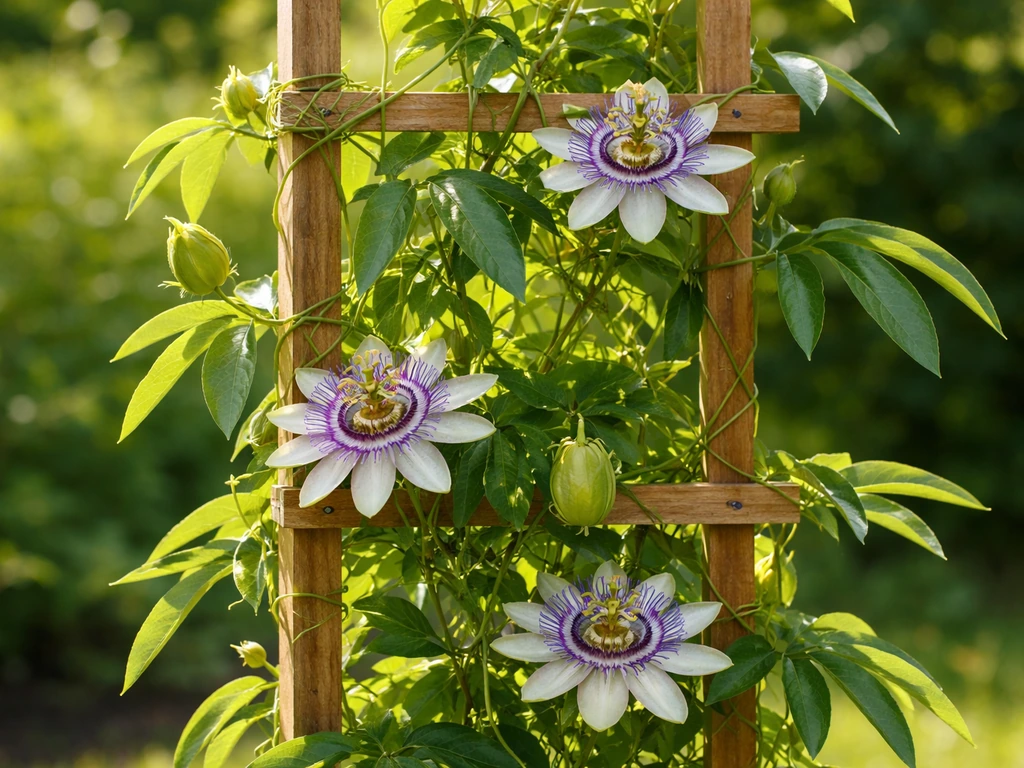
Passion flowers (Passiflora) are climbing vines that produce some of the most extraordinary-looking blooms in the gardening world, and they are far more manageable than they look. Plant one in full sun at the base of a fence or trellis, give it decent drainage, keep it reasonably fed, and you will have a vigorous vine flowering from early summer through autumn within one season. If you want a more focused walkthrough for Maypop specifically, see this guide on how to grow maypop passion flower for step-by-step tips alongside these basics. The trickiest part is germination from seed, but once you have a plant in the ground it practically takes care of itself.
How to Grow Passion Flowers: Step-by-Step Vine Guide

Marcus Holloway
23 Apr 2026
Choosing the right passion flower variety
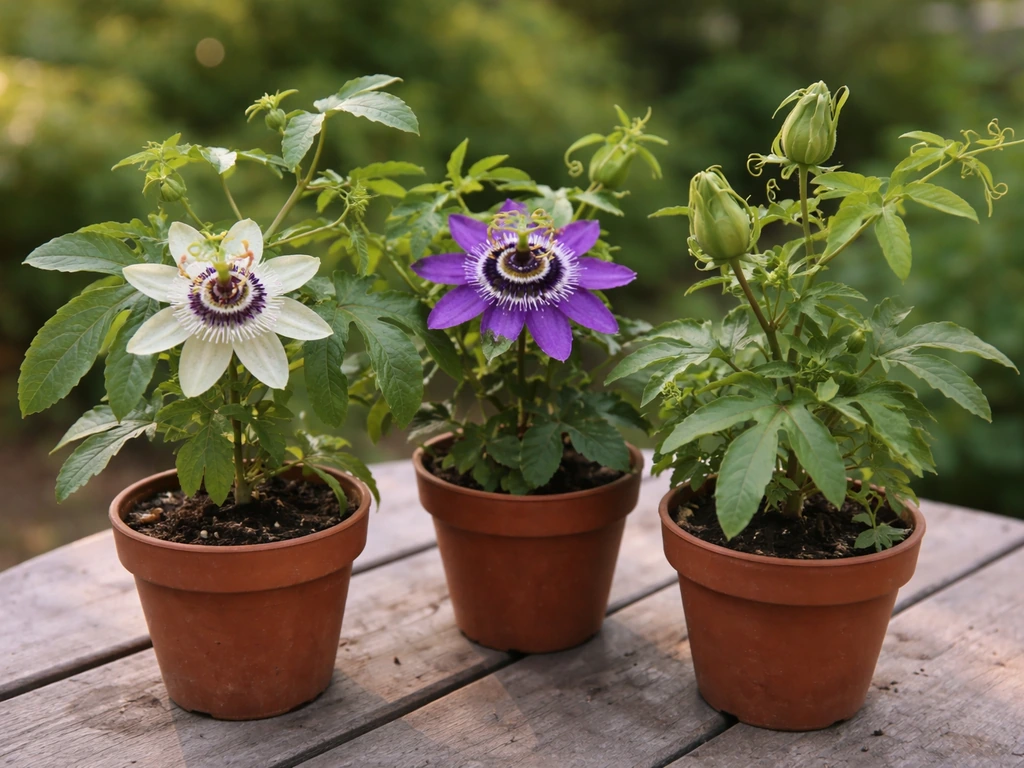
"Passion flower" and "passionflower" both refer to the same plant: vining species in the genus Passiflora. There are hundreds of species, but a handful are worth your attention as a home gardener. The single most important decision you will make is matching the species to your climate, because some are frost-tender tropicals and others are surprisingly cold-hardy.
| Species | Common Name | Hardy to Zone | Notes |
|---|---|---|---|
| Passiflora incarnata | Maypop | Zone 6 (some Zone 5 with protection) | Native from Texas to Illinois to Pennsylvania; blooms June–September; easiest for most US gardeners |
| Passiflora caerulea | Blue passion flower | Zone 7–8 | Popular in UK gardens; blue-white flowers; widely available |
| Passiflora edulis | Passion fruit | Zone 9B–11 | Grown for edible fruit; needs a long, warm season |
| Passiflora coccinea | Red passion flower | Zone 10–11 | Striking scarlet blooms; best as a container plant in cooler climates |
For most gardeners in the continental US, Passiflora incarnata (Maypop) is the go-to choice. It is native across a wide swath of the eastern and central US, tolerates cold winters by dying back to the roots, and reliably returns each spring. If you are in the UK or a mild coastal climate, Passiflora caerulea is the standard recommendation. Gardeners in Florida or southern California can grow Passiflora edulis for fruit as well as flowers. A dedicated guide to growing Maypop passion flower covers the incarnata species in even more depth if that is your route.
One practical warning: some Passiflora species have been flagged as potentially invasive outside their native range, particularly in warmer climates. Check your local extension service before planting, and favor native or regionally appropriate species when you can.
On vine expectations: passion flower vines grow fast once established. A healthy plant can put on 15 to 20 feet of growth in a single season. They climb by wrapping slender tendrils around whatever is nearby, so they need something to grab from day one. Think of this as a feature, not a problem. Give them a strong trellis and they will reward you with a wall of tropical-looking foliage and flowers.
Sun, soil, water, and fertilizing
Sun
Full sun is non-negotiable for good blooming. Passiflora incarnata specifically does best in full sun, and both the RHS and most extension research agree that passion flowers flower most freely against a warm, sunny wall. Aim for at least six hours of direct sun daily. Part shade will keep the plant alive but you will get fewer flowers and weaker growth.
Soil

Well-drained soil is the single most important cultural condition. Waterlogged roots invite fungal problems fast. Passion flowers tolerate a fairly wide pH range (roughly 6.0 to 7.5), with slightly acidic soil being ideal. They also handle a variety of soil types, including occasionally wet conditions in the case of Maypop, but consistently soggy ground will cause root rot. If your soil is heavy clay, raise the planting area slightly or work in compost and grit to improve drainage before planting.
Watering
Water freely during the growing season, especially in summer when the vine is putting on its heaviest growth and flowering. The RHS is direct about this: reduce watering in winter, and do not let the soil dry out completely during the growing season because drying out causes buds to drop before they open. That last point matters a lot. If you notice buds forming and then falling off, the first thing to check is soil moisture.
Fertilizing
Here is a mistake a lot of new passion flower growers make: they over-fertilize with nitrogen, the vine puts out masses of lush green leaves, and then the flowers never come. Go easy on high-nitrogen fertilizers. A balanced feed applied after pruning in early spring is a good starting point, then switch to a low-nitrogen, higher-potassium fertilizer (a tomato feed works well) once the plant is actively growing to push flowers rather than foliage. If you want better blooms on a tougher, corkier stem passion flower, focus on consistent watering, full sun, and a low-nitrogen feed that supports flower production low-nitrogen, higher-potassium fertilizer. Stop feeding by late summer.
Starting from seed vs. buying a plant
Let's be honest: starting passion flower from seed is slow and requires some patience. Germination can take anywhere from one to six weeks even under ideal conditions, and the seeds need warmth to perform at all. That said, it is absolutely doable, and growing from seed is the cheapest route if you want several plants.
Growing from seed
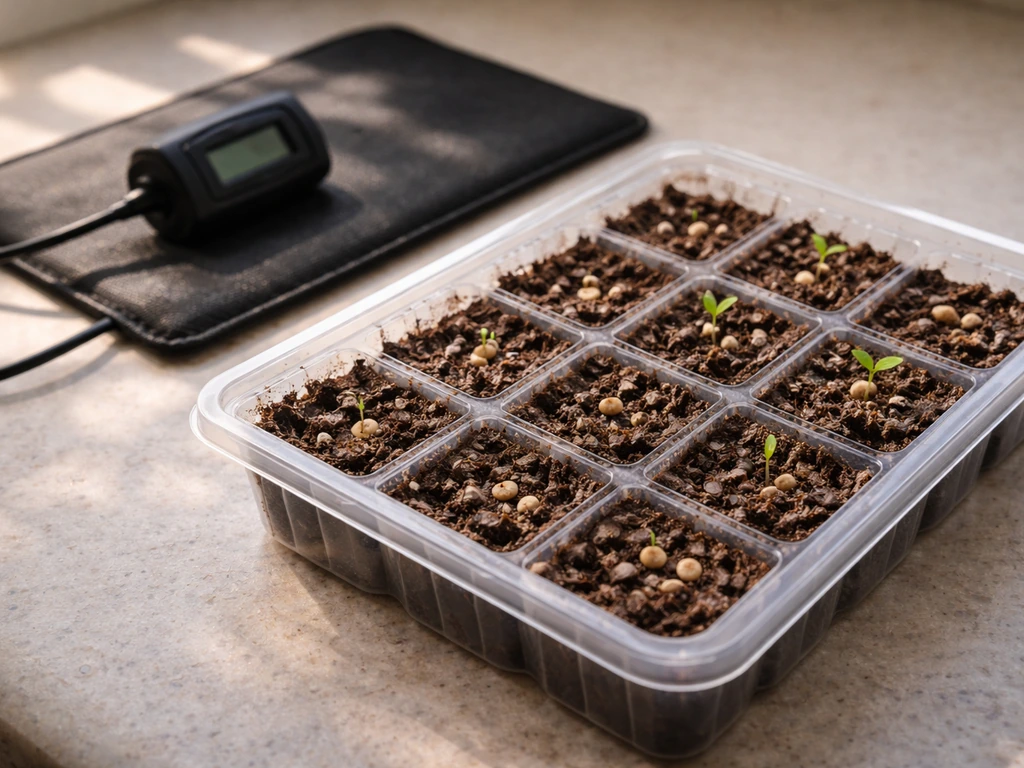
The key to germination is heat. Passiflora seeds germinate best at soil temperatures between 30°C and 35°C (86°F to 95°F). At lower temperatures, germination is poor or very slow. A heat mat set to around 70°F to 80°F is the practical minimum for indoor sowing; warmer is better. blank" rel="noopener noreferrer">The seeds also prefer darkness while germinating, so cover trays with a dome or a piece of cardboard once sown.
- Lightly scarify seeds by rubbing them briefly on sandpaper or a nail file to thin the seed coat. This genuinely speeds things up.
- Sow seeds about 6mm (1/4 inch) deep in a well-draining seed compost mix in small pots or a seed tray.
- Water gently, then place the tray on a heat mat or in the warmest spot you have (an airing cupboard or the top of a refrigerator works if you have no heat mat).
- Keep the compost moist but not waterlogged. Check daily.
- Once sprouts appear, move seedlings to bright light immediately. Leggy seedlings in low light are a common early mistake.
- Pot on seedlings once they have two or three true leaves.
One important caveat: seeds from named cultivars or hybrids will not reliably produce plants identical to the parent. If you have a specific flower color or form in mind, buy a named plant from a nursery rather than growing from seed.
The easier route: buying a young plant
For most beginners, buying a small passion flower plant from a nursery in spring is the fastest and most reliable path to flowers in year one. You skip the germination wait entirely and start with a plant that already has an established root system. Plant it out after your last frost date and you can realistically expect blooms that same summer.
Timing
If starting from seed indoors, sow 10 to 12 weeks before your last expected frost date. Transplant outdoors only after all frost risk has passed and nights are reliably warm. For most of the US, that means outdoor planting from late April through May. In the UK, hold off until late May or early June. Passiflora incarnata dies back to the roots in cold winters and re-sprouts from the base in spring, so do not panic if the top growth looks dead after a cold snap.
Planting out and early care
Whether you are planting a nursery-bought plant or a seedling you have raised yourself, the first step is getting the location right. Passion flowers need to be planted at the base of whatever they are going to climb: a fence, trellis, arbor, or pergola post. Plant them there from the start rather than trying to relocate them later, because moving established vines is disruptive.
- Dig a hole twice as wide as the root ball and the same depth. Do not bury the stem deeper than it was in the pot.
- Mix in some compost if your soil is poor, but do not over-enrich. These plants do not need rich soil to thrive.
- Set the plant in, backfill, and firm down gently. Water well.
- Immediately tie the main stem loosely to the nearest support with soft plant ties or garden twine. This gets the tendrils started in the right direction.
- Mulch lightly around the base to retain moisture, but keep mulch away from the stem itself to prevent rot.
- Water regularly for the first few weeks while the plant is establishing its root system. After that, you can ease off.
For indoor container growing (useful if you are in a colder zone or want to overwinter a tender species), use a large container of at least 30 to 45 cm diameter with drainage holes. Place it in your sunniest window or in a heated greenhouse. Container plants dry out faster than in-ground plants, so check the soil moisture more often.
Training the vine: trellis, spacing, and growth management
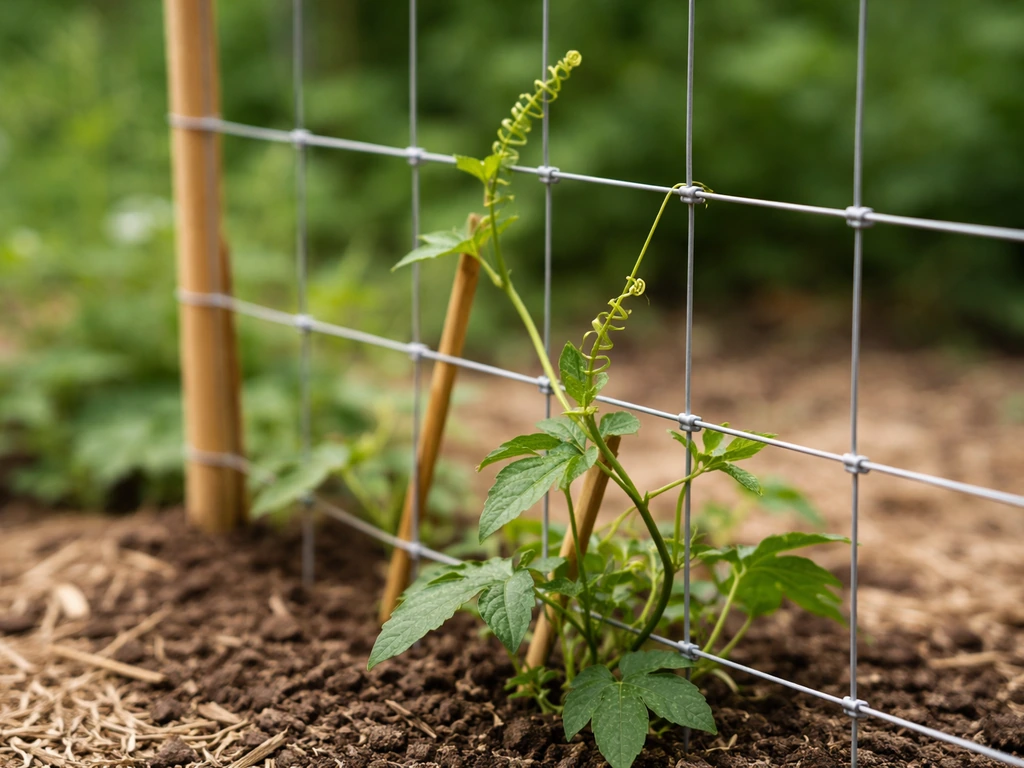
Passion flowers climb by tendrils, which means they will wrap around anything thin enough to grip: wires, trellis mesh, bamboo canes, or fence rails. They do not cling to flat walls the way ivy does, so give them a structure with something to wind around. A free-standing trellis, horizontal wires attached to a wall, or a chain-link fence all work well.
In terms of spacing, if you are planting more than one vine, allow at least 1.8 to 2.4 meters (6 to 8 feet) between plants. They spread generously and need room to fill in without competing. Single plants on a standard garden arch or small trellis (around 1.8 m x 0.9 m) will fill the structure comfortably within one season in warm climates.
Early in the season, help the vine get going by manually guiding new shoots toward the support and loosely tying them in place. Once the tendrils take hold, the vine manages itself. As it grows, periodically check that stems are not crossing, bunching up, or shading each other heavily. Open, well-aired growth produces better flowers and reduces disease pressure.
If the vine is growing in a direction you do not want, redirecting it early is easy. Snap off or redirect new shoots while they are still soft and flexible. Trying to untangle established woody stems later is frustrating and risks snapping the vine.
Pruning for shape and more flowers
Pruning passion flowers intimidates a lot of gardeners because the vines look complex, but the approach is actually straightforward. The main rules are: prune once a year in early spring, and do not cut back into old, bare wood unless you are doing a renovation. The RHS recommends pruning passion flowers once a year in early spring if necessary.
Annual maintenance pruning
After flowering, cut the shoots that have flowered back to about two buds from the main framework of stems. This encourages bushy new growth that will carry next year's flowers. Do not prune harder than this as part of your routine, or you risk removing the stems where new flowering shoots will emerge.
In early spring, tidy up any dead, damaged, or frost-killed stems. For Passiflora incarnata in colder zones, most of the top growth may have died back completely, and the vine re-sprouts from the root. Cut dead stems back to about 30 cm above a healthy bud when you see new growth emerging at the base.
Renovating an overgrown vine
If you have inherited an old, tangled passion flower or the vine has gone completely wild, a renovation prune brings it back. Cut back one in every three main stems to about 50 cm from the ground, leaving the others at their full length. This opens up the plant without shocking it all at once. Repeat over two to three years until the whole framework is renewed. Alternatively, the RHS suggests cutting the entire plant back to 30 to 60 cm from the base as a hard reset, which works well on very vigorous and established vines.
Troubleshooting common problems
Seeds won't germinate
This is the most common complaint from first-time growers. Nine times out of ten the problem is temperature. If your seed tray is sitting on a windowsill in a cool room, the soil temperature may only be 15°C to 18°C, which is too cold. Passiflora seeds need at least 25°C to 30°C at the root zone to germinate reliably, and 35°C gives the best results. Get a heat mat, or find the warmest spot in your house. Scarifying the seed coat first also makes a measurable difference in germination rates.
Slow or weak growth after planting out
Passion flowers are slow starters in their first year while they build a root system. Do not panic in the first few weeks if the top growth seems static. As long as the leaves look healthy and the plant is not wilting, it is probably fine. Make sure it is getting full sun and consistent moisture. Drought stress early on is a very common cause of stunted first-season growth.
Pests to watch for
Aphids are the most likely pest you will see, especially on soft new growth in spring. Check the undersides of leaves and the growing tips regularly. A strong blast from a hose knocks most of them off, or use an insecticidal soap spray if the infestation is heavy. Spider mites show up in hot, dry conditions and cause stippled yellow patches on leaves. Keeping the plant well-watered and occasionally misting the foliage helps deter them. Other pests that can occasionally appear include mealybugs, scale insects, and thrips, all of which are manageable with standard organic or chemical controls.
Fungal disease and root rot
Fusarium wilt and root rot are the most serious disease problems, and both are caused or worsened by waterlogged soil. If the plant suddenly starts yellowing and wilting despite moist soil, root rot is the likely culprit. There is no cure for an established Fusarium infection, so prevention is everything: plant in well-drained soil, never let water pool around the roots, and avoid over-watering. In humid conditions, powdery mildew can appear on leaves, usually late in the season. Remove affected leaves, improve air circulation through pruning, and apply a fungicide if needed.
No flowers
If your vine is leafy but stubbornly refuses to bloom, run through this checklist: Is it getting enough sun (six or more hours)? Have you been over-feeding with nitrogen? Is it still in its first year, where it may simply need more time to establish? Did you prune it at the wrong time and remove the flowering wood? Passiflora incarnata blooms from June to September, so if you are checking in May, just wait. Switching to a lower-nitrogen, higher-potassium fertilizer mid-season is often the quickest fix for a non-blooming established vine.
A few final thoughts
Passion flower is one of those plants that rewards a bit of upfront thought and then largely looks after itself. Get the variety right for your climate (Maypop for most US gardeners, Passiflora caerulea for UK gardens), plant it in full sun with good drainage, give it something to climb, and prune it lightly each spring. If you are also aiming for long-stem blooms, focus on supporting strong growth with consistent sun, water, and low-nitrogen feeding how to grow long stem flowers. That really is most of the job. If you want to go deeper on specific varieties, growing Passiflora caerulea in the UK has its own nuances, and the Maypop specifically has some fascinating native-plant qualities worth exploring. If you are wondering how to grow passion flower in the UK, the key is matching Passiflora caerulea to your conditions and following the basic sun, drainage, and pruning routine how to grow passion flower uk. Either way, do not overthink the exotic looks. This is a tough, willing climber that just needs the right spot. If you are expanding your repertoire, here is a practical guide to how to grow pasque flowers as well.
FAQ
Should I mulch passion flowers, and how close to the plant should it be?
In-ground plants usually benefit from a mulch layer, but keep it 5 to 10 cm away from the crown to avoid trapping moisture against the stems. In wet climates or heavy clay, mulch can worsen soggy soil, so prioritize drainage improvements and use a lighter mulch (like gravel) if your area stays damp.
Can I overwinter passion flowers, and will they come back after frost?
Yes, but only for certain species and it works best if you plan for dieback. For cold-hardy types like Maypop, expect the top to die back in winter, then re-sprout from the base. For more tender Passiflora, moving the container indoors or using protection like frost cloth may help, but success depends on keeping the root zone from freezing solid.
What should I do if my passion flower leaves turn yellow and the plant looks weak?
If you see leaf yellowing with soft, collapsing growth, suspect root stress first. Confirm by checking soil drainage after watering, then pull back any heavy mulch. If the plant is in a container, ensure the pot has ample drainage and never let it sit in a saucer of water.
My vine is making buds but they drop, why and how do I fix it?
Passiflora can bloom later than you expect, especially in the first year. If buds form and drop before opening, focus on two things: full sun and consistent moisture (avoid letting the soil dry out completely). Also avoid late nitrogen feeding, which can trigger leaf growth at the expense of buds.
Why does my passion flower keep growing but not flowering, even though I have a trellis?
Start by confirming the vine has a structure it can wrap around, then guide new shoots early so flowers develop on the right stems. Don’t prune outside early spring, and when pruning after flowering, cut back only to the recommended buds on the framework, not back into old woody sections.
Do passion flowers need pollination to bloom or to make fruit?
Hand pollination is usually unnecessary outdoors because many bees and other insects visit Passiflora. If you’re growing indoors, you can shake the vine gently or use a small soft brush to transfer pollen between open flowers early in the day, but expect the biggest driver of fruit or seed set to be species and timing rather than pollination alone.
How often should I fertilize passion flowers, and what fertilizer ratio matters most?
Feed less than you think. A balanced feed early in spring is fine after pruning, then switch to a low-nitrogen, higher-potassium option once it’s actively growing. Stop feeding by late summer so new growth can mature and the plant can handle cooler weather.
How do container-grown passion flowers differ from in-ground plants for watering and care?
For container growing, moisture swings cause more bud drop and slower flowering. Check the pot at least every couple of days in hot weather, and water thoroughly until it drains out the bottom. In winter, reduce watering, but do not let the root zone fully dry if the container is kept above freezing.
How should I manage dense growth so it doesn’t become tangled or disease-prone?
To prevent leggy growth that crowds itself, thin only the busiest crossing stems during spring checks, and keep airflow moving through the canopy. Avoid drastic pruning mid-season because flower stems are formed on specific growth, and cutting the wrong parts can reduce blooms for the next cycle.
Can I save seed from my passion flower and expect the same flowers next year?
If you want plants true to a specific flower form, avoid saving and re-sowing seed from named cultivars or hybrids, because offspring won’t be reliably identical. The practical approach is to buy a nursery plant for the exact traits you want, then propagate from healthy cuttings or divide only if your species supports it (Maypop is mainly grown from seed or nursery starts).
What’s the difference between powdery mildew and root diseases, and how should I respond?
If you see fungal-looking growth after watering, treat the symptoms by removing affected leaves and improving airflow, then correct the cause (wet feet). There is no cure for established Fusarium, so the long-term fix is prevention through drainage and not over-watering, rather than repeated fungicide use.
What are the most common reasons passion flower seeds fail to germinate?
For best germination, the root-zone temperature matters more than air temperature. Use a heat mat targeted to the seed tray, keep it warm throughout the day and night, and maintain darkness during germination by covering the tray after sowing. If you keep temperatures too cool, the common result is a very slow or stalled start.
Next Article
How to Grow Marigold From Stem Cutting: Step-by-Step
Learn how to grow marigold from stem cuttings, root in water or soil, avoid rot and mold, and transplant to flower.