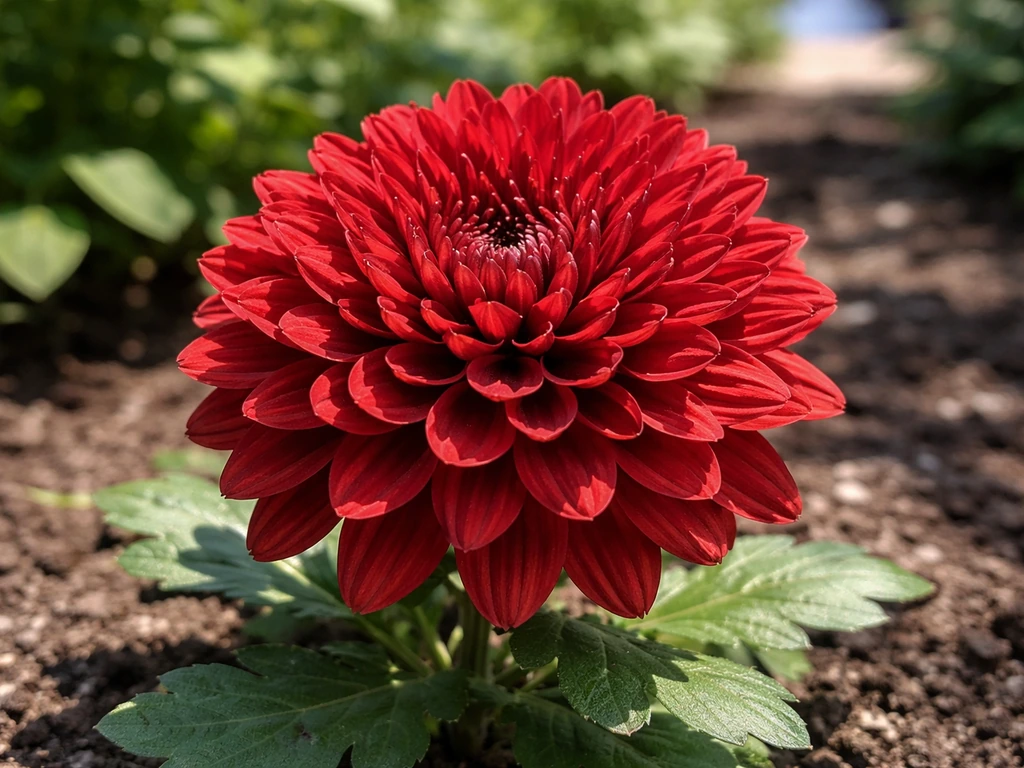
Growing rainbow flowers is mostly about choosing the right seed mix and then getting the sowing conditions right. To get a rainbow chrysanthemum going, focus on choosing the right variety for your climate and providing full sun, consistent watering, and well-draining soil rainbow chrysanthemum how to grow. Most people searching this term are either buying a packet literally labeled 'rainbow mix' (which could be a wildflower blend, a snapdragon color mix, or even a coleus foliage mix) or they're curating a mix of bright annuals themselves to create that multicolor effect. Either way, the basics are the same: full sun, well-draining soil, shallow sowing, and consistent moisture until germination. Do those four things well and you'll have a season-long parade of color.
How to Grow Rainbow Flowers: Step-by-Step Guide

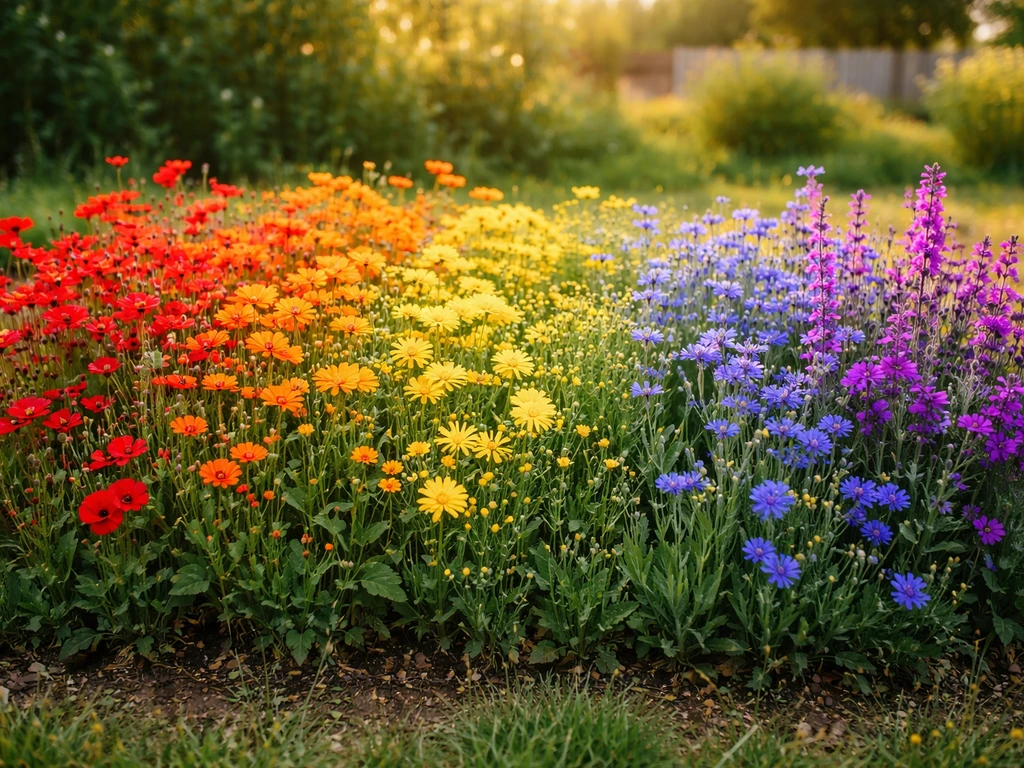
What 'rainbow flowers' actually means when you buy seeds
Before you buy anything, it helps to know what you're actually getting. The term 'rainbow flowers' doesn't refer to a single plant species. It's a marketing label applied to several very different seed products, and picking the wrong one for your goals is the most common mistake.
The most popular interpretation is an all-annual wildflower seed mix blended for color range. Products like American Meadows' All Annual Vivid Variety Wildflower Seed Mix pack in 23 annual species (think California poppy, cosmos, cornflower, coreopsis, and more) and claim blooms just weeks after germination that continue until frost. Theodore Payne's Payne's #1 Rainbow Mix takes a similar approach, mixing annuals in proportions that give you a succession of color from early spring into late summer. These are great for cutting gardens and anyone who wants an effortless meadow look.
Then there's the snapdragon rainbow mix, which is a single species (Antirrhinum majus) selected across a wide color range from pale pink to deep red to yellow. West Coast Seeds sells one specifically for tall, cutting-garden stems. If you want vase flowers with structure, a snapdragon rainbow mix is a smarter choice than a wildflower scatter mix.
A third thing that comes up constantly in search results is rainbow coleus, which is a foliage plant, not a flowering one. The leaves are spectacular in reds, pinks, yellows, greens, and purples, but if you want blooms, coleus is not what you're after. It's worth knowing so you don't accidentally order the wrong thing. If you’re specifically aiming for how to grow chrysanthemum Robinson Red, focus on providing enough sun, consistent moisture, and timely pinching to promote sturdy blooms.
For this guide, the focus is on annual flower mixes, whether a branded wildflower rainbow blend or a snapdragon-style color mix, grown from seed for a cutting garden or a bright border bed. The steps apply to both, with notes where they differ.
Pick the right spot and growing conditions
Almost every annual in a rainbow mix is selected for one reason: it wants full sun. Six to eight hours of direct sunlight per day is the minimum. Less than that and you'll get leggy, floppy plants with sparse blooms and washed-out colors. If your only available spot gets afternoon shade, look specifically for a 'partial shade wildflower mix' rather than forcing a sun-loving blend into the wrong spot.
Soil quality matters less than drainage. Annual wildflower mixes are actually designed for lean, average soil. Rich, amended garden beds can cause plants to push foliage at the expense of flowers. That said, soil does need to be loose so roots can establish quickly. If your soil is heavy clay, break it up and mix in a little coarse sand or fine grit, not bags of compost. For container growing, use a standard potting mix, not a moisture-retaining formula, and make sure your containers have drainage holes.
| Condition | In-Ground Bed | Container |
|---|---|---|
| Best for | Large color drifts, meadow effect, cutting rows | Patios, balconies, small spaces |
| Soil | Well-drained, average fertility, loosened 4–6 inches | Standard potting mix, no moisture crystals |
| Sun needed | 6–8 hours minimum | 6–8 hours minimum |
| Watering frequency | Every 2–3 days until established | Daily in hot weather |
| Seed coverage area | Large scatter sowings work well | Best for single-species rainbow mixes like snapdragons |
Temperature is where a lot of beginners go wrong. Most annual rainbow mixes contain a blend of species that don't all germinate under the same conditions. Cool-season types like calendula, larkspur, and poppies actually want soil temperatures around 50–65°F and will germinate poorly or not at all in warm soil. Warm-season types like cosmos and zinnias need soil above 65°F. This is exactly why commercial all-annual mixes are designed to have staggered bloom times: the cool-season flowers come first, then the warm-season ones take over.
How to start rainbow flowers from seed
Timing: when to sow
For most wildflower-style rainbow mixes, direct sowing into the garden is the right call. You can sow in early spring as soon as the soil can be worked (even if a light frost is still possible), or in fall if you're in a mild climate. For when to grow chrysanthemums specifically, aim for late-spring to early-fall planting based on your local frost dates. The cool-season species will germinate first and bloom before heat sets in, and the warm-season ones follow naturally. Do not wait until your 'safe' transplant date to direct sow these mixes because by then it's often too warm for the cool-season portion to establish.
For snapdragon rainbow mixes, the timing is a little different. Snapdragons prefer cool weather and actually slow down or stop blooming in peak summer heat. Start snapdragon seeds indoors 6–8 weeks before your last frost date. Some growers (and Restoration Seeds recommends this specifically) chill snapdragon seeds in the refrigerator for 3–5 days before sowing to improve germination rates. Transplant seedlings outdoors when temperatures are reliably between 45 and 65°F.
Sowing depth and technique

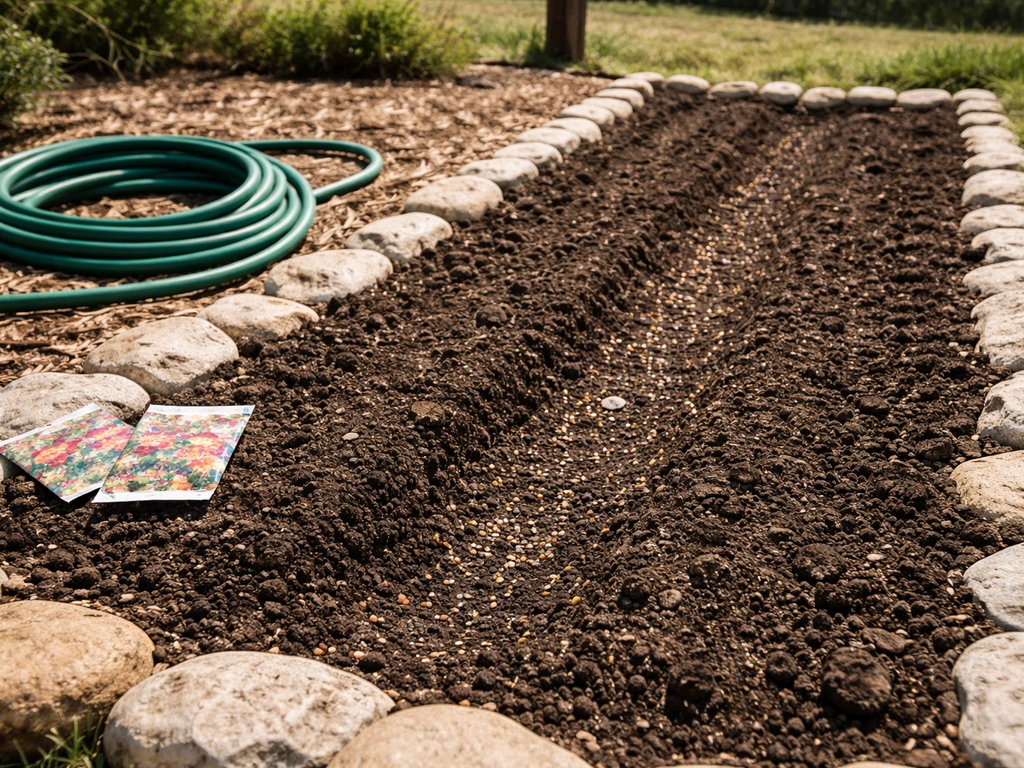
This is the step most people get wrong: they bury the seeds too deep. Most annual wildflower seeds are tiny and need light to germinate. The rule is no more than 1/8 inch of soil coverage, and for many species in the mix, no covering at all is ideal. Here is the exact process I use:
- Loosen the top 4–6 inches of soil with a fork or hand cultivator, then rake the surface smooth.
- Water the bed well and let it drain so the surface is damp but not muddy.
- Mix your seed with a small amount of dry sand at roughly a 4: 1 sand-to-seed ratio. This makes distribution more even and helps you see where you've sown.
- Scatter the seed-sand mixture evenly over the prepared area. For an all-annual wildflower mix, aim for roughly the density on the packet.
- Do not rake it in. Instead, press the seeds firmly into the soil surface using a flat board, a hand roller, or just by walking over the area with flat-soled shoes. The goal is good seed-to-soil contact without burial.
- Water gently with a fine mist or a can with a rose head. Avoid strong spray that will move seeds around.
For indoor starts (snapdragons, or if you're starting warm-season annuals indoors for a head start), fill small cells or seed trays with a fine seed-starting mix. Press seeds lightly onto the surface without covering them, or with just a whisker of fine vermiculite on top. Keep the soil at 70–75°F using bottom heat if possible. Germination happens in 7–14 days for snapdragons at those temperatures.
Spacing and germination expectations
With a scatter mix, spacing is handled by thinning later rather than precise placement at sowing. Expect germination to be staggered, sometimes by weeks, because the mix contains species with very different germination speeds. Some species may take 7 days; others in the same packet can take 3 weeks or more. Don't panic if the bed looks uneven early on. That's normal and, in fact, that's the whole point of a succession blend.
Watering, feeding, and thinning
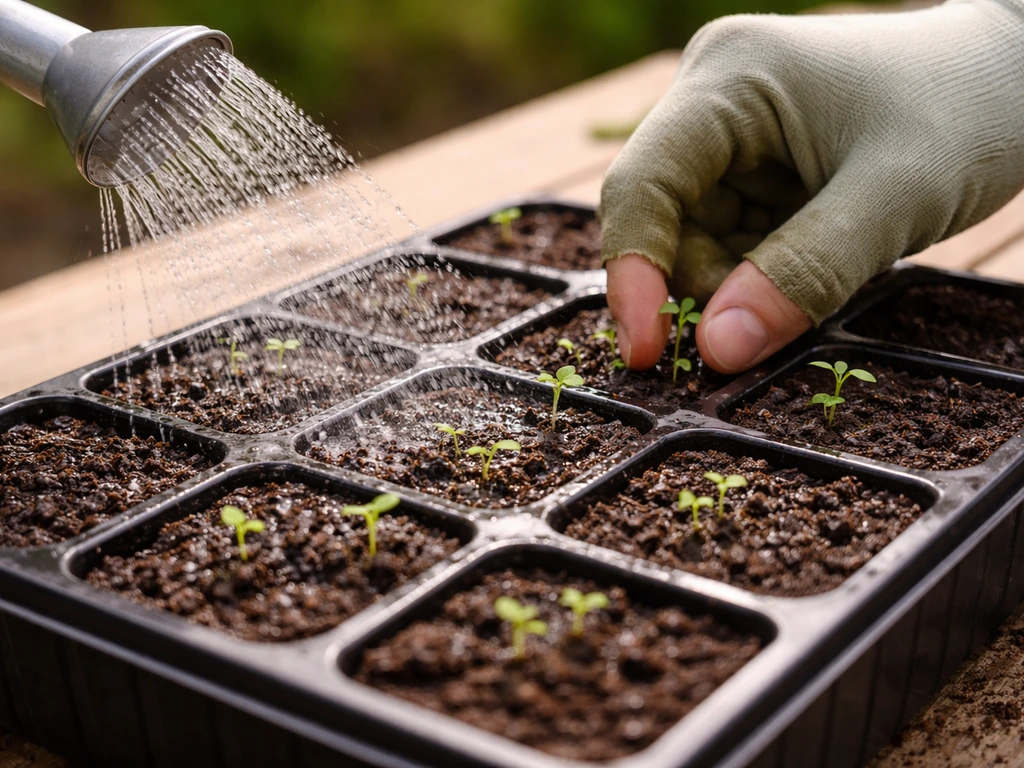
Until germination, the soil surface needs to stay consistently moist. This is the hardest part because the seeds are right at the surface and a dry afternoon can set germination back significantly. Water with a gentle mist once or twice a day in dry conditions, always keeping the spray soft so you don't displace seeds. Once seedlings are up and have their first true leaves, you can back off to watering every 2–3 days depending on rainfall and temperature.
Feeding annual rainbow mixes is generally less is more. These plants are designed for average garden soil, and overdoing nitrogen fertilizer is one of the most reliable ways to get lush, leafy plants with few flowers. Michigan State University Extension warns that too much fertilizer, especially many annual flower products with high nitrogen, can lead to leggy growth and weaker bloom performance overdoing nitrogen fertilizer. If your soil is genuinely poor (sandy or very low in organic matter), a single application of a balanced, slow-release fertilizer at planting time is enough. If growth looks good, skip supplemental feeding entirely. If you do fertilize later in the season, wait at least 6–8 weeks after planting before adding anything, and use a formula lower in nitrogen relative to phosphorus and potassium to encourage blooms over foliage.
Thinning is non-negotiable. Overcrowded seedlings compete for light and air circulation, which leads to leggy, weak growth and disease problems. Once seedlings are about 2–3 inches tall, thin them so plants are spaced roughly 6–12 inches apart depending on the mature size of the species (check your packet). Thin by snipping at soil level rather than pulling, so you don't disturb neighboring roots. It feels harsh to cut healthy seedlings, but the ones you keep will reward you with dramatically stronger plants.
How to handle the most common problems
Seeds not germinating or germinating unevenly
The two most common causes are burial that's too deep and a soil surface that dried out during the critical germination window. If your bed looks bare after two weeks, check whether seeds got raked in too deeply when you smoothed the soil. Also check that you're seeing the right temperature: cool-season seeds won't germinate in warm soil, and warm-season seeds stall in cold soil. Give a mixed blend at least 3–4 weeks before you assume failure, because the slow germinators are often the ones with the biggest, boldest flowers.
Commercial seed mixes can also contain a meaningful percentage of inert filler material, which is normal and helps with even distribution. If germination seems lower than expected overall, it's worth buying from a reputable source with a stated germination rate before assuming you did something wrong.
Leggy, weak seedlings
Legginess almost always means insufficient light or too much nitrogen. Indoors, move seedling trays as close to the light source as possible, within 2–4 inches of a grow light. Outdoors, seedlings in partial shade will stretch toward any available light. If you've already fertilized heavily, cut back immediately and hold off watering for a day or two. You can't undo existing legginess, but you can prevent more of it.
Damping off
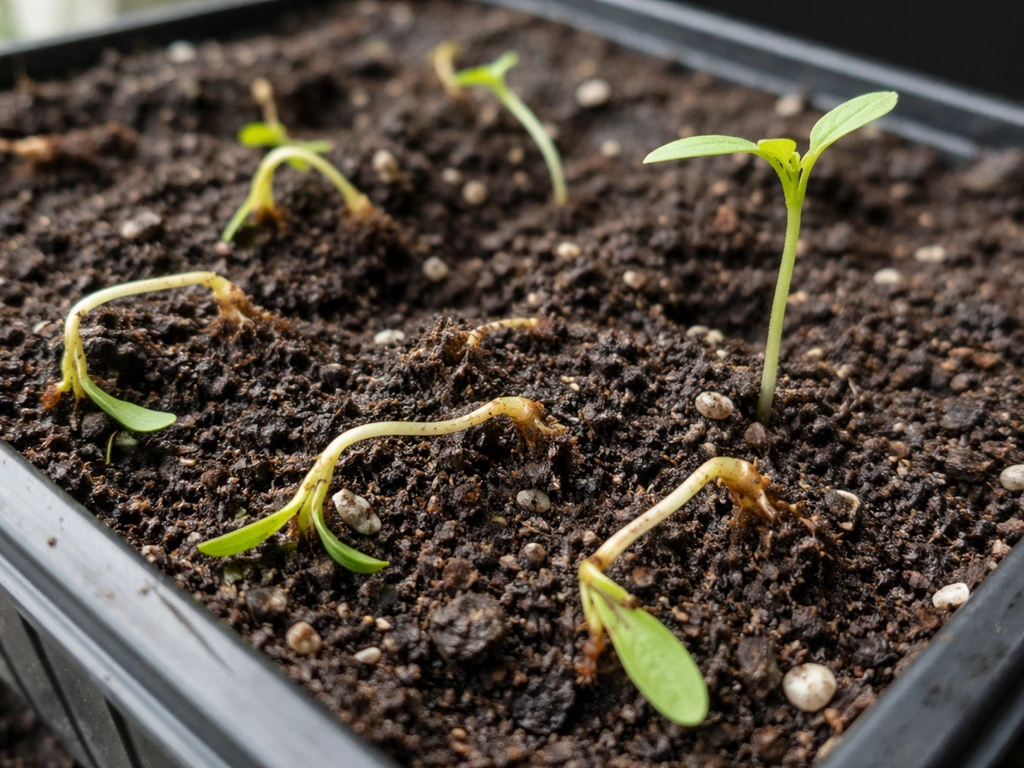
Damping off is a fungal problem where seedlings collapse at the soil line, usually with a mushy, pinched-looking stem. It's caused by water molds (typically Pythium or Phytophthora) that thrive in warm, wet, low-airflow conditions. Prevention is the only real cure. Use fresh, sterile seed-starting mix for indoor starts. Don't overwater, especially in cool conditions where the soil stays wet too long. Improve airflow by spacing seedlings out and using a small fan indoors. Outdoors, good drainage is the main defense. If damping off hits a patch, remove affected seedlings immediately and let the soil dry out before watering again.
Pests and disease in the garden
Aphids are the most common pest you'll see on annual flower mixes, especially on tender new growth. A strong blast of water from a hose knocks them off and is often enough to keep populations in check. Slugs and snails can demolish young seedlings overnight, particularly in cool, moist spring conditions. Hand-pick them in the evening or use iron phosphate bait around the bed. Powdery mildew shows up later in the season when nights cool and humidity rises. The best defense is adequate spacing (back to thinning), good airflow, and avoiding watering late in the day.
Keeping the color going through flowering season
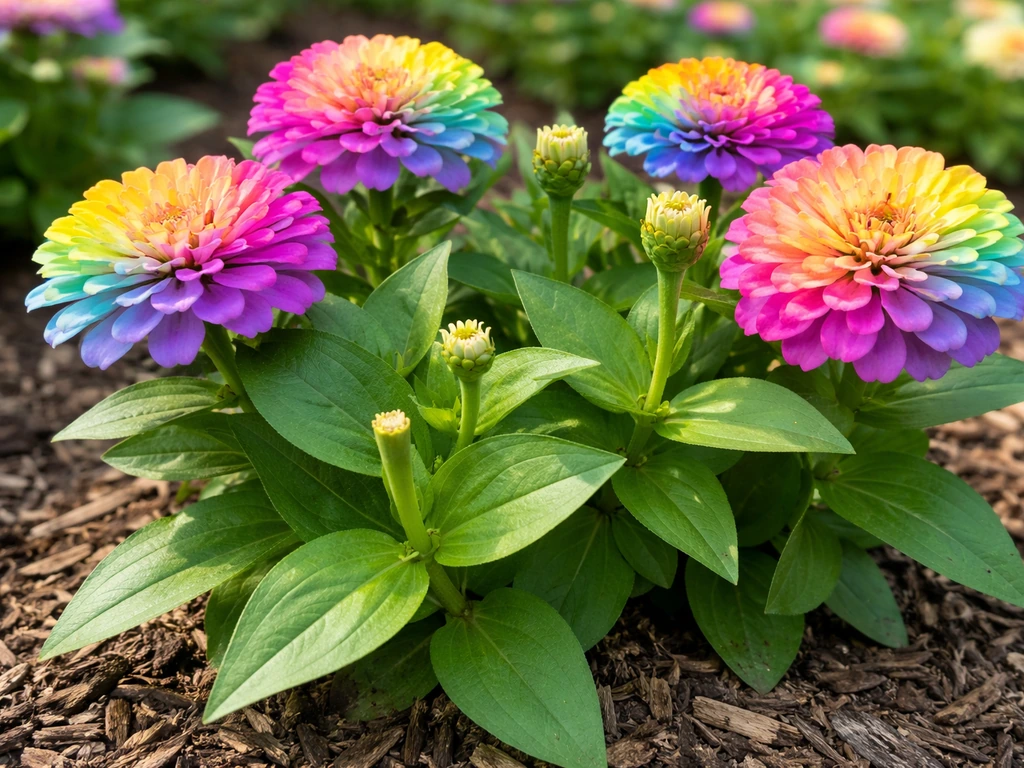
Deadheading is the single most effective thing you can do to extend bloom time. When a flower finishes and starts forming a seed head, the plant's energy shifts from making more flowers to completing that seed. Remove spent blooms before the seeds mature and the plant keeps trying. For most annuals in a rainbow mix, snap or snip the stem back to just above the first set of healthy leaves or a side shoot. Do this every few days when you're in peak bloom season, and you can meaningfully extend color by weeks.
Taller plants in a mixed bed, especially if you've got cosmos or snapdragons reaching 3 feet or more, may need support. Push a few bamboo canes in around the base of a clump and loosely tie stems with soft twine. This prevents lodging after summer rain and wind, which can flatten a beautiful display overnight.
For a truly extended season with a wildflower-style mix, consider succession sowing. Sow a second patch 4–6 weeks after your first sowing so you have a fresh wave of plants coming into bloom as your first patch starts winding down. This works particularly well in long-season climates and is something cutting garden growers do routinely.
Harvesting cut flowers, saving seeds, and finishing up
Cutting for the vase
Cut stems in the morning when temperatures are lower and plants are at their most hydrated. Cut at a 45-degree angle with clean, sharp scissors or snips and plunge stems immediately into a bucket of cool water. Strip any leaves that would sit below the waterline in the vase. Changing the vase water and re-cutting the stem base every 2–4 days makes a significant difference to vase life, so don't skip that step once the flowers are in the house.
Saving seeds from a rainbow mix
Seed saving from a mixed seed packet is complicated. Rainbow mixes are often hybrid varieties or close-planted species that cross-pollinate freely, which means seeds saved from this year's plants won't reliably produce the same colors or plant types next year. If you want to save seed and get predictable results, you need to isolate specific open-pollinated varieties from the mix and let only those go to seed. Let seed heads dry fully on the plant before collecting them, then store seeds in a paper envelope in a cool, dry spot until spring.
If you're saving from a wildflower mix and you're okay with unpredictable results (which can actually be fun), let a handful of your strongest plants go to seed at the end of the season. Scatter those seeds over your prepared bed in fall for a natural reseeding effect, or store and direct sow them next spring.
End-of-season cleanup
Once annuals are finished and frost has knocked them back, pull the spent plants and compost them (unless they show signs of disease, in which case bag them for the bin). Lightly turn the soil and leave the bed ready for an early spring sowing next year. If you're growing a rainbow chrysanthemum variety or any perennial species within your mix, treat those differently and leave them in place through winter with a light mulch layer.
Rainbow mixes are genuinely one of the most rewarding seed gardening projects because the payoff is fast and the results are hard to mess up once you nail the basics. Get the sowing depth right, keep the surface moist until germination, thin decisively, and deadhead regularly. If you are growing chrysanthemum snowland, the same basic attention to sun and soil drainage will help you keep stems strong and blooms looking their best. That's really all it takes.
FAQ
Can I grow rainbow flower mixes in containers, or do I need an in-ground bed?
Yes, but only if you match the mix to the container conditions. Use a fast-draining potting mix, and keep the pot size large enough for the biggest plant listed on the packet (cosmos and snapdragons get tall and top-heavy). Also, plan to thin more aggressively in containers because airflow is usually worse than in the ground.
What should I do if I buried the seeds too deep?
Most rainbow mixes should be sown at the surface or just barely covered, because light often triggers germination for many component species. If you accidentally covered them more than about 1/8 inch, gently loosen the soil you put on top (don’t bury more), and wait longer than usual before declaring failure, since the slow germinators may still emerge.
How do I prevent snapdragons from stopping blooming in hot weather?
For snapdragon rainbow mixes, keep seeds cool and avoid summer heat. Start indoors 6 to 8 weeks before your last frost, transplant when nighttime temperatures stabilize, and expect that peak summer heat can pause blooms. If you want continuous color, plan to deadhead and keep watering steady rather than pushing extra fertilizer.
Is thinning really necessary, or can I just let a rainbow mix grow naturally?
You can, but you need to separate roles. Thin the plants once they reach the 2 to 3 inch stage, and still keep watering consistent until germination. If you rely on spacing alone without thinning, overcrowding usually leads to weak, disease-prone plants even if the seed mix germinates well.
If my rainbow mix bed looks bare after two weeks, does that mean I did something wrong?
Look at timing before assuming the mix is “failed.” Many rainbow blends include species with widely different germination speeds, so it can take 3 to 4 weeks for the slowest ones to show. If nothing appears by then, re-check seed depth, soil temperature matching (cool-season vs warm-season), and whether the surface dried out after sowing.
How can I tell if I’m dealing with damping off, and how do I stop it?
If you see damping off (seedlings collapsing at the soil line), stop trying to “save” the collapsed ones. Remove affected seedlings promptly, improve airflow, and let the surface dry slightly before the next watering. For indoor starts, use fresh sterile seed-starting mix next time, and consider bottom watering to avoid keeping the top layer constantly wet.
My plants are leafy but not blooming well, what’s the most likely cause and fix?
Dense foliage usually signals excess nitrogen or overly rich soil. Back off on feeding, and if you fertilized recently, pause supplements for the rest of the season. In the short term, the best lever is light quality, make sure seedlings and young plants get strong direct light, and thin so each plant has room.
What’s the best way to deadhead rainbow mixes to keep flowers coming?
Deadheading works best when you remove spent flowers before they fully form mature seed heads. In practice, check every few days during peak bloom, snip back to just above a healthy leaf set or side shoot, and don’t wait for the whole plant to finish before removing spent blooms.
Why is germination uneven across the bed, even though I kept the soil moist?
You may get uneven germination because mixes include multiple species with different germination requirements and speeds, and some inert filler can also delay the look of “uniform” coverage. What matters is whether you see at least some sprouts and whether the surface has stayed lightly moist during the germination window. Wait 3 to 4 weeks before troubleshooting deeply.
When should I fertilize rainbow flowers, and what if I already added compost?
Yes, but timing is key. Fertilize only if growth is truly poor, and if you do feed, use a low-nitrogen balanced product. Apply only after plants have established, generally waiting at least 6 to 8 weeks after planting, because feeding too early can shift the plant toward foliage instead of blooms.
My cosmos or snapdragons are flopping, when should I add support?
If a rainbow mix includes a lot of taller species, support early, not after they flop. Insert canes when plants are small, loosely tie stems using soft twine, and aim to prevent lodging after wind or heavy summer rain. Taller plants plus overcrowding make lodging more likely, so thin on schedule.
How do I stagger blooms over a longer period if I have a small garden?
You can do succession sowing even in small spaces by dividing your area into two or three blocks. Sow the next block about 4 to 6 weeks after the first, and keep the same rules for shallow depth and surface moisture. This reduces the “all blooms at once” problem that happens with one-time sowing.
How to Grow Chrysanthemum Robinson Red: Step-by-Step Guide
Step-by-step guide to grow Robinson Red mums from seed or transplants: timing, soil, watering, feeding, pests, and bloom