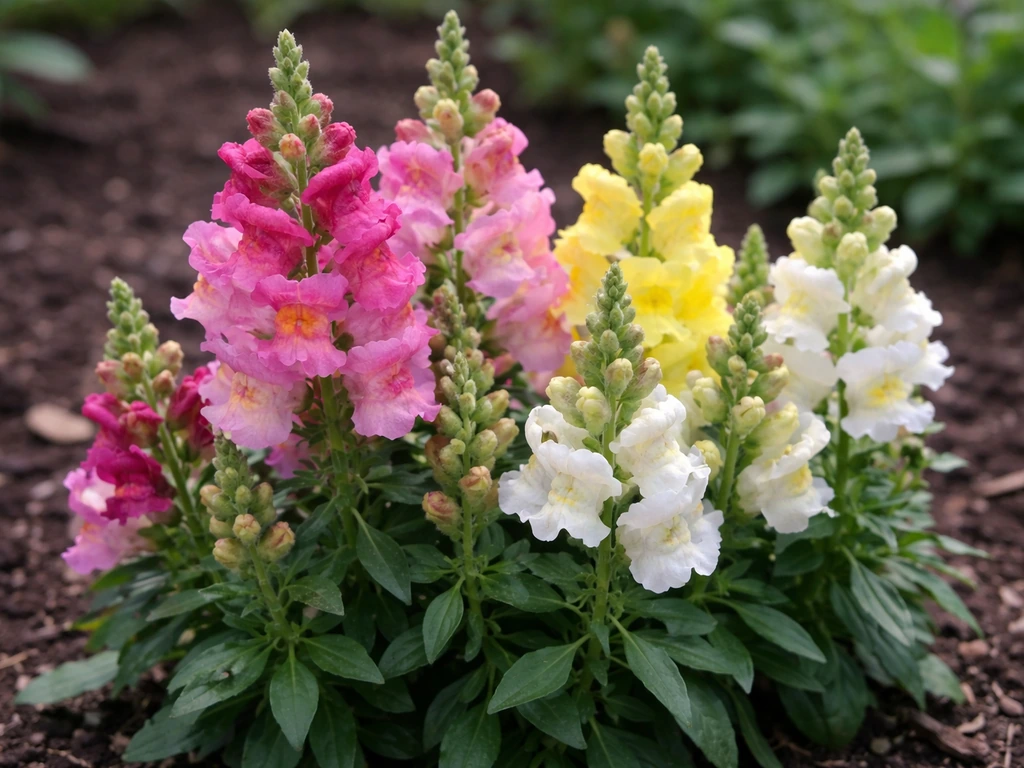
To grow tall snapdragons, you need three things working together: a genuinely tall variety (not a dwarf or intermediate), cool temperatures during the seedling stage, and enough sun and space once plants are in the ground. Get all three right and you can realistically hit 30 to 36 inches of strong, straight stem. Miss one of them and you'll get a compact, early-flowering plant that tops out at knee height regardless of how well you water it.
How to Grow Tall Snapdragons: Step-by-Step Guide

Marcus Holloway
21 May 2026
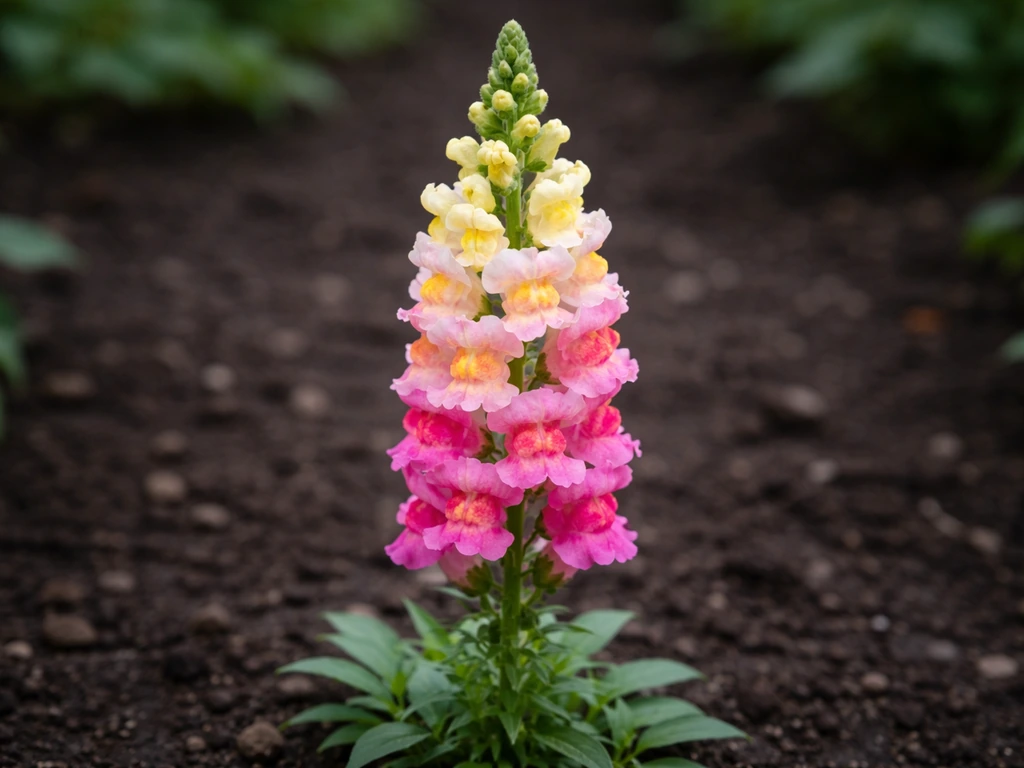
Choose the right tall snapdragon varieties
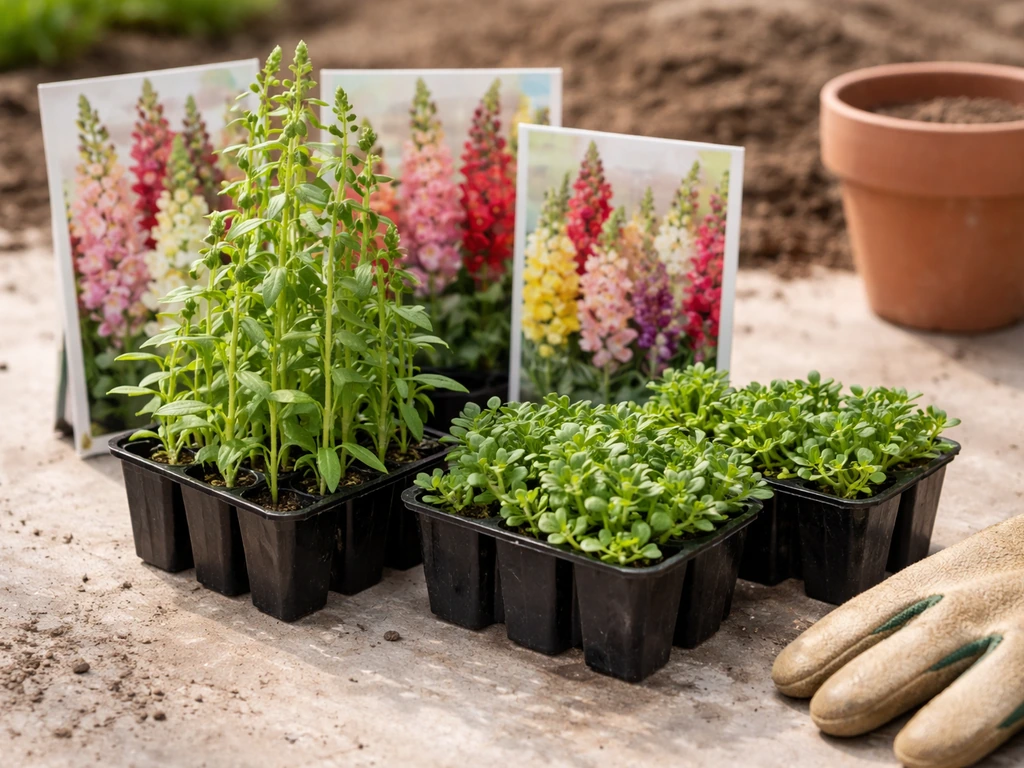
This is the single most important decision you'll make. Snapdragons come in dwarf, intermediate, and tall types, and they don't look dramatically different as seedlings. If you accidentally start a dwarf variety like 'Magic Carpet' (which maxes out at 6 to 12 inches), no amount of perfect care will make it tall. The genetics simply aren't there.
For genuine height, look for cut-flower series. Pair your choice of tall snapdragons with smart companion planting, using guidance on what to grow with snapdragons for the best results cut-flower series. The Rocket series is the most widely available tall snapdragon for home gardeners. Longfellow's lists Rocket Mix at 30 to 36 inches, and other seed suppliers back that up. Rocket produces very tall flower spikes and is specifically bred for cutting-garden use. Other tall-type series to look for include Madame Butterfly, Potomac, and Liberty. These are all in the same height tier and will give you long, sturdy stems worth cutting.
One thing to know: tall snapdragons are also grouped by their response to light and temperature. Commercial growers use these groups to time bloom precisely, but as a home gardener the main takeaway is to choose a variety labeled 'cut flower' or 'tall' rather than 'garden,' 'bedding,' or 'compact.' Those labels are your fastest filter when browsing seed catalogs.
| Variety / Series | Height Range | Best Use | Notes |
|---|---|---|---|
| Rocket Mix | 30–36 inches | Cut flower, tall garden | Most widely available tall type for home growers |
| Madame Butterfly | 24–36 inches | Cut flower | Double-flowered, open-faced blooms |
| Potomac | 24–30 inches | Cut flower | Good vase life, professional-grade stems |
| Liberty Classic | 24–30 inches | Cut flower, garden | Strong branching, good color range |
| Magic Carpet (avoid) | 6–12 inches | Edging, containers | Dwarf type — not suitable if height is the goal |
Timing and temperature for taller growth
Temperature is where most home gardeners accidentally stunt their snapdragons before the plants even get outside. Snapdragons are cool-season flowers, and they actually need cool conditions to build tall, sturdy stems. Push them too warm too early and they skip ahead to flowering before they've had time to develop proper height.
For germination, aim for 70 to 75°F (21 to 24°C). That's the sweet spot where seeds sprout in 7 to 14 days. Some sources report germination in as few as 4 to 5 days at slightly cooler temperatures, but the 70 to 75°F range is the most reliable for consistent, even germination across a tray.
Once seedlings have 3 to 5 true leaves, drop the temperature. University of Florida IFAS recommends maintaining seedlings at 65 to 75°F (18 to 24°C) during the day and 56 to 64°F (15 to 17°C) at night. This temperature differential is what builds the thick, tall stems you're after. The reasoning is straightforward: cool nights slow respiration and allow the plant to put energy into cell structure rather than rushing to flower. About a week or two before transplanting, drop the day temperature even further to around 60 to 62°F (16 to 17°C) to harden stems before they go in the ground.
On timing for outdoor planting: snapdragons are frost-tolerant and actually prefer to be outside while it's still cool. Start seeds indoors 8 to 10 weeks before your last frost date and plan to transplant a few weeks before that date. In most temperate climates that means starting seeds in late winter indoors (January to February in zones 5 to 7) and planting out in March or April. A second planting window in mid-summer for fall blooms is also worth trying if your summers aren't brutal.
Sowing depth, light, and early-care basics
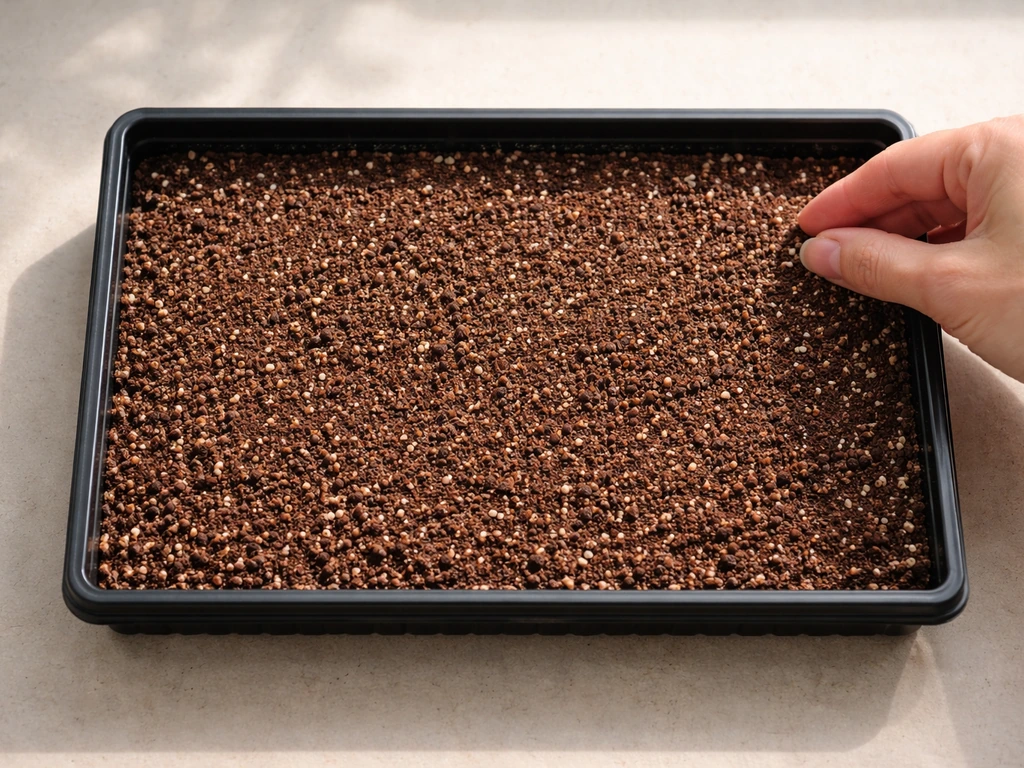
Snapdragon seeds need light to germinate. Do not bury them. This is a rule, not a suggestion. Sow seeds on the surface of a moist, fine seed-starting mix, then either leave them completely uncovered or blank" rel="noopener noreferrer">dust the very thinnest possible layer of fine vermiculite over the top just to hold moisture against the seed. Even a millimeter of soil can block enough light to dramatically slow germination.
- Fill a shallow tray or 128-cell flat with a fine, moist seed-starting mix. Press it down gently so the surface is firm and level.
- Place seeds on the surface, one per cell if using cell trays, or scattered thinly across a flat. Do not press them in.
- Mist very lightly with a spray bottle, or bottom-water by setting the tray in a shallow dish of water until the surface shows moisture. Bottom-watering is better because it won't displace or bury the seeds.
- Cover the tray loosely with a clear dome or plastic wrap to hold humidity. Place it somewhere with bright indirect light or under grow lights, at 70 to 75°F.
- Check daily. Remove the cover once you see the first sprouts (usually 7 to 14 days). Keep the surface barely moist, not wet.
- When seedlings have their first true leaves (about 3 to 4 weeks after sowing), transplant them into individual cell packs or 2-inch pots using a slightly coarser potting mix.
From this point, the seedlings need strong light. Leggy, weak-stemmed snapdragons almost always come from insufficient light during the seedling stage. If you're growing indoors, put them under fluorescent or LED grow lights for 14 to 16 hours a day, keeping the light about 2 to 3 inches above the tops of the seedlings. A sunny south-facing windowsill can work but it's often not enough in late winter. Leggy seedlings will not recover into tall, strong-stemmed plants even if everything else goes right later.
Soil, watering, and feeding for strong stems
Snapdragons want well-drained soil with a pH between 5.5 and 7.0. They're actually quite sensitive to iron deficiency, which tends to show up when pH creeps above 7.0, so if your soil is naturally alkaline it's worth amending with a bit of sulfur or using an acidifying fertilizer. Below 5.5 and other nutrient lockouts become the problem, so the middle of that range (around 6.0 to 6.5) is where you want to be.
For in-ground beds, work in compost before planting to improve both drainage and fertility. Snapdragons do not want to sit in wet soil. Roots that stay saturated rot quickly, and a stressed plant will never put energy into height. Raised beds or beds on a slight slope are ideal. If your garden soil is heavy clay, mix in coarse sand and compost or grow in raised beds.
Water consistently but let the top inch of soil dry slightly between waterings. Deep, infrequent watering is better than light daily sprinkles. Water at the base of the plant rather than overhead to reduce the risk of botrytis and other fungal problems, which snapdragons are prone to in cool, damp conditions.
For feeding, a balanced fertilizer with a roughly equal NPK ratio works well early in the season when you want to encourage stem and leaf growth. Once plants are established and starting to bud, you can switch to a lower-nitrogen, higher-phosphorus formula to support flowering. The caution here is don't over-apply nitrogen: excess nitrogen pushes leafy growth and makes plants more susceptible to pests and disease without actually adding height.
Feed lightly every two to three weeks rather than heavily all at once. USU Extension advises collecting soil tests so you can choose fertilizer sources and rates based on which nutrients like nitrogen and phosphorus are deficient [Feed lightly every two to three weeks rather than heavily all at once. ](https://extension. usu.
edu/yardandgarden/research/selecting-and-using-inorganic-fertilizers). If you had the soil tested and it's reasonably fertile, a top-dressing of compost may be all you need.
Sunlight, spacing, and wind/height-promoting practices
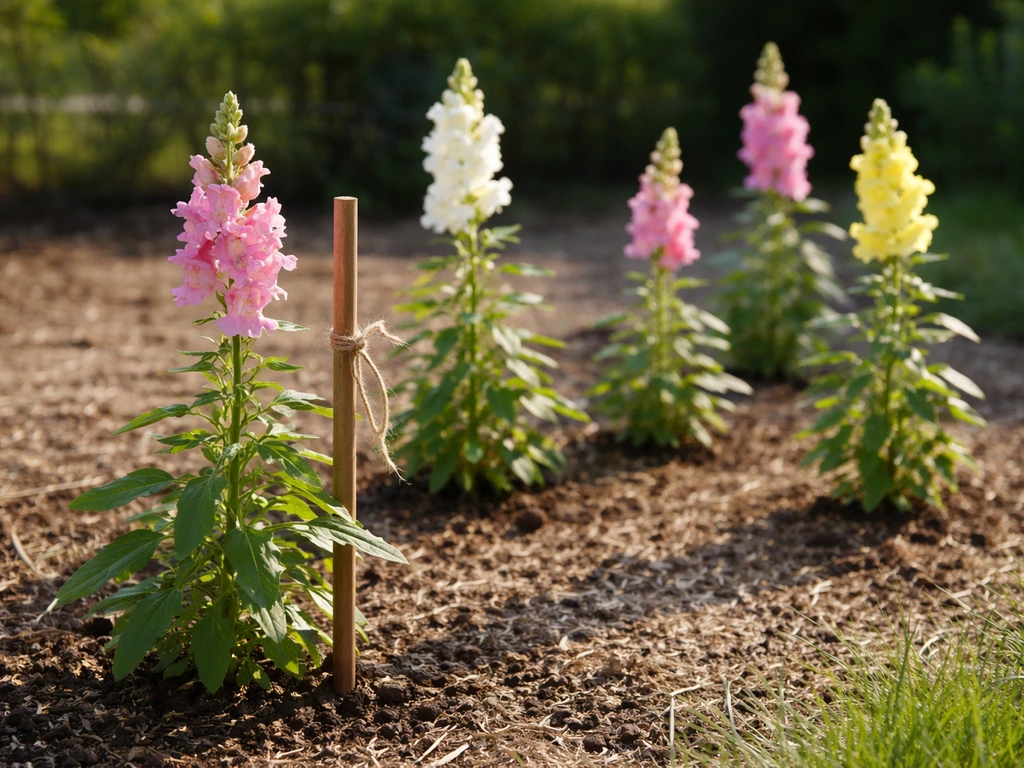
Tall snapdragons need full sun: a minimum of 6 hours of direct sunlight per day, and 8 hours is better. Less than that and stems will stretch sideways looking for light rather than growing straight up, and the plant will put out fewer and shorter flower spikes. South or west-facing beds are ideal.
That said, snapdragons struggle in intense summer heat. They're at their best in cool to warm weather (below about 80°F / 27°C) and will often stall, drop flowers, or bolt and decline in prolonged heat. This is exactly why timing matters so much: get them planted early enough that they do most of their growing in spring, before the heat of summer hits.
Spacing is more important than many home gardeners realize. For tall varieties where you want maximum stem length and bloom quality, University of Florida IFAS recommends a 4-inch diameter planting area per plant. In practical terms, that means about 6 inches between plants in a cutting garden grid. Dwarf and shorter types can handle 6 to 12 inches, but for your tall cut-flower types, tighter spacing (around 6 inches) actually encourages the plants to grow upward rather than spreading out, which is exactly what you want for height. Just make sure air can still move between plants: good airflow reduces disease pressure significantly.
If your garden is exposed to wind, tall snapdragons will need some support. A single layer of netting strung at about 12 inches off the ground and another at 24 inches works well in a cutting garden row. Bamboo stakes with soft twine also work for individual plants. Unsupported tall stems in a windy spot will kink or snap before they reach full height.
Training, thinning, and removing spent blooms
Whether or not to pinch your tall snapdragons depends on what you want. If you want a single, very tall central spike per plant (classic for cut flowers), do not pinch. Leave the plant to grow its main stem straight up. This is the single-stem approach, and it gives you the longest individual stems.
If you want more stems per plant and a bushier habit, pinch young plants back by about half when they have 4 to 6 leaves or are around 3 to 4 inches tall. This pushes the plant to branch and produce multiple flowering stems. You trade one very tall stem for several slightly shorter but still useful stems. For a home cutting garden, pinching often makes more practical sense because you get more flowers over a longer period.
Thinning is different from pinching and it's about removing weaker seedlings so the strongest ones have room to grow. If you sowed seeds in a flat and transplanted without thinning, check your transplants and remove any that are clearly smaller or weaker than their neighbors. Crowded plants compete for light and nutrients and rarely reach full height.
Deadheading, meaning removing spent flower spikes before they go to seed, is essential if you want continued stem production. Once a snapdragon sets seed it starts to wind down. Cut spent spikes back to a healthy leaf node and the plant will push new side shoots with fresh flowers. Keep doing this throughout the season and you'll significantly extend the productive life of each plant. Illinois Extension specifically recommends removing spent flower spikes to promote rebloom and prevent the plant from dying back prematurely.
Troubleshooting stunted or short snapdragons
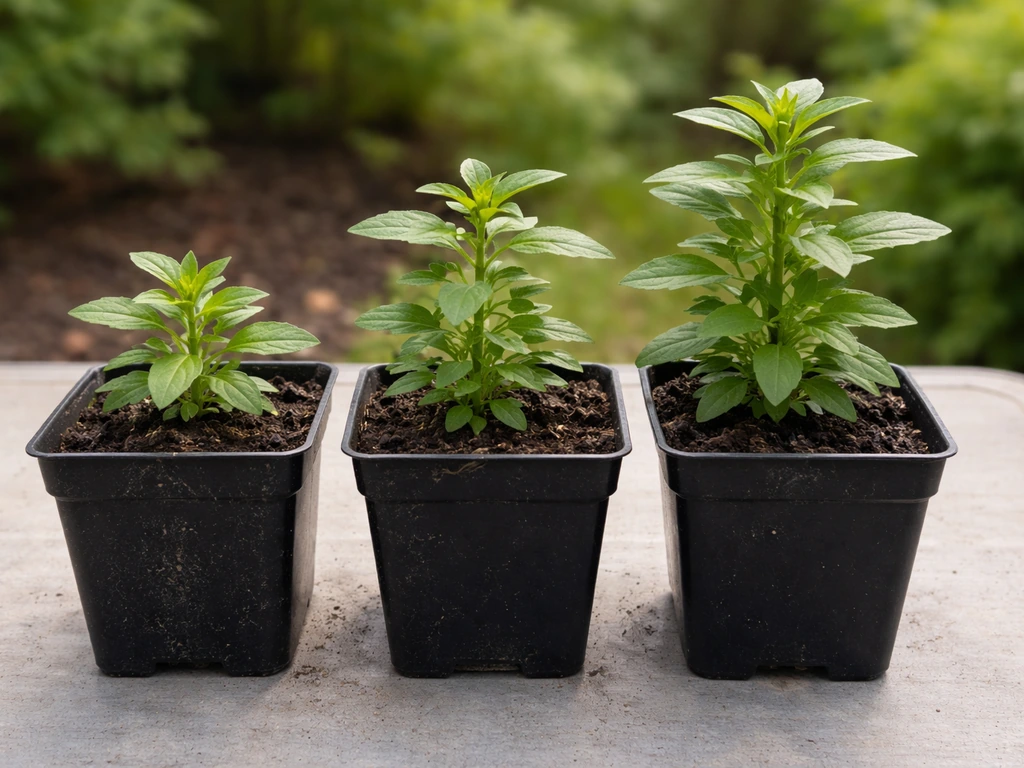
If your snapdragons aren't reaching the height you expected, one of a handful of things is almost certainly the cause. Here's how to identify and fix the most common problems.
| Problem | Likely Cause | Fix |
|---|---|---|
| Plants stay short no matter what | Wrong variety (dwarf or intermediate type) | Check the seed packet. Switch to a named tall/cut-flower series like Rocket for next season. |
| Leggy, weak stems that flop over | Insufficient light during seedling stage | Move seedlings under grow lights at 2–3 inches distance for 14–16 hours/day immediately. |
| Early flowering before plants reach height | Too warm too early, or planted too late in spring | Keep seedlings at cooler night temps (56–64°F). Plant out earlier in spring next season. |
| Slow growth, pale or yellow leaves | Poor soil fertility or pH out of range | Test soil pH. Aim for 5.5–7.0. Feed with a balanced fertilizer every 2–3 weeks. |
| Stunted growth with wilting | Overwatering or poor drainage | Check root health. Improve drainage with compost or raised beds. Let soil dry slightly between waterings. |
| Compact plants that plateau early | Overcrowding | Thin to 6 inches apart. Remove the weakest plants now and give survivors more space. |
| Sudden growth stall in summer | Heat stress (temps above 80°F/27°C) | Shade cloth during peak afternoon heat can help, but timing is really the better fix for next year. |
| Poor germination or no sprouting | Seeds buried too deep or lack of light | Resow on the surface with at most a dust of vermiculite. Do not cover with soil. |
| Transplant shock and slow recovery | Roots disturbed, or plants not hardened off | Harden seedlings off over 7–10 days before planting. Water in well with transplant. Reduce transplant trauma by handling root balls carefully. |
The most fixable problem is usually the variety choice combined with temperature management. If you've been growing snapdragons for a season or two and feeling disappointed with the height, it's almost certainly one of those two things. Get a tall-type seed packet (Rocket Mix is a reliable starting point), start it indoors under lights at the right time, keep seedlings cool at night, and you'll likely be genuinely surprised at the difference next spring.
If you're also figuring out the basics of snapdragon care more broadly, such as what conditions they prefer overall or the best time of year to get them in the ground, the related guides on what snapdragons need to grow and when to grow snapdragons cover those angles in more depth.
Camellias also benefit from having the right conditions, so if you want to pair them with your garden plan, this guide on camellias how to grow can help you get started. But for height specifically, the path is clear: right variety, cool seedling temperatures, strong early light, well-drained soil, and consistent deadheading. Snowdrops also need cool conditions and the right planting setup, so follow a snowdrop-specific guide for best results how to grow snowdrops.
If you want a full step-by-step plan, see our guide on how do you grow snapdragons from seed to tall flower spikes deadheading. Follow those and you'll have tall, cutting-quality spikes you can actually be proud of. If you're wondering how to grow cowslips, the same basics of choosing the right conditions and giving plants reliable light and soil will help you get stronger blooms tall, cutting-quality spikes.
If you want detailed steps, follow the guidance on choosing tall varieties, keeping seedlings cool, and providing enough sun and spacing what do snapdragons need to grow.
FAQ
Can I still grow tall snapdragons if my spring nights are warm?
Yes, but pick tall varieties and treat warmth as the enemy. Start seeds indoors under grow lights, keep nighttime cool once seedlings emerge, and delay transplanting until nights are consistently cool. If you plant into warm soil or hot nights, tall types often behave like compact plants because they hurry into flowering before enough stem structure forms.
Will snapdragons still reach 30 to 36 inches if I start seeds late?
Cut-flower height targets assume plants have full-strength sun after transplant and that you manage light during the seedling phase. If you start seeds late (after the weather warms) you may get taller plants than you’d expect, but you are more likely to get shorter spikes or earlier bud set. The most reliable path is to follow the indoor start window and transplant while nights are still cool.
How do I know if I need to thin my snapdragon seedlings, and when?
Thin, but do it gently and early. If seedlings are overcrowded in a flat, remove the weakest ones as soon as you can clearly identify them (when you have a few true leaves). Don’t leave gaps between seedlings in an attempt to “let them stretch,” because low airflow and competition can cause stunting and disease, even if stems try to elongate.
What’s the best way to water tall snapdragons, and does watering method affect height?
Yes, and it can affect height and timing. Overhead watering keeps foliage wet, which increases botrytis risk in cool weather, and stress from disease pressure can reduce usable stem length. Water at the base and water deeply so the top inch can dry slightly between waterings.
Can I use extra fertilizer to push snapdragons taller?
You typically should not apply high-nitrogen fertilizer late in the season. Once buds begin, switching to a lower-nitrogen, higher-phosphorus blend helps support flowering, and avoiding heavy nitrogen reduces leafy, disease-prone growth. Also avoid “rescuing” weak plants with repeated heavy feedings, instead check pH and light first.
My snapdragons look yellowish. Could that stop them from getting tall, and what should I check first?
Make sure the soil pH stays roughly between 6.0 and 6.5. When pH rises above about 7.0, iron deficiency becomes more likely, and pale foliage with weak growth can prevent tall stems from forming. If your soil is alkaline, use a soil amendment plan (like sulfur or an acidifying fertilizer) before you expect major height.
Should I pinch tall snapdragons for maximum height or for more cut stems?
For a cutting-garden look, the single-stem approach usually wins. Do not pinch if you want one very tall central spike per plant. If you pinch, limit it to early stage plants and expect the tallest spike height to trade off for multiple stems that are shorter but still useful for bouquets.
How long will tall snapdragons keep blooming if I deadhead, and will heat end the show?
If you deadhead properly, snapdragons can keep producing side shoots, but they still have a seasonal limit and may slow when weather turns too hot. Continue removing spent spikes down to a healthy leaf node, and if heatwaves hit, prioritize airflow, consistent moisture, and avoiding extra nitrogen rather than expecting full rebound.
Why do my snapdragons grow tall-ish but not straight up?
Light stress after transplant can cause sideways growth and shorter spikes. For best form, ensure at least 6 hours of direct sun, ideally 8, and orient rows so plants receive consistent sun exposure. If plants are in part shade during late afternoon, stems may lean, which makes them look shorter even if genetics are correct.
If I start indoors, how do I prevent legginess so my plants can still grow tall?
Grow lights help, but they must be close enough and the schedule must be long enough. If the tops are getting less than about 14 to 16 hours of strong light, seedlings often become leggy, and that weakness usually carries into the ground even after you increase sun. Adjust fixture height so the plants stay compact, not stretched.
What are the top reasons my snapdragons never reach their expected height, even with good care?
If you see no height improvement across a season, the most common causes are the variety is not truly tall and/or early warmth pushed them into flowering too soon. The second tier of causes is too little light and crowded spacing. Before changing everything, confirm the seed packet category (tall or cut flower) and then correct seedling temperatures and grow-light exposure.
Next Article
When to Grow Snapdragons: Planting Dates by Region
Learn when to grow snapdragons by region, sow indoors or out, transplant timing, and expected bloom dates plus fixes.