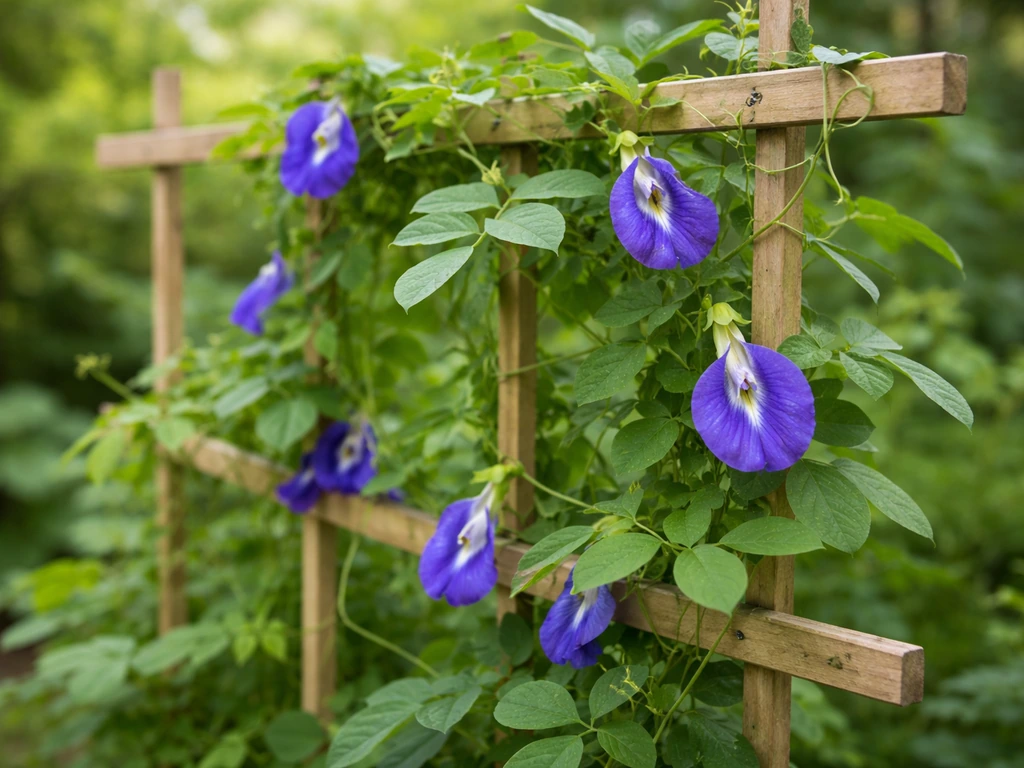
Butterfly plants are some of the most rewarding things you can grow from seed. Whether you are starting butterfly weed (Asclepias tuberosa) to feed monarch caterpillars, sowing butterfly pea (Clitoria ternatea) for its vivid blue blooms, or filling a border with milkweed species that support an entire pollinator ecosystem, the basic seed-to-flower process is well within a beginner's reach. The key is matching the right species to your climate, using the correct seed treatments before you ever touch a trowel, and knowing whether to sow outdoors in fall or nurse seedlings under lights indoors in late winter.
Butterfly plants how to grow: Step-by-step guide gardeners
Marcus Holloway
14 Jul 2026
What I mean by butterfly plants (and what this guide covers)
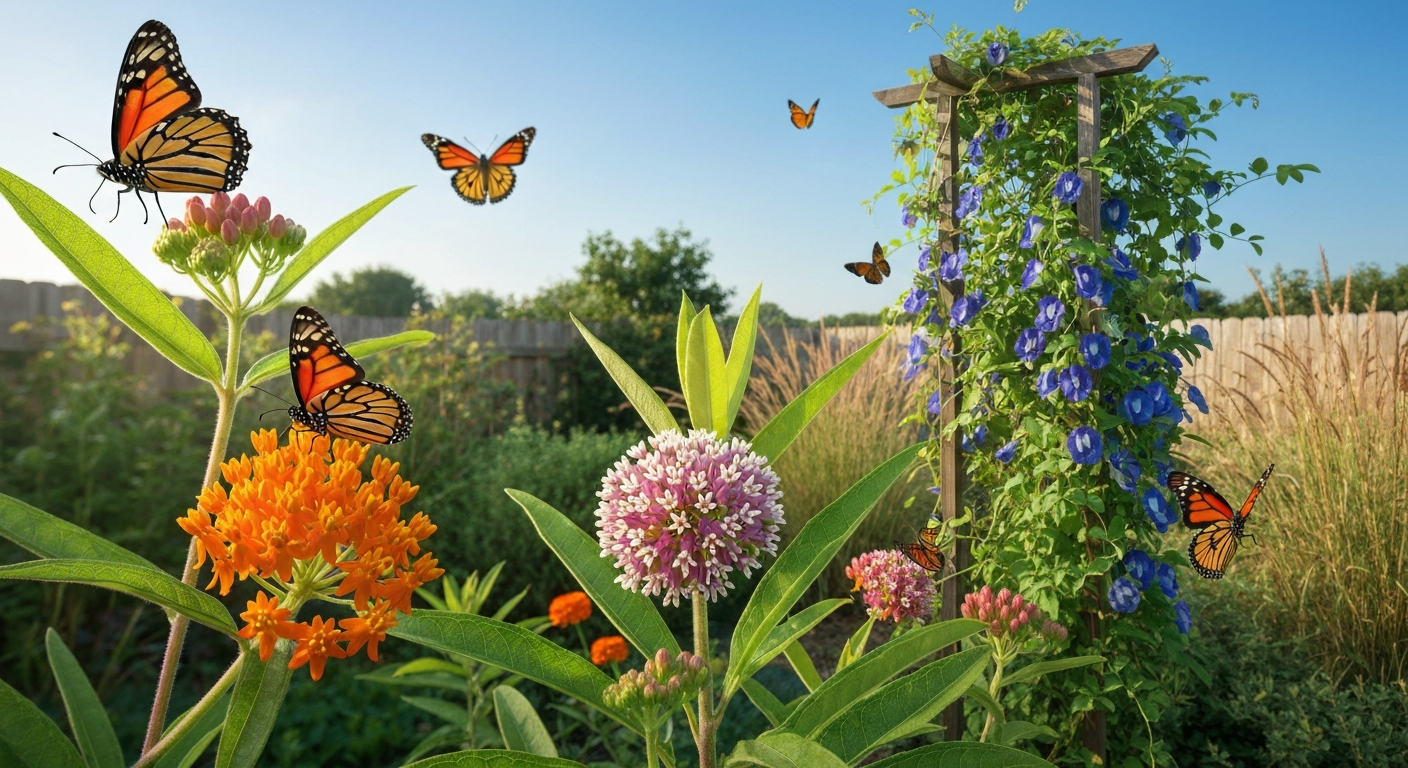
The phrase 'butterfly plants' covers a loose family of flowering plants that share two traits: they attract butterflies as pollinators, and at least one species in the group carries the common name 'butterfly plant' or 'butterfly something.' For this guide I am focusing on four groups that home gardeners search for most often: butterfly weed (Asclepias tuberosa), milkweeds grown specifically to support monarch butterflies, butterfly pea (Clitoria ternatea), and a handful of related garden species including white buttercup types sometimes grown alongside them. Each one has its own germination quirks, its own ideal climate, and its own reason to earn a spot in your garden.
I have organized this guide so you can jump straight to the species you are growing, but if you are undecided, read the choosing section first. It will save you from putting a frost-sensitive tropical vine in a zone-5 garden or expecting a deep-rooted native perennial to thrive in a shallow container.
Deciding what to grow: match your plant to your climate and goals
Before you buy a single seed packet, ask yourself three questions: What do I want the plant to do? How cold does my garden get? And how much maintenance am I genuinely willing to do? Pollinator gardeners focused on monarch conservation will want native milkweed species for their region. Gardeners after a showy cut flower or an edible blue dye will be happiest with butterfly pea. Those who want a tough, drought-tolerant perennial that requires almost no care once established should look at butterfly weed. And gardeners with cooler climates who still want that butterfly-garden look may gravitate toward white buttercup or other cold-tolerant nectar plants as companion plantings.
Climate is the single biggest filter. Butterfly pea is frost-sensitive and performs best as a perennial only in USDA zones 9 to 11; everywhere else, grow it as an annual. Native milkweeds including Asclepias tuberosa and Asclepias syriaca are cold-hardy perennials that survive winters in zones 3 to 9 depending on species. If you are in a mid-Atlantic or Midwest garden, native milkweed is almost foolproof given the right seed treatment. If you are in Florida or Southern California, tropical milkweed (Asclepias curassavica) grows easily but comes with an important conservation caveat I cover in the pest section below.
Key species at a glance
Here is a quick-reference look at the main species covered in this guide, including hardiness, height, and what each one is best known for in the garden.
| Plant | Type | USDA Zones | Height | Best for | Difficulty |
|---|---|---|---|---|---|
| Butterfly weed (Asclepias tuberosa) | Native perennial | 3–9 | 1–2 ft | Monarch habitat, orange blooms, drought tolerance | Moderate (slow to establish) |
| Common milkweed (Asclepias syriaca) | Native perennial | 3–9 | 3–5 ft | Monarch larvae, large pollinator habitat patches | Easy once established |
| Swamp milkweed (Asclepias incarnata) | Native perennial | 3–8 | 3–4 ft | Moist sites, cut flowers, monarchs | Easy |
| Tropical milkweed (Asclepias curassavica) | Tender perennial/annual | 9–11 perennial | 2–3 ft | Fast bloom, container growing, warm climates | Easy (with caveats) |
| Butterfly pea (Clitoria ternatea) | Tropical vine/annual | 9–11 perennial | 6–15 ft | Vivid blue flowers, edible dye, trellis cover | Easy in warm climates, moderate elsewhere |
| White buttercup / related species | Annual or perennial (varies) | Varies | Varies | Companion planting, cottage garden nectar source | Generally easy |
Butterfly weed (Asclepias tuberosa)
Butterfly weed is the star of the native milkweed world for most home gardeners. It produces brilliant orange flower clusters from midsummer into fall, tolerates dry and poor soils better than almost any other milkweed, and is a designated host plant for monarch caterpillars. The tradeoff is patience: it is genuinely slow to establish from seed, often taking two full growing seasons before you see flowers. Do not panic if your first-year plants stay small. They are spending their energy on that deep taproot, which will support them for decades. This species is worth every bit of the wait.
Milkweed for monarchs (Asclepias syriaca, A. incarnata, and others)
Common milkweed and swamp milkweed are the workhorses of monarch habitat gardens. Common milkweed spreads by underground rhizomes, so give it space or plant it where spreading is welcome. Swamp milkweed is well-behaved, clump-forming, and thrives in average to moist soil, making it the easier choice for mixed borders. Both produce nectar-rich flowers that attract dozens of butterfly species beyond monarchs, and both support monarch caterpillars through their entire larval cycle. If growing milkweed for monarchs is your primary goal, building a dedicated patch of two or three native species is far more effective than a single specimen plant.
Butterfly pea (Clitoria ternatea)
Butterfly pea is a fast-growing twining vine from tropical Asia that has become a global sensation for its electric blue flowers and the natural pH-sensitive dye extracted from its petals. For detailed tips on butterfly pea flower plant how to grow, see my practical guide to butterfly pea care and how to grow. (destination: 514b63ec-1e50-4bbf-9a73-b26f12c9d901). For step-by-step planting, care, and harvest instructions for this vine, see how to grow butterfly pea flower. The flowers turn from blue to purple when an acid like lemon juice is added, making them wildly popular for butterfly-garden cocktails and teas. It climbs aggressively, reaching 6 to 15 feet in a single season when given a trellis, fence, or wire netting to grab onto. In zones 9 to 11 it returns from roots each year. Everywhere else, treat it as a long-season annual started indoors 6 to 8 weeks before your last frost date.
White buttercup and related companion species
White buttercup and similar small-flowered nectar plants work brilliantly as companions in a butterfly garden because they fill the gap between bigger showpiece plants. They are typically easy to direct-sow and require minimal intervention once established. If you are building out a butterfly-themed planting, mixing in a few compact, long-blooming nectar annuals alongside your milkweed and butterfly pea keeps the garden humming with activity from spring through frost. For step-by-step instructions on obtaining and growing white buttercup, see how to get white buttercup in Grow a Garden.
Seed to harvest: the full growing timeline
Understanding the full arc of a butterfly plant's season before you start helps you avoid the two most common beginner mistakes: sowing too late and expecting flowers too soon. Here is the broad workflow that applies across most species, with species-specific differences called out below.
- Obtain and inspect seed (check viability, stratification requirements, and expected germination percentage).
- Apply pre-treatment if needed: cold stratification for milkweeds, mechanical scarification and soaking for butterfly pea.
- Sow seeds at the right depth and temperature, either outdoors in fall or indoors under lights in late winter.
- Maintain consistent soil moisture through germination; expect first sprouts in 7 to 21 days for stratified milkweed seed at 65 to 80°F.
- Pot up or thin seedlings once they have two true leaves.
- Harden off indoor-started seedlings over 7 to 10 days before transplanting outdoors.
- Plant out after your last frost date; water consistently for the first four weeks.
- Maintain plants through the season: water, trellis butterfly pea, control aphids without systemic pesticides.
- Deadhead or leave seed heads, depending on whether you want to encourage more blooms or harvest seed.
- Collect and dry seed in paper bags or envelopes once pods mature and begin to split.
For butterfly weed specifically, that timeline stretches across two seasons. Year one is root development; year two is when you typically see flowers. Every other species in this guide can bloom in its first season from seed given proper timing. For step-by-step guidance on planting, caring for, and encouraging blooms, see how to grow butterfly weed.
Planting calendar and regional timing
When you sow matters as much as how you sow. The timing varies significantly by species and by where you live.
| Species | Fall direct-sow window | Indoor seed start | Transplant / direct-sow in spring | First bloom expected |
|---|---|---|---|---|
| Asclepias tuberosa (butterfly weed) | Sep–Nov (after first frost) | 12–14 weeks before last frost (stratify 4 weeks first) | After last frost; soil 65°F+ | Year 2 typically |
| Asclepias syriaca (common milkweed) | Sep–Nov | 10–12 weeks before last frost (stratify 4–6 weeks) | After last frost | Year 1 or 2 |
| Asclepias incarnata (swamp milkweed) | Sep–Nov | 8–10 weeks before last frost (stratify 4 weeks) | After last frost | Year 1 or 2 |
| Clitoria ternatea (butterfly pea) | Not recommended in cold climates | 6–8 weeks before last frost (scarify + soak 24 h first) | After all frost risk; soil 70°F+ | 60–90 days from transplant |
| White buttercup / companion annuals | Species-dependent | 4–6 weeks before last frost | At or just after last frost | 60–90 days from sowing |
In the Upper Midwest and Northeast (zones 4 to 6), fall direct-sowing native milkweeds is the method I recommend most strongly for beginners. You scatter the seed in October or November, the winter does the stratification work for you, and seedlings emerge in spring as naturally as if you had never touched them. In the South and Southwest (zones 7 to 10), spring is the primary sowing window, with soil temperatures your main guide. For butterfly pea in zones below 9, starting indoors is non-negotiable if you want a full season of blooms; the plant simply needs the head start.
Succession planting is less relevant for perennial milkweeds, but it pays off with butterfly pea in warmer climates. Sowing a second round of butterfly pea seeds two to three weeks after the first gives you a longer harvest window for flowers and a backup if your first sowing is slow to establish.
Seed treatments and germination tricks
This is the section most gardeners skip, which is exactly why so many butterfly plant seeds end up failing. Getting the pre-treatment right is genuinely the difference between 20% germination and 80% germination.
Cold stratification for milkweeds
Most milkweed species, including butterfly weed, require a period of cold, moist conditions to break dormancy. The method that works reliably is cold, moist stratification in your refrigerator at around 40 to 41°F (4 to 5°C). Moisten a paper towel, wring it out so it is damp but not dripping, lay your seeds on one half, fold the other half over, slide it into a labeled zip-lock bag, and refrigerate it. The recommended duration is 4 to 6 weeks for most species, though some seed lots benefit from up to 9 weeks. Check every few days for signs of mold or premature sprouting; if seeds start to sprout in the fridge, it is time to sow them immediately regardless of how many days have passed.
Once stratified, your milkweed seed wants warmth to germinate. Target a substrate temperature of 65 to 80°F (18 to 27°C), with 70 to 75°F being the sweet spot. A seedling heat mat under your trays will make a real difference here, especially if your indoor space is cool in late winter.
Butterfly weed (A. tuberosa) is slightly different from other milkweeds in that some seed lots will germinate without stratification, but germination rate and uniformity are markedly better with a 4-week cold stratification followed by bottom heat. I always stratify it. The extra four weeks in the refrigerator is a small investment for a plant that you are hoping to have for 20 or 30 years.
Scarification for milkweed (optional but useful)
Mechanical scarification, which means lightly nicking or abrading the seed coat with a nail file, fine sandpaper, or an X-Acto knife, can give germination an extra boost for milkweed species. Research shows stratification typically produces a larger proportional improvement than scarification alone, so if you can only do one thing, cold-moist stratify. But combining both methods gives you the highest germination rates. Nick the seed coat gently (just enough to scratch the surface, not cut through to the embryo), then proceed with your stratification routine.
Scarification and soaking for butterfly pea
Butterfly pea seed has a hard coat that dramatically slows water uptake. The best pre-treatment is a nick-and-soak: use a nail file or fine sandpaper to lightly abrade the seed coat on the side opposite the hilum (the small scar where the seed was attached), then soak seeds in room-temperature water for 24 hours before sowing. Studies report germination rates around 81% using this combined method at approximately 70°F substrate temperature, compared to much lower rates with unscarified seed. Do not skip this step; it is quick to do and the difference in germination speed is visible within days.
After the soak, plant immediately. Sow butterfly pea seeds about 1 inch (2.5 cm) deep in warm, moist starting mix. At substrate temperatures between 70 and 80°F, you should see the first sprouts in 5 to 10 days with properly treated seed.
Expected germination timelines
- Stratified milkweed seed: first germination typically at 7 to 21 days at 65–80°F.
- Unstratified milkweed seed: germination is erratic, often 30+ days, with much lower overall percent.
- Butterfly pea (scarified + soaked): 5 to 10 days at 70–80°F substrate.
- Butterfly pea (untreated): 14 to 30+ days, lower germination percent.
- White buttercup and common annual companions: typically 7 to 14 days at 65–70°F, no treatment needed.
Direct sowing vs. starting seeds indoors
Both methods work for butterfly plants, but they suit different species and different gardener personalities. Here is an honest breakdown.
| Method | Best for | Pros | Cons |
|---|---|---|---|
| Fall direct sow outdoors | Native milkweeds in zones 4–8 | No stratification labor; nature handles freeze-thaw; no transplant shock; lower cost | Slower to see results; weeds can outcompete seedlings; hard to know what emerged |
| Spring direct sow outdoors | Milkweeds after artificial stratification; companion annuals | Simple; no transplanting; good for deep-rooted species | Requires constant moisture; weed management critical in first weeks |
| Indoor seed starting under lights | Butterfly pea in zones below 9; butterfly weed for faster establishment; all species in short-season climates | Controlled environment; faster visible growth; start earlier in the season | Transplant shock risk (especially for taprooted milkweeds); requires lights, heat mat, and space |
How to fall direct-sow milkweed outdoors (step by step)
- Choose your site in late September or October: full sun (6+ hours), well-drained soil for butterfly weed; average to moist soil for swamp milkweed.
- Clear weeds and loosen the top inch of soil; you are not trying to till deeply, just create a contact surface.
- Broadcast seed over the area or sow in shallow furrows no deeper than 1/4 inch. For broadcast seed, press or tamp the surface firmly so seeds make good contact with soil; a board or flat-soled shoe works perfectly.
- Mark the area clearly so you do not accidentally weed out seedlings in spring.
- Do not water in unless the fall is unusually dry; winter precipitation will handle moisture.
- In spring, watch for small seedlings with narrow oval leaves. Milkweed seedlings are easy to miss in the first couple of weeks; give them a chance before writing off the patch.
How to start butterfly plant seeds indoors (step by step)
- Time your start date: 6 to 8 weeks before last frost for butterfly pea, 8 to 14 weeks for milkweeds (accounting for 4-week stratification period).
- Apply your pre-treatment: cold-moist stratify milkweed seed for 4 to 6 weeks in the fridge; nick and soak butterfly pea seed for 24 hours.
- Fill containers with a sterile, well-draining seed-starting mix. For milkweeds: use the deepest cells available (3 to 4 inches minimum) or 4-inch biodegradable pots to accommodate the taproot. Shallow plug trays are the number one milkweed-starting mistake.
- Sow milkweed seed at 1/8 to 1/4 inch depth; sow butterfly pea seed at 1 inch depth. Cover lightly and press gently to ensure seed contact.
- Place trays on a seedling heat mat; target 70 to 75°F substrate temperature.
- Cover trays with a clear dome or plastic wrap to hold humidity until germination. Remove the cover once the first sprouts appear.
- Move seedlings under grow lights immediately after germination; keep lights 2 to 4 inches above the seedling tops and run for 14 to 16 hours per day.
- Water from the bottom when possible to prevent damping-off; keep mix evenly moist but never waterlogged.
- Thin to one seedling per cell once two true leaves appear.
- Begin liquid fertilization at quarter-strength once seedlings have their second set of true leaves.
Transplanting seedlings safely
Hardening off is the step most beginners rush, and it shows. Seedlings that go directly from the warmth of your house to the full exposure of an outdoor garden often stall, turn pale, or wilt dramatically. The process is simple but it takes 7 to 10 days of patience.
Hardening off: the 10-day process
- Days 1 to 3: set seedlings outside in a sheltered spot (dappled shade, out of wind) for 1 to 2 hours in the morning, then bring them back indoors.
- Days 4 to 6: increase outdoor time to 4 to 6 hours; introduce some direct sun toward the end of this phase.
- Days 7 to 9: leave seedlings out for most of the day, including several hours of full sun; bring them in only if temperatures drop below 50°F (45°F for butterfly pea, which is more cold-sensitive).
- Day 10: if nights are consistently above 50°F and all frost risk has passed, seedlings are ready to transplant.
Planting out: spacing and first-month care
For milkweeds, the biggest transplanting risk is disturbing the taproot. Biodegradable pots can go straight into the ground, which is exactly why I recommend them. If you used plastic cells, pop the root ball out gently, disturb it as little as possible, and plant at the same depth it was growing in the cell. Water in well and provide shade cloth for the first 3 to 5 days if temperatures are hot and sunny.
Spacing for butterfly weed and most milkweed species: 18 to 24 inches apart in beds, or 12 inches if you are creating a dense pollinator patch. Swamp milkweed spreads modestly, so give it 18 to 24 inches. Common milkweed spreads by rhizomes and will fill in on its own; plant it 2 feet apart and let it naturalize.
For butterfly pea: plant 6 to 12 inches apart (or 8 to 12 inches in rows spaced 20 to 30 cm apart) at the base of your chosen support. UF/IFAS recommends planting butterfly pea 6–12 inches apart at the base of a support and providing a sturdy trellis to accommodate vines that can reach 6 to 15 feet (see Butterfly pea, UF/IFAS Gardening Solutions) Butterfly pea — UF/IFAS Gardening Solutions. Set your trellis, fence, or wire netting before you plant so you are not disturbing roots afterward. Begin training vines onto the support within the first two weeks; they twine naturally but appreciate a gentle nudge in the right direction. Tie loosely with soft twine if needed. Prune the growing tips lightly a few weeks after transplanting to encourage branching and heavier flowering.
First-month watering and care
The first four weeks after transplanting are when your butterfly plants are most vulnerable. Water deeply two to three times per week in the absence of rain, targeting the root zone rather than the foliage. Milkweeds are drought-tolerant once established but need consistent moisture while their roots are settling. Butterfly pea is thirstier and benefits from mulching around the base immediately after planting to hold moisture and moderate soil temperature. Avoid fertilizing milkweeds heavily; they evolved in lean soils and excess nitrogen pushes leafy growth at the expense of flowers.
Growing conditions: soil, sun, and water by species
| Species | Sun | Soil | Water needs | Special notes |
|---|---|---|---|---|
| Butterfly weed (A. tuberosa) | Full sun (6+ hours) | Well-drained, lean, even sandy or gravelly | Low once established; drought-tolerant | Never waterlog; poor drainage kills this plant |
| Common milkweed (A. syriaca) | Full sun to part sun | Average, tolerates poor soils | Moderate; tolerates dry spells | Spreads by rhizomes; give it room or contain it |
| Swamp milkweed (A. incarnata) | Full sun to part shade | Average to consistently moist | Moderate to high | Good for rain gardens and pond edges |
| Butterfly pea (C. ternatea) | Full sun | Well-drained, average to fertile | Moderate; do not let roots dry out completely | Needs trellis; frost-sensitive; mulch in warm climates |
| White buttercup / companions | Full sun to part shade | Average garden soil | Moderate | Vary by species; most undemanding |
Maintenance through the season
Deadheading and pruning
Deadheading butterfly pea extends bloom production significantly; snip spent flowers every few days once the plant hits its stride. For milkweeds, deadheading is a judgment call. If your goal is seed production for next year's garden (or to share with fellow gardeners), leave the seed pods to mature. If you want to encourage a second flush of nectar flowers, remove spent flower clusters before pods form. In late fall, leave some milkweed stems standing through winter; hollow stems provide overwintering habitat for native solitary bees. Cut them back to about 6 inches in early spring before new growth emerges.
For butterfly pea vines, prune lightly every 3 to 4 weeks by pinching the growing tips of the longest stems. This forces the plant to branch and produce more flowering laterals rather than racing toward the top of the trellis with a single vine. In zones where it returns as a perennial, cut it back hard (to 6 to 12 inches) in late winter before the new season's growth begins.
A note on tropical milkweed and monarch conservation
Tropical milkweed (Asclepias curassavica) is easy to grow and available everywhere, but if you are in a warm climate where it does not die back in winter, be aware of its risks to monarchs. When tropical milkweed remains green year-round, it encourages monarchs to skip migration and breed continuously in one place. This leads to a build-up of OE (Ophryocystis elektroscirrha), a debilitating protozoan parasite. The solution is straightforward: cut tropical milkweed back hard in autumn to force dormancy, or better yet, replace it over time with locally native milkweed species that naturally die back in winter. Growing milkweed for monarchs is covered in more detail on this site. See Tropical milkweed, Monarch Joint Venture for guidance on cutting back or avoiding year‑round Asclepias curassavica to reduce OE buildup and encourage normal monarch migration blank" rel="noopener noreferrer">Tropical milkweed — Monarch Joint Venture.
Pest and disease management: keeping it butterfly-safe
The golden rule of butterfly plant pest management is this: never use systemic insecticides, including neonicotinoids, on any plant that butterflies or their caterpillars use. Systemic residues move into pollen and nectar and can kill or harm pollinators even long after you applied the product. Check plant tags before you buy at a garden center; many pre-grown milkweed and flowering plants are treated before sale.
Oleander aphids on milkweed
Oleander aphids (Aphis nerii) are bright yellow-orange insects that colonize milkweed stems in clusters. They are alarming to look at but rarely kill a healthy plant. Your best options are manual removal (wear gloves and squash them), a firm blast of water from the hose to knock them off, or a targeted spot spray of insecticidal soap or horticultural oil on infested stems. Always check stems and undersides of leaves for monarch eggs or small caterpillars before applying anything; if caterpillars are present, hand-pick aphids only. Test any soap or oil spray on a small area first to check for phytotoxicity in hot weather.
Damping-off in seedlings
Damping-off is a fungal problem that topples seedlings at the soil line, and it is almost always caused by overwatering or poor air circulation. Prevent it by watering from the bottom (fill your tray rather than overhead-watering), using sterile seed-starting mix, not overcrowding seedlings, and running a small fan near your seed-starting setup for 30 to 60 minutes a day. If you spot it happening, remove affected seedlings immediately, reduce watering, and increase air movement around the remaining plants.
Harvesting flowers and saving seed
Butterfly pea flowers are ready to harvest as cut flowers or for drying as soon as they are fully open. For edible use (teas and natural dyes), harvest the flowers in the morning after the dew has dried. Lay them on a screen or paper towel in a single layer in a warm, ventilated spot out of direct sunlight, and they will dry completely in 3 to 5 days. Store dried flowers in an airtight jar away from light.
For milkweed seed saving, timing is everything. Watch the seed pods as they fatten through late summer. The pods are ready to harvest when they have turned tan or light brown and are just beginning to split at the seam. Do not wait until they burst open; the fluffy white floss will carry seeds everywhere before you can collect them. Slip a rubber band around each pod before it splits fully, or collect pods in paper bags. Separate seeds from the floss by pulling the floss away and dropping seeds into a bowl. Store milkweed seeds in a labeled paper envelope (not plastic, which traps moisture) in a cool, dry place. They remain viable for 2 to 3 years under good storage conditions.
Quick-reference checklist for butterfly plant success
- Match species to your USDA zone before buying seed; do not grow frost-tender butterfly pea as a perennial where temps drop below 25°F.
- Cold-moist stratify all milkweed seed for 4 to 6 weeks before indoor sowing or rely on fall direct-sowing for natural stratification.
- Nick and soak butterfly pea seed for 24 hours before planting for the fastest, highest germination.
- Use deep cells or biodegradable pots for milkweed seedlings to protect the taproot.
- Sow milkweed seed no deeper than 1/4 inch; tamp the soil surface firmly for good seed contact.
- Target 70 to 75°F substrate temperature for germination; use a heat mat if your space is cool.
- Never use systemic insecticides on any butterfly plant or its companions.
- Harden off indoor-started seedlings for 7 to 10 full days before transplanting outdoors.
- Erect a trellis for butterfly pea before you plant to avoid root disturbance.
- Cut tropical milkweed back in autumn if you are in a warm climate where it does not naturally die back.
- Harvest milkweed seed pods just before they split; store in paper envelopes, not plastic.
FAQ
What are the best butterfly-attracting plant choices for home gardeners and how do I pick for my purpose?
Choose by climate and purpose: For monarch conservation pick local native milkweeds (Asclepias spp.); butterfly weed (A. tuberosa) is drought-tolerant and showy; avoid year-round tropical milkweed (A. curassavica) in temperate areas unless you will cut it back seasonally. For ornamental/edible blooms choose butterfly pea (Clitoria ternatea) — great for trellises and edible flowers. Include a mix of nectar plants (coneflowers, asters, salvias) and host plants (milkweeds) to supply both adult nectar and caterpillar food. Match species to your USDA hardiness zone: milkweeds for temperate zones; butterfly pea for warm/frost-free or as an annual started indoors in cooler zones.
When should I sow seeds (direct-sow vs. start indoors)?
Fall direct-sow milkweed in temperate climates when possible — winter cold naturally stratifies seeds and settles them into soil. If fall sowing is not possible, cold-moist stratify milkweed seed in the refrigerator then sow in spring after last frost. Start butterfly pea indoors 6–8 weeks before last frost in cool climates (or direct-sow when soil consistently >70°F/21°C). For butterfly weed (A. tuberosa) start seeds 8–10 weeks before last frost or fall sow; stratification improves uniformity.
How do I cold-moist stratify milkweed seeds and how long should I do it?
Place seeds in a moist (not wet) medium: mix seed with damp sterilized sand, vermiculite or paper towel in a sealed bag. Refrigerate at ~40–41°F (4–5°C). Common recommended duration is 4–6 weeks; some species or seed lots benefit from 1–9 weeks. Avoid standing water to prevent rot; check periodically for mold and discard obviously rotten seeds.
Do milkweed seeds need scarification?
Mechanical scarification (abrasion or nicking) can help some milkweed seed lots, but for most species cold‑moist stratification provides a larger benefit. Scarification is more useful for very hard-coated seed; if you scarify, be gentle (light sandpaper or a small nick) — avoid damaging the embryo. Some growers fully remove the seed coat for near‑100% germination, but that requires care.
What soil, light, watering and planting depths should I use for milkweeds and butterfly pea?
Milkweeds: plant seed on the surface or shallowly cover (1/8–1/4 inch; max ~1/2 in); keep seedbed continuously moist until germination. Most Asclepias prefer full sun and well-drained soil; many tolerate poor soils. Butterfly pea: scarify then soak seeds 12–24 hours, sow 1–2 in (2.5–5 cm) deep in warm soil (~21–27°C). Butterfly pea is frost‑sensitive and prefers full sun and fertile, well-drained soil.
What substrate temperature and timing maximize milkweed germination?
After stratification aim for soil/substrate temperatures around 65–80°F (18–27°C), with ~70–75°F (21–24°C) practical for fastest germination. Stratified seed typically germinates within 7–21 days under those conditions; unstratified seed will be slower and less uniform.
Next Article
Butterfly Pea Flower Plant How to Grow From Seed to Bloom
Seed to bloom guide for growing butterfly pea flower plants, with planting tips, care, trellis, troubleshooting, and har