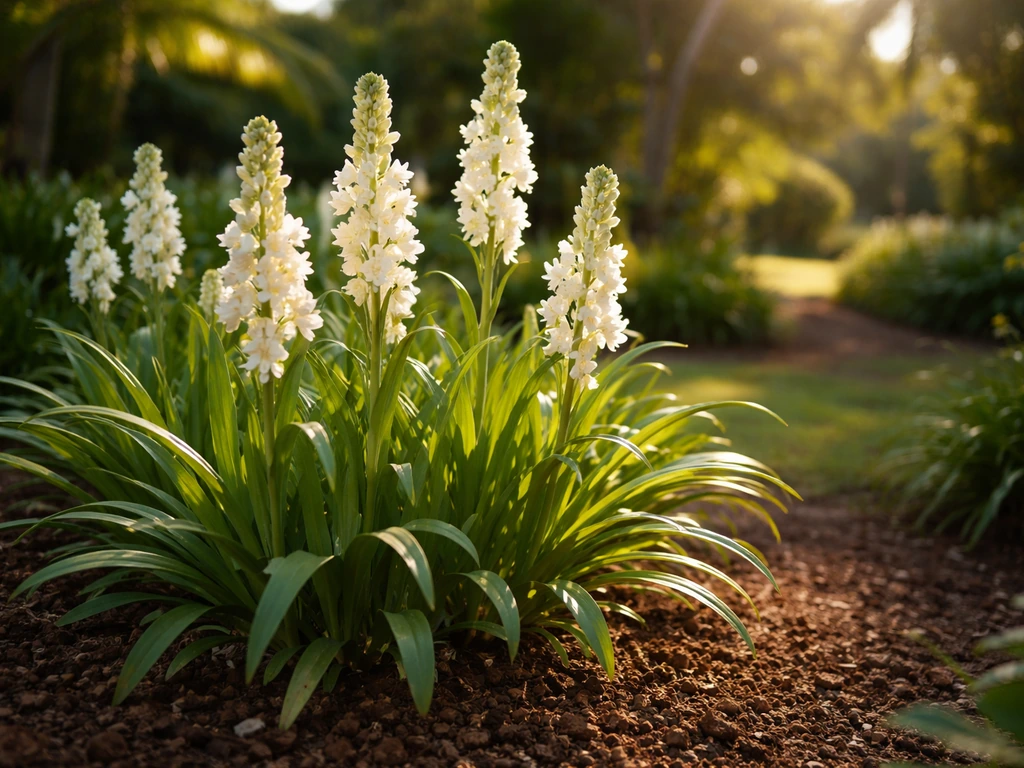
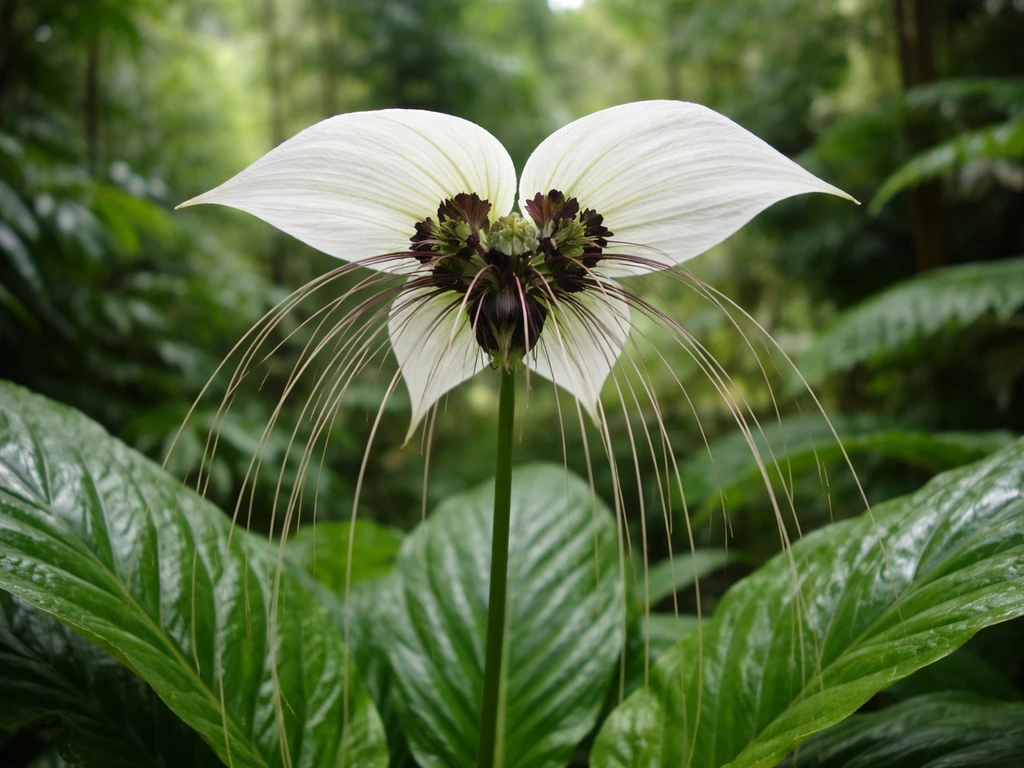
White bat flower (Tacca integrifolia) is one of the most dramatic flowering plants you can grow at home, but it demands patience and specific conditions. It takes anywhere from 1 to 9 months just to germinate, and plants grown from seed can take a couple of years before they bloom. If you go in knowing that, and give it warm temperatures, consistent moisture, high humidity, and low-to-medium indirect light, you will eventually be rewarded with those extraordinary white flowers trailing long black whisker-like bracts. Here is exactly how to do it.
How to Grow White Bat Flower From Seed to Blooms

Marcus Holloway
22 Jun 2026
First, make sure you have the right plant
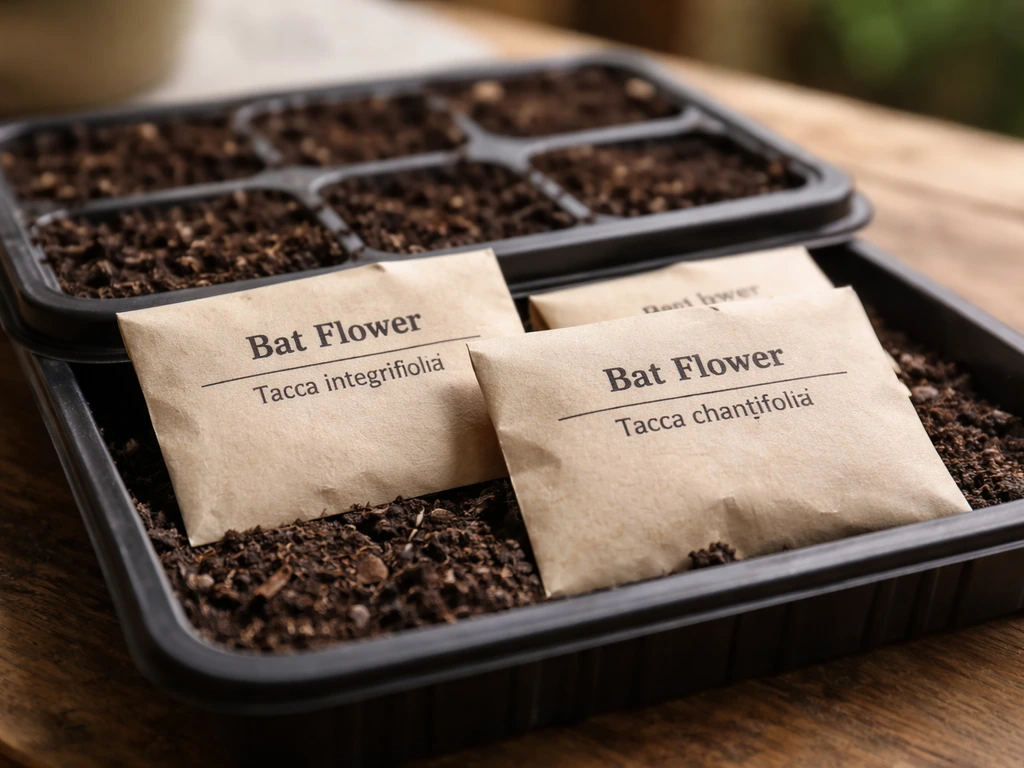
This matters more than you might think. The common name "bat flower" is shared by two completely different species: Tacca integrifolia, which is the white bat flower, and Tacca chantrieri, which is the black bat flower. Retailers, seed sellers, and even some nurseries regularly mix these up or sell them interchangeably under the umbrella name "bat lily" or "bat plant." Tacca integrifolia is also sometimes labeled "black lily" or "white batflower" (one word), which adds to the confusion.
Always check the botanical name before buying. You want Tacca integrifolia specifically. Some retailers sell a cultivar called Tacca integrifolia 'White Bat,' which is essentially the same plant under a market name. Reputable nurseries like Logee's sell it clearly labeled as White Bat Flower (Tacca integrifolia), and established seed retailers like Ferri Seeds or Smart Seeds Emporium list it with the full botanical name. If a listing only says "bat flower" or "bat lily" without a species name, ask the seller before you commit.
For seeds, look for freshly packed stock. Germination rates on old seeds drop significantly, and given how long this plant takes to sprout anyway, you do not want to stack the odds against yourself. For plants or starts, rhizome divisions from reputable nurseries are an equally valid route and will get you to bloom faster than seed. University of Florida IFAS confirms that rhizome or tuber division is a reliable propagation method for this species, so if you find a division available, grab it.
Germination basics: what to expect and how to set up for success
This is where most people give up, so let me be direct: Tacca integrifolia seeds are slow and unpredictable. Germination typically takes between 1 and 9 months, with most sources clustering around 2 to 6 months as a realistic window. There is no trick to speed this up significantly. You are managing conditions and waiting. Accept that now and you will be fine.
The seeds need warmth to germinate. Target daytime soil temperatures of 80 to 85°F and nighttime temps of 75 to 80°F. This is tropical rainforest territory, which means a standard cool room or windowsill in most homes will not cut it. A heat mat set under your seed tray is the most reliable way to hit these numbers consistently. A soil thermometer is worth the small investment here.
Light at germination is a debated point, but surface sowing in bright indirect light (not direct sun) is the commonly recommended approach. Cover your container with clear plastic film or a humidity dome to trap warmth and moisture, which mimics the humid understory environment these plants come from. Check every few days, keep the surface evenly moist (not soggy), and resist the urge to dig around checking for roots. The seeds may show zero visible activity for months before anything breaks the surface.
Troubleshooting when nothing sprouts
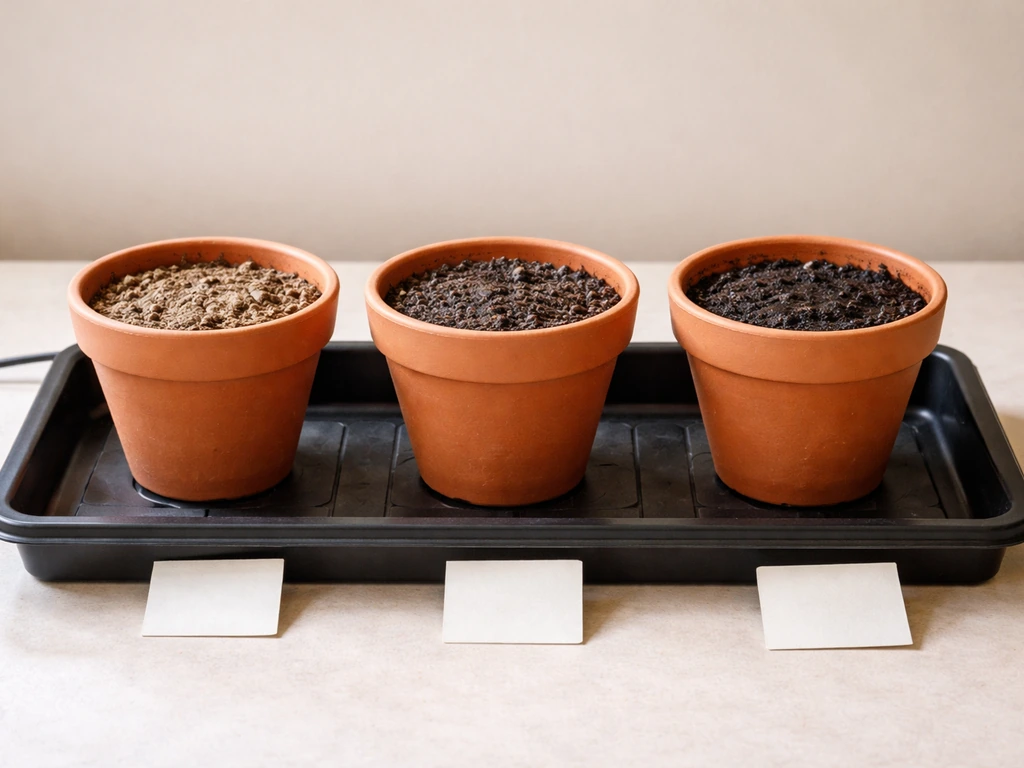
- Temperature too low: Check your soil temp with a thermometer. Ambient room temp is not the same as soil temp on a heat mat. Aim for 80–85°F at the soil surface.
- Dried-out mix: The germination medium should feel like a wrung-out sponge at all times. Drying out even once can kill seeds that were just beginning to activate.
- Old or poor-quality seeds: If nothing has happened after 6 months with correct conditions, the seeds may have been non-viable. Source fresh stock from a reputable retailer.
- Too deep: Seeds sown more than a few millimeters below the surface may struggle. Surface sowing with just a light dusting of mix on top is the right approach.
- No humidity: Without a dome or cover, moisture evaporates too quickly and temperatures fluctuate. Keep the cover on until sprouts appear.
How to sow: indoor setup step by step
White bat flower is almost always started indoors, regardless of where you live. It is a tropical perennial with a long germination window, and it needs controlled warmth that outdoor conditions in most climates simply cannot provide reliably. Unless you are in USDA zone 10 or above (think southern Florida or Hawaii), sow inside. In Hawaii, you can often treat it like a year-round warm-weather plant, focusing on humidity, shade, and consistent moisture southern Florida or Hawaii.
Start seeds in late winter to early spring, roughly late February through March, so young seedlings have a full warm season ahead of them. There is no advantage to starting in summer since the first year is mostly root and foliage establishment anyway.
- Fill a shallow seed tray or small pot with a mix of peat-free seed compost and perlite (about 2:1 ratio). You want something moisture-retentive but not waterlogged.
- Moisten the mix thoroughly before sowing. Water from below if possible by sitting the tray in a shallow dish of water until the surface feels damp, then let it drain.
- Place seeds on the surface of the mix. Do not bury them deeply. Press each seed gently so it makes contact with the mix, then cover with a very light dusting (1–2mm) of fine mix or vermiculite.
- Space seeds at least 2–3cm apart if sowing multiple seeds in one tray so you can separate seedlings without root damage later.
- Cover the tray with a clear humidity dome or stretch clear plastic film over the top. Place on a heat mat set to maintain 80–85°F soil temperature.
- Site the tray in bright, indirect light. A north or east-facing windowsill with no direct sun exposure works well, or under a grow light on a 14-hour cycle.
- Check every 2–3 days. Mist lightly if the surface is beginning to dry. Do not overwater. Do not remove the cover until seedlings are visibly growing.
- Wait. Mark the start date on a label and do not panic until at least 3 months have passed.
Transplanting and getting your plant established
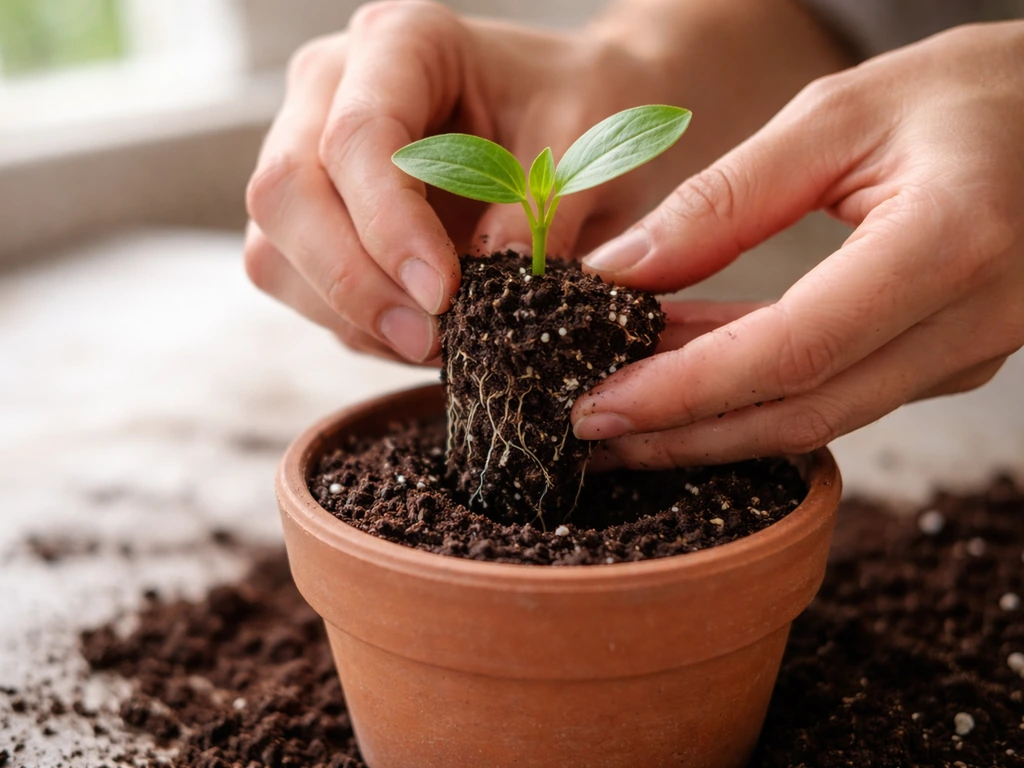
Once seedlings have two or three true leaves (the first leaf-like structure is not a true leaf), they are ready to move into their own pots. Handle them carefully at this stage since the roots are fragile. Use a dibber or pencil to lift each seedling from beneath rather than pulling from the stem.
Soil and pot choice
Tacca integrifolia wants rich, moist, and well-drained soil with an acidic pH in the range of 5.1 to 5.5. A mix of good-quality peat-free compost, orchid bark, and perlite (roughly 2:1:1) gives you the drainage and organic matter it needs. Avoid heavy, compacted potting soil. A pot with generous drainage holes is non-negotiable. For most home growers, containers are the best route because they let you control soil conditions precisely.
Sunlight and placement
This plant is a rainforest understory species. It does not want direct sun, ever. Bright, indirect light is ideal. In practice, this means a spot that receives good ambient daylight but no direct rays hitting the leaves. East-facing windows work well. South or west-facing windows need a sheer curtain or the plant set back a meter or so from the glass. Outdoors in summer, a shaded patio or the dappled shade under a tree is excellent for established plants in warm climates.
Spacing and watering after transplanting
Pot up into a container that is only slightly larger than the root ball, roughly 10–12cm to start, then pot on as the plant grows. Tacca does not like sitting in an oversized pot with too much wet compost around the roots. Water thoroughly after transplanting, then allow the top centimeter of soil to dry slightly before watering again. The key phrase here is "slightly dry at the surface" not "bone dry throughout." These plants are native to areas with consistent rainfall and they react quickly to underwatering with drooping leaves and yellowing.
Feeding and ongoing care
Established plants (past the seedling stage and growing actively) benefit from fertilizer during the growing season, roughly spring through early autumn. The RHS recommends a half-strength foliar feed in summer. Wellspring Gardens suggests a fertilizer ratio of approximately 1:3:2 (nitrogen:phosphorus:potassium), which favors root development and flowering over lush green growth. A diluted balanced liquid feed applied every 2 to 3 weeks during active growth is a practical approach for most home growers.
Stop feeding in autumn when growth slows, and do not feed at all during winter dormancy if your plant enters one. Overfeeding, especially with high-nitrogen fertilizers, will push leafy growth at the expense of flowers. Less is genuinely more with this plant.
Pot vs. ground growing
In USDA zones 10 and above, you can grow Tacca integrifolia directly in the ground in a shaded, sheltered spot with well-amended, free-draining soil. In-ground plants in suitable climates tend to establish faster and grow larger over time, but they still need the same acidic, moisture-retentive conditions. In cooler zones, pots are your only real option, and they have the advantage of being moveable. In summer, pots can go outside in a shaded spot, which gives the plant the humidity and warmth it loves. Bring them back in before temperatures drop below 60°F.
Humidity is a year-round concern for container plants indoors. Aim for 60% relative humidity or above. Grouping plants together, using a humidifier nearby, or sitting the pot on a tray of wet pebbles all help. Low humidity is one of the most common reasons indoor bat flowers look stressed even when watering and light are correct.
Getting your plant to actually bloom
Here is the honest truth: if you grew your plant from seed, do not expect flowers in year one. If you are instead trying blanket flowers, the process is much faster and focuses on choosing the right light and soil for your variety how to grow blanket flowers. Community growers consistently report that Tacca integrifolia can take two or more years from seed before it blooms. Plants sourced as rhizome divisions or established starts will flower sooner. Be patient, keep conditions right, and the blooms will come.
When your plant is mature enough, flowers appear in summer on long stalks above the foliage. The dramatic white bracts with trailing dark "whiskers" are the showpiece. To encourage blooming, make sure the plant has had a slight rest period in winter with reduced watering and no feeding. This temperature and light shift often triggers the blooming response the following season.
Fixing leggy or non-blooming plants
- Leggy growth with pale leaves: Too little light. Move closer to a bright window or add a grow light. This plant wants indirect brightness, not dimness.
- No flowers after two-plus years: Check whether the plant had a winter rest. Consistent warm temperatures year-round can prevent flowering. Try a 6 to 8 week period of reduced watering and slightly cooler temps (around 60–65°F) in winter.
- Yellowing leaves: Usually overwatering or low humidity. Check that soil is not waterlogged and that the pot has good drainage. Also check for pests.
- Wilting despite moist soil: Root rot from poor drainage. Unpot, trim any blackened roots, and repot in fresh well-draining mix.
- No new growth at all: May be entering dormancy, especially in winter. Reduce watering and wait. If it is summer, check root health and temperature.
Deadheading spent flowers is not strictly necessary for reblooming (this is not an annual like a cosmos or marigold that needs deadheading to keep producing), but removing finished flower stems tidies the plant and redirects energy. Do not prune the foliage unless a leaf is damaged or dead.
Pests and diseases to catch early
White bat flower is not especially pest-prone, but a few problems do show up in home cultivation, particularly when growing indoors where air circulation can be limited.
| Problem | What to look for | What to do immediately |
|---|---|---|
| Mealybugs | White cottony clusters in leaf joints and on stems | Dab with isopropyl alcohol on a cotton swab; treat with neem oil spray; improve air circulation |
| Root rot | Mushy stems at base, foul smell from soil, wilting despite wet soil | Unpot, remove all rotted roots, dust cuts with fungicide, repot in fresh dry mix |
| Spider mites | Fine webbing under leaves, stippled or pale leaf surfaces | Increase humidity; spray undersides of leaves with water or insecticidal soap |
| Fungal leaf spots | Brown or black spots with yellow halos on leaves | Remove affected leaves; avoid overhead watering; improve air flow around the plant |
| Scale insects | Brown bumps on stems that do not move | Scrape off manually; treat with neem oil or horticultural oil spray |
The best prevention across all of these is good air circulation, consistent but not excessive watering, and avoiding water sitting on leaves or in the crown of the plant. Logee's specifically flags air circulation as a key care factor for this species. If you are growing indoors, a small fan running on low nearby does more for plant health than almost any product you could buy.
End of season: overwintering and propagation
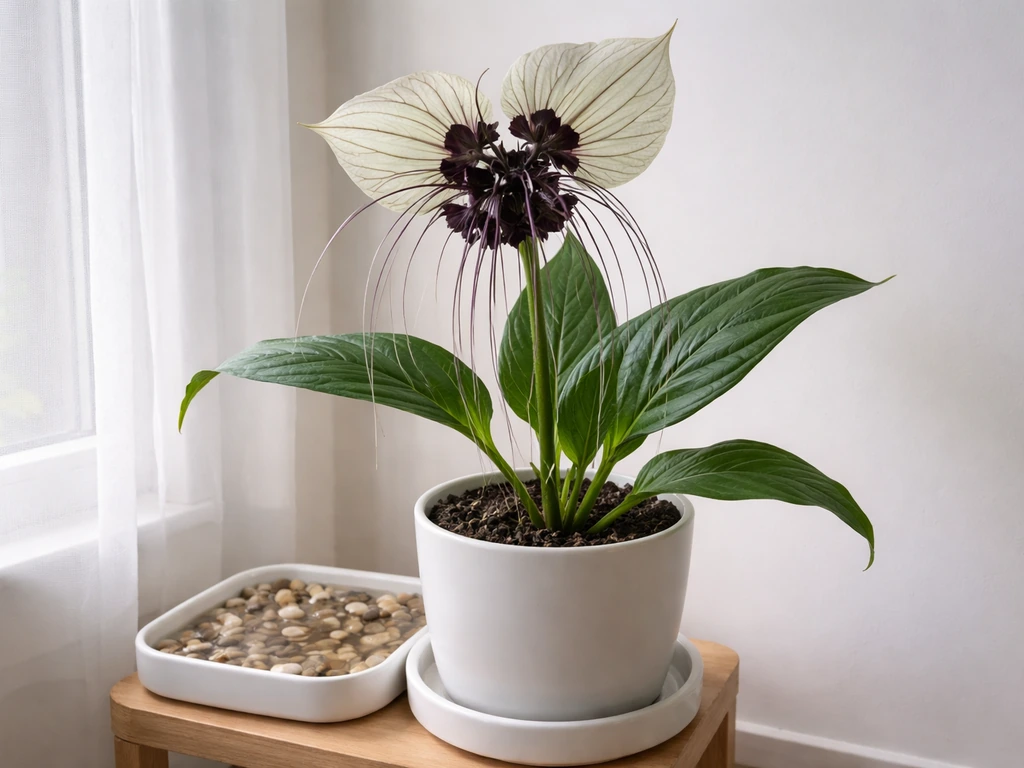
If you are in zone 10 or warmer, your Tacca integrifolia can stay in the ground or outdoors in its pot year-round. It is an evergreen perennial in frost-free conditions and will continue growing with only minor seasonal slowdown. According to the Missouri Botanical Garden Plant Finder, Tacca integrifolia is a rhizomatous evergreen perennial native to rainforests in Southeast Asia, India, and southern China, where it is commonly known as bat plant or bat flower. Reduce watering slightly in the cooler months but do not let it fully dry out.
In cooler zones, bring potted plants indoors before the first frost, ideally when nighttime temps start dropping below 60°F. Set up in the warmest room you have with good indirect light and a humidifier if possible. Cut back on watering significantly over winter but do not let the rhizome dry out completely. Stop feeding from October through February. The plant may drop some leaves and look a bit sad over winter. That is normal. Resume regular watering and feeding in spring as temperatures rise and new growth starts.
Propagation by rhizome division
Once your plant has been growing for a few years, it will develop offsets or divisions from the rhizome. Spring is the best time to divide. Carefully unpot the plant, find a natural separation point in the rhizome where there is a growing point, and use a clean sharp knife to divide. Dust the cut surfaces with powdered cinnamon or sulfur to prevent rot, then pot each division into its own container with fresh mix. Keep warm and moist while it establishes. Divisions will reach blooming size significantly faster than seed-grown plants.
Your action plan for this week
Given that today is late June, you are actually in a reasonable window to start seeds right now if you are growing indoors with a heat mat, since indoor conditions are not tied to outdoor seasons the way annual flowers are. A summer start means your seedlings will have warmth and long days ahead of them. Here is what to do this week: You can follow the same step-by-step approach in the forget-me-not grow kit instructions to set up temperature, moisture, and light so seeds have a better chance to germinate.
- Source seeds or a rhizome division from a reputable retailer. Verify the botanical name is Tacca integrifolia before buying. Freshly packed seeds only.
- Set up your germination tray with a peat-free seed mix plus perlite, a clear humidity dome, and a heat mat. Get a soil thermometer to confirm you are hitting 80–85°F.
- Sow seeds on the surface, cover lightly, label with today's date, and set up your monitoring routine of checking every 2 to 3 days.
- While you wait, prep a growing space with bright indirect light and high humidity (60%+). A humidifier or pebble tray is worth setting up now.
- If you already have a plant that is not blooming or looks stressed, run through the troubleshooting checklist above, starting with light level and watering consistency.
White bat flower is genuinely one of the more demanding plants covered on this site. It is not a beginner's first project the way a cosmos or marigold might be, and the germination patience required is in a different league. But if you have grown something trickier than the average annual and you are ready to manage tropical conditions indoors, this plant pays you back with flowers unlike anything else you will grow. Clustered bellflower is a close cousin in the same general garden perennial family of Campanula, so the key care basics often translate well trickier than the average annual. Set realistic expectations, nail the warmth and humidity, and give it time.
FAQ
How can I tell if my white bat flower seeds are still viable after months of nothing happening?
Instead of digging, check the setup and do a patience test. Keep temperatures steady and moisture consistent, then try a simple viability check on a small subset after the longest expected window (up to 9 months). Viable seeds may swell slightly under the humidity dome before any sprout appears, while old seed often stays unchanged and may eventually mold if the surface stays soggy.
Should I soak Tacca integrifolia seeds before sowing to improve germination?
For this species, soaking is often not the make-or-break step, and it can backfire if it leads to oxygen-poor conditions. If you do try it, keep it brief (hours, not days), use lukewarm water, drain completely, and start in your warmed, evenly moist medium right away. Otherwise, focus on the correct heat and humid cover, since those have the biggest impact.
My seedlings rotted after a few weeks. What’s the most common cause?
Overwatering and poor airflow. Even if the surface is meant to stay moist, soggy conditions around the seed or tender roots can quickly turn into damping-off. Use a light, draining mix, keep humidity high with the dome, but vent briefly every few days and avoid letting water pool in the bottom tray.
Do I need to use a grow light, or are windows enough for white bat flower?
Windows can work if you get strong ambient daylight without direct sun, but indoor light levels often drop in winter. A grow light on a gentle schedule (for example, consistent daily hours) can stabilize growth and make it easier to keep plants from getting leggy, especially during darker months when you are also reducing feeding.
What soil acidity test should I use, and how do I adjust if the pH is too high?
Use an inexpensive soil or media pH test kit, and test the actual pot mix after it’s been watered a couple of times. If pH trends high, you can fine-tune with small amounts of acidic amendments, but do it gradually to avoid shocking the roots. It’s usually safer to correct by adjusting your future mixes rather than trying to drastically swing pH in an established pot.
How do I avoid leaf yellowing when humidity is correct but leaves still droop?
Check watering depth, not just frequency. Yellowing plus droop usually points to water stress, either underwatering (surface dryness progressing too far) or root issues from persistently wet mix. Aim for slightly dry at the top before watering again, and ensure you never see water sitting in the saucer.
Can I grow white bat flower in a self-watering pot or wick system?
It can be risky because constant moisture is hard to control for a plant that prefers a slightly drying surface between waterings. If you try it, use tight control (small reservoir, careful monitoring) and make sure drainage is excellent so the crown and rhizome never stay wet. For most home growers, standard pots and manual watering are more reliable.
When should I repot, and what signs mean the container is too small?
Repot when roots have filled the pot and the plant dries out unusually fast, or when growth stalls despite good light and humidity. Avoid upsizing too aggressively, since oversized pots hold excess moisture. Move up gradually, keeping the new container only slightly larger than the root ball.
Why isn’t my white bat flower flowering even after a couple of years?
Most non-flowering plants miss one of three targets: a true seasonal rest with reduced watering, consistent indirect light that is bright enough, or insufficient humidity. If you never reduce watering in winter (or you keep feeding), you can get lush foliage without blooms. Also confirm the plant is truly Tacca integrifolia, since labeling mix-ups are common.
Is pruning or removing leaves helpful to encourage blooms?
Usually no. Do not prune healthy foliage, since it fuels the energy needed for flowering. Only remove leaves that are damaged or clearly dying, and keep tools clean to reduce the chance of introducing rot, especially when the plant is in a warm, humid indoor environment.
How should I handle white bat flower in winter if it keeps dropping leaves?
Leaf drop can be normal during cooler months, especially when growth naturally slows. Reduce watering but do not let the rhizome completely dry out, stop feeding for the winter period, and keep it in the warmest indoor location with bright indirect light. The goal is stable conditions, not a dry, dormancy-like landscape that fully desiccates the rhizome.
What’s the safest way to divide offsets without killing the parent plant?
Divide in spring when active growth resumes. Use a clean sharp knife, identify a natural separation with at least one growing point, and keep the division warm and lightly moist while it establishes. Dusting cut surfaces helps, but the bigger success factor is minimizing time roots are exposed to dry air and avoiding cold temperatures during recovery.
Next Article
How to Grow Tuberose in Hawaii: Step-by-Step Guide
Step-by-step guide for growing tuberose in Hawaii: bulbs, planting timing, soil prep, care, pests, and cut-flower harves