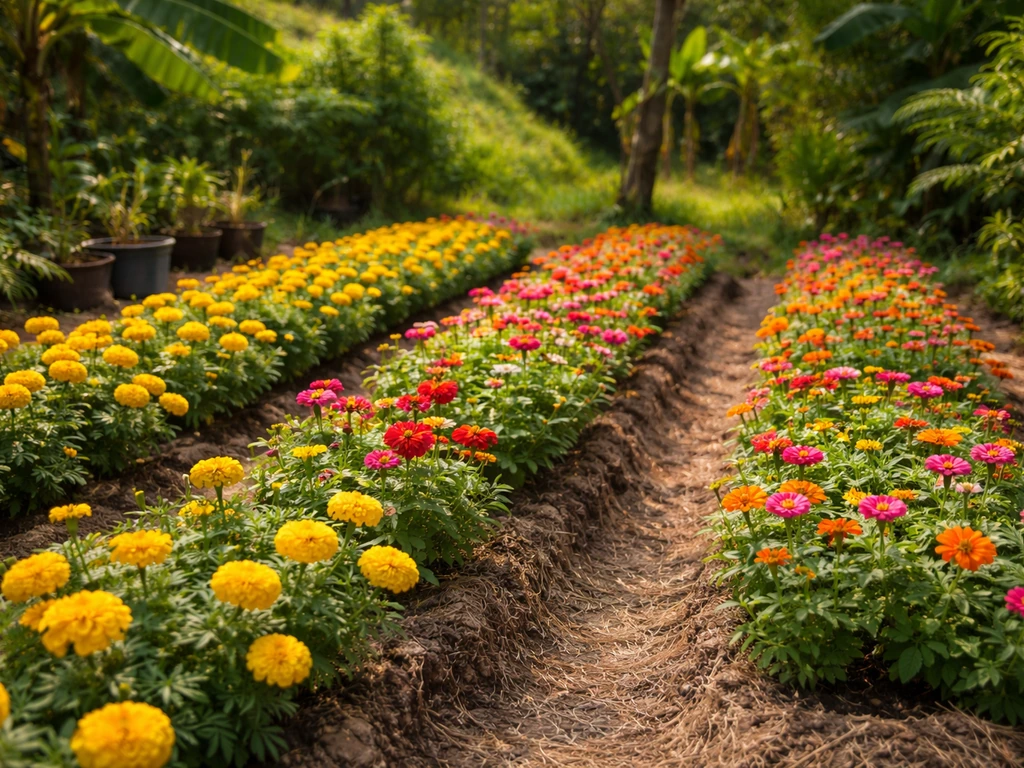
The best time to grow marigolds in India depends on where you live, but most gardeners across the country have three reliable windows: sow in mid-January to February for a summer crop, mid-June for a monsoon/rainy-season crop, and mid-September to October for the all-important winter crop (the one that gives you flowers for Diwali and winter festivals). If you can only pick one, the September–October sowing is the easiest and most rewarding for beginners in almost every Indian climate zone.
Best Time to Grow Marigold in India: Month-by-Month Plan

Marcus Holloway
12 Jul 2026
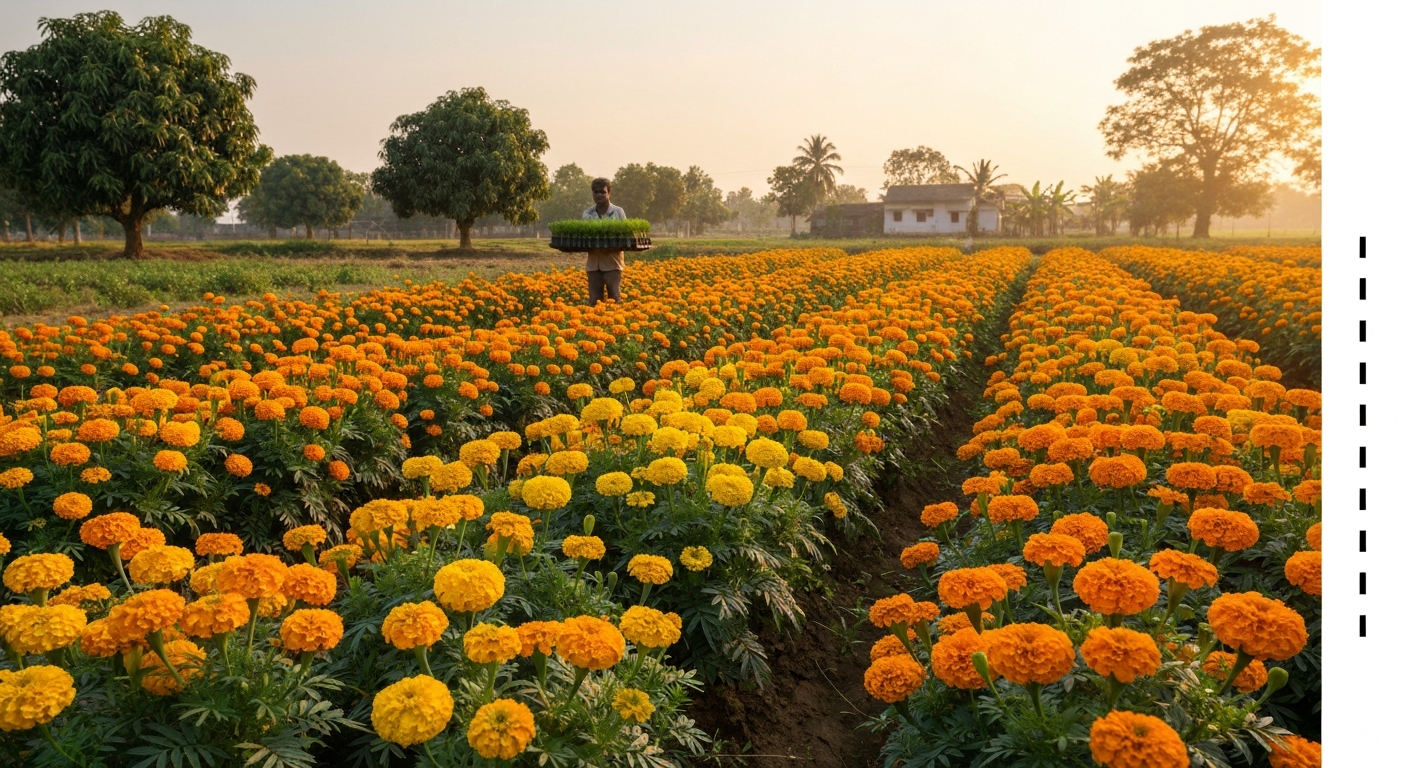
Best months to grow marigold in India, region by region
India's climate varies enough that one calendar does not fit everyone. The table below gives the clearest quick-reference summary for the five major growing zones. Sowing dates refer to nursery/seed-tray sowing, and transplant dates are roughly 20–30 days later when seedlings carry 3–4 true leaves.
| Region | Summer crop (sow) | Rainy crop (sow) | Winter crop (sow) | Easiest season |
|---|---|---|---|---|
| North India (Delhi, Punjab, UP, Haryana, Bihar) | Mid-Jan–Feb | Mid-Jun–Jul | Mid-Sep–Oct | Winter (Sep–Oct) |
| South India (Tamil Nadu, Karnataka, Kerala, Andhra, Telangana) | Jan–Feb | Jun–Jul | Sep–Oct | Winter (Sep–Oct) or Rainy |
| East & Northeast (West Bengal, Odisha, Assam, Meghalaya) | Jan–Feb | Late Jun–Jul | Sep–Oct | Winter (Sep–Oct) |
| West & Arid zones (Rajasthan, Gujarat, parts of Maharashtra) | Jan–Feb | Avoid peak monsoon waterlogging; sow late Jul–Aug on raised beds | Sep–Oct (best) | Winter (Sep–Oct) |
| Hills & Himalayan foothills (Himachal, Uttarakhand, J&K, NE hills) | Feb–Apr in protected nursery | Jun–Jul (lower elevations) | Aug–Sep (before frost) | Spring/early summer (Feb–Apr sowing) |
For flower-festival demand (Diwali, weddings, puja), growers across North and South India rely heavily on the September–October sow, which times flowers to peak in December–February. That window also sidesteps the two biggest enemies of young marigold seedlings: waterlogging from the monsoon and extreme summer heat.
Why timing matters: temperature, daylength, and the monsoon
Marigold seeds germinate best between 18°C and 30°C, with the sweet spot around 21–27°C. Below 15°C, germination slows dramatically and you get patchy, uneven seedlings. Above 35°C, germination rates drop and seedlings become stressed before they even establish. This is why sowing in peak Delhi summer (May–June) or in the coldest Himalayan January rarely produces good results without protective structures.
Daylength is the other factor most beginners overlook. African marigolds (Tagetes erecta, the big-flowered type) are what botanists call quantitative short-day plants: they flower faster and more freely when days are shorter than about 12–13 hours. This is exactly why October-sown African marigolds bloom so enthusiastically in December and January when days are shortening. Modern hybrid cultivars have largely reduced this short-day dependency, but the photoperiod effect still nudges flowering timing, so it is worth knowing.
The monsoon adds a third layer of timing complexity. The southwest monsoon makes landfall in Kerala around 1 June and progresses northward through the country over the following weeks. Heavy, sustained rainfall waterlogging young seedling roots is the single biggest killer of nursery-raised marigold transplants. The trick is to time your nursery so seedlings are ready to transplant either just before heavy rains arrive (transplant onto raised ridges) or after the monsoon begins to withdraw from your area. In flood-prone parts of West Bengal, Assam, or the Gangetic plains, it is often safer to sow in late June and transplant in mid-to-late July when the worst flooding has passed.
Which marigold to choose for your garden
Three marigold species are grown commercially in India: Tagetes erecta (African or large marigold), Tagetes patula (French marigold), and Tagetes minuta (wild or Mexican marigold). For home gardeners, the first two are the ones that matter. Here is how to pick the right one for your purpose.
| Type | Best for | Days to flower (sow to bloom) | Plant height | Notes |
|---|---|---|---|---|
| African marigold (T. erecta) | Cut flowers, festival garlands, large beds | 75–110 days | 60–90 cm | Short-day response; big blooms; needs space (45x45 cm); heat reduces flower size |
| French marigold (T. patula) | Pots, borders, balconies, companion planting | 50–70 days | 20–40 cm | Faster; less short-day dependent; compact; ideal for containers |
| Dwarf/early hybrid patula types | Tiny balconies, window boxes, succession sowing | 45–60 days | 15–25 cm | Quickest to flower; very beginner-friendly |
| Signet/wild (T. minuta) | Companion planting, pest deterrence | Variable | Tall (1–1.5 m) | Not grown for ornament; strong-smelling; deters soil nematodes |
My honest recommendation for first-time growers: start with French marigold (T. patula) or a dwarf African hybrid. They flower faster, tolerate container growing better, and forgive more beginner mistakes than tall African marigolds. Once you have a successful season under your belt, move up to the full-sized African types for the big, show-stopping flowers.
What you need before you start
Seeds
Buy from a reliable source: a known seed company, a well-stocked nursery, or a KVK (Krishi Vigyan Kendra) if you are in a rural area. Open-pollinated varieties need roughly 1.0–1.5 kg of seed per hectare at commercial scale, but for home gardens, a single 5–10 g packet is plenty for dozens of plants. Open-pollinated marigold seed rates are about 1.0–1.5 kg/ha, while F1 hybrid seed rates are much lower (≈250–300 g/ha) because hybrids are sown using precision nursery/plug systems Open-pollinated marigold seed rates are about 1.0–1.5 kg/ha, while F1 hybrid seed rates are much lower (≈250–300 g/ha) because hybrids are sown using precision nursery/plug systems.. F1 hybrid seed is more expensive per gram but gives more uniform, vigorous plants and often earlier flowers.
Soil and potting mix
Marigolds want well-drained, loamy soil with a pH of around 6.5–7.5 and plenty of organic matter. For containers, university trials have shown that a mix of leaf mould, garden soil, and well-rotted FYM (farmyard manure) in a 1:1:1 ratio produces excellent growth and flowering. University potting substrate trials (Parmar University / IARI) reported that leaf mould + soil + FYM (1:1:1, v/v) and cocopeat:soil:FYM mixes produced superior plant growth and flowering, supporting the recommended container mixes Journal of Applied Horticulture (potting substrate trials — leaf mould+soil+FYM results). Cocopeat mixed with soil and FYM works equally well and is easier to source in cities. Avoid dense, waterlogged clay unless you build raised beds or use ridges.
Containers, tools, and organic inputs
- Seedling trays or plug trays (50- or 72-cell) for nursery sowing — old egg cartons or repurposed plastic cups work in a pinch
- Pots at least 25–30 cm wide and deep for French marigolds in containers; 35–40 cm for African types
- A watering can with a fine rose head or a misting bottle for seedling-stage watering
- Well-rotted FYM or vermicompost for soil enrichment (apply 2–3 kg per square metre of bed)
- Neem cake (at 50–100 g per pot or 250–500 kg/ha in beds) mixed into soil before planting to deter soil-borne pests
- A balanced granular fertiliser (10: 10:10 NPK or similar) for feeding during the growing season
- Neem oil solution (5 ml per litre of water with a drop of soap) ready for pest control
Month-by-month sowing and transplant calendar
Use this calendar as your at-a-glance planner. 'Sow' means putting seeds in nursery trays or a seedbed. 'Transplant' means moving 20–30 day old seedlings (with 3–4 true leaves) into beds or final containers. 'Flowers expected' is approximate and varies by species and cultivar (French types are faster; African types take longer).
| Month | Activity | Crop / Season | Notes |
|---|---|---|---|
| January | Sow (mid-Jan) | Summer crop | North India: start in protected nursery if nights below 10°C; South/West India: sow directly outdoors |
| February | Sow / Transplant Jan-sown seedlings | Summer crop | Transplant when seedlings have 3–4 true leaves; last chance for summer sowing in South India |
| March | Transplant Feb-sown seedlings; care/feeding | Summer crop | Pinch growing tips after transplant to encourage branching |
| April | Ongoing care; watch for aphids/whitefly | Summer crop | Flowers begin on French types sown in Jan–Feb |
| May | Harvest / deadhead summer flowers | Summer crop | African marigolds peaking if sown Jan–Feb; heat may reduce flower size |
| June (mid) | Sow rainy/monsoon crop nursery | Rainy/Monsoon crop | Raise nursery trays under shade net or polytunnel to protect from heavy rain; avoid open seedbeds |
| July (mid) | Transplant June-sown seedlings onto raised beds/ridges | Rainy/Monsoon crop | Raised beds essential; avoid low-lying waterlogged spots; space African types 45x45 cm |
| August | Ongoing care; stake tall plants; watch for fungal disease | Rainy/Monsoon crop | Fungal leaf spot common in wet weather; improve air circulation |
| September | Harvest rainy-crop flowers; Sow winter nursery (mid-Sep) | Rainy crop ends / Winter crop starts | Most important sowing of the year for winter/Diwali flowers |
| October | Transplant Sep-sown seedlings; prepare beds | Winter crop | Transplant by mid-Oct for December flowers; add vermicompost to beds before planting |
| November | Ongoing care; feed with potassium-rich fertiliser | Winter crop | Buds forming on French types; African types approaching flower |
| December | Harvest winter flowers (peak season) | Winter crop | Peak bloom for Diwali, Christmas, New Year; deadhead regularly to extend display |
| January (following) | Continue harvesting; save seed from open-pollinated types | Winter crop wrapping up | Collect seed from fully dried flower heads for next season |
For succession planting, stagger your nursery sowings by 3–4 weeks within a season. For example, a first winter-crop sow in mid-September and a second sow in early October will give you two waves of bloom rather than one big flush. This is especially useful if you grow marigolds for cut flowers or regular puja use.
Region-by-region planting plan
North India (Delhi, Punjab, Haryana, UP, Bihar, Madhya Pradesh)
This zone has hot summers (up to 45°C), a clearly defined monsoon (July–September), and cold winters (sometimes below 5°C in January in Punjab and Delhi). The winter crop sown in mid-September to early October is the star here, giving flowers through December and February. Germination in January is possible but protect nursery trays from nights below 10°C by placing them indoors or under a polytunnel. The monsoon crop sown in June needs raised seedbeds and shelter from driving rain during the nursery phase.
South India (Tamil Nadu, Karnataka, Kerala, Andhra Pradesh, Telangana)
South India's milder winters and bimodal rainfall (southwest monsoon June–September plus northeast monsoon October–December in TN/coastal AP) give growers more flexibility. The winter crop still performs best, but both the summer and monsoon crops are viable across most of this region. In Kerala and coastal Karnataka where the monsoon is heavy and prolonged, prioritise raised beds and well-drained soil for July–August transplants. Tamil Nadu growers benefit from TNAU's precision calendar (three defined seasons) as a reliable local reference.
East and Northeast India (West Bengal, Odisha, Assam, Meghalaya, Tripura)
Flooding risk is the main planning challenge here. In Assam and the Brahmaputra valley, the monsoon can be severe enough to wash out even raised-bed transplants in July. Wait until the worst flooding subsides (often late July to early August) before transplanting your monsoon-crop seedlings. The winter sowing (mid-September to early October) is the safest and most rewarding season. West Bengal's temperate pockets in Darjeeling can follow a schedule closer to the hill zones.
West and arid zones (Rajasthan, Gujarat, western Maharashtra)
Rajasthan and interior Gujarat have extreme heat in April–June (often above 42°C) and a relatively brief, sometimes patchy monsoon. The winter crop (sow September–October, flowers December–February) is by far the most reliable. Avoid attempting a summer crop in Rajasthan without shade netting and drip irrigation. The monsoon crop is possible but waterlogging risk is high in Gujarat's black cotton soil areas, so use well-raised ridges and ensure your soil mix has good drainage built in.
Hill regions (Himachal Pradesh, Uttarakhand, J&K hills, Northeast hill states)
At elevations above 1,000 m, winters are too cold for outdoor sowing before February–March. Start seeds in a sheltered indoor nursery in February, germinate under a cover of plastic or glass on a warm windowsill, and transplant outdoors after the last frost (typically March–April at mid-hill elevations). Summer (April–August) is the primary growing season here. A second sowing in June–July will give late-summer and early-autumn flowers. Avoid transplanting after late September at higher elevations as frosts arrive early.
Step-by-step seed-to-flower guide
Step 1: Prepare your seed tray or nursery bed
Fill plug trays or seedling trays with a fine, moist nursery mix (cocopeat and fine compost in a 2:1 ratio works well). Water the mix thoroughly and let it drain before sowing. Dry mix leads to uneven germination. If you are using a seedbed outdoors, rake it to a fine tilth, remove stones, and add a thin layer of sieved compost over the surface.
Step 2: Sow the seeds
Marigold seeds are small and slim (they look like a thin sliver with a papery tail). Sow them at a shallow depth: about 0.3–0.8 cm (roughly 1/4 inch) deep is ideal. Do not bury them deeply or they will struggle to push through. In trays, place one or two seeds per cell. In a seedbed, scatter seeds thinly and cover with a fine layer of sieved compost. Firm the surface gently with a flat board or your palm to ensure good seed-to-soil contact, then mist with water.
Step 3: Germination care (days 1–10)
Keep the tray or seedbed at 21–27°C and consistently moist but not waterlogged. Covering the tray loosely with a plastic sheet or old newspaper traps humidity and speeds germination. Remove the cover as soon as you see the first green shoots (usually day 5–10 at ideal temperatures). Once uncovered, move trays to bright indirect light. Direct midday sun on newly emerged seedlings can scorch them.
Step 4: Seedling care and potting-on (days 10–25)
After the first true leaf pair appears (not the seed leaves, the first feathery, marigold-shaped leaves), thin your tray cells to one seedling per cell if two germinated. Water from below if possible by placing the tray in a shallow dish of water for 20 minutes rather than splashing from above, which can cause damping-off (a fungal rot at the base of young stems). If seedlings look pale and yellowish, give them a dilute liquid compost tea or half-strength balanced fertiliser once. If they look leggy and stretched toward the light, move them to a brighter spot.
Step 5: Hardening off (days 20–28)
Seedlings raised indoors or under cover need to gradually adjust to outdoor conditions before transplanting. Start placing the tray outdoors for 1–2 hours in morning shade, increasing the time by 30–60 minutes each day over about a week. After 5–7 days, they can stay out all day. Do not skip this step, moving pampered seedlings straight into full sun and outdoor wind causes transplant shock and wilting that can set growth back by two weeks.
Step 6: Transplanting into beds or final containers
Transplant when seedlings are 20–30 days old with 3–4 true leaves and a healthy root ball. For ground beds, space African marigolds 45x45 cm apart and French/dwarf types 20–30 cm apart (30x30 cm for a fuller, denser display). Water the seedling cell or pot thoroughly 30 minutes before transplanting so the root ball holds together. Plant slightly deeper than the seedling was in its tray, firm the soil around the base, and water in well. Pinch out the growing tip after transplanting: this small act forces the plant to branch and will give you many more flower stems than a single unpinched plant.
Ongoing care: light, water, feeding, and deadheading
Light
Marigolds need at least 6 hours of direct sunlight daily to flower well. On a city balcony, choose the sunniest spot you have. East-facing balconies that get 4–5 hours of morning sun can support French marigolds adequately, but African marigolds really need 6+ hours or they grow leggy and produce few flowers.
Watering
Water deeply and then let the top 2–3 cm of soil dry out before watering again. Marigolds hate continuously soggy roots. In summer, container plants may need daily watering. In winter, every 2–3 days is usually enough for ground-planted marigolds. Water at the base of the plant, not over the flowers and foliage, to reduce fungal disease risk during the monsoon season.
Feeding
Feed with a balanced fertiliser (10:10:10 NPK or equivalent) at transplanting, then switch to a slightly higher-potassium feed once buds form to boost flower quality and longevity. In organic gardens, apply vermicompost tea every 2–3 weeks or top-dress with well-rotted FYM monthly. Avoid excess nitrogen once plants are established: it pushes leafy growth at the expense of flowers.
Deadheading and pruning
This is the single most effective thing you can do to keep marigolds blooming for months. Deadhead (remove spent flower heads) as soon as petals begin to brown and droop. Do not leave old flowers on the plant, they signal the plant to stop producing new buds and start setting seed. Snip off the old flower head just above the next set of leaves. Every 4–5 weeks, give plants a light trim (cut back by about one-third) to refresh the flowering cycle and prevent them from becoming woody and sparse at the base.
Common problems and quick fixes
| Problem | Likely cause | Organic/low-toxicity fix |
|---|---|---|
| Damping-off (seedlings collapse at base) | Overwatering + poor airflow in nursery | Reduce watering; improve ventilation; water from below; dust with wood ash |
| Leggy, stretched seedlings | Too little light | Move to brighter spot; reduce watering slightly to slow top growth |
| Aphids on buds and stems | Common in dry weather or new growth flushes | Spray with neem oil solution (5 ml/litre + soap); strong water jet to dislodge |
| Whitefly | Hot dry conditions, poor air circulation | Yellow sticky traps; neem oil spray; avoid excess nitrogen feeding |
| Powdery mildew (white coating on leaves) | High humidity + poor air circulation (monsoon season) | Improve spacing; spray dilute baking soda solution (5 g/litre); remove affected leaves |
| Leaf spot / blight | Wet foliage in monsoon; fungal infection | Water at base only; neem-based fungicide spray; remove affected leaves |
| Poor or no flowering | Insufficient light OR excess nitrogen OR waterlogging | Check 6+ hours of sun; cut nitrogen feed; improve drainage; check roots for rot |
| Flower size smaller than expected | Summer heat stress (common in African marigolds) | Provide afternoon shade; mulch soil surface to keep roots cooler; extra watering in peak heat |
Harvesting for cut flowers and saving seed
For cut flowers, harvest African marigold blooms in the morning when they are freshly opened but not fully blown. Cut the stem long (15–20 cm), place immediately in a bucket of water, and keep in a cool shaded spot. French marigold stems are shorter but the flowers last 5–7 days in a vase with clean water changed daily.
To save seed from open-pollinated (non-hybrid) varieties, allow a few flower heads to fully dry on the plant until the base turns brown and papery. Snap the dried head off, peel apart the petals, and extract the thin seed slivers inside. Dry them on newspaper for 2–3 days in a shaded, airy spot, then store in a paper envelope in a cool dry place. Properly dried marigold seed stays viable for 2–3 years. Note: F1 hybrid seeds will not produce plants identical to the parent, so only save from open-pollinated varieties.
Growing marigolds across India's diverse climates is genuinely one of the most forgiving and rewarding things a beginning gardener can do. The three-season calendar, a little attention to drainage during the monsoon, and regular deadheading will take you a very long way. For gardeners in tropical regions, see a regional guide on how to grow flowers in the Philippines for climate-specific tips and schedules. Start with one tray of French marigolds this September, follow the steps above, and you will have bright, cheerful blooms by December with almost no experience required. For gardeners who also enjoy flowering bulbs, see how to grow stargazer for tips on planting and care. For gardeners in tropical climates, see a regional guide on how to grow marigold in the Philippines for tips adapted to year-round warmth and different rainfall patterns. If you also grow tropical lilies, see a concise guide on how to grow stargazer in the Philippines for tips on climate, soil, and care specific to that region.
FAQ
Short answer: What is the best time to grow marigolds in India (seed to flower) by major climate zones?
Best months by zone: Indo‑Gangetic Plains — sow Jan–Feb (summer crop), Jun–Jul (rainy crop), Sep–Oct (winter crop). Peninsular South (Tamil Nadu, Karnataka, Kerala) — sow almost year‑round with main windows: Jan–Feb, Jun, Sep–Oct (milder winters allow earlier/extended sowing). Western arid (Rajasthan/Gujarat) — prefer post‑monsoon/winter: Sep–Nov and Feb–Mar; avoid seedling establishment during heavy rains. Himalayan hills — sow in protected nursery Feb–Apr and transplant after last frost (Apr–May). For containers in cities, you can start most windows 2–4 weeks earlier using warm, protected sites. These windows align with nursery (20–30 day) and days‑to‑flower timings so you get blooms within the season.
Month‑by‑month sowing/transplant calendar (seeds and containers) for a typical Indian home gardener
General monthly plan: Jan — sow for summer flowering (transplant Feb–Mar). Feb — sow for late spring/summer. Mar–Apr — transplant and maintain summer crops; start nursery in cool/hill areas. May — shade young plants, avoid peak heat if possible. Jun — sow early rainy crops in nurseries (raise trays before heavy rains). Jul — transplant rainy crop when soil drains well. Aug — maintain, fertilize, and succession sow for autumn bloom. Sep — sow for winter/post‑monsoon crops (transplant Oct–Nov). Oct — transplant for winter displays. Nov — container sowing for winter/spring blooms in warmer regions. Dec — final sowings in frost‑free areas; protect seedlings in cold zones. For containers: you can start seed 2–4 weeks earlier than field windows if you provide warm, sunny microclimate and avoid waterlogging.
Why does timing matter? (temperature, daylength, monsoon influence)
Timing affects germination, growth and flower quality: seeds germinate best at roughly 18–30°C, so very cool or very hot periods slow emergence. Photoperiod (shorter days) can accelerate flowering in many African marigolds; French types are less sensitive. Heavy monsoon rains can cause seedling damping‑off and waterlogging, so raise nurseries and transplant on ridges or delay field transplanting in flood‑prone sites. High summer temperatures often reduce individual flower size and can delay quality—planting in cooler windows gives larger, longer‑lasting blooms.
Which marigold varieties suit each season and use (annual bedding, long‑bloom, pots, short‑day types)?
Variety guidance: African marigold (Tagetes erecta) — tall, large heads, best for long‑lasting cut flowers and seasonal mass displays (use in winter/post‑monsoon and cooler months for bigger blooms). French marigold (Tagetes patula) — compact, early, excellent for bedding, borders, containers and succession plantings (flowers quicker, 45–70 days). Dwarf/novelty hybrids — dense blooms for pots and balcony boxes. Short‑day/photoperiod‑sensitive cultivars — perform best when days shorten (autumn/winter) for faster flowering. Choose hybrids labeled ‘early’ or ‘heat tolerant’ for summer plantings; pick compact or ‘for pots’ types for containers.
Step‑by‑step: How to sow marigold seed (tray/pot) for beginners
1) Use a fine, well‑draining seed mix (cocopeat or fine compost + soil + sand). 2) Fill trays/pots and moisten. 3) Surface‑sow seeds and press lightly; cover very shallowly (0.3–0.8 cm) or leave uncovered if mix is fine. 4) Keep at 18–27°C and maintain even moisture (mist, not saturate). 5) Germination in 5–10 days under ideal temps. 6) Move seedlings to bright light (avoid harsh noon sun for young plants). 7) When seedlings have 2–3 true leaves (about 20–30 days), transplant to larger pots or field with root ball intact.
How and when to transplant (field and containers) and recommended spacing
Transplant seedlings at 20–30 days or when 3–4 true leaves form. Harden off 5–7 days by gradually increasing sun exposure. Field spacing: African marigold ~45x45 cm; French/dwarf types 20–30 cm apart (30x30 cm common). For containers: use pots at least 15–20 cm diameter for single French marigolds; larger 25–30 cm pots for African types. Transplant into well‑drained beds or raised ridges during appropriate seasonal windows—avoid transplanting into waterlogged soil or peak heat without shade.
Next Article
How to Grow Flowers in the Philippines: Step-by-Step Guide
Step-by-step guide to grow flowers in the Philippines, choosing tropical plants, planting timelines, care, and pest cont