Yes, you can absolutely [how to grow marigold at home] with marigolds from seed, and they are one of the easiest flowers to start this way. how to grow marigold at home Marigold seeds germinate fast, the seedlings are sturdy, and you get far more plants for your money than buying transplants at the nursery. Whether you are starting indoors under lights or sowing straight into the garden bed, this guide walks you through the full process from seed to flower. what do marigold seeds look like when they grow
How to Grow Marigold Seeds: From Sowing to Flowers
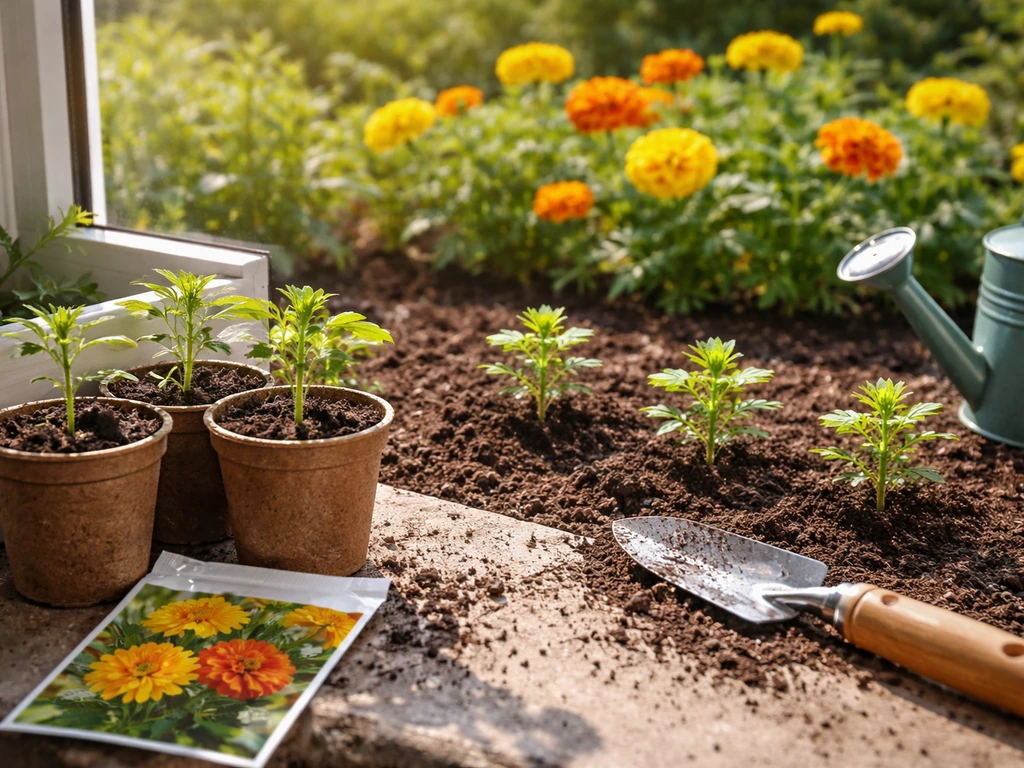
Can you grow marigold from seed? (Short answer: yes, and here's why it works)
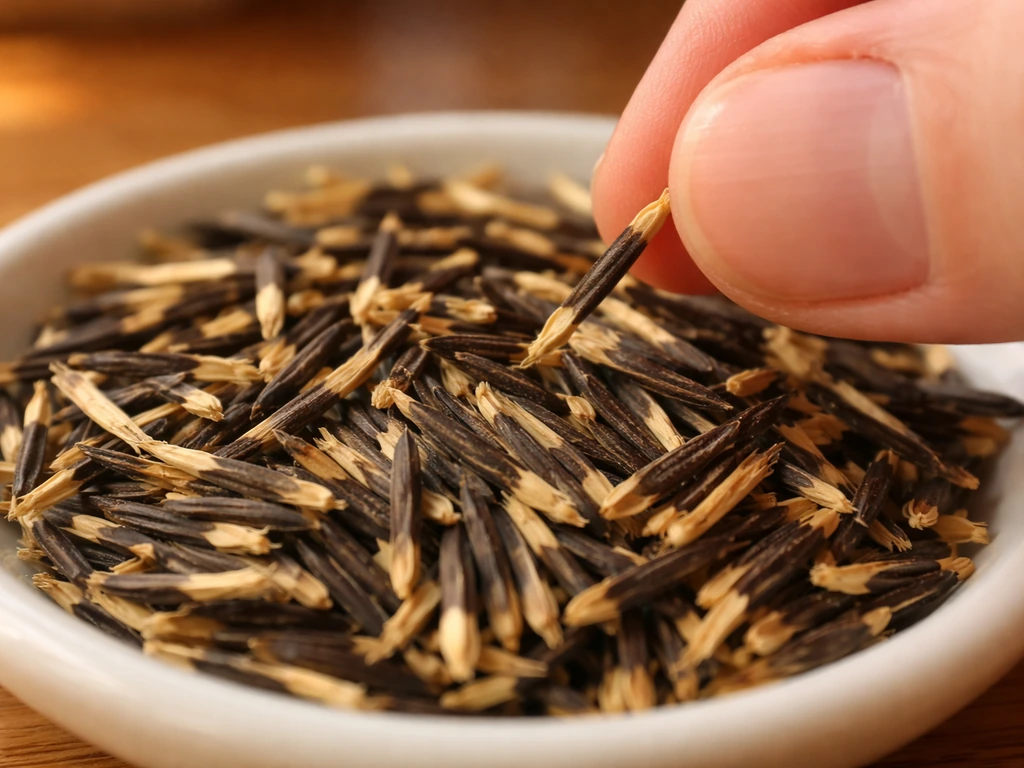
Marigold seeds are large enough to handle easily, they germinate reliably at room temperature, and most varieties go from seed to first bloom in 50 to 100 days depending on the type. Under good conditions, you will see the first sprouts in as little as 3 to 5 days, and most seeds will be up within a week. That speed is part of what makes them so satisfying for beginners.
What is happening underground during those first few days: the seed absorbs moisture, the seed coat softens, and a tiny root called a radicle pushes downward before the shoot curves up toward the light. By day 5 to 7, you typically see a pair of narrow seed leaves (cotyledons) pushing through the soil surface. True leaves, which look more like the familiar feathery marigold foliage, follow within another week or two.
One important clarification before going further: if you searched for how to grow marsh marigold from seed, that is a completely different plant. Marsh marigold (Caltha palustris) is a native wetland perennial in the buttercup family, not related to the garden marigold (Tagetes spp.) at all. It has very different growing requirements, including a 60-day cold moist stratification period before it will germinate, and it prefers boggy or consistently wet soil. Growing instructions for Caltha palustris are covered at the bottom of this article. Everything else here applies to common garden marigolds: African (Tagetes erecta), French (Tagetes patula), and signet types.
Choosing the right marigold type and seed starting method
Picking the right type matters mostly because it affects how long you need to grow before you see flowers and how you space the plants. Picking the right type matters mostly because it affects how long you need to grow before you see flowers and how you space the plants. The two types you will encounter most often are French marigolds and [African marigolds](/article/how-to-grow-african-marigold), and they behave quite differently in the timeline from seed to bloom.
| Type | Botanical Name | Plant Size | Days to Bloom | Best Starting Method |
|---|---|---|---|---|
| French marigold | Tagetes patula | 6–12 inches, mounding | 50–60 days | Direct sow or start indoors 4–6 weeks out |
| African marigold | Tagetes erecta | 18–36 inches, upright | 70–100 days | Start indoors 4–6 weeks before last frost |
| Signet marigold | Tagetes tenuifolia | 10–15 inches, airy | 55–70 days | Direct sow after last frost |
| Crackerjack (African mix) | Tagetes erecta | 24–36 inches | 60–70 days | Start indoors for earliest blooms |
If you are a beginner, French marigolds are the most forgiving. They bloom faster, tolerate a little more variability in soil and water, and are compact enough for containers or tight borders. African marigolds produce the large, showy pompom blooms you often see in cutting gardens, but they need a longer season, so starting them indoors is especially worthwhile if your summers are short. For more in-depth advice specific to African types, the guide on how to grow African marigolds covers their particular needs in detail.
Seed starting method comes down to your climate and how early you want flowers. Indoors gives you a head start and earlier blooms, especially important for the longer-season African types. Direct sowing is simpler, skips the transplanting step, and works well for French and signet marigolds once the soil is warm.
Step-by-step seed starting: indoors and outdoors
Starting marigold seeds indoors
- Time it right: start seeds 4 to 6 weeks before your last expected frost date. This puts transplant-ready seedlings in your hands right when outdoor conditions become safe.
- Choose your container: a 72-cell seed-starting flat works well. Each cell gives roots enough space to develop without becoming waterlogged. You can also use any clean small container with drainage holes.
- Fill with seed-starting mix: use a fine-textured, well-draining seed-starting medium, not garden soil or potting mix with large chunks. Moisten the mix before filling cells so it is evenly damp but not soggy.
- Sow the seeds: place one or two seeds per cell, then cover lightly with about 1/4 inch of seed-starting mix. Do not bury them deeper. Marigold seeds need only a thin covering to stay moist and still receive warmth from above.
- Set the temperature: aim for 70 to 72°F (21 to 22°C) for germination. A heat mat under the flat helps maintain this consistently, especially if your home is cool. Bottom heat is the single biggest driver of fast germination.
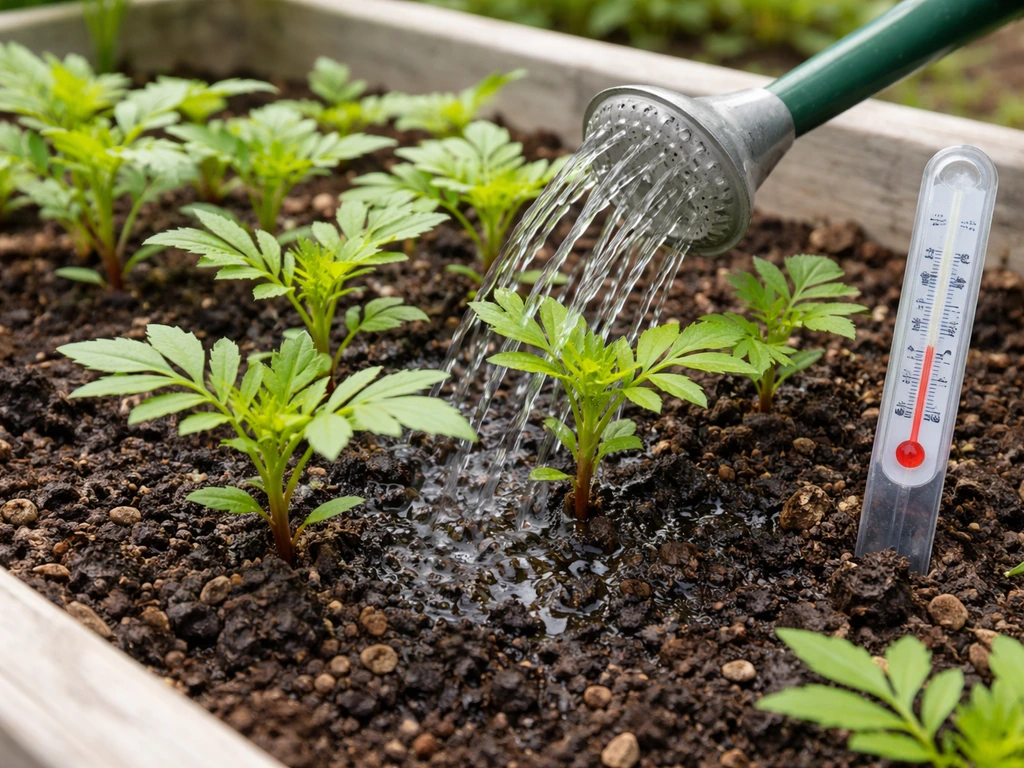
- Keep moisture even: mist the surface with a spray bottle or water from below by setting the tray in a shallow dish of water. The goal is consistently moist, not wet. A humidity dome over the flat helps retain moisture until sprouts appear.
- Provide light immediately after germination: as soon as the first sprouts appear, remove any dome and move the flat under a grow light or directly into your brightest south-facing window. Seedlings need 14 to 16 hours of bright light daily to avoid becoming leggy.
- Thin to one seedling per cell: once seedlings have their first set of true leaves, snip the weaker one at soil level with scissors. Do not pull, as this can disturb the roots of the seedling you are keeping.
Direct sowing marigold seeds outdoors
- Wait for the right conditions: sow directly in the garden after your last frost date, once soil temperature has reached at least 65°F. Cold soil dramatically slows germination and can rot seeds before they sprout.
- Prepare the bed: loosen the soil to about 4 to 6 inches deep and rake it smooth. Remove large clods, rocks, and debris. Marigolds are not demanding about soil quality, but they hate compacted, waterlogged ground.
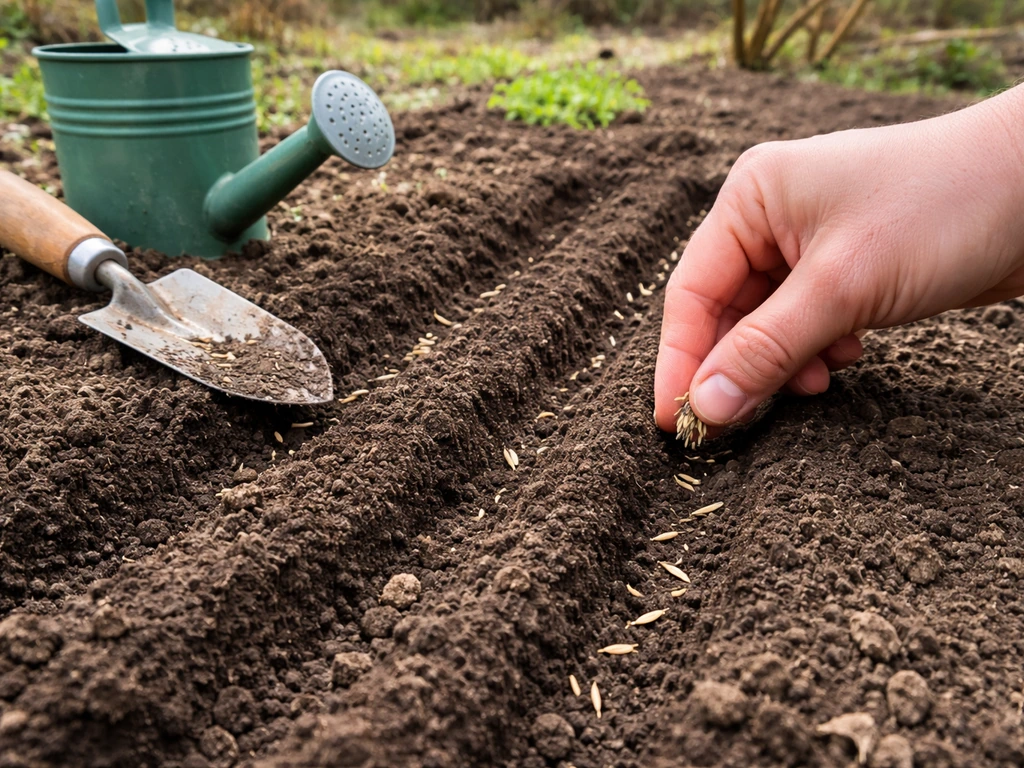
- Sow at the right depth: press seeds into the soil and cover with about 1/4 inch of fine soil or a light layer of seed-starting mix. Johnny's and other commercial growers consistently recommend covering marigold seed 'lightly.' Burying seeds too deep makes it harder for the seedling to push through and increases damping-off risk.
- Space your seeds: sow seeds about 2 inches apart in rows or patches, then thin to final spacing once seedlings are 2 to 3 inches tall. Final spacing depends on the variety (more on this in the transplanting section).
- Water gently right after sowing: use a fine mist or watering can with a rose head to avoid washing seeds out of position. Keep the seedbed consistently moist until germination is complete.
- Mark the area: it sounds obvious but seedlings look like little green slivers at first. A label or a ring of sand around your sowing area prevents accidental hoeing.
What to expect during germination and how to keep seedlings healthy
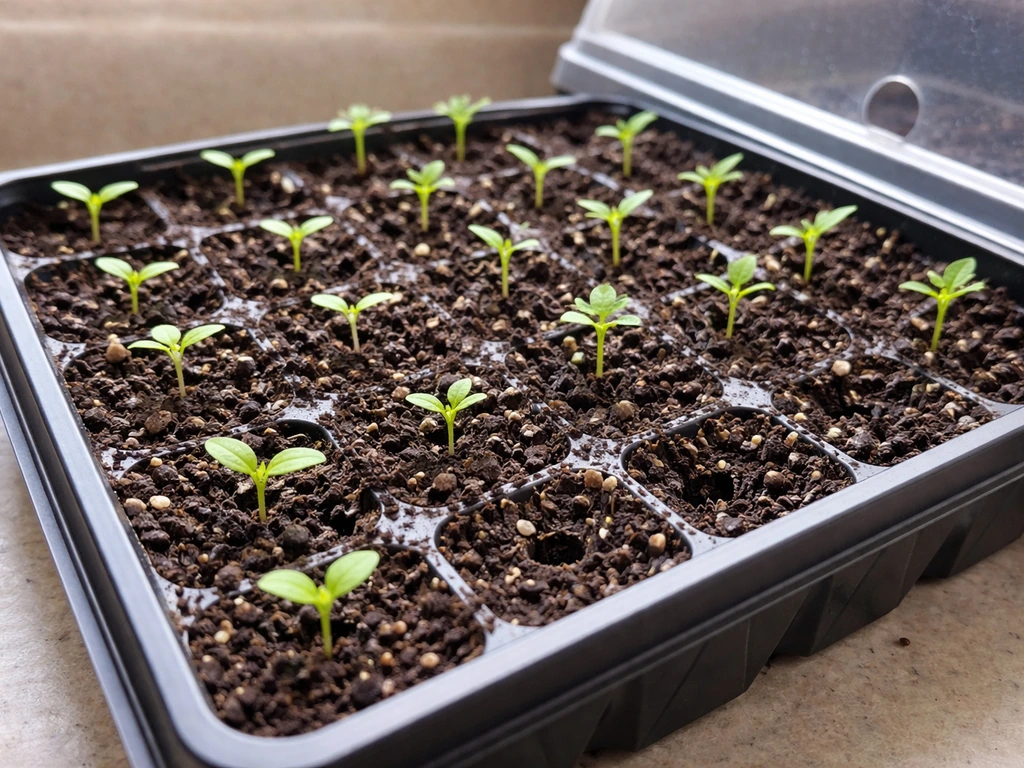
At 70 to 72°F, marigold seeds typically begin showing roots and shoot activity within 2 to 3 days, and you will see seedlings above the soil surface in 3 to 7 days. Cooler temperatures push that to 10 to 14 days or more. If nothing has emerged by day 14 under decent conditions, the seeds may have been too old, too cold, or buried too deep.
The biggest killer of indoor marigold seedlings is damping-off, a fungal problem that causes otherwise healthy-looking seedlings to suddenly collapse at the soil line and die. It is almost always caused by conditions that are too wet, too warm, and too still. To prevent it: water from below rather than overhead, make sure your containers drain freely, do not let trays sit in standing water for more than an hour, and provide good air circulation around seedlings. A small fan on low pointed near (not directly at) your seedling tray makes a real difference. Dense planting makes damping-off outbreaks worse, so thin seedlings promptly. If you do see it spread, remove affected seedlings immediately before it jumps to neighbors.
Legginess (long, spindly stems reaching toward the light) is the other common early problem. It means your seedlings are not getting enough light. Under a grow light, keep the light 2 to 4 inches above the tops of the seedlings and raise it as they grow. A south window alone is rarely sufficient in late winter or early spring in most climates. If you can only use a window, rotate the tray daily and accept that indoor-only seedlings will be leggier than those grown under supplemental light.
Transplanting, spacing, and setting up your plants for strong blooms
Do not skip hardening off. Before transplanting indoor-started seedlings to the garden, spend 7 to 10 days gradually acclimating them to outdoor conditions. Start by setting them outside in a sheltered, shaded spot for a couple of hours on the first day, then gradually increase time and sun exposure over the following days. Skipping this step and moving seedlings directly from indoor conditions to full sun and wind will stress or kill them.
Transplant after your last frost date, once nighttime temperatures are reliably above 50°F. Marigolds are cold-sensitive and will sit sulking rather than growing if temperatures stay cool. Plant on a cloudy day or in the late afternoon to reduce transplant shock.
Spacing makes a real difference to airflow, bloom production, and long-term plant health. Crowded marigolds compete for light, stay wetter between waterings, and are more prone to disease. Use these guidelines as a starting point:
| Marigold Type | Recommended Spacing | Notes |
|---|---|---|
| French marigold (small) | 8–10 inches apart | Mounding habit; fills in quickly at this spacing |
| French marigold (large) | 10–12 inches apart | Larger cultivars need room to spread |
| African marigold | 12–18 inches apart | Tall plants need space; poor airflow encourages disease |
| Signet marigold | 10–12 inches apart | Spreading, airy plant; give it room to cascade |
When planting, set the transplant at the same depth it was growing in its cell. Bury it too deep and the stem can rot; too shallow and roots dry out quickly. Water in gently after transplanting and check daily for the first week while roots establish.
Light, soil, watering, feeding, and pest watchouts
Light and soil
Marigolds want full sun, meaning at least 6 to 8 hours of direct sunlight per day. Less than that and you get taller, leggier plants with fewer flowers. They tolerate a wide range of soils but prefer well-draining, moderately fertile ground. Rich, heavily amended soil actually tends to produce more foliage and fewer blooms. If your soil drains poorly, raise the bed slightly or mix in compost to improve structure.
Watering
Once established, marigolds are reasonably drought-tolerant, but consistent moisture produces better blooms and healthier foliage than irregular deep soakings. Water at the base of the plant rather than overhead. Wet foliage sitting overnight invites fungal problems. Let the top inch of soil dry out between waterings for established plants, but keep the soil around newly transplanted seedlings more consistently moist for the first two weeks.
Feeding
Marigolds do not need heavy feeding. A balanced slow-release fertilizer worked into the soil at planting time is usually all they need for the season. If plants look pale or growth has stalled mid-summer, a diluted balanced liquid feed once a month will perk them up. Avoid high-nitrogen fertilizers, which push leafy growth at the expense of blooms.
Pest watchouts
Marigolds have a reputation as pest-repellers, which is partly earned but they are not immune. Here are the ones to watch for:
- Spider mites: the most persistent problem, especially in hot, dry weather. Look for fine webbing on the undersides of leaves and a stippled, dull appearance to the foliage. Blast plants with water from a hose to dislodge mites, and keep plants well-watered during dry spells.
- Aphids: soft, clustering insects usually found on new growth and stem tips. A strong spray of water knocks most of them off. Severe infestations can be treated with insecticidal soap.
- Whiteflies: small white flying insects that scatter when you brush the plant. They tend to be more of a greenhouse or warm-climate problem, but can show up in sheltered garden spots.
- Slugs: especially damaging to young seedlings and transplants. They feed at night and leave ragged holes in leaves. Slug bait, diatomaceous earth around the base of plants, or a nighttime patrol with a flashlight and bucket of soapy water all work.
- Damping-off (at seedling stage): not a pest, but a fungal disease that collapses seedlings at the soil line. See the germination section above for prevention.
Seasonal timing and troubleshooting
When to sow for your climate
The right sowing date comes down to your last frost date. For indoor starts, count back 4 to 6 weeks from that date. For direct sowing, wait until after that date and until soil temperatures are above 65°F. In USDA zones 9 and warmer, you can often direct sow in late February or early March and get blooms by May. In zones 5 to 7, that typically means starting indoors in late March to mid-April and transplanting in mid to late May. If today is late March 2026 and you have not started yet, French marigolds can still be direct-sown after your last frost date with plenty of time for 50 to 60 days to bloom. African marigolds benefit most from the indoor head start, so starting a flat indoors now is still worthwhile for zones with frosts through April or May. For detailed timing guidance based on region and variety, the article on when to grow marigold seeds goes deeper into the calendar planning.
Troubleshooting common problems
| Problem | Likely Cause | Fix |
|---|---|---|
| No germination after 14+ days | Soil too cold, seeds buried too deep, or old seed | Check soil temp (aim for 65–72°F), resow at 1/4 inch depth, use fresh seed |
| Slow or patchy germination | Cold soil, inconsistent moisture, seed too deep | Bottom heat helps; keep soil evenly moist; thin covering of soil only |
| Leggy, stretched seedlings | Not enough light | Move closer to grow light or add supplemental lighting; 14–16 hrs light per day |
| Seedlings collapse at soil line | Damping-off (fungal) | Remove affected plants; reduce watering; improve airflow; avoid overhead watering |
| Stunted or yellowing plants | Cold soil, waterlogged roots, or nutrient deficiency | Ensure soil is draining; wait for warmer temps; apply balanced dilute fertilizer |
| Lots of leaves, few or no flowers | Too much nitrogen, not enough sun, or plants too young | Cut back on feeding; ensure 6+ hours of sun; African types need 70–100 days |
| Flowers stop mid-season | Spent flowers not removed (deadheading) | Deadhead regularly to keep plants producing new blooms |
A note on flowers not appearing yet
If your marigolds are growing well but have not bloomed, check the variety. French marigolds hit their first flowers in 50 to 60 days from seed. African marigolds can take 70 to 100 days. If you direct-sowed in late spring, blooms in midsummer are completely normal. Patience is the fix here, combined with making sure plants have full sun and have not been over-fertilized with a nitrogen-heavy product.
Growing marsh marigold from seed (Caltha palustris): a completely different plant
Marsh marigold shares a common name with Tagetes but is not related. It is a native perennial wildflower (Caltha palustris) in the buttercup family, growing naturally in wet meadows, stream banks, and bog edges across North America and Europe. Its bright yellow flowers in early spring make it a beautiful addition to a rain garden or pond edge, but growing it from seed requires completely different handling.
The key requirement is cold moist stratification: seeds need to be kept cold (around 33 to 40°F) and moist for approximately 60 days before they will germinate. This mimics the natural winter conditions the seed would experience in the wild. To do this at home, mix seeds with barely moist peat or sand in a sealed bag and place them in your refrigerator for 60 days. After stratification, sow seeds shallowly in a container and move them to a cool, bright location. Germination is slower and less uniform than garden marigolds.
Once established, space marsh marigold plants about 40 cm (roughly 16 inches) apart in consistently moist or wet soil. They tolerate partial shade and are at home at pond margins. They are not drought-tolerant and will fail in a dry garden bed. If you are trying to grow Caltha palustris rather than Tagetes, treat it as a native perennial propagation project rather than a standard annual flower start.
FAQ
Can I plant marigold seeds from old seed packets and still expect germination?
Yes, but germination drops as seeds age. Do a quick viability test by moistening 10 to 20 seeds on a damp paper towel, keeping them warm (around 70 to 72°F), and checking how many sprout after about 7 to 10 days. If less than half emerge, sow thicker or plan to replace the seed. Also remember that cooler indoor temperatures can stretch emergence beyond a week.
Should I cover marigold seeds with soil or leave them on the surface?
Covering lightly is usually best. Because seeds are small but not dust-sized, a thin layer of fine soil or vermiculite helps keep moisture in while still allowing the shoot to emerge. If seeds are buried too deep, emergence often stalls even when temperatures are right. If you direct sow and you do not see sprouts by day 14 under decent conditions, the depth is a common culprit.
How many marigold seeds should I sow per cell or pot if I want fewer thinnings?
Sow 2 to 3 seeds per cell, then thin to the strongest seedling once you have clear cotyledons and sturdy growth. Marigolds germinate fairly reliably, so planting many extra seeds often leads to crowding, which increases damping-off risk and leggy growth from competition for light.
What temperature is the sweet spot for fastest germination, and what if my home is cooler at night?
Aim for about 70 to 72°F for quicker, more consistent germination. If nights drop much cooler, seedlings may take 10 to 14 days or longer, even though they may still be viable. Using a simple heat mat under seed trays, with gentle monitoring so the medium is not overly warm and wet, helps keep results predictable.
My seedlings look healthy, but they collapse at the soil line. Is that damping-off, and can it be fixed?
That collapse is a classic damping-off sign. It is usually not something you can “rescue” once it spreads. Remove affected seedlings immediately, improve airflow, and stop overhead watering. Watering from below, ensuring free drainage, and reducing seedling density are the fastest practical changes to stop further loss.
How can I prevent legginess if I do not have a strong grow light?
The key is light intensity and distance. If you only have a window, rotate the tray daily and accept that indoor plants may grow taller and weaker. If using a grow light, keep it close (roughly 2 to 4 inches above the seedlings) and raise it as they grow. Leggy seedlings after transplanting are more prone to slower establishment, so it is worth addressing early.
Do I need to thin marigolds after direct sowing?
Often yes. If multiple seedlings emerge in the same spot, thin to the recommended spacing so plants do not stay damp and crowded. Overcrowding reduces airflow, increases disease pressure, and can reduce the number of blooms later in the season, even if the plants eventually survive.
What should I do if my marigolds are growing but not blooming yet, and I suspect fertilizer?
If you used a high-nitrogen fertilizer or added lots of fresh compost, you may get leafy growth with fewer flowers. Switch to a balanced, light feeding approach only if needed, and prioritize full sun. Also consider variety timing, since African types can easily take 70 to 100 days from seed to first blooms.
How do I know when to transplant indoor seedlings if the weather keeps changing?
Transplant when nighttime temperatures are consistently above 50°F. If your area has cold snaps after you transplant, protect plants temporarily with a row cover or cloche, especially during the first week while roots establish. Moving seedlings to a sheltered spot during unpredictable weather reduces shock even if you are not transplanting on an ideal day.
Can marigolds handle containers, and how does container care change from in-ground?
Yes, marigolds do well in containers, and French marigolds are especially convenient for compact growth. Use well-draining potting mix, do not let the base sit in excess water, and water more consistently because pots dry faster. For airflow, avoid overcrowding multiple plants in one pot, since container humidity can raise disease risk.
I accidentally planted marsh marigold instead of garden marigold. What is the most common mistake?
The biggest mistake is using standard marigold seed-starting conditions. Marsh marigold (Caltha palustris) requires cold, moist stratification for about 60 days before germination. If you skip that cold moist period and sow it like Tagetes, germination is likely to fail or be very irregular.
How do I water marigolds for best blooms without inviting fungus?
Use base watering and moderate soil moisture. Let the top inch dry slightly for established plants, and avoid wet foliage overnight. For seedlings, keep moisture more consistent but still provide drainage and airflow, since damping-off risk is highest when the environment is too wet, too warm, and still.