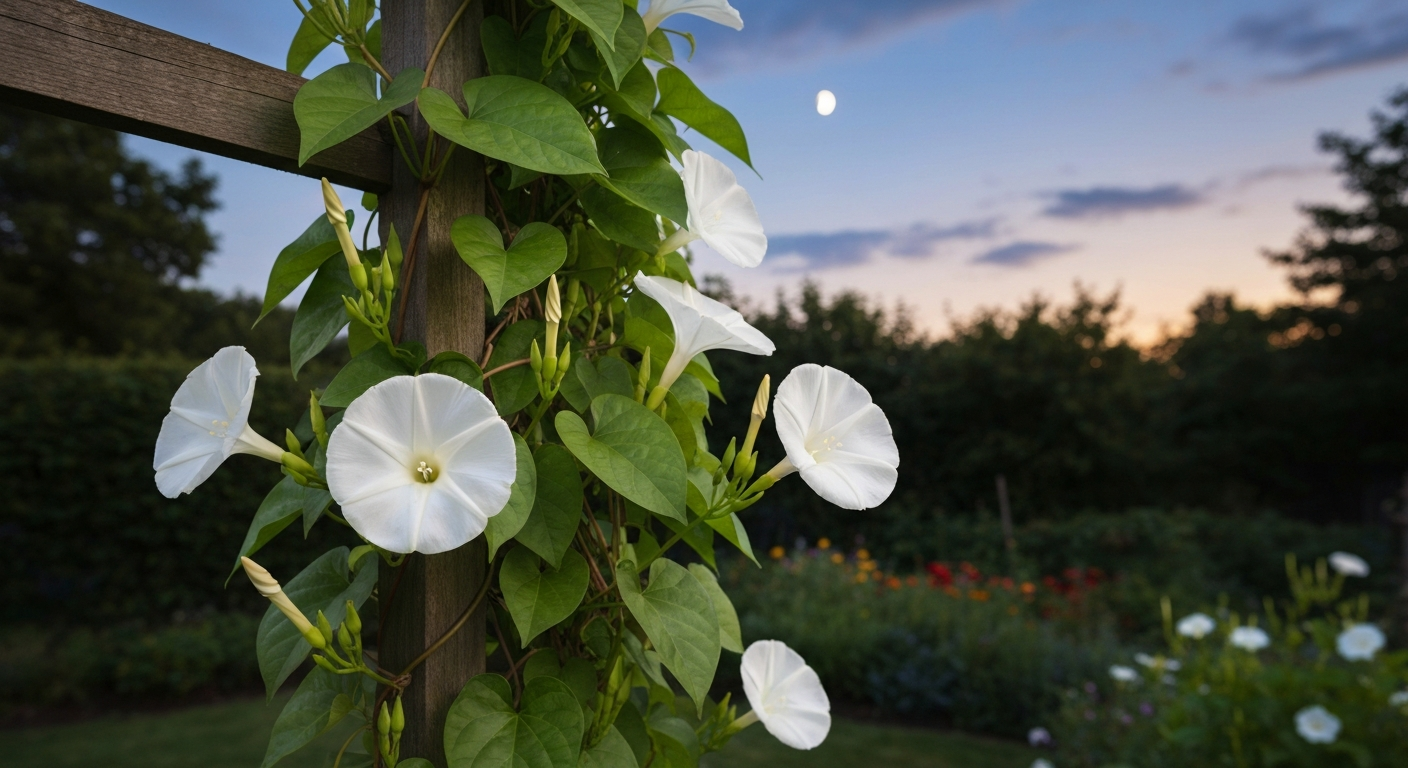
To grow a big moon blossom, your best bet is Ipomoea alba, the classic moonflower vine. Nick or file the hard seed coat, soak the seeds in warm water for 12 to 24 hours, then sow them about half an inch deep in warm soil (at least 70°F / 21°C). Start seeds indoors 6 to 8 weeks before your last frost, give the vine a trellis of at least 10 feet, full sun during the day, and a balanced liquid feed every one to two weeks. With the right conditions you will get fragrant, saucer-shaped blooms of 5 to 6 inches (12 to 15 cm) opening at dusk all summer long.
How to Grow a Big Moon Blossom: Step-by-Step Guide for Beginners

Marcus Holloway
10 Aug 2026
This guide walks you through every step of that process, from choosing the right species to saving seed at the end of the season. If you have never grown night-blooming flowers before, do not worry. Moonflower vines are forgiving once they get going, and watching those white blooms unfurl in the evening is one of the most satisfying moments in a home garden. Let's get into it.
What people actually mean by 'moon blossom'
The name 'moon blossom' or 'moonflower' is one of those charming, chaotic common names that gets pinned to several completely different plants. When a home gardener says moon blossom, they almost always mean Ipomoea alba, a vigorous twining vine in the morning-glory family that opens large white flowers after dark. In home‑gardening usage the name “moonflower” or “moon blossom” most commonly refers to the night‑blooming vine Ipomoea alba (syn. Calonyction aculeatum). That is the plant this guide focuses on. But seed packets, garden center tags, and online listings sometimes use the same name for Datura inoxia (jimsonweed/devil's trumpet), Brugmansia species (angel's trumpet), and even night-blooming cacti like Epiphyllum oxypetalum or Selenicereus. These are different plants with different habits, toxicity levels, and care needs, so always check the botanical name before you buy.
The safest rule: if the packet says Ipomoea alba (sometimes still listed under the old synonym Calonyction aculeatum), you have the classic annual moonflower vine. If it says Datura or Brugmansia, that is a very different, potentially toxic plant that deserves its own research before you grow it around children or pets.
Comparing the main 'moon blossom' types at a glance
Before you commit to a seed packet, it helps to see all the night-blooming 'moon blossom' relatives side by side. The table below covers the plants most commonly grouped under this name, including the moonflower bush, 10 o'clock flower (Mirabilis), crown flower, bubble blossoms, and office time or clock flowers. Each has a distinct growth habit and bloom size, which matters a lot if you specifically want those big, dramatic blooms.
| Plant / Common Name | Botanical Name | Type | Bloom Size | Blooms When | Night Bloomer? | Best For |
|---|---|---|---|---|---|---|
| Moonflower vine (moon blossom) | Ipomoea alba | Annual vine (perennial Zones 10–12) | 5–6 in (12–15 cm) | Summer to frost | Yes, opens at dusk | Large showy blooms, trellises, fences |
| Moonflower bush | Datura inoxia / Datura metel | Annual or tender perennial shrub | 4–7 in (10–18 cm) | Summer to fall | Yes (also open daytime) | Bold architectural plant; all parts toxic |
| 10 o'clock flower / Four o'clock | Mirabilis jalapa | Tender perennial, grown as annual | 1–2 in (2.5–5 cm) | Late afternoon onward | Opens late afternoon / evening | Easy color, fragrance, compact beds |
| Crown flower | Calotropis gigantea | Tropical shrub / small tree | 1–1.5 in (2.5–4 cm) | Year-round in tropics | No (day bloomer) | Tropical gardens, pollinator plant |
| Bubble blossoms | Various (ornamental brassicas / novelty cultivars) | Annual | Small to medium | Spring / summer | No | Novelty beds and containers |
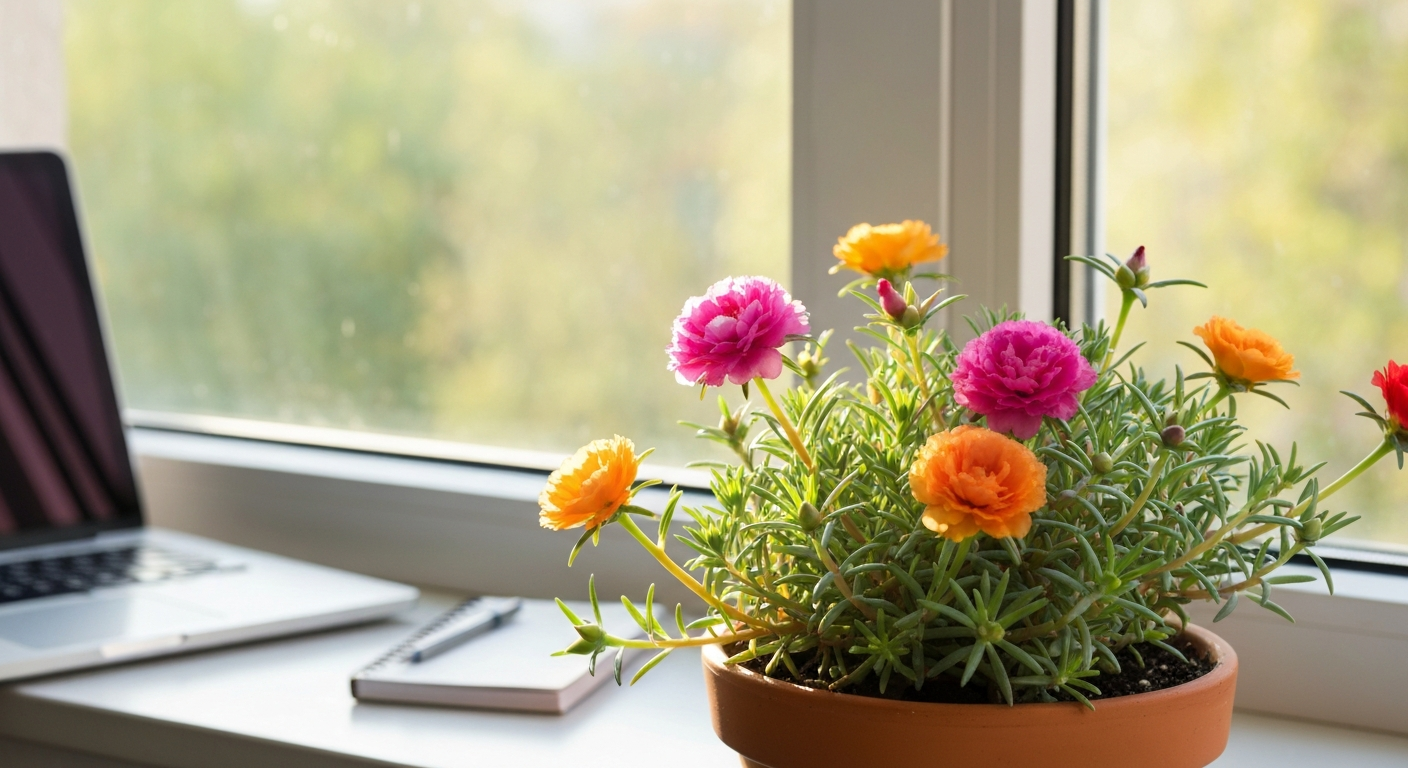
| Office time / clock flower | Portulaca grandiflora (moss rose) | Annual succulent | 1–2 in (2.5–5 cm) | Morning to midday | No (closes at night) | Sunny dry spots, containers |
The takeaway from that table is clear: if your goal is a genuinely big, night-blooming flower that earns the 'moon blossom' name, Ipomoea alba is the standout choice. The moonflower bush (Datura) comes close on size but carries serious toxicity concerns. The 10 o'clock flower opens in late afternoon and has fragrance, but its blooms are much smaller. Crown flower, bubble blossoms, and office time flowers (like the 10 o'clock flower and clock flower cousins explored elsewhere on this site) are lovely in their own right but are not what most gardeners picture when they say moon blossom. For specific care and growing tips, see our guide on how to grow crown flower.
Choosing the right species for large night blooms
For sheer bloom size and the classic night-opening drama, stick with Ipomoea alba. It is a legitimate annual in most temperate gardens (Zones 3–9) and a tender perennial in Zones 10 to 12. The vine reaches 10 to 15 feet (3 to 4.5 m) in a single season with enough warmth and support, and those 5- to 6-inch white flowers open at dusk with a heady fragrance. It is honest about being a climber: give it something to twine up and it will reward you generously. Try to grow it as a bush without support and it will flop and underperform.
If you are in Zone 10 or warmer, or if you are container-growing indoors over winter, Ipomoea alba can behave as a short-lived perennial and may bloom longer into the year. In cooler zones, treat it as a fast annual that you start fresh from seed each spring. The effort of that annual restart is minimal once you know the seed preparation steps covered below.
The moonflower bush (typically Datura inoxia or Datura metel) is a viable choice if you want big blooms on a non-climbing plant, but please do your research on toxicity first. Every part of Datura is poisonous. It is not a plant to grow where children or pets roam. With that caveat understood, it can produce spectacular trumpet flowers and is grown safely by many experienced gardeners who are aware of the risks.
Best variety picks for big, showy night blooms
Vigorous climbing types (the main event)
- Ipomoea alba (standard species): the workhorse moonflower vine, widely available from Ferry-Morse, Chiltern, Pangea, and most seed retailers. Blooms run 5–6 inches, pure white, fragrant. This is the one to grow if you want the classic moon blossom experience.
- Ipomoea alba 'Giant White': some catalog listings market a 'Giant' selection with extra-large blooms. Results vary by seed lot, but it is worth trying if you can find it labeled clearly with the botanical name.
- Ipomoea muricata (purple moonflower): a close relative that opens purple-white blooms in the evening. Slightly smaller flowers than I. alba but still showy. Treat it identically for seed prep and care.
Compact or container options
- Mirabilis jalapa (four o'clock / 10 o'clock flower): if you want something easier to manage in a smaller space, this is a good companion plant to moonflower. Blooms are smaller but it is extremely low-maintenance and opens from late afternoon onward.
- Datura metel 'Ballerina' series: compact Datura selections bred for container use. Blooms can reach 6–7 inches. Reiterate: handle with care and keep away from children and animals.
Seed-to-bloom calendar and materials checklist
Here is the full timeline for Ipomoea alba in a temperate garden (adjust last-frost date to your location). Most of the continental US last-frost range is March through May, so the dates below use a mid-May last frost as the reference point. Adjust earlier or later to suit your region.
| Stage | Timing (relative to last frost) | What to do |
|---|---|---|
| Seed sourcing and preparation | 8–10 weeks before last frost (early March) | Buy fresh seed, scarify, soak 12–24 hrs |
| Indoor sow | 6–8 weeks before last frost (late March to early April) | Sow 1/2 in deep in warm cell trays, 70–80°F |
| Germination window | 7–21 days after sowing (older seed up to 45 days) | Keep warm and moist; watch for sprouts |
| Seedling growth indoors | Weeks 2–6 after germination | Bright light, weekly half-strength feed, introduce small cane support |
| Hardening off | 2 weeks before last frost (early May) | Move trays outdoors for increasing hours each day |
| Transplant outdoors | After last frost, nights above 50°F / 10°C | Space 12–18 in apart at base of trellis |
| Vine establishment | Weeks 2–4 after transplant | Water regularly, begin full feeding schedule |
| First blooms | 60–90 days after germination (mid to late summer) | Enjoy evening display; begin deadheading |
| Peak bloom | Midsummer to early fall | Maintain feeding, monitor for pests |
| Seed saving | Late summer to fall | Allow selected pods to dry on vine before collecting |
| Direct sow option | When soil reaches 70°F / 21°C (late spring) | Skip indoor phase; scarify and sow directly outdoors |
Materials checklist
- Fresh Ipomoea alba seed (check the packet date — old seed germinates erratically)
- Small file, nail clipper, or sandpaper for scarification
- Small bowl for soaking seeds
- Seed-starting cell trays (72-cell or 50-cell)
- Seed-starting mix (peat/perlite or the recipe below)
- Heat mat to maintain 70–80°F soil temperature
- Grow light or very bright south-facing window
- 4-inch or 6-inch pots for stepping up seedlings
- Trellis, netting, or fence panel (minimum 8–10 ft tall)
- Balanced water-soluble fertilizer (look for roughly equal N-P-K numbers, e.g. 10-10-10 or 20-20-20)
- pH test kit or meter
- Dolomitic lime (if your mix is too acidic)
Choosing and sourcing good seed
Seed quality matters more for moonflower than for most annuals because of that hard seed coat. Old or poorly stored Ipomoea alba seed can germinate erratically, sometimes taking 30 to 45 days rather than the usual 7 to 21 days, and overall germination rates drop sharply after two to three years. Buy from a reputable seed company that prints a packed-for year on the packet, and try to use seed from the current or previous season. If you are buying online, check the botanical name on the listing. A packet labeled only 'moonflower' or 'moon blossom' could be Ipomoea alba or could be Datura or something else entirely.
When you receive seeds, write the full botanical name, seed company, and purchase year on the packet with a permanent marker before you file it away. This sounds obvious, but it saves real confusion if you are growing several night-blooming plants at once. Store unused seed in a sealed envelope in a cool, dry place (a glass jar in the fridge works well) and use within two seasons for best results.
Seed treatment and preparation: the step that makes or breaks germination
This is the single most important thing you can do for moonflower germination. Ipomoea alba seeds have a dense, impermeable seed coat that prevents water uptake until it is broken down. Skip this step and you may wait weeks for spotty germination, or get nothing at all. Do it properly and you will see sprouts in as little as seven days.
The two-step treatment method
- Scarify each seed mechanically: use a small metal file, a piece of coarse sandpaper, or a nail clipper to nick or lightly abrade the seed coat on the flat (darker) side. You are aiming to just scratch through the outer layer, not to cut the seed in half. One or two strokes of a file is plenty. This opens a path for water to enter.
- Soak the scarified seeds in a small bowl of warm (not boiling) water for 12 to 24 hours. You will notice seeds swell noticeably. Discard any that float after 12 hours (they are usually non-viable). Drain and sow immediately after soaking — do not let them dry back out.
Some extension resources describe a hot-water method where you pour near-boiling water over the seeds and let them soak as the water cools. This can work but carries a real risk of cooking the embryo if the water is too hot or the seeds sit too long. For beginners, the mechanical nick plus a warm-water soak is safer and just as effective. I have had much more consistent results with the file method than with hot-water soaks.
Stratification (cold treatment) is not needed for Ipomoea alba. That is a technique for cold-requiring seeds like some perennials and tree seeds. You can skip it entirely for moonflower.
Germination times by species
| Species | Treatment needed | Soil temp for germination | Expected germination window | Notes |
|---|---|---|---|---|
| Ipomoea alba (moonflower vine) | Scarify + soak 12–24 hrs | 68–80°F (20–27°C) | 7–21 days; up to 45 days for old seed | Warmth is critical; cold soil stalls germination badly |
| Ipomoea muricata (purple moonflower) | Scarify + soak 12–24 hrs | 68–80°F (20–27°C) | 10–21 days | Treat identically to I. alba |
| Datura inoxia / metel (moonflower bush) | Light soak 12 hrs, scarification optional | 65–75°F (18–24°C) | 10–21 days | Wash hands after handling; all parts toxic |
| Mirabilis jalapa (four o'clock / 10 o'clock) | Soak 4–8 hrs optional but helpful | 65–75°F (18–24°C) | 7–14 days | Very easy germinator; minimal treatment needed |
| Calotropis gigantea (crown flower) | None or light surface soak | 72–82°F (22–28°C) | 7–14 days | Tropical; needs consistent warmth |
| Portulaca grandiflora (office time / clock flower) | None required | 70–85°F (21–29°C) | 7–14 days | Tiny seeds; surface sow, do not cover |
Sowing indoors: step by step
- Fill cell trays with a seed-starting mix. A reliable DIY recipe: 50% sphagnum peat moss and 50% perlite by volume (the classic Cornell peat-lite formula), or 2 parts peat to 1 part vermiculite to 1 part perlite. Avoid garden soil in trays — it compacts and invites disease.
- Check the pH of your mix with a test kit. Aim for pH 6.0 to 7.0. If your peat mix is too acidic (common), add a small amount of dolomitic lime per the lime manufacturer's instructions and mix thoroughly before filling trays.
- Moisten the mix before filling trays so it is evenly damp but not dripping. Sowing into dry mix and then watering from above can displace small seeds.
- Press one pre-soaked, scarified seed into each cell at a depth of 1/2 to 1 inch (12 to 25 mm). Firm the mix lightly over the top.
- Place trays on a heat mat set to 70–80°F (21–27°C). Cover with a clear humidity dome or loose plastic wrap to retain moisture.
- Check daily. Do not let the surface dry out, but do not waterlog the cells. Bottom-watering (placing the tray in a shallow dish of water and letting it wick up) works well and avoids disturbing seeds.
- As soon as you see the first sprout (usually within 7 to 14 days with good treatment), remove the humidity dome and move trays directly under a grow light or to the brightest window you have. Seedlings left in low light after germination go leggy fast.
- Once seedlings have their first true leaves, begin watering with a half-strength balanced liquid fertilizer weekly.
Direct sowing outdoors
Direct sowing works well if your spring and summer are long enough. Wait until soil temperature is at least 70°F (21°C) at the planting depth, which in most temperate gardens means late spring or early summer. Still scarify and soak seeds before sowing outdoors, skipping treatment in the ground gives even more erratic results than skipping it indoors. Sow at the same depth (1/2 to 1 inch), space seeds 12 to 18 inches (30 to 45 cm) apart at the base of your trellis, and keep the area consistently moist until germination. Thin to the strongest seedling at each position once true leaves appear.
Soil, light, and where to plant
Ipomoea alba wants full sun during the day to fuel its evening show. It can tolerate part shade but will produce noticeably fewer blooms and a less vigorous vine. Choose a spot with at least 6 hours of direct sun and good air circulation. For garden soil, work in some compost to improve drainage and organic matter, and test pH. The target is 6.0 to 7.0. Heavy clay or waterlogged soil will stunt root growth and invite root rot; if your soil drains poorly, raise the bed or amend generously with coarse grit or perlite.
In containers, use a well-draining potting mix (the peat-perlite recipe above, or a quality commercial potting mix) in a pot that is at least 12 inches wide and 12 inches deep per plant. Containers dry out faster than beds, so plan to water more frequently. Make sure pots have drainage holes, standing water at the roots is the fastest way to lose a moonflower vine.
Trellising and support for maximum bloom
A moonflower vine will climb 10 to 15 feet (3 to 4.5 m) in a season, so build or install your support structure before you plant, not after. A thin trellis panel or wires strung between posts works well. The vine twines by wrapping its stems around supports, so it needs something to grab: twine, wire, netting, bamboo canes, or the classic split-rail fence. Smooth flat surfaces (like fence boards) without wires or netting attached will frustrate it.
For the biggest blooms, encourage the vine to grow upward rather than sprawling sideways. Gently guide new growth onto the trellis in the early weeks. Once established, the vine will find its own way. A trellis height of 8 to 10 feet is a practical minimum; taller is better if you can manage it.
Watering and feeding: what the vine actually needs
Young moonflower seedlings and newly transplanted vines need consistent moisture while they establish, but once the vine is growing strongly it is reasonably drought-tolerant. In garden beds, aim for about 1 inch of water per week (from rain or irrigation) during the growing season. In containers, check daily in hot weather and water whenever the top inch of mix feels dry. Avoid wetting the foliage late in the day, damp leaves overnight encourages fungal problems.
For fertilizing, the goal is steady, balanced nutrition rather than heavy nitrogen hits. Heavy nitrogen gives you lush foliage but fewer flowers. In garden beds, a balanced slow-release granular fertilizer (10-10-10 or similar) worked into the planting area at transplant, followed by a balanced liquid feed every two to three weeks through the growing season, is a practical approach. In containers, where nutrients flush out with watering, feed more frequently: a balanced water-soluble fertilizer at label-recommended dilution (typically delivering around 100 to 200 ppm nitrogen) every one to two weeks. If the vine is all leaves and no blooms mid-summer, switch to a bloom-booster formula with lower nitrogen and higher phosphorus (like a 5-10-10 or 10-30-20) for a few weeks.
Pinching, pruning, and deadheading for bigger blooms
Pinch out the growing tip of a young moonflower vine once it has four to six sets of true leaves. This encourages the plant to branch at the base and produce multiple climbing stems rather than one single shoot, which means more flowers over a longer period. It feels counterintuitive to cut back a seedling you have carefully grown, but it genuinely works.
Moonflower blooms last one night and then wither. Deadheading (removing spent flowers and their developing seed capsules) keeps the plant focused on producing new buds rather than putting energy into seeds. If you want to save seed, leave a few pods on the vine to mature fully (they will turn brown and papery on the vine). Deadhead everything else regularly through the season.
Troubleshooting common problems
| Problem | Likely cause | Fix |
|---|---|---|
| No germination after 3+ weeks | Seed coat not broken; soil too cold; old seed | Re-scarify and re-soak fresh seed; check soil temp is above 70°F |
| Leggy, weak seedlings | Insufficient light after germination | Move under grow light or to brightest window; reduce watering slightly |
| Damping off (seedlings collapse at soil level) | Fungal rot from overwatering or poor airflow | Use sterile seed mix; bottom-water only; remove dome early; improve airflow |
| Yellow leaves | Overwatering, nutrient deficiency, or pH out of range | Check drainage; test soil pH (target 6.0–7.0); resume balanced feeding |
| Vine grows but few or no flowers | Too much nitrogen; too little sun; plant too young | Switch to bloom-booster feed; ensure 6+ hours direct sun; give it more time |
| Leaves with pale tunneling or stippling | Leafminers or spider mites | Remove affected leaves; spray with neem oil solution; improve airflow |
| Powdery white coating on leaves | Powdery mildew | Improve airflow; avoid wetting leaves; apply potassium bicarbonate or neem |
| Vine stops climbing; stems sprawling | Nothing to grab; support too smooth | Add twine or mesh to trellis; guide stems by hand onto support |
Bloom triggers: getting the most out of evening displays
Ipomoea alba opens its flowers in response to falling light levels at dusk. A warm day followed by a cooler evening seems to encourage the most prolific opening. Artificial light pollution at night (a street lamp or porch light shining directly on the plant) can confuse the plant's light-sensing and delay or reduce flowering. If you notice fewer blooms than expected and the vine is planted near a bright outdoor light, try moving the plant or shielding it from that light source.
Consistent watering through hot spells also helps. Drought stress in high summer causes the plant to drop buds before they open. Keep soil moisture steady during the hottest weeks of the season, and you will be rewarded with blooms opening reliably each evening.
Overwintering and growing indoors
In Zones 10 to 12, Ipomoea alba is a tender perennial and can survive mild winters in the ground. In all other zones, it will die back to frost. If you want to carry a plant over winter, pot it up before the first frost, cut the vine back to about 12 to 18 inches, and bring it into a bright indoor space (a sunny greenhouse or south-facing window) where temperatures stay above 50°F (10°C). For tips on growing moonflowers in offices or other indoor spaces, see how to grow office time flower. Cut back watering significantly in winter, feeding monthly at most. In spring, resume regular watering and feeding as temperatures warm, harden the plant off gradually, and move it back outside after your last frost date.
Honestly, in most temperate climates it is easier and just as rewarding to save seed and start fresh each year than to overwinter the vine. Moonflower grows so fast from treated seed that you will not lose much of a head start.
Harvesting and saving seed
Leave a handful of spent flowers on the vine to develop into seed pods through late summer and fall. The pods are round, about the size of a large marble, and will turn brown and papery when ripe. Harvest them on a dry day before the first frost, crack them open, and you will find the distinctive dark, angular seeds inside. Each pod holds two to four seeds typically. Spread seeds on a paper towel for a week to ensure they are completely dry, then store in a labeled paper envelope (include the botanical name, variety if known, and harvest year) in a cool, dry location. Seed stored this way is usually viable for two to three seasons.
Growing moon blossoms from your own saved seed after the first year feels like a proper return on your gardening investment. The seed is easy to collect, easy to prepare the following spring, and the plants from saved seed tend to perform just as well as purchased seed if storage conditions were good. Give it a try.
FAQ
What exactly do gardeners mean by “moon blossom” or “moonflower” — which species should I choose for big night blooms?
Most home gardeners mean Ipomoea alba (syn. Calonyction), a vigorous night‑blooming vine with large white saucer/trumpet flowers (5–6 in / 12–15 cm). However, the common name is also used for unrelated night‑bloomers: Datura/Brugmansia (large pendent trumpet flowers, often woody shrubs/trees), Epiphyllum/Selenicereus (night‑blooming cacti) and Mirabilis jalapa (10 o’clock flower, smaller evening blooms on a bush). For the classic large, climbing “moon blossom” choose Ipomoea alba. Choose Datura/Brugmansia if you want woody/large potted plants (note toxicity), Epiphyllum for indoor/epiphyte displays, and Mirabilis if you prefer compact, bushy, multicolored evening flowers.
When should I start moonflower (Ipomoea alba) seed indoors or sow outdoors?
Indoors: sow 4–8 weeks before your average last frost date (6 weeks is typical) so vines have time to climb and bloom. Direct sow: wait until soil temperatures are ≥70°F (≈21°C) and all danger of frost has passed. Transplant outdoors after evenings stay above ~50°F (10°C). In short seasons start toward the earlier end of the indoor window and be prepared to provide taller trellis space early.
How do I treat moonflower seeds to get faster, more reliable germination?
Seeds have a hard coat. Use one of these pretreatments: 1) Mechanical scarification — nick or lightly file the seed coat (avoid damaging the embryo), then soak in tepid water 12–24 hours. 2) Hot‑water method — pour near‑boiling water over seeds in a container, let it cool, then soak 12–24 hours (do not leave in scalding water). After soaking sow immediately. Both methods improve water uptake and speed germination.
What medium, sowing depth, temperature and expected germination time should I use?
Use a light seed‑starting mix: 50% sphagnum peat (or coco coir) + 50% perlite/vermiculite (by volume). Sow seeds 1/2–1 inch (12–25 mm) deep. Keep medium moist but not waterlogged. Maintain temperature 70–80°F (21–27°C). Expect germination typically in 7–21 days after scarification/soak; older seed can be erratic up to 30–45 days.
What are stepwise instructions for starting seed indoors and transplanting successfully?
1) Pretreat seeds (scarify or hot‑water soak 12–24 hr). 2) Fill 2–3 in (5–7 cm) plug trays or 3–4 in (7–10 cm) pots with seed mix. 3) Sow one seed per cell/pot at 1/2–1 in (12–25 mm) depth, cover, water gently. 4) Place under heat mat or warm location at 70–80°F (21–27°C) and provide light (grow light or bright window) once seedlings emerge. 5) Thin to strongest seedling if multiple emerged. 6) Harden off 7–10 days before transplanting: gradually increase outdoor exposure. 7) Transplant outdoors after nights >50°F (10°C); space plants 12–18 in (30–45 cm) apart. 8) Provide trellis/support at planting or immediately after (see trellis notes).
How big should the trellis be and how many plants per support for large blooms?
Allow vigorous growth: trellis height 8–15 ft (2.5–4.5 m) depending on site and variety; 10–12 ft (3–3.7 m) is common. Space plants 12–18 in (30–45 cm) apart along the base of a trellis. Use one vine per 12–18 in section. For very large displays use multiple plants per trellis (3–5) to ensure full coverage and more blooms.
Next Article
How to Grow Office Time Flower: Seed-to-Bloom Guide for Office & Container
How to grow office time flower: seed-to-bloom care for 4/10‑o’clock, moonflower, crown flower, pots, light, watering, fix