If you searched 'how to grow office time flower,' you are most likely looking for Portulaca grandiflora, the cheerful little succulent annual that goes by the common name 'office time flower' across much of India because its blooms pop open right around mid-morning office hours and close by early afternoon. That said, the phrase also pulls in four-o'clocks (Mirabilis jalapa), white moonflower vines (Ipomoea alba), crown flower (Calotropis gigantea), and the commercially traded 'bubble blossom' category, since all of them are tied to a specific time of day. This guide sorts out exactly which plant you are dealing with, then walks you through growing it from seed to bloom, whether your space is a desk, a balcony pot, or a backyard bed.
How to Grow Office Time Flower: Seed-to-Bloom Guide for Office & Container

Marcus Holloway
27 Jul 2026

What people actually mean by 'office time flower'
The most documented usage of 'office time flower' as a formal common name belongs to Portulaca grandiflora, also called moss rose or 9/10 o'clock plant. Indian flora databases, including the eFlora of Gandhinagar, list 'Office-Time Flower' as a verified vernacular name for Portulaca grandiflora, and if you have seen tiny jewel-coloured blooms open up on a sunny window ledge around 9 or 10 am, that is the one. Portulaca grandiflora, eFlora of Gandhinagar (shows 'Office‑Time Flower' usage) Portulaca grandiflora — eFlora of Gandhinagar (shows 'Office‑Time Flower' usage). The flowers close in the afternoon, so if your neighbour calls it an 'office time' plant, Portulaca is almost certainly what they mean.
But internet searches mix in related time-of-day bloomers, and it is worth knowing who is who before you buy seeds. Here is a quick identification guide based on leaf shape, bloom time, and how the plant looks:
| Plant | Common name(s) | Bloom time | Key ID features |
|---|---|---|---|
| Portulaca grandiflora | Office time flower, moss rose, 9/10 o'clock | Opens mid-morning (~9–10 am), closes afternoon | Fleshy needle-like leaves, low spreading habit, small rose-like blooms in bright colours |
| Mirabilis jalapa | Four-o'clock, marvel of Peru | Opens late afternoon (~4 pm), stays open overnight | Trumpet-shaped flowers, thick tuberous root, bushy 60–90 cm tall, opposite oval leaves |
| Ipomoea alba | White moonflower | Opens at dusk, closes by mid-morning | Heart-shaped leaves, large white fragrant trumpets 10–15 cm wide, vigorous climbing vine |
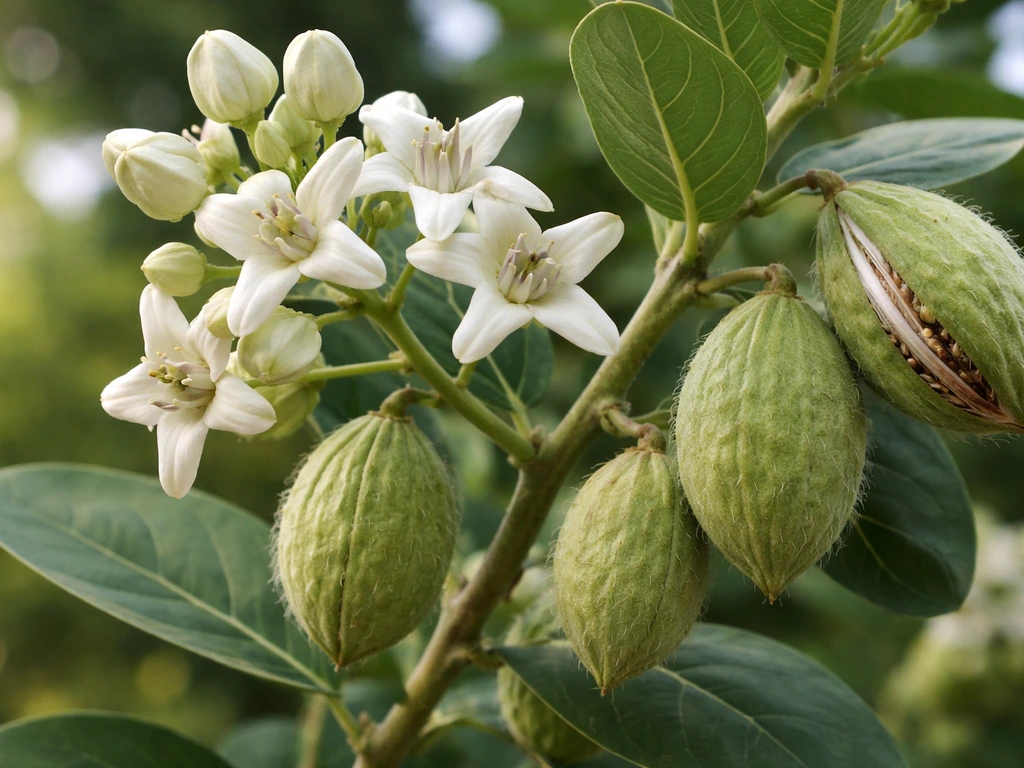
| Calotropis gigantea | Crown flower | Daytime; blooms year-round in tropics | Woody shrub/small tree, milky sap, grey-green oval leaves, five-petalled star-shaped flowers |
| Bubble blossom (BlinQ/trade name) | Bubble blossom, BlinQ blossom | Daytime (edible/ornamental use) | Not a single botanical species — a trade/brand name for crystalline-textured edible blossoms |
If you are unsure, check the plant label or seed packet for the Latin name. A tag reading 'Portulaca grandiflora' confirms the true office-time flower. For the others, the bloom timing itself is usually the giveaway: if it opens at 4 pm, you have a four-o'clock; if it opens at dusk with a heavenly scent, you have a moonflower vine.
Quick suitability guide for office and desk containers
Not every time-of-day bloomer is a realistic desk plant. Portulaca is genuinely container-friendly. Moonflower vines and crown flower are not suitable for small indoor pots in any practical sense. Here is an honest breakdown:
| Plant | Container suitability | Minimum pot size | Indoor desk? | Notes |
|---|---|---|---|---|
| Portulaca grandiflora | Excellent | 10–15 cm (4–6 in) diameter | Yes, sunny windowsill | Compact, drought-tolerant, perfect for small pots |
| Mirabilis jalapa (four-o'clock) | Good (medium containers) | 25–30 cm (10–12 in) diameter | Maybe — needs a bright window | Gets 60–90 cm tall; opens at 4 pm so you likely miss the show at a desk |
| Ipomoea alba (moonflower) | Poor for small containers | 30+ cm (12+ in), 5+ gallon preferred | No | Aggressive vine needing 1.8–2.4 m trellis; opens at night |
| Calotropis gigantea (crown flower) | Poor | Very large tub or open ground | No | Shrub/small tree; toxic sap; unsuitable indoors |
| Bubble blossom (trade type) | Varies by species used | Varies | Varies | Not a defined species; container suitability depends on actual plant |
For a true desk or office windowsill situation, Portulaca grandiflora is the clear winner. It is compact, forgiving, and genuinely beautiful in a 10–15 cm pot on a sunny south-facing ledge. If you want a four-o'clock indoors, you can manage it in a 25–30 cm container near a bright window, but expect a tall, bushy plant rather than a tidy desk ornament.
Choosing a variety for your space
Once you know which plant you are dealing with, the next decision is variety type within that species. The main tradeoffs are compact versus vining, daytime versus night-blooming, fragrance, and how much maintenance you are willing to give.
- Compact types (Portulaca): Low-growing, spreading to about 20–30 cm wide, no support needed, dozens of cultivars in single and double-flowered forms. Double-flowered 'Sundial' or 'Afternoon Delight' series work especially well in pots.
- Vining types (Ipomoea alba, moonflower): Can reach 3–6 m in a single season. Beautiful but not a container beginner's plant. Need a strong trellis and a large pot.
- Day-bloomers (Portulaca): Flowers mid-morning to early afternoon. If you actually want to watch your plant bloom at your desk, this is the right choice.
- Night-bloomers (Ipomoea alba, Mirabilis jalapa): Flowers open late afternoon or at dusk. Great for an evening patio but wasted on a daytime office.
- Fragrance: Ipomoea alba has strong, sweet night fragrance — spectacular outdoors, potentially overwhelming in a small room. Portulaca has no significant scent. Mirabilis jalapa has a mild sweet perfume.
- Maintenance: Portulaca is low-maintenance and drought-tolerant. Moonflower vines require regular watering, feeding, and training. Four-o'clocks are somewhere in between.
Seed-to-bloom timeline: what to realistically expect
One of the most common frustrations in growing these plants is not knowing how long to wait. Here are honest, research-backed timelines for each type. These assume warm conditions and good light.
| Plant | Germination | Weeks to first bloom (from seed) | Best sowing season (Northern Hemisphere) |
|---|---|---|---|
| Portulaca grandiflora | 6–10 days at 18–24°C (65–75°F) | 8–10 weeks | March–May (start indoors), or direct sow after last frost |
| Mirabilis jalapa (four-o'clock) | 5–15 days at 20–25°C (68–77°F) | 8–12 weeks | Start indoors 4–8 weeks before last frost; direct sow when soil is warm |
| Ipomoea alba (moonflower) | 7–21 days at 20–25°C (68–77°F) | 10–17 weeks (60–120 days) | Start indoors 4–6 weeks before last frost; transplant after all frost risk passes |
| Calotropis gigantea (crown flower) | 2–4 weeks in warm conditions | Several months to a year for first bloom | Year-round in tropical zones; not suited to seasonal sowing in temperate climates |
Portulaca is the fastest and most rewarding plant in this group for beginners. You can have blooms within two months of sowing, and the plant keeps producing all summer with almost no fuss. Moonflower vines demand patience: a 60-to-120-day range from seed to decent flowering means you absolutely must start them indoors early if you are in a cooler climate.
Step-by-step starter plan for beginners
If you are new to growing any of these plants, this checklist gets you started without overthinking it. The steps below are written for Portulaca grandiflora (the true office time flower) but I have noted where four-o'clocks and moonflowers differ.
- Buy seeds: Look for Portulaca grandiflora seeds labelled 'moss rose' or '9/10 o'clock.' For four-o'clocks, look for 'Mirabilis jalapa.' For moonflower, look for 'Ipomoea alba.' Source from a reputable seed supplier and check the sow-by date on the packet.
- Gather supplies: A 10–15 cm pot with drainage holes (for Portulaca), a bag of well-draining potting mix (cactus/succulent mix works perfectly for Portulaca), a spray bottle for watering seedlings, and a small amount of slow-release granular fertilizer.
- Time your sow: For Portulaca, sow indoors 6–8 weeks before your last expected frost date, or direct-sow in warm soil after frosts are done. For four-o'clocks, start indoors 4–8 weeks before last frost. For moonflower, start indoors 4–6 weeks before last frost.
- Sow the seeds: Follow the depth and technique for each species (detailed below). Label your pots with the date and plant name.
- Provide warmth: Set pots in the warmest spot in your home — a heat mat is helpful but not essential if your indoor temperature stays above 18°C (65°F).
- Watch for germination: Portulaca sprouts in 6–10 days, four-o'clocks in 5–15 days, moonflowers in 7–21 days. Once sprouts appear, move to your brightest window.
- Grow on and harden off: Once seedlings are a few centimetres tall and your outdoor temperature is reliably warm, begin hardening off (acclimatising to outdoor conditions) before transplanting.
- Place in final position: Portulaca stays in a pot on your sunniest windowsill or balcony. Four-o'clocks go into a 25–30 cm pot or garden bed. Moonflowers need a large outdoor container with a trellis.
Sowing and germination: the details that actually matter
Sowing depth and seed preparation are where a lot of beginners go wrong. Each species has specific needs, and ignoring them is the single most common cause of poor germination.
Portulaca grandiflora (office time flower)
Portulaca seeds are tiny, almost dust-like. They need light to germinate, so do not cover them with soil. Press them gently onto the surface of moist potting mix and mist with a spray bottle. Soil temperature should be 18–24°C (65–75°F). Cover the pot loosely with clear plastic film or a plastic bag to hold humidity and place it in bright indirect light or under a grow light. Germination takes 6–10 days. Once sprouts appear, remove the plastic immediately and move the pot into direct sunlight.
Mirabilis jalapa (four-o'clock)
Four-o'clock seeds are larger and easier to handle. Sow them about 6 mm (1/4 inch) deep in moist potting mix. Some seed suppliers recommend soaking or lightly scarifying (nicking the seed coat with a nail file) before sowing to speed up germination, though it is not strictly necessary. Soil temperature of 20–25°C (68–77°F) is ideal. Germination typically takes 5–15 days. You can also grow four-o'clocks from dormant tubers if you save them from a previous season, plant tubers about 5 cm (2 inches) deep.
Ipomoea alba (moonflower)
Moonflower seeds have a hard coat that resists water uptake. Before sowing, nick the seed coat gently with a nail file or soak the seeds in warm water for 12–24 hours until you see them swell slightly. Sow about 6–12 mm (1/4–1/2 inch) deep in moist potting mix. Maintain soil temperature around 20–25°C (68–77°F). Germination takes 7–21 days. Start moonflowers in individual pots or cells rather than trays, as they dislike root disturbance.
Indoor seedling tips for all types
- Always use fresh, sterile potting mix — not garden soil — to reduce the risk of fungal damping-off.
- Water from below (set the pot in a tray of water for 10 minutes) rather than splashing the seedlings to help prevent stem rot.
- Once seedlings have their first true leaves, begin giving them 14–16 hours of bright light per day — a south-facing window or a basic LED grow light works well.
- Thin Portulaca seedlings to about 10–15 cm apart once they are 2–3 cm tall; they compete for light quickly.
- If seedlings become leggy (tall and spindly), they need more light, not more water.
Transplant timing and hardening off
Hardening off is just the process of letting indoor-raised seedlings get used to outdoor conditions gradually. Skip this step and you will often see wilting or leaf scorch within a day or two of moving plants outside, even if the weather seems mild.
- Start hardening off about 7–10 days before you plan to transplant. Begin when nighttime temperatures are reliably above 10°C (50°F) for Portulaca and four-o'clocks, and above 15°C (59°F) for moonflowers.
- Day 1–2: Place seedlings in a sheltered outdoor spot (no direct sun, no wind) for 1–2 hours, then bring them back inside.
- Day 3–4: Increase outdoor time to 3–4 hours, introducing a little direct morning sun.
- Day 5–7: Leave plants outside for most of the day, including midday sun. Bring them in before dark.
- Day 8–10: Leave outside overnight if temperatures allow. After this, transplant into their final pots or garden positions.
- For Portulaca, transplant into a 10–15 cm pot or window box filled with well-draining mix. For four-o'clocks, use a 25–30 cm pot or a garden bed with 30–45 cm spacing. For moonflowers, transplant into a large container (30+ cm, at least 5 gallons) next to a trellis or fence, or directly into the ground.
Potting mixes, container sizes, and placement
Getting the soil mix right
For Portulaca, drainage is everything. The roots will rot in soggy mix within days. I use a simple recipe: 2 parts perlite or coarse sand to 1 part standard potting mix. You can also buy a pre-made cactus and succulent mix and use it straight from the bag, it is already formulated for fast drainage. For four-o'clocks in medium containers, a standard all-purpose potting mix with about 20–25% perlite added works well. For moonflower vines in large outdoor containers, use a high-quality, peat or coir-based potting mix that retains slightly more moisture, again with 20% perlite for aeration, and mix in a slow-release granular fertilizer at the manufacturer's recommended rate at planting time.
Container sizes and drainage
Here is the practical breakdown by plant. Every container must have drainage holes, this is non-negotiable. If you are growing indoors, place the pot in a saucer but empty the saucer after 30 minutes to prevent the roots from sitting in water.
| Plant | Recommended pot diameter | Volume | Drainage saucer tip |
|---|---|---|---|
| Portulaca grandiflora | 10–15 cm (4–6 in) — desk/windowsill | ~0.5–1 litre | Empty saucer within 30 min; small pots dry fast |
| Mirabilis jalapa (four-o'clock) | 25–30 cm (10–12 in) — medium container | 3–5 gallon | Use a deeper saucer; water more frequently in summer heat |
| Ipomoea alba (moonflower) | 30+ cm (12+ in), 5+ gallon preferred | 5–7+ gallon | Outdoors only; no indoor saucer needed if on patio |
| Calotropis gigantea (crown flower) | Very large tub or open ground only | 10+ gallon minimum | Best grown in-ground in tropical climates |
Light and temperature
Portulaca needs at least 6 hours of direct sunlight daily, it is a sun-worshipper and will not bloom well in anything less than a south-facing window with full sun. Ideal indoor temperature is 18–27°C (65–80°F). Below 10°C (50°F) it stops growing. Four-o'clocks prefer 6+ hours of sun but tolerate partial afternoon shade. They bloom best when daytime temperatures are 20–30°C (68–86°F). Moonflowers are also full-sun plants for most of the day (6–8 hours direct sun), but their blooms open at dusk, you do not need to be there while they photosynthesise, but the plant itself needs strong light to build enough energy to produce flowers. A special note for night-bloomers: do not place them near artificial lights that stay on through the night outdoors, as constant light can disrupt flowering cycles in some Ipomoea varieties.
Watering and feeding schedule
The single most useful test for watering is to push your finger about 2.5 cm (1 inch) into the soil. If it feels dry at that depth, water thoroughly until it drains from the bottom. If it still feels moist, wait another day.
| Plant | Watering frequency (summer) | Fertilizer type | Feeding rate and schedule |
|---|---|---|---|
| Portulaca | Every 3–5 days; allow to dry between waterings | Balanced liquid fertilizer (e.g., 10-10-10) | Half-strength dose every 3–4 weeks; avoid overfeeding (excess nitrogen reduces blooms) |
| Mirabilis jalapa | Every 2–3 days in containers; less in ground | Balanced or bloom-booster (e.g., 5-10-10) | Full-strength every 2–3 weeks during growing season |
| Ipomoea alba (moonflower) | Every 1–2 days in containers during heat | High-phosphorus bloom fertilizer (e.g., 5-20-10) | Every 2 weeks once established; ease off nitrogen or you get leaves but no flowers |
| Calotropis gigantea | Minimal — drought-tolerant once established | Light general fertilizer twice a year | Not recommended for container feeding schedules |
A common mistake with Portulaca is over-watering. It stores water in its fleshy leaves and stems, so soggy conditions cause root rot almost immediately. When in doubt, skip a watering day. With moonflowers in containers, the opposite problem is more common: large pots in summer heat can dry out surprisingly fast, and drought stress during bud development causes bud drop.
Support, training, and pruning
Portulaca needs no support and very little pruning. If it becomes straggly mid-season, trim stems back by about one-third and it will bush out again quickly. For four-o'clocks, a single bamboo cane per plant is enough to keep it upright in a pot if your balcony is windy. Pinching out the growing tips of young four-o'clock plants (when they are about 15 cm tall) encourages a bushier, more floriferous plant rather than a tall single stem.
Moonflower vines need serious vertical support from the start. Install a trellis, fence, or stake structure at least 1.8 m (6 feet) tall before transplanting, trying to add support after the vine has taken off is a frustrating job. Train the main stem up by loosely tying it to the support with soft garden twine every 20–30 cm. Moonflowers are not typically pinched; they bloom on the main leaders and lateral shoots. Prune only to remove dead or diseased growth.
Propagation options
Most of these plants are easiest to grow from seed each year, but there are useful shortcuts.
Portulaca grandiflora
Propagate by seed (surface-sow as described above) or by stem cuttings. Cuttings root very easily: snip a 5–8 cm stem, let the cut end dry for an hour, then push it into moist, sandy potting mix. Keep in a warm, bright spot. Rooting takes about 7–14 days. This is a handy trick for multiplying a plant you already love without buying new seeds.
Mirabilis jalapa (four-o'clock)
Four-o'clocks grow from seed and from their tuberous roots. If you grow them one season, you can dig up the tubers in autumn (before frost), store them in dry peat or vermiculite at around 7–10°C (45–50°F), and replant them in spring. Tubers tend to give you bigger, faster-blooming plants than seed-grown ones. Division is also possible when a clump of tubers has grown large, simply separate and replant sections.
Ipomoea alba (moonflower)
In practice, moonflowers are grown fresh from seed each year in temperate climates. In frost-free tropical zones they can be perennial. Stem cuttings are possible in summer (take 10–15 cm softwood cuttings, dip in rooting hormone powder, and place in moist potting mix), but most home growers find fresh seed each season easier and more reliable.
Calotropis gigantea (crown flower)
Crown flower is propagated by seed (the fluffy, wind-dispersed seeds germinate readily in warm, tropical conditions) or by stem cuttings taken in warm weather. Because it is a woody perennial shrub, division is not practical. Always wear gloves when taking cuttings, the milky latex sap can cause skin irritation.
Troubleshooting common problems
No blooms
- Not enough light: This is the number one reason Portulaca and four-o'clocks fail to flower indoors. Move the pot to a sunnier location immediately — at least 6 hours of direct sun.
- Too much nitrogen fertilizer: Excess nitrogen pushes leafy green growth at the expense of flowers. Switch to a lower-nitrogen, bloom-booster fertilizer (higher middle number, e.g., 5-10-10) and skip a feeding cycle.
- Plant is too young: Check the timeline table above. Portulaca takes 8–10 weeks from seed; moonflowers can take 60–120 days. Patience is sometimes the only cure.
- Day-length issues (moonflowers): Continuous artificial light at night can delay blooming in some Ipomoea varieties. Turn off patio lights or move the plant away from them.
Pest problems
- Aphids: Small clusters of soft-bodied insects on new growth. Blast off with a strong stream of water or spray with insecticidal soap solution (a few drops of dish soap in 500 ml water).
- Spider mites: Tiny dots on leaf undersides with fine webbing, causing leaves to look stippled and pale. Most common in hot, dry indoor conditions. Increase humidity, spray with neem oil solution (follow label rates), and repeat every 5–7 days.
- Whiteflies: Small white flies that cluster on leaf undersides and fly up in a cloud when disturbed. Yellow sticky traps catch adults; neem oil or insecticidal soap treats nymphs on the plant.
Disease problems
- Root rot: Black, mushy roots and wilting despite moist soil. Caused by overwatering or poorly draining mix. Remove plant from pot, cut away rotten roots with clean scissors, repot into fresh, very well-draining mix, and reduce watering frequency.
- Damping-off (seedlings collapsing at the base): Caused by fungal pathogens in non-sterile soil or overwatering. Always use sterile potting mix, water from below, and ensure good air circulation around seedlings.
- Powdery mildew (white powder on leaves): More common on four-o'clocks and moonflowers in humid, low-airflow conditions. Improve air circulation, avoid overhead watering, and apply a dilute baking soda spray (1 tsp baking soda per litre of water) weekly as a preventive.
Quick care checklist card
Print this out and stick it near your plants. It covers the basics for keeping any of these office-time bloomers healthy from week to week.
- DAILY: Check soil moisture at 2.5 cm depth. Water only if dry. Check that Portulaca or other flowering pots are in full sun.
- DAILY: Remove spent/dead flowers (deadheading encourages more blooms on Portulaca and four-o'clocks).
- EVERY 2–3 DAYS: Check underside of leaves for pests (aphids, mites, whiteflies). Empty saucers if water has pooled.
- WEEKLY: Check that vining plants (moonflower) are tied to their support and not tangling. Rotate pots a quarter-turn for even light exposure.
- EVERY 2–4 WEEKS: Apply liquid fertilizer at recommended dilution (half-strength for Portulaca; full-strength for four-o'clocks and moonflowers in active growth).
- MONTHLY: Check drainage holes for blockage. Refresh the top 2 cm of soil if it has become crusty or compacted. Pinch back any leggy stems on Portulaca or four-o'clocks.
- SEASONALLY: In autumn (temperate climates), save seed from Portulaca and four-o'clocks, dig and store four-o'clock tubers before frost, and compost spent annuals. Plan next season's sowing dates.
Variety-specific notes and what to expect
Crown flower (Calotropis gigantea)
Crown flower is a large woody shrub or small tree native to tropical and subtropical Asia. It can reach several metres tall in the ground and blooms with distinctive five-petalled, star-shaped flowers in white or pale lavender. It is a daytime bloomer and produces flowers year-round in warm, frost-free climates. Container suitability is very poor for anything smaller than a large outdoor planter or half-barrel, and it is not a practical indoor plant. Importantly, all parts of Calotropis gigantea contain milky latex with cardenolide compounds (calotropin) that are toxic if ingested and can cause skin irritation on contact. Wear gloves when handling, and keep plants away from children and pets. If you are interested in growing crown flower and want related context, the how-to guide for crown flower goes into much more detail on its specific care requirements.
Four-o'clock and ten-o'clock types (Mirabilis jalapa / Portulaca grandiflora)
Portulaca (the true 'ten-o'clock' / 'office time flower') is a compact annual succulent. Flowers open mid-morning and close by early afternoon or when it gets cloudy. It blooms abundantly from late spring through to autumn if given full sun and lean, well-draining soil. It is genuinely one of the easiest plants a beginner can grow in a container. Mirabilis jalapa (four-o'clock) is a bushy annual or tender perennial growing 60–90 cm tall, with fragrant trumpet flowers that open around 4 pm and stay open through the night, closing in the morning. It is great for evening garden spaces but less useful as a 'desk' flower since you will miss the show. Both are easy from seed and worth growing. For detailed guidance on the ten-o'clock specifically, the how-to guide for the 10 o'clock flower covers its care in dedicated depth.
Moonflower and moonflower bush (Ipomoea alba and related)
Ipomoea alba (white moonflower) is a vigorous tropical vine with large, pure white flowers up to 15 cm across that open at dusk and emit a strong, sweet fragrance. For detailed tips on producing large, showy moonflower blooms, see how to grow a big moon blossom. Ipomoea alba L., Plants of the World Online (Kew) lists Ipomoea alba as an accepted species, documents its native/tropical range and widespread introductions, and notes that the common name 'moonflower' can refer to multiple species, which can cause search ambiguity Ipomoea alba L. — Plants of the World Online (Kew). It is spectacular for an evening patio but completely impractical as an indoor or desk plant. It needs full sun during the day, a large container (at least 5 gallons), and sturdy vertical support 1.8–2.4 m tall. It takes 60–120 days from seed to meaningful flowering, so early indoor starts are essential in temperate climates. The moonflower bush (a related but distinct growing form) has its own specific care profile covered in dedicated guides.
Bubble blossom types
Bubble blossom is not a single botanical species. In commercial horticulture and food trade, the name refers to crystalline or ice-plant-style edible blossoms marketed under brand names like BlinQ Blossom. In commercial horticulture and food trade this category is marketed under brand names such as BlinQ Blossom (Bubble Blossoms), see the Flavour Fields product page for an example. Because it is a trade/brand name rather than a fixed botanical name, there is no single 'bubble blossom' seed packet to buy or care sheet to follow. If you have heard this name, look at the underlying plant variety for accurate growing guidance. The how-to guide for bubble blossoms addresses this in more detail for those specifically seeking that type.
When indoor growing is not the right choice
Some of these plants simply do not belong on a desk or in a small room, and pushing them into that situation sets you up for failure. Here are the clear warning signs that a plant is unsuitable for indoor or desk growing, and what to do instead.
- The plant is a vigorous vine (moonflower, Ipomoea alba): Without a large container, full outdoor sun, and a real trellis, you will get a frustrated tangle of leafy stems and no flowers. Move it to a balcony, patio, or garden fence.
- The plant is a woody shrub or small tree (Calotropis gigantea / crown flower): This plant simply cannot be contained in a desk pot. It belongs in a tropical garden or a very large outdoor planter. Its toxic sap also makes it unsuitable for small indoor spaces, especially with children or pets nearby.
- Your indoor light is poor: If you cannot offer at least 6 hours of direct sun daily (a south-facing window with no obstructions), neither Portulaca nor four-o'clocks will bloom well. In this situation, consider a dedicated LED grow light, or move the project outdoors.
- Your indoor space is too warm or too dry in winter: Most of these plants are warm-season annuals that need to be rested or replaced each year. Do not try to keep Portulaca or four-o'clocks going through a dim, heated indoor winter — start fresh from seed each spring.
- Alternatives for unsuitable indoor spaces: A north-facing office window with limited sun is better suited to low-light foliage plants. If you want a time-linked bloom experience outdoors, any of the species above work beautifully on a sunny balcony, patio, or deck from late spring through summer.
FAQ
What does the ambiguous search “how to grow office time flower” usually mean — which plants could it refer to?
Regionally this phrase commonly refers to small day‑blooming Portulaca species (moss‑rose / 9–10 o’clock). Globally, similar intent can mean: Mirabilis jalapa (four‑o’clock, opens late afternoon/evening), Ipomoea alba and related moonflower/morning‑glory vines (night or early‑morning bloomers), Calotropis gigantea (crown flower—a large shrub, not a typical office plant), or commercially branded “bubble‑blossom” products. Identify your plant by flower timing (morning vs evening), growth habit (low succulent vs vining vs woody shrub), and leaf type (succulent leaves on Portulaca, broad leaves on Mirabilis/Ipomoea, large leathery leaves on Calotropis).
How do I choose the right variety for an office or desk container?
Match mature plant size and light needs to your space: - Portulaca (moss‑rose): best for small sunny windowsills or tiny desk pots (4–6" / 10–15 cm diameter). - Compact Mirabilis cultivars: use medium pots (6–10" / 15–25 cm) if you want a small evening‑blooming plant; most standard Mirabilis get bushy (1–3 ft). - Moonflower/Ipomoea vines: need large containers (3–5+ gallons / 11–19 L) and tall support — not ideal for tiny desks. - Calotropis (crown flower): is a large shrub (multi‑meter) and unsuitable for ordinary office containers. Choose Portulaca or dwarf Mirabilis for true small/indoor suitability.
Seed‑to‑bloom timing: when should I sow and how long until flowers?
General timings: - Portulaca grandiflora: sow indoors or direct seed after last frost; surface‑sow because seeds need light. Germination 6–10 days at 18–24°C (65–75°F). Expect first flowers ~6–8 weeks from seed in warm conditions. - Mirabilis jalapa (four‑o’clock): start seeds indoors 4–8 weeks before last frost or direct sow when soil is warm; germination 5–15 days at 20–25°C (68–77°F); flowering in ~8–12 weeks. - Ipomoea alba (moonflower): scarify/soak seeds 12–24 hours, start indoors 4–6 weeks before last frost; germination 7–21 days; expect heavy flowering 60–120 days from seed depending on cultivar and season length. - Calotropis gigantea: slow woody shrub, not practical for seed‑to‑flower in containers for beginners.
How should I sow seeds (depth, medium, temperature) for Portulaca, Mirabilis and moonflower?
Portulaca: use a free‑draining seed mix, surface sow (do not cover) or press seeds lightly to contact; keep medium 18–24°C (65–75°F); keep lightly moist until germination. Mirabilis jalapa: sow very shallowly (1/8–1/4" / 3–6 mm), or press seed into surface; warm soil 20–25°C (68–77°F); keep moist. Ipomoea alba (moonflower): nick or soak seeds 12–24 hours, sow 1/4" (6 mm) deep; 20–25°C (68–77°F) ideal; keep moist until radicles emerge.
What potting mix and container size should I use for office plants?
Portulaca: shallow pots 4–6" (10–15 cm) with well‑draining mix: 2 parts peat or coco coir + 1 part coarse sand or perlite; ensure drainage hole. Mirabilis (small varieties): 6–10" (15–25 cm) pot, general potting mix amended with perlite for drainage. Moonflower vines: 3–5+ gallon (11–19 L) pots with high‑quality potting mix (2:1 mix of potting soil:perlite) and deep root space; provide tall trellis (6–8 ft). Avoid heavy, moisture‑retentive soils for Portulaca — they prefer drier, fast‑draining mixes.
What light, temperature, and humidity do these plants need indoors?
Light: Portulaca needs full sun (6+ hours direct) — place in the brightest south/west window or under a 12–14 hr LED grow light. Mirabilis prefers full sun to part afternoon shade; moonflowers prefer full sun for best flowering. Temperature: keep daytime 18–27°C (65–80°F); avoid nights below 10–12°C (50–54°F) for seedlings. Humidity: average indoor humidity is fine; high humidity isn’t required. For moonflower vines, stronger light yields more blooms.
Next Article
How to Grow Crown Flower From Seed Step by Step
Step-by-step guide to grow crown flower from seed, from choosing the right type to germination, care, blooming, and seed