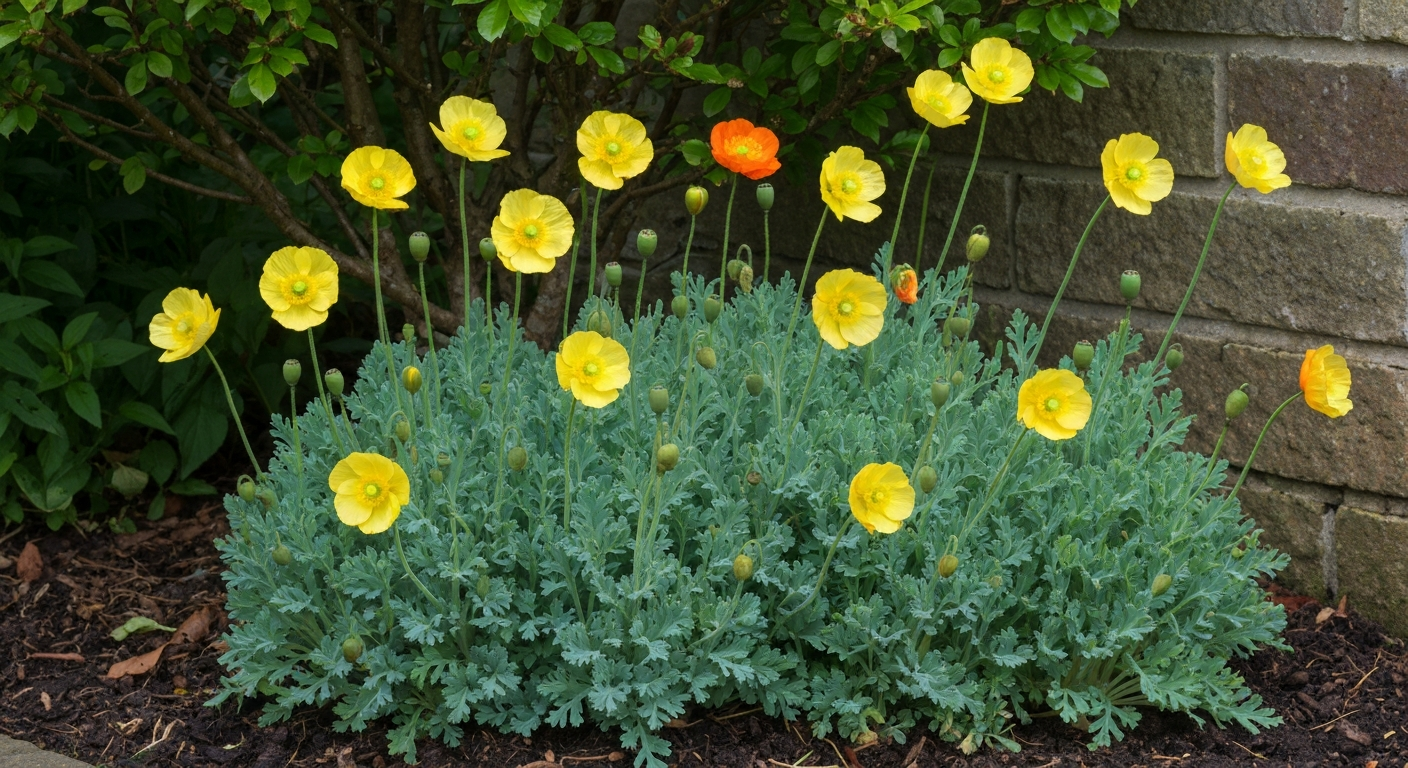
Poppies need full sun (at least 6 hours a day), well-drained soil, and cool temperatures to germinate and establish. Most species prefer a near-neutral pH somewhere between 6.0 and 7.5, moderate fertility rather than rich compost-heavy beds, and consistent but not excessive moisture. Get those five things right and poppies are genuinely one of the easiest flowers you can grow from seed.
What Do Poppies Need to Grow: A Step-by-Step Guide for Beginners
Marcus Holloway
12 Aug 2026
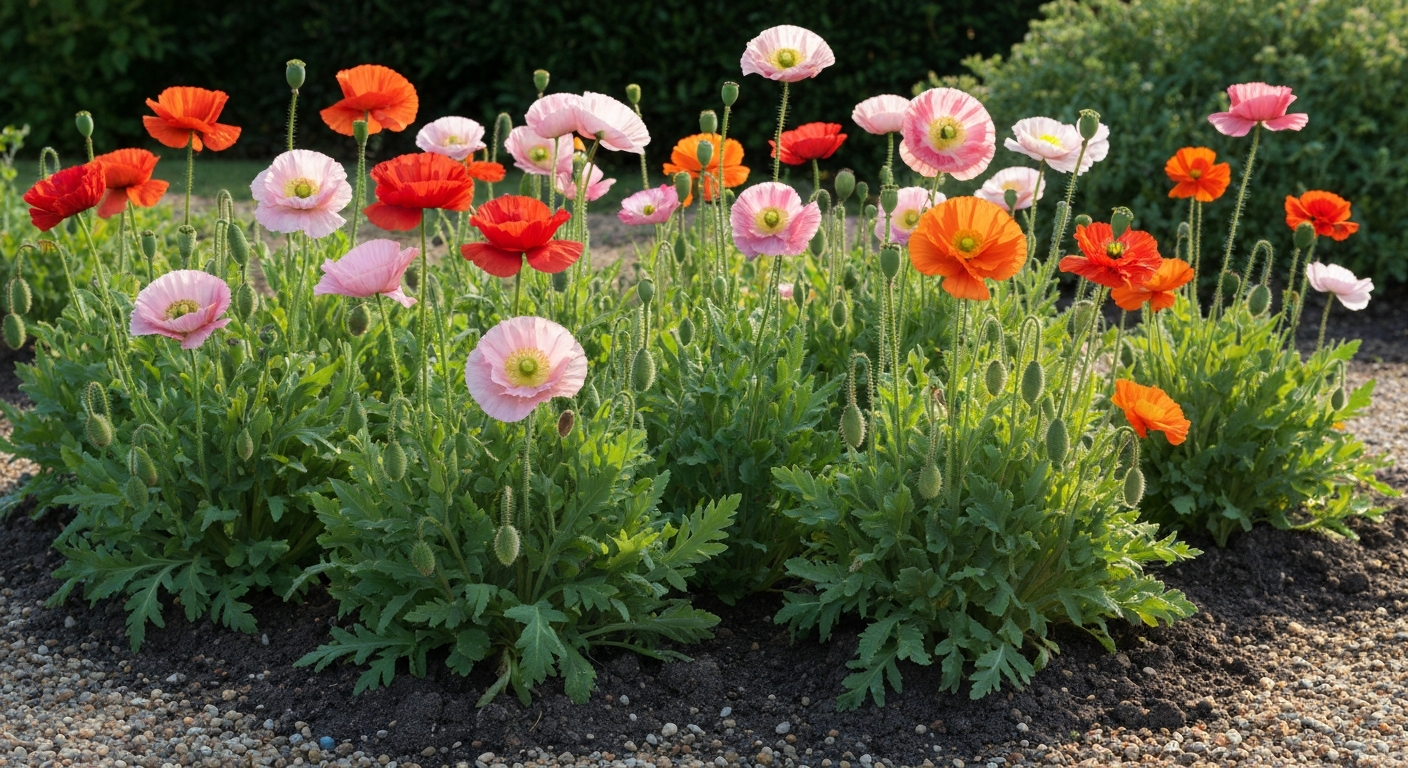
Poppies at a glance: the core growing conditions
Before diving into varieties and timing, it helps to understand the baseline requirements that apply to nearly every poppy you are likely to grow. These are not fussy plants, but they do have non-negotiables, and drainage is the biggest one.
Light
The vast majority of ornamental poppies want full sun, meaning a minimum of six hours of direct sunlight per day. Oriental poppies (Papaver orientale), common corn poppies (Papaver rhoeas), breadseed poppies (Papaver somniferum), and California poppies (Eschscholzia californica) all fall into this category. Iceland poppies (Papaver nudicaule) can manage in part shade, and Welsh poppies (Meconopsis cambrica) are the outlier of the group, actively preferring dappled shade or a cool shaded corner. For the others, shading means fewer flowers, taller and floppier stems, and weaker overall plants.
Soil type and pH
Poppies are not heavy feeders and most actually perform better in moderately fertile soil rather than ground that has been heavily amended with compost or manure. Papaver rhoeas (the classic red corn poppy) thrives on chalk, loam, and sand, and the RHS notes it tolerates acid, neutral, and alkaline pH. California poppy will handle a pH range of roughly 5 to 8 and actively prefers poor, sandy to loamy soils. Oriental poppies want moderately fertile, humus-rich soil with excellent drainage. For Papaver somniferum, research suggests germination and establishment peak near pH 7. A safe target across the board is a slightly acidic to neutral soil, somewhere between pH 6.0 and 7.0, which suits all common species.
Drainage
This is the one condition poppies will not compromise on. Waterlogged soil is fatal to oriental poppies especially, but it damages the root systems of all species. If your garden has heavy clay that stays wet through winter and early spring, you need to either raise your beds, work in grit, or grow a different flower. Sandy loam or loamy soil that drains freely after rain is ideal. If water pools on the surface for more than an hour after a downpour, that spot is not going to work for poppies.
Temperature
Poppies are cool-season plants at heart. Most species germinate best between 65 and 77°F (18 to 25°C), and breadseed poppies have a modelled base germination temperature of around 3°C, meaning they will start in quite cold soil. Iceland poppies have an optimum germination window of 65 to 75°F (18 to 24°C) and their bloom quality declines noticeably once temperatures climb above 70°F (21°C). This is why timing matters so much: you want poppies to establish roots and foliage during cool weather and flower before summer heat sets in.
Water
During germination, keep the soil surface consistently moist, because poppy seeds are tiny and they dry out fast. Once established, most species are surprisingly drought-tolerant. California poppy, once it has settled in, should be irrigated no more than twice a month. Oriental poppies are drought-sensitive when young but toughen up considerably. The rule of thumb: water deeply and infrequently rather than lightly every day, and never let water sit around the crown or root zone.
Which poppy is right for your garden?
There are five species most home gardeners work with, and they behave very differently. Knowing what you are growing saves a lot of frustration.
| Species | Type | Light | Key trait | Best for |
|---|---|---|---|---|
| Papaver rhoeas (corn/common poppy) | Hardy annual | Full sun | Fast, easy, brilliant red or pink flowers | First-time growers, wildflower patches |
| Papaver somniferum (breadseed/opium poppy) | Hardy annual | Full sun | Large ornamental seed heads, doubles & singles | Cutting gardens, seed saving |
| Papaver orientale (oriental poppy) | Herbaceous perennial | Full sun | Huge blooms, goes dormant in summer | Borders, long-term plantings |
| Papaver nudicaule (Iceland poppy) | Short-lived perennial/biennial | Sun to part shade | Cool-season bloomer, wide colour range | Winter/spring colour in mild climates |
| Eschscholzia californica (California poppy) | Hardy annual | Full sun | Drought-tolerant, self-seeds readily | Dry or poor-soil gardens |
| Meconopsis cambrica (Welsh poppy) | Perennial | Shade/dappled light | Shade-tolerant, self-seeds freely | Woodland edges, shaded borders |
For most beginners, Papaver rhoeas or Papaver somniferum is the right starting point. Both are direct-sown hardy annuals that germinate reliably in cool soil, need minimal input, and deliver showy results in a single season. If you are working with a shaded spot, Welsh poppy is the one to reach for. If your soil is poor and dry, California poppy will outperform everything else listed here.
Variety notes: shade, poor soil, and containers
Welsh poppy (Meconopsis cambrica) is the standout choice for shade. It tolerates and actually prefers dappled light or a cool, north-facing corner, and it likes moist, humus-rich, well-drained soil. For step-by-step instructions on how to grow Welsh poppies, see our dedicated guide. Once it is happy, it self-seeds enthusiastically and you will have more plants than you know what to do with. It is genuinely low-maintenance and one of the few poppies that works under deciduous trees or along a shaded fence line.
For poor or sandy soil, California poppy wins without question. It was essentially bred by nature for exactly those conditions and performs worse in rich, fertile ground where plants tend to go vegetative and produce more leaves than flowers. Do not amend your worst patch before sowing California poppies. Just sow them directly and let them get on with it.
Containers are trickier for poppies because of their taproots. The best candidates are Iceland poppies, which are compact enough for deep pots (aim for at least 30 cm deep) and can be started in small plugs and transplanted. Use a free-draining compost mix, avoid plastic pots that stay wet, and make sure drainage holes are clear. California poppy can work in a wide, shallow container if drainage is excellent, but you will need to sow directly into the pot rather than transplant seedlings.
When to plant: timing basics for cool-season sowing
Poppies are cool-season flowers, which means the planting window is earlier than most people expect. For a quick timing guide and zone-specific advice, see when to grow poppies. The two main sowing strategies are early spring (4 to 6 weeks before your last frost date, when soil is still cool) or autumn/late fall, where seeds overwinter naturally and germinate as soon as conditions are right in spring. Autumn sowing mimics what poppies do in the wild and gives particularly reliable germination because the seeds experience natural cold stratification.
Iceland poppies need a slightly different approach. Because they want cool growing conditions and flower quality drops above 70°F (21°C), they are typically started indoors in late summer or early autumn (around 10 to 14 weeks before your first fall frost) for winter or early spring flowering in mild climates. In colder zones they are usually treated as an early-spring annual.
The most common beginner mistake with poppies is sowing too late, when the soil has already warmed up. Seeds sown into warm ground after the last frost date will often germinate poorly or produce plants that bloom briefly and weakly before the heat shuts them down. Earlier is almost always better with this group.
Sowing by zone: a simple timing reference
| USDA Zone | Autumn sow window | Spring sow window | Expected flowering |
|---|---|---|---|
| Zone 4 | Not reliable (too cold) | Late March to mid-April (4–6 weeks before last frost) | June to July |
| Zone 5 | October to early November | Late March to mid-April | May to June |
| Zone 6 | October to November | Early to mid-March | May to June |
| Zone 7 | October to November | Late February to mid-March | April to May |
| Zone 8 | October to November | February (or autumn sow for spring bloom) | March to May |
| Zone 9–10 | October to November (primary window) | Not usually recommended (too warm) | February to April |
These windows apply primarily to Papaver rhoeas, Papaver somniferum, and California poppy. Oriental poppies are perennials and can be planted as bare-root divisions or pot-grown plants in spring or autumn. Iceland poppies in zones 7 and above are usually autumn-planted transplants for winter and spring bloom.
Zone 5 and zone 7: what changes and what stays the same
Zone 5 gardeners have a shorter growing window and colder winters, which actually works in their favour with poppies. Autumn sowing is reliable here because seeds can stratify through a genuine cold winter and germinate strongly in March or April. If you miss the autumn window, aim to direct sow in late March to mid-April, even if there is still frost forecast. Hardy annual poppies can handle light frost at the seedling stage. Expect flowers by late May to June. Oriental poppies are a great long-term choice for zone 5 since they are cold-hardy to zone 4 and will return reliably year after year.
Zone 7 gardeners get an earlier and longer cool season, which is excellent for poppies. Autumn sowing in October or November works very well, and you can often expect flowering as early as April. The risk in zone 7 is the other end of the calendar: summer arrives early and poppies will finish fast once temperatures climb into the mid-70s°F consistently. Planting Iceland poppies as autumn transplants for late winter and spring colour is a particularly good strategy in zone 7. For annuals, direct sow no later than mid-March in spring if you are not autumn sowing.
If you want a deeper look at zone-specific sowing calendars and timing nuances, the dedicated guides for zone 5 and zone 7 poppy growing cover those details in full. For a detailed zone 5 sowing calendar and step-by-step advice, see our guide on how to grow poppies zone 5.
Direct sowing vs. starting indoors
For most poppy species, direct sowing is strongly preferred over starting indoors, and this is not just a preference. It is biology. Papaver rhoeas, Papaver somniferum, and California poppy all develop a taproot early in their life cycle, and disturbing that root during transplanting causes significant stress, often resulting in stunted plants or outright failure. Utah State Extension and most commercial seed companies are straightforward about this: poppies do not transplant well, so direct sow whenever possible.
When direct sowing works best
- Prepare a fine, raked seedbed with no large clods or debris on the surface.
- Mix seeds with dry sand at a ratio of roughly 1 part seed to 4 parts sand. This makes even distribution much easier with such tiny seeds.
- Scatter the mix across the prepared area and press gently with the flat of your hand or a board. Do not cover with soil. Poppy seeds need light to germinate, and even a few millimetres of covering can prevent germination entirely.
- Water gently with a fine rose watering can or misting spray. A strong jet will wash seeds into clumps.
- Keep the surface consistently moist until germination, which typically takes 7 to 21 days depending on temperature and species.
- Thin seedlings to 15 to 30 cm apart once they are large enough to handle (spacing varies by species: California poppy at 15 cm, oriental poppy at 30 to 45 cm). Thinning feels brutal but overcrowded plants produce fewer flowers and are more prone to mildew.
The exception: starting Iceland poppies indoors
Iceland poppy is the one species where indoor starting makes genuine sense. Because it needs a longer cool growing period and commercial growers start it in 128-cell plugs, you can replicate this at home. Fill small individual cells or biodegradable plugs with a fine seed compost, surface-sow seeds (do not cover), and keep at 65 to 75°F (18 to 24°C) until germination in 7 to 21 days. Grow on in cool conditions (below 65°F ideally) and transplant out before the weather warms up, being as gentle as possible with the rootball. Moving the whole plug into the ground without disturbing the roots sidesteps the taproot transplant problem.
Quick decision guide
| Situation | Recommended approach |
|---|---|
| Growing Papaver rhoeas, somniferum, or California poppy | Direct sow only. Do not start indoors. |
| Growing Iceland poppy for spring display | Start indoors in individual cells 10–14 weeks before first fall frost; transplant carefully. |
| Growing oriental poppy | Buy pot-grown plants or divisions; plant in spring or autumn. Direct sowing is possible but slow. |
| Growing Welsh poppy | Direct sow or buy pot-grown plants. Will self-seed once established. |
| Limited outdoor space or containers | Iceland poppy in deep pots, started indoors. California poppy direct-sown in the container itself. |
Planting depth, spacing, and thinning
The depth question for poppies is simple: surface sow. Press seeds onto the soil surface and do not bury them. This applies to all the species covered here. The seeds are tiny and they need light exposure to trigger germination. For spacing, a good working guide is 15 cm (6 inches) for California poppy and corn poppies, 20 to 25 cm (8 to 10 inches) for breadseed poppies, and 30 to 45 cm (12 to 18 inches) for oriental poppies. When thinning, snip seedlings at the base with small scissors rather than pulling them out, which disturbs the roots of nearby plants.
Feeding, watering, and general maintenance
Most poppies want very little feeding. Annual types sown into average garden soil need no additional fertiliser at all. If you are growing oriental poppies as long-term perennials, a light application of a balanced granular fertiliser in early spring is fine, but avoid high-nitrogen feeds which push leafy growth at the expense of flowers. California poppy, as mentioned, actively dislikes rich soil.
Once established, water deeply every one to two weeks during dry spells rather than a little every day. Overhead watering late in the day can encourage fungal issues, so water at the base or early in the morning. Mulching around oriental poppies in summer helps retain moisture during their dormant period.
Deadheading vs. saving seed
This is a genuine choice that depends on what you want from your plants. Deadheading spent flowers on annual poppies extends the flowering period by preventing the plant from putting energy into seed production. For Papaver rhoeas and Papaver somniferum, removing spent heads regularly will keep the display going for several extra weeks. However, if you want to save seed or encourage self-seeding for next year (which is one of the great joys of growing breadseed poppies), leave some flower heads to develop fully. The large, distinctive seed pods of Papaver somniferum are decorative in their own right and can be dried for arrangements. Harvest seed heads when they are dry and papery and the small holes at the top have opened: tip the seeds into a paper envelope and store in a cool, dry place.
Cutting poppies for the vase
Poppies can be used as cut flowers, but you need to harvest them at exactly the right moment. Cut the stem just as the bud is beginning to crack open and show colour, before the petals have fully unfurled. Immediately sear the cut end by dipping it in boiling water for about 10 seconds, or pass a flame from a lighter across the cut for a few seconds. This seals the milky latex sap that bleeds from the stem and dramatically extends vase life. Without this step, cut poppies will typically collapse within a few hours. After searing, place in deep cold water and keep in a cool room. Expect vase life of 5 to 7 days with good conditioning.
Pests, diseases, and common problems
Poppies are relatively tough once established. The most common disease issue is powdery mildew, which typically appears in late summer on oriental poppies as they go dormant. It is mostly cosmetic at that stage and rarely requires treatment. Good air circulation through proper spacing helps prevent it. Aphids occasionally cluster on young growth, especially on Iceland poppies started under glass. A strong jet of water or an insecticidal soap spray deals with them effectively.
Downy mildew and damping-off can affect seedlings started indoors or sown in cold, wet conditions. If you are starting Iceland poppies indoors, use fresh seed compost, keep the growing area well-ventilated, and do not overwater. Slugs and snails will eat young seedlings, particularly breadseed poppy in spring. A grit mulch around emerging seedlings provides some deterrence.
Winter care and perennial behavior
Annual poppies (rhoeas, somniferum, California) complete their life cycle in one season and die after setting seed. There is no winter care needed: clear spent plants in autumn or leave them for self-seeding. Oriental poppies die back completely after flowering in early summer, leaving a gap in the border, and this often alarms new gardeners. The plants are fine. They go dormant, and the crown overwinters underground. They will re-emerge in late spring the following year. Filling the summer gap with annuals planted nearby is a classic trick. Welsh poppies are evergreen or semi-evergreen in mild winters and will self-seed reliably, giving you a low-maintenance perennial colony over time.
Quick troubleshooting
| Problem | Likely cause | Fix |
|---|---|---|
| Poor or no germination | Seeds buried too deep, soil too warm, or seeds dried out after sowing | Surface sow only; sow earlier in cooler soil; mist daily until germination |
| Leggy, floppy seedlings | Not enough light, sown too late into warm weather, or overcrowding | Thin ruthlessly; ensure full sun position; sow earlier next year |
| Few flowers on established plants | Over-rich soil, too much shade, or plants sown too late | Reduce feeding; move to sunnier spot; time sowing for cool season |
| Plants collapse after cutting | Stem not seared after cutting | Sear cut end immediately in boiling water or with a flame |
| Oriental poppy disappears in summer | Normal summer dormancy, not death | Fill gap with annuals; mark position to avoid accidental digging |
| Seedlings damping off indoors | Overwatering, poor ventilation, or infected compost | Use fresh compost; water from below; increase airflow around seedlings |
FAQ
What do poppies need to grow (basic summary)?
Light: most ornamental poppies need full sun (≥6 hours); Iceland tolerates part shade and Welsh poppy tolerates shade/dappled light. Soil: well‑draining loam or sandy loam; avoid heavy waterlogged clay. pH: generally tolerant (about pH 5–8) but many prefer slightly acidic to neutral. Drainage: excellent — poppies dislike sitting in water. Temperature: seeds germinate best in cool to moderate soil temps (≈60–75°F/15–24°C); Iceland poppies prefer cooler growing conditions. Water: keep seedbeds evenly moist until established, then water moderately — California poppy is drought tolerant once established while others prefer regular moisture but not waterlogging. Seeds: tiny and require light — surface‑sow or barely press into soil. (Sources: NC State, RHS, OSU, Johnny’s.)
Step‑by‑step: how to grow poppies from seed (direct sow)
1) Choose site with full sun (or part shade for Iceland/Welsh). 2) Prepare soil: loosen top 2–3 in (5–8 cm), remove weeds, incorporate small amount of compost if soil is poor (do not over‑enrich). 3) Timing: sow in fall in mild climates or early spring 4–6 weeks before last frost while soil is cool. 4) Sow: broadcast or row‑sow seeds on surface and gently press in — do not bury (>1–2 mm reduces germination). 5) Keep seedbed evenly moist until seedlings emerge (7–21 days depending on species). 6) Thin after true leaves form to final spacing (see spacing). 7) Mulch sparingly to conserve moisture but keep material away from crowns. 8) Flowering: expect blooms the first season for annual types; perennials may take longer to clump. 9) Maintenance: deadhead to prolong bloom or leave seedheads if saving seed. 10) Winter: leave crowns for perennial types; mulch in very cold sites. Follow variety‑specific notes for details.
Indoor starting vs direct sowing — which should I choose?
Direct sow when possible: most poppies (common/annual Papaver rhoeas, oriental P. orientale, Papaver somniferum, California Eschscholzia) do not transplant well because of taproots. Direct sowing in fall (for natural stratification) or early spring gives best results. Exceptions: Iceland poppy can be started indoors in small plugs and transplanted carefully; some growers start very large numbers in cells to avoid root disturbance. If you must start indoors for a long season, use deep cells, avoid root binding, and transplant very young.
What timing should I follow by hardiness zone (quick table)?
General calendar: Zone 3–5: direct sow in early spring as soon as soil can be worked (or sow in fall for natural stratification in milder microclimates). Zone 6–8: sow in late fall to early winter for spring blooms OR early spring sowing. Zone 9–10: fall sowing for spring bloom; spring sowing may fail in hot months — aim for cool season. Specific notes: Zone 5 — direct sow early spring (4–6 weeks before last frost) or autumn where winters are reliable for stratification. Zone 7 — autumn sowing often produces robust spring seedlings; early spring sowing also works. (Adjust by local microclimate; see related “when to grow poppies” and your zone page.)
Which poppy varieties should I choose for my site?
- California poppy (Eschscholzia californica): heat/drought tolerant, prefers poor, well‑drained soil and full sun — good for low‑water gardens. - Oriental poppy (Papaver orientale): perennial, full sun, needs fertile but well‑drained soil; large spring flowers. - Iceland poppy (Papaver nudicaule): cool‑season annual/perennial in cooler climates; tolerates part shade and is surface‑sown. - Common/annual poppy (Papaver rhoeas): quick, bright annuals for wildflower mixes and poor soils. - Welsh poppy (Meconopsis cambrica): shade/dappled light, moist humus soils — choose when you need poppy flowers in shade. Choose Welsh for shaded borders, California for dry sunny sites, and oriental for long‑lived perennial clumps.
Planting depth, spacing and thinning guidelines
Depth: surface sow or cover seed with a dusting of soil; do not bury (even a few millimetres can reduce germination). Spacing: California and annuals — thin to 6–8 in (15–20 cm) between plants; Iceland — 8–10 in (20–25 cm); oriental (perennial) — space 18–24 in (45–60 cm) for clump development. Thinning: when seedlings have 2–4 true leaves, remove weakest to reach final spacing; thin by snipping at soil level to avoid disturbing nearby roots.
Next Article
How to Grow Welsh Poppies: Complete Seed-to-Bed Guide
How to grow Welsh poppies from seed to steady beds, timing, sowing, care, troubleshooting, and seed-saving.